2117 Executioners Sword
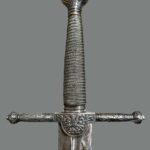
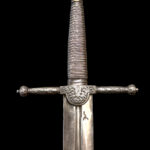
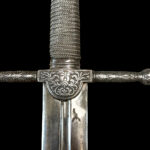
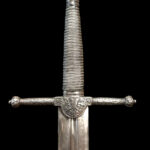
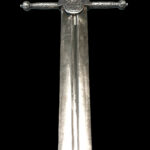
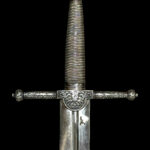
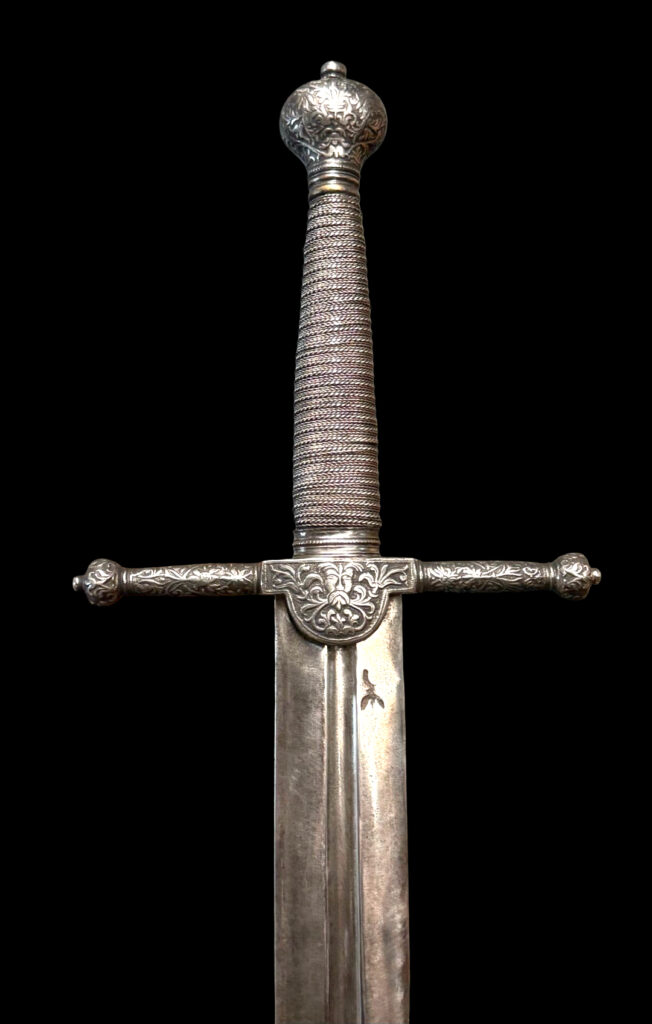
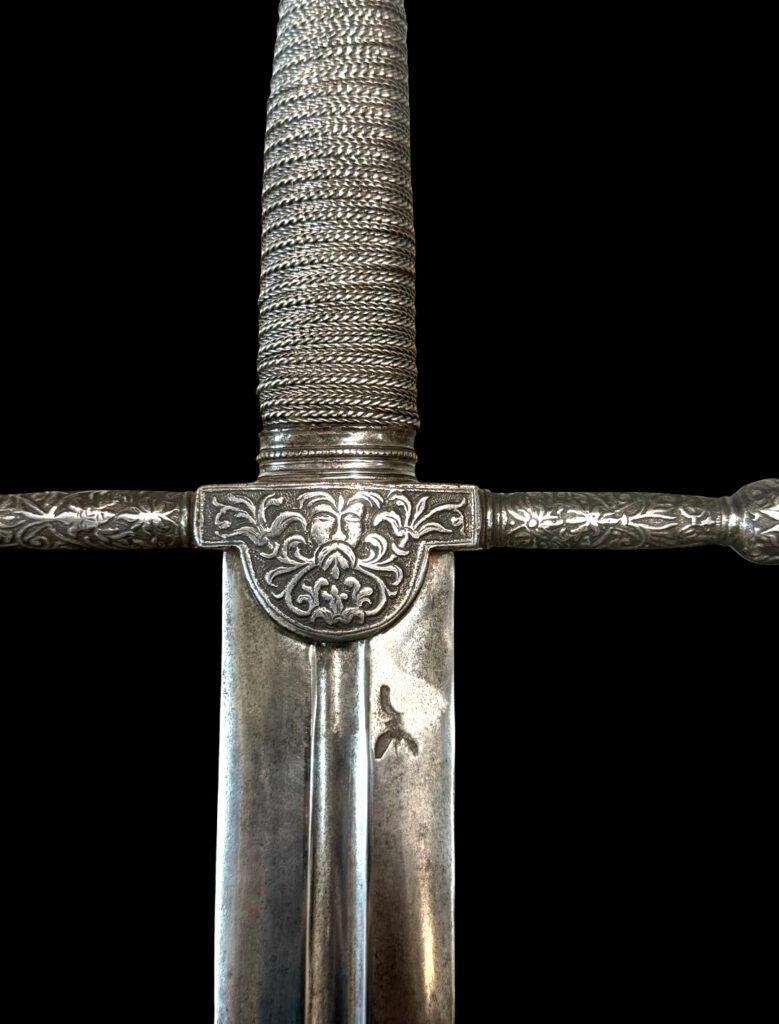
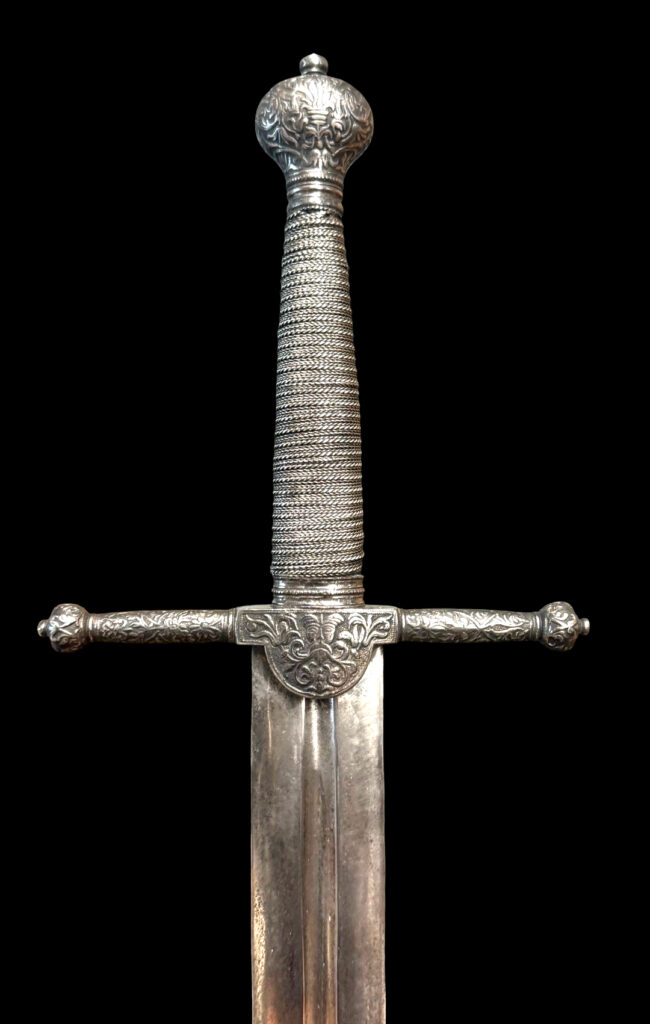
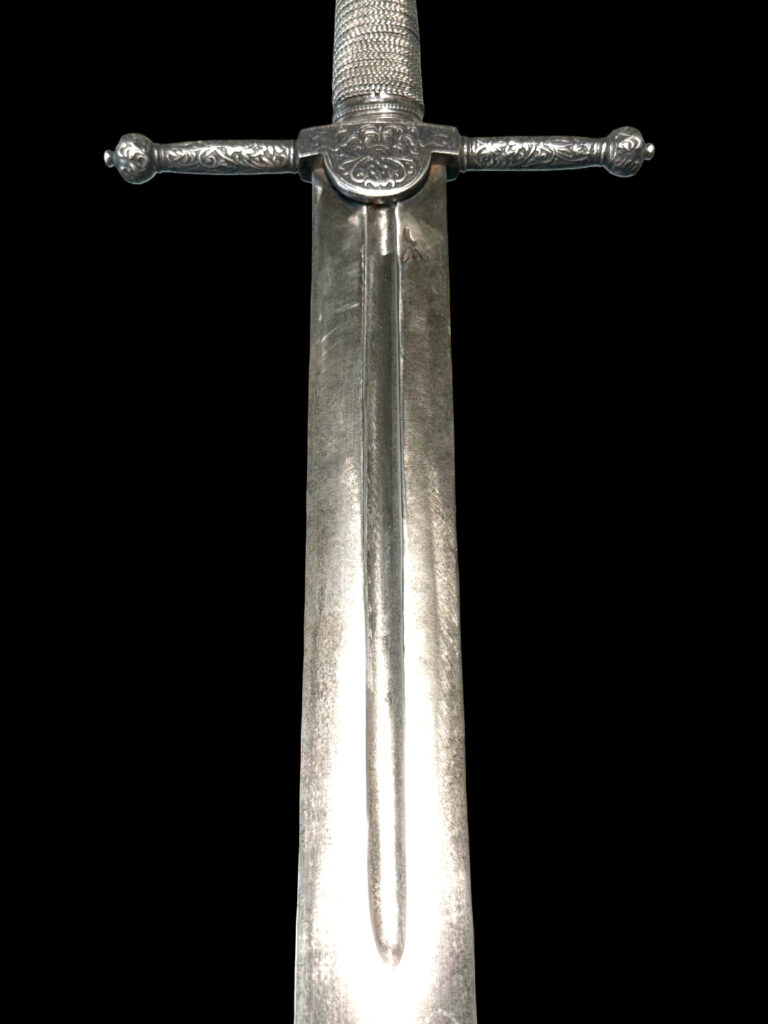
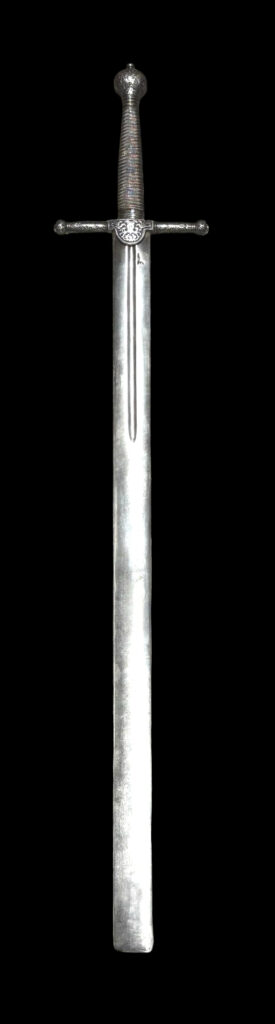
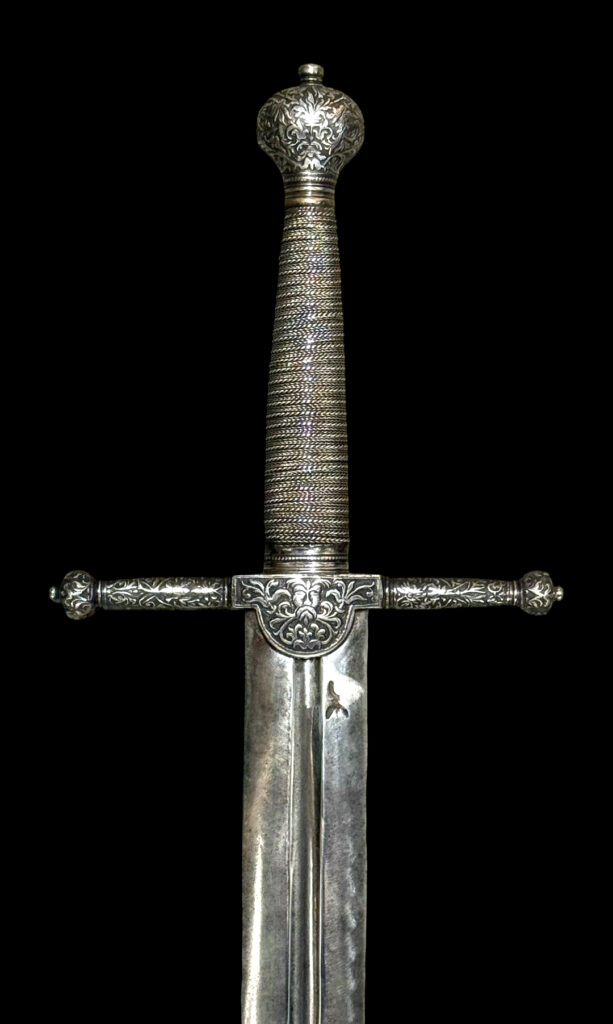
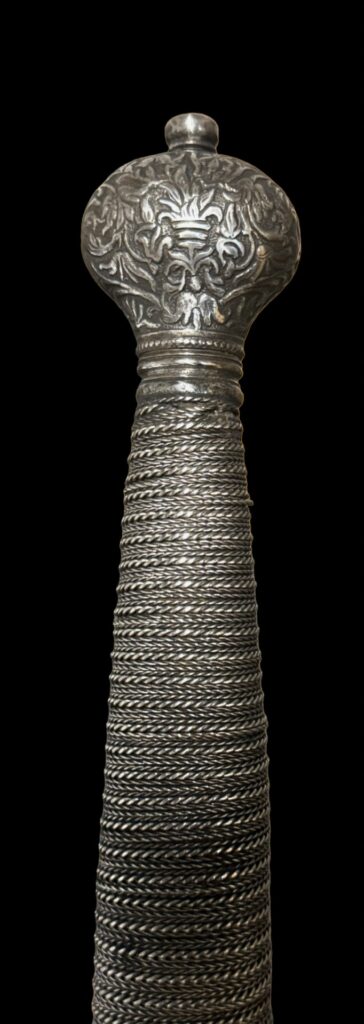
2117) SPECTACULAR CHISELED EXECUTIONER’S SWORD CIRCA 1590:
Introduction: Let me be blunt. This sword is in mint museum condition and decorated to a fine art. The hilt decoration is indicative of circa 1590. Its construction is superb. I am surprised it is not in a museum in Europe. Contrary to popular belief, most executioners’ swords were not used for decapitation as often as you may think. Most executioners’ swords were used as symbols of justice, representing a powerful individual, such as a judge. The sword identified them to the masses, who still could not read or identify the person’s position in society without a visual reference, such as an ornately decorated sword. The Crown Jewels of the United Kingdom include two swords of justice.
Discussion: In the Middle Ages, decapitation was performed with regular combat swords. The executioner’s sword was introduced in the late 15oo’s and was popular during the 1600s. Executioner’s swords have a flat point, are somewhat stout, and are used with two hands. It has been suggested that the decorations were added after the swords were retired from beheadings and were used as a symbolic sword of justice and authority.
In the Holy Roman Empire and its neighbors, beheading by the sword was the formal, and comparatively honorable, method of capital punishment. Hanging and breaking on the wheel were reserved for crimes and offenders considered more shameful. The executioner (Scharfrichter) was a salaried official of the town or territorial court. He was socially shunned, yet his skill was valued, because a clean single stroke was expected and a failed one could provoke the crowd.
The last public beheading in Europe was carried out in Switzerland in 1867 and 1868 when Niklaus Emmenegger in Lucerne and Héli Freymond in Moudon were beheaded for murder.
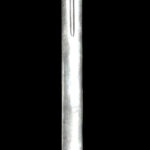
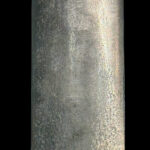
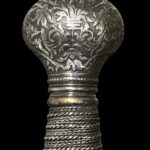
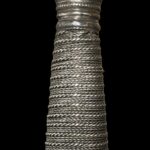
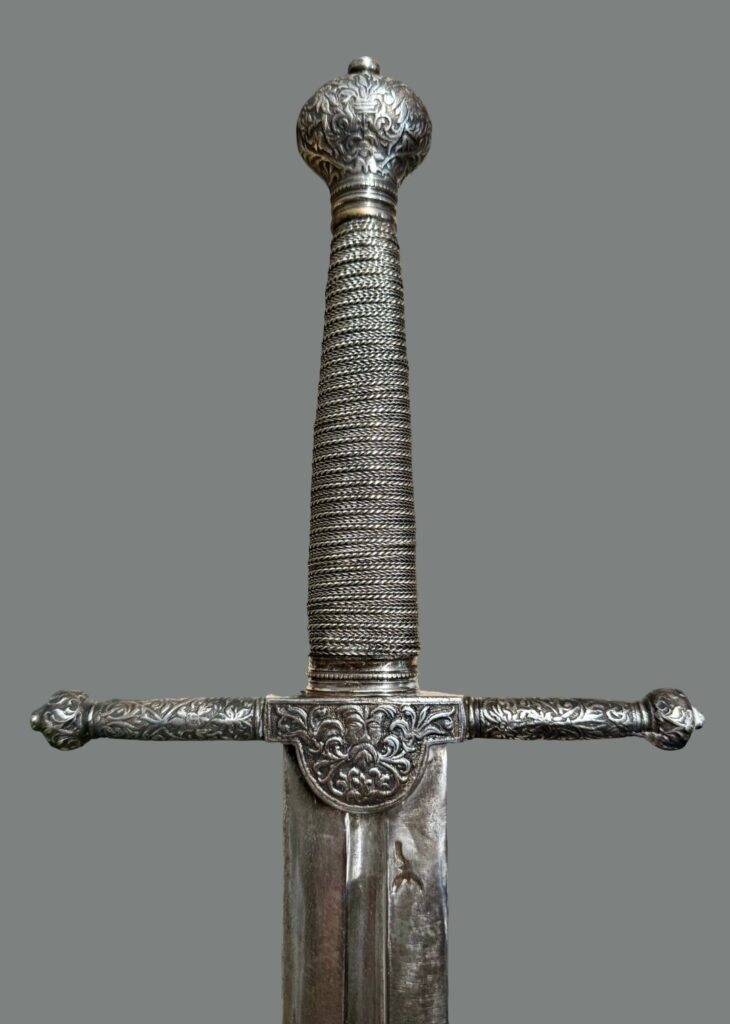
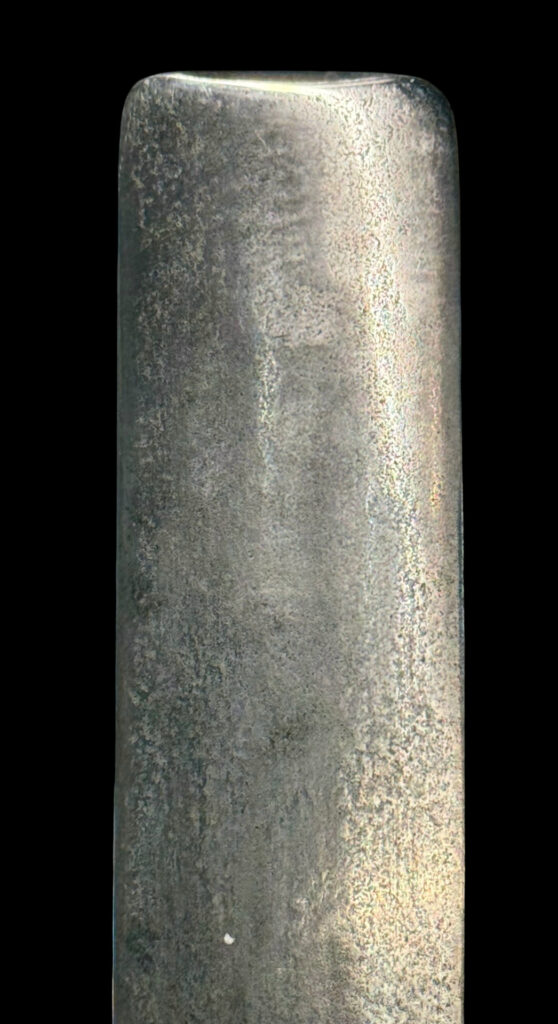
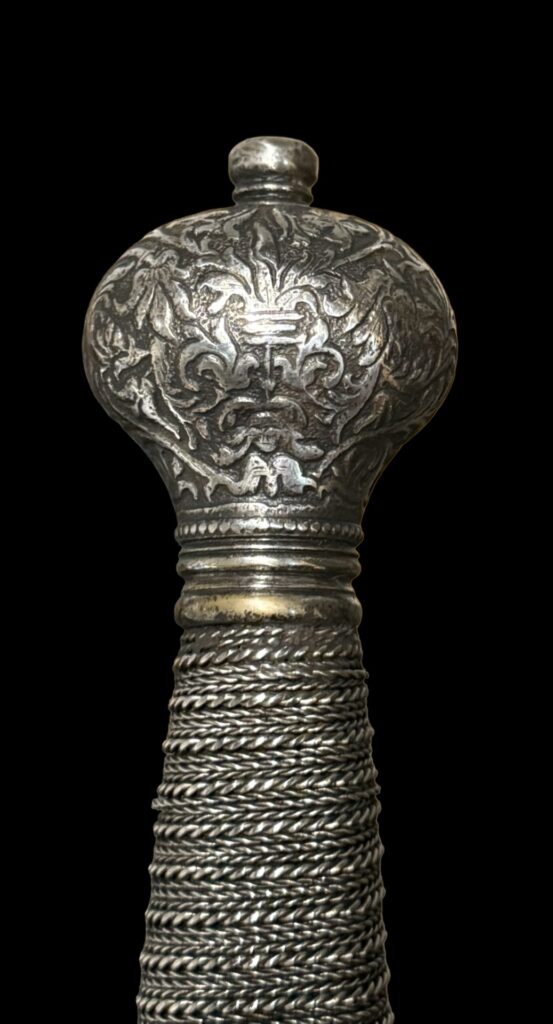
Description: Constructed with a broad, straight, and double-edged blade with edges that run parallel almost to the end, with a square tip with softly rounded corners, the feature that most clearly sets an executioner’s sword apart from a fighting sword. A wide single central fuller runs from the hilt through roughly the first quarter of the blade. Below it, the blade is flat and plain, keeping the weight forward and giving the cut its force. On one face, just below the guard, the steel bears a deep stamped unidentified maker’s mark. The guard is straight, with round-section quillons chased with scrolling foliage. Each quillon ends in a lobed, bulbous finial capped by a small button. At the center of the guard, a chevron-shaped plate (écusson) extends down over the blade’s base. It is chased with a foliate mask, a bearded face growing out of leaves, set above a stylized lily. The long grip accommodates both hands. It widens toward the guard and is closely bound with many turns of twisted silver wire (replaced), finished at each end by ferrules with ribbed and beaded collars. The pear-shaped pommel is decorated with acanthus leaves and fleur-de-lis scrolls arranged around a smaller grotesque mask. It ends in a turned button.
Condition: Superb.
Provenance: From the estate of a well-known American collector.
Approximate length: 45 inches.
Comparables:
Fitzwilliam Museum, Cambridge (M.10‑1947): the closest overall match. It’s a German executioner’s sword dated circa 1616–1630, with a broad blade with a rounded point. It’s etched with a gallows and three wheels and has a king’s head mark of Johannes Wundes of Solingen, plus an engraved and silvered hilt. The overall length is 105.9 cm, and it was formerly in the Laking collection. The museum notes that it may have been used more often for ceremonial purposes than executions.
Fitzwilliam Museum, Executioner’s sword M.10‑1947
Cleveland Museum of Art: These are two Cleveland executioner’s swords, including 1916.1616, with a blade dated 1634. Their brass hilts and wire grips are a good comparison for the shape of your hilt and grip.
Cleveland Museum of Art, Executioner’s Sword 1916.1620
Cleveland Museum of Art, Executioner’s Sword 1916.1616
Metropolitan Museum of Art. The Met has two executioner’s swords with scabbards: one from ca. 1673, possibly Solingen, and a Saxon one from ca. 1700. Both have brass hilts and are later than this example.
The Pfinzgaumuseum in Karlsruhe‑Durlach has a sword dated 1689 from the court of Durlach.
The Landesmuseum Württemberg in Stuttgart.
Conclusion: The vast majority of executioners’ swords on the market are 19th-century reproductions. An original executioner’s sword like this one, with exceptionally beautiful décor, is rarely found on the market. This sword is for a collector who wants the absolute best at a bargain price!!!*
Priced to sell immediately. Don’t wait; ACT NOW!
This one should sell quickly, and I don’t want you to be disappointed!
All my items come with the following:
–Free shipping.
–10-day review period.
–Certificate of Authenticity.
–Autographed copy of my book.
– In the event of an international shipment, we will help assign the lowest correct Customs tariff so you pay the least.
Please contact me for the best available price.
I believe you will be very pleased. ACT-NOW!!!*