2116 Antique Rapier
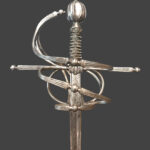
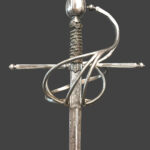
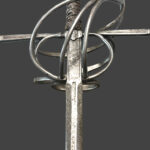
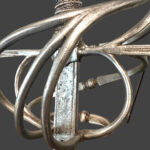
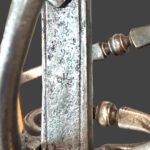
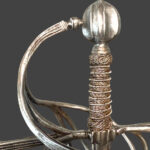
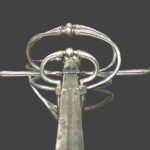
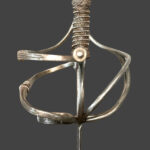
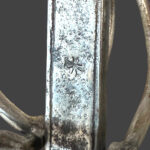
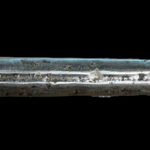

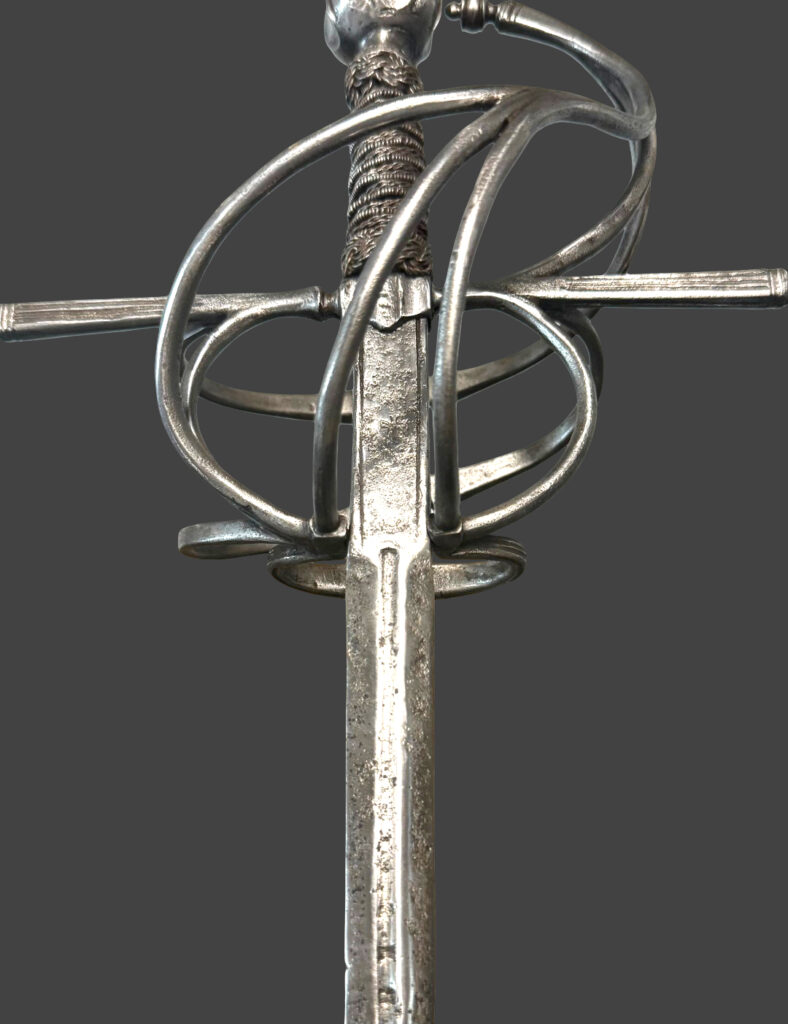
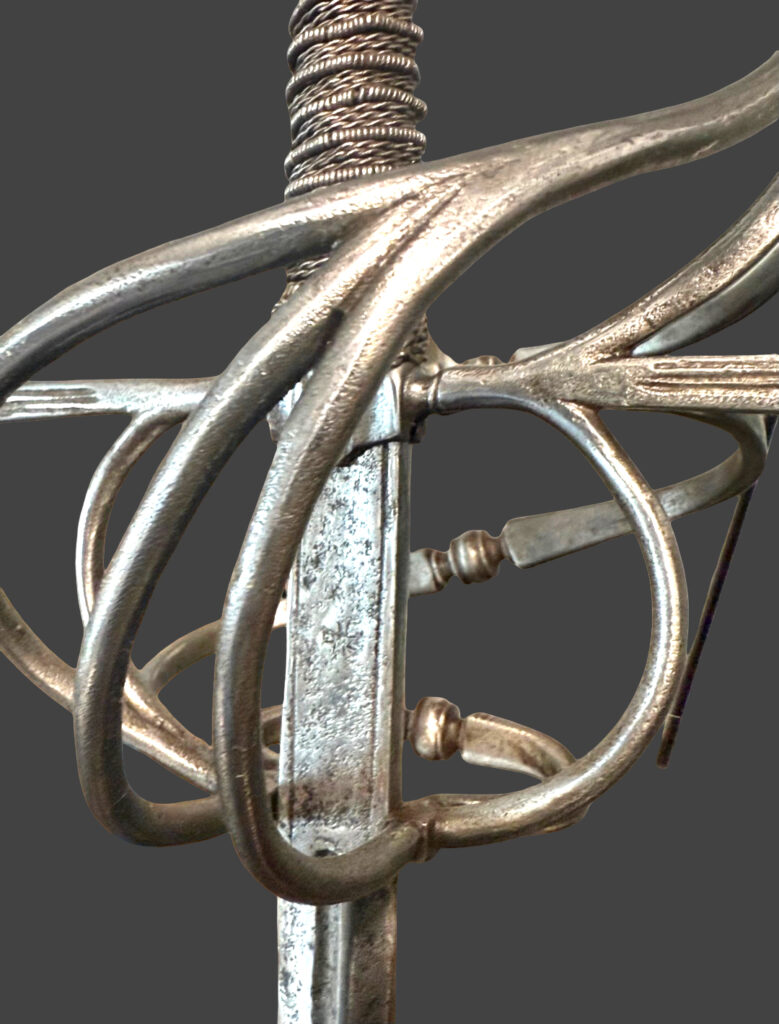
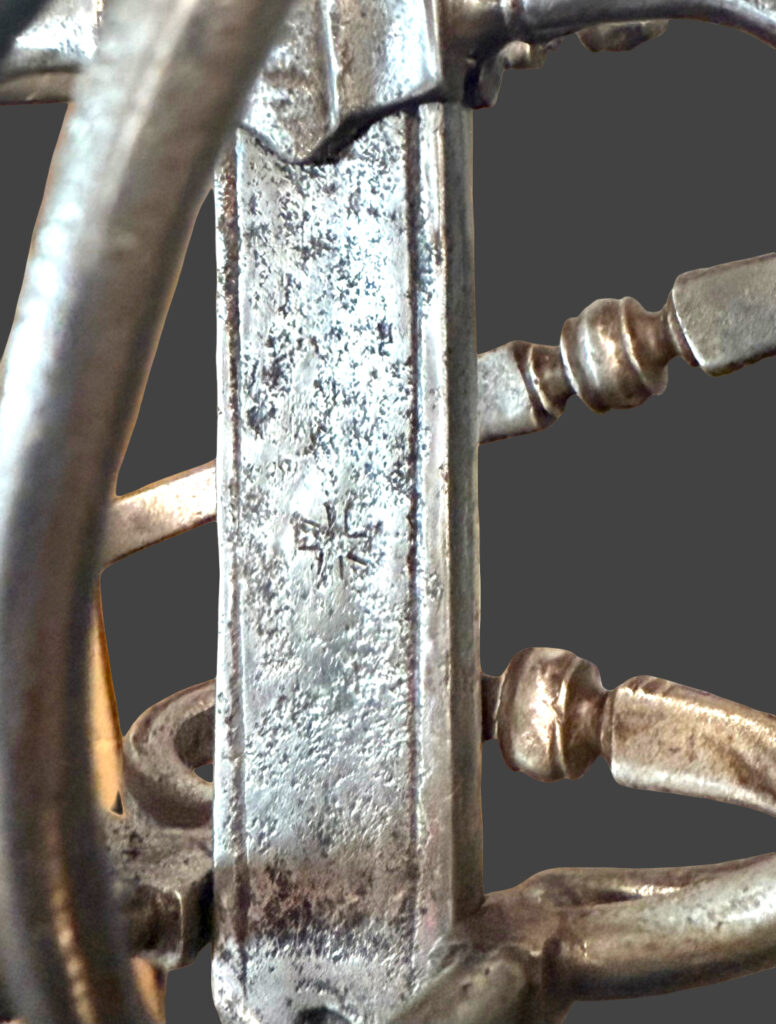
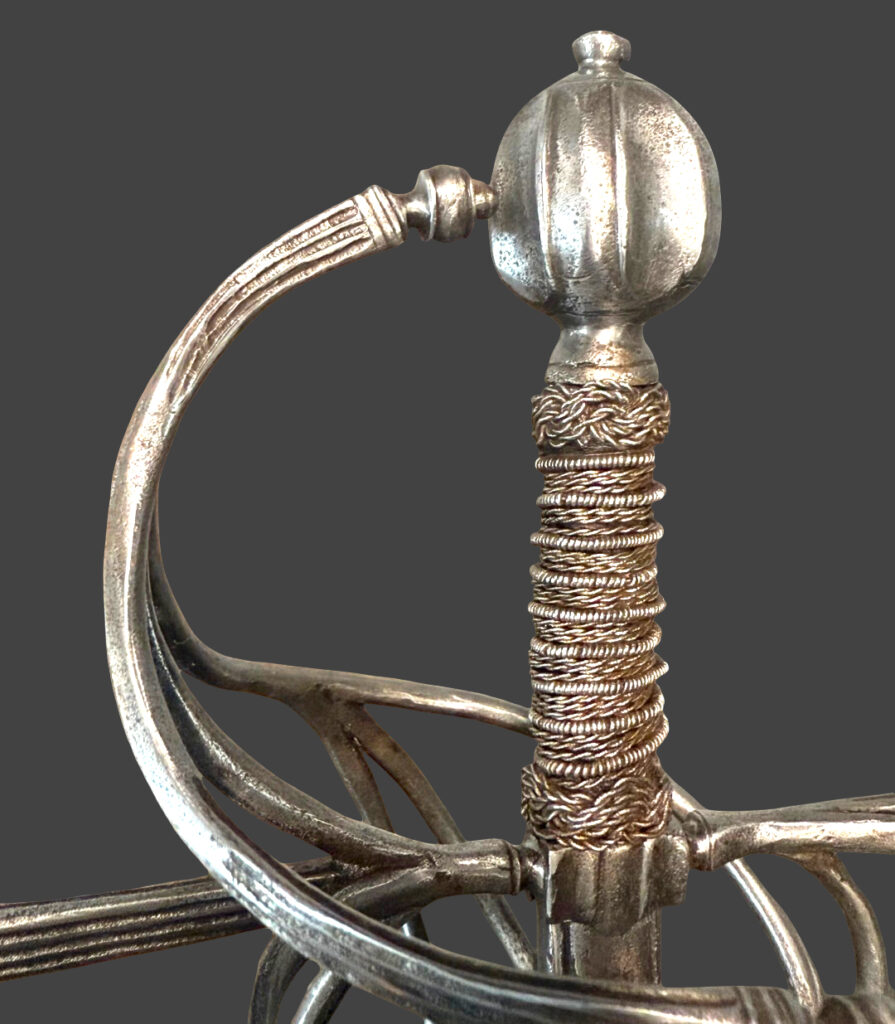
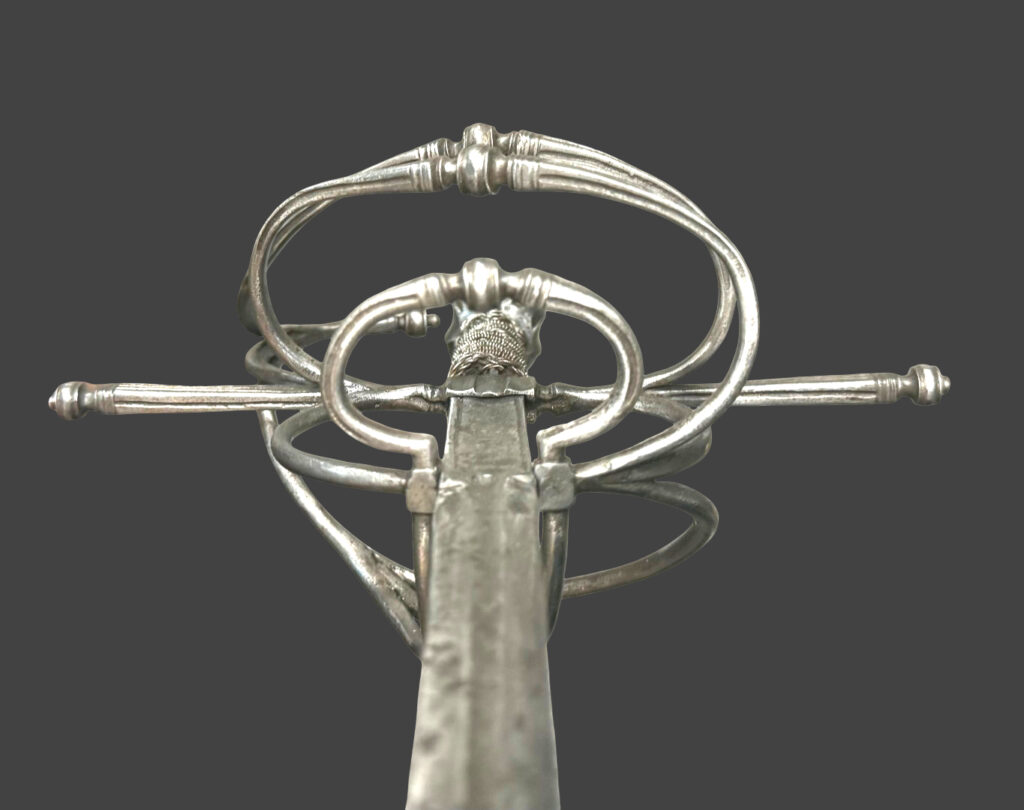
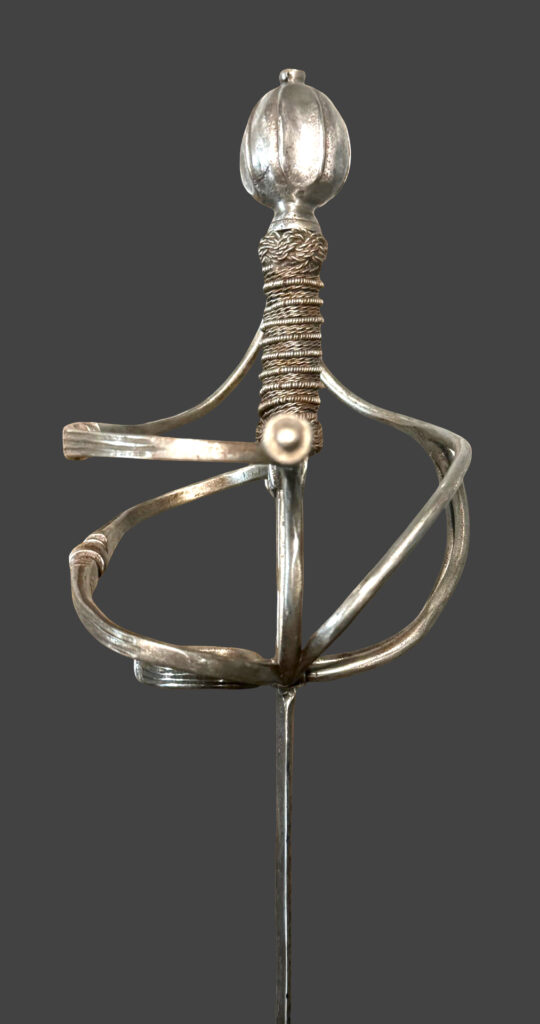
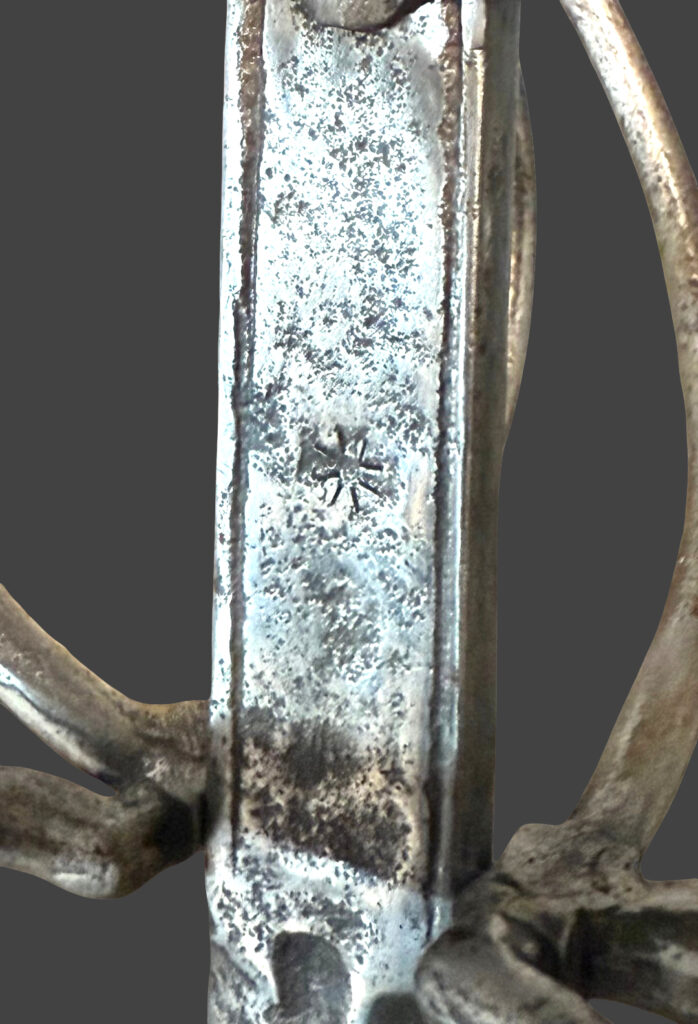
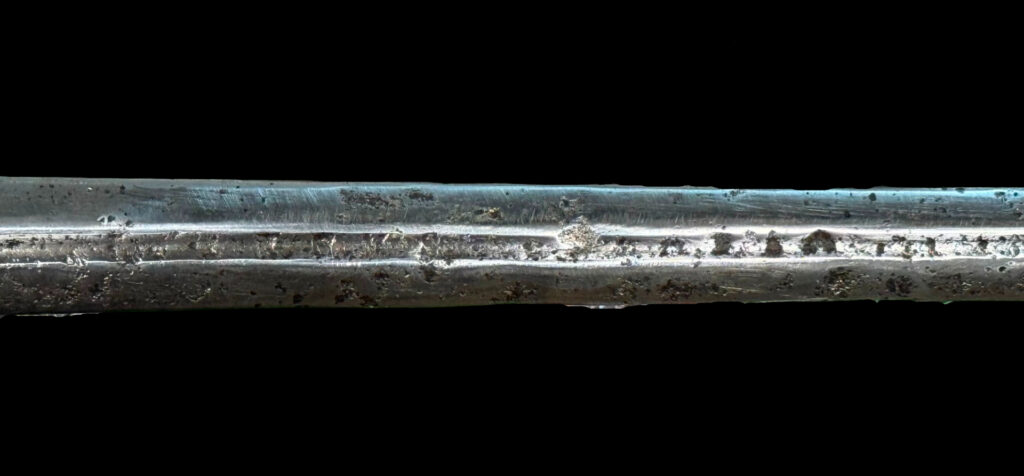

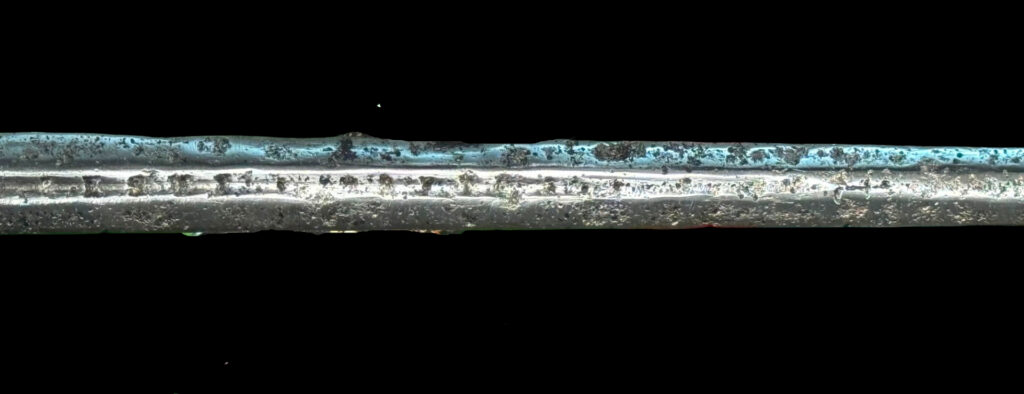
2116) A FINE GERMAN/ITALIAN RAPIER WITH COMPLICATED HILT CIRCA 1610: With maker’s marks on the ricasso on both sides and inscription on the fuller.
Introduction: Under the Norman typology, this would be a Hilt 74 (1545-1620). The earliest clear recorded example of this typology is in a painting by Moretto da Brecia in 1560. The earliest known example circa 1560 is in the Dresden Historical Museum, Cat. # E612.
In an age lacking appropriate policing, the private citizen was forced to protect himself from society’s criminal dregs. The weapon of choice was the rapier from the mid-16th to the end of the 17th century. The rapier is a simple but highly effective sword against the unarmored.
The rapier was primarily a thrusting weapon that could inflict serious injury to an adversary’s vital organs with minimal effort. It was also an exceptional slashing and cutting weapon; however, the slash was less lethal than the thrust. The slash was used more as a feint to set up a finishing thrust. The slash was also a dire warning to a would-be assailant of the horrors to quickly follow if he chose not to acquiesce.
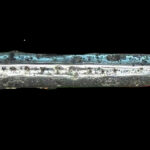
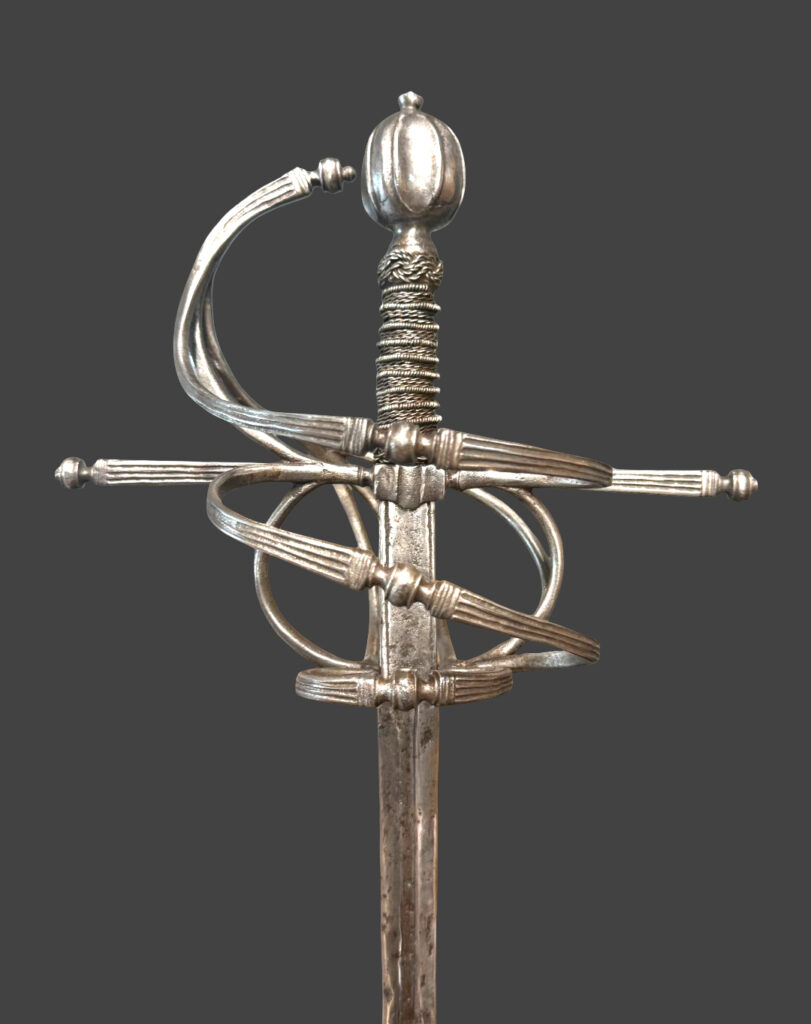
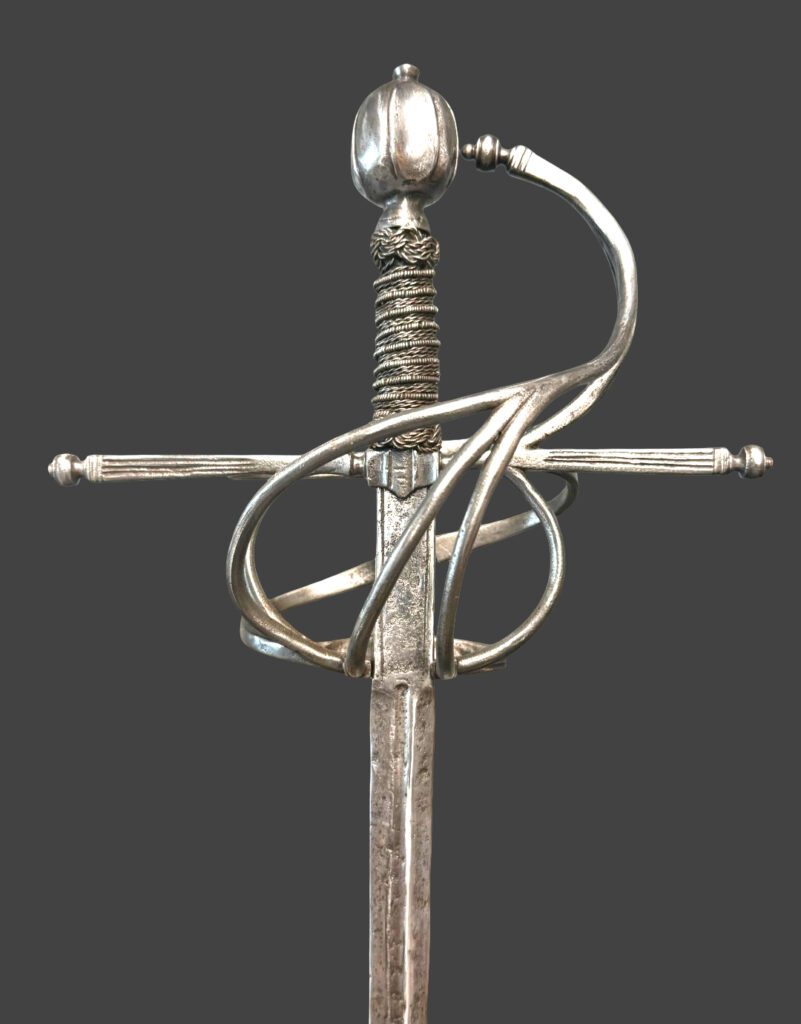
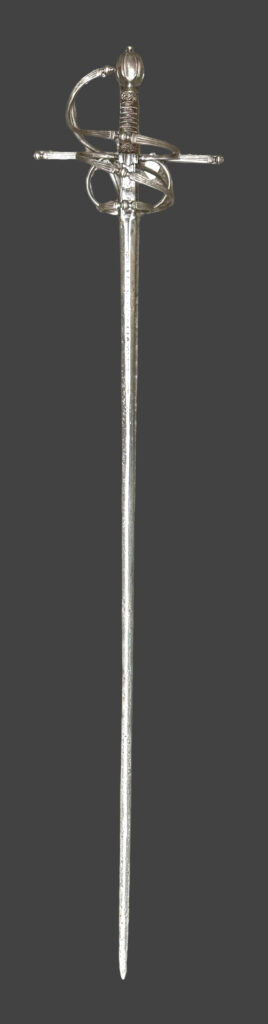
Description: The quillons are long and straight, reeded along their length, and end in turned button finials. They meet at a small quillon block that sits over the ricasso. The knuckle-guard rises from the quillon block and divides into three bars that sweep up toward the pommel. Its reeded upper end has a turned button, and it stops just short of the pommel instead of being fixed to it. This free-ended knuckle-guard is a characteristic feature of the period. On the outside of the hand, swept bars and side rings form an openwork cage. Two horizontal bars cross the guard, and each is reeded and has a baluster knop at its center. The lower one runs across the front of the ricasso. Below the quillons, the arms of the hilt (pas d’âne) form loops that protect the forefinger, which in this grip was hooked over the quillon. The pommel is ovoid and lobed, a melon form, and is topped by a button. The original grip is bound in alternating spirals of twisted and plain wire, finished at both ends with braided Turk’s-head bands. The blade is long and slender, double-edged, and tapers to a sharp point, as suits a weapon designed mainly for thrusting. It has a long, flat, rectangular ricasso. A small mark is stamped on each face of the ricasso: a cross or star-like device with pellets. It’s probably a bladesmith’s or workshop mark and is not yet identified. Faint traces of lettering appear lower down the blade near the forte. This may be the remains of an inscription, which would be typical of Solingen and Toledo blades of this period, and it should be examined under raking light.
Approximate length: 45 inches.
Condition: Very good. The steel surfaces have been cleaned to a bright finish, with scattered pitting. The guard is complete, and its bars are in good alignment.
Comparables: The earliest clearly recorded example of this typology is in a painting by Moretto da Brescia in 1560. The earliest known example, circa 1560, is in the Dresden Historical Museum (Cat. # E612).
Provenance: From a very well-known private world-class collector and dealer who was thinning his collection.
Condition: Good, with some wear and pitting as you would expect from a utilitarian instrument of war.
Discussion: The rapier is almost undeniably of Spanish origin and is probably Spain’s most significant contribution to the Renaissance arms race. A highly expensive, ornate rapier was the equivalent of someone today making a fashion or opulence statement by wearing very expensive jewelry, such as a Rolex or Audemars Piguet watch.
Because fencing is more of a thrusting art, it became commonplace throughout Europe to have as long a blade as possible to obtain an advantage. This extravagance in length reached the point that municipalities passed statutes setting allowable blade lengths. Those in violation had the misfortune of having their rapier‚ blades cropped at the tip at the city gate to comply. One example is the English Royal Proclamation of March 17, 1557. The French adopted the phrase ‚” epee rapier” by 1475, which later was shortened to simply ‚”rapiere”,‚ the English in 1505 spelled it ‚”rappyer”. The Giles Duwe’s English/ French dictionary of 1532/3 adopted the rapier’s definition as ‚” Spannyshe sworde”.
By 1550, the term rapier had been adopted to describe a slender, sharply pointed sword designed for thrusting, cutting, and slashing attacks. The rapier now consisted of a hilt protected by a handguard.
Conclusion: Even if you do not collect rapiers, it’s always good to have one in your collection because they were such an important part of Renaissance Europe. Military-grade rapiers like this one seldom make it to the collector’s market. This rapier would be a welcome addition to any collection or museum. This is a rare opportunity. Act now so that you won’t be disappointed!!!*
Even if you are not a rapier aficionado, every early arms and armor collection should include at least one rapier. Priced to sell to the connoisseur of superb collecting taste at a lot less than you would expect!!!*
Contact me immediately to get the lowest price from the owner. Acy Now!!! Swords like this seldom make it to the collectors’ marketplace.
All my items come with the following:
–Free shipping.
–10-day review period.
–Certificate of Authenticity.
–Autographed copy of my book.
–In the event of an international shipment, we will help assign the lowest correct Customs tariff so you pay the least.
Please contact me for the best available price.
I believe you will be very pleased. ACT-NOW!!!*