
2112 Antique Sword
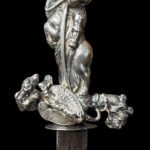
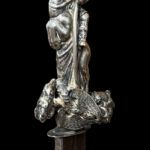
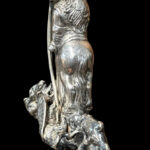
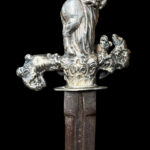

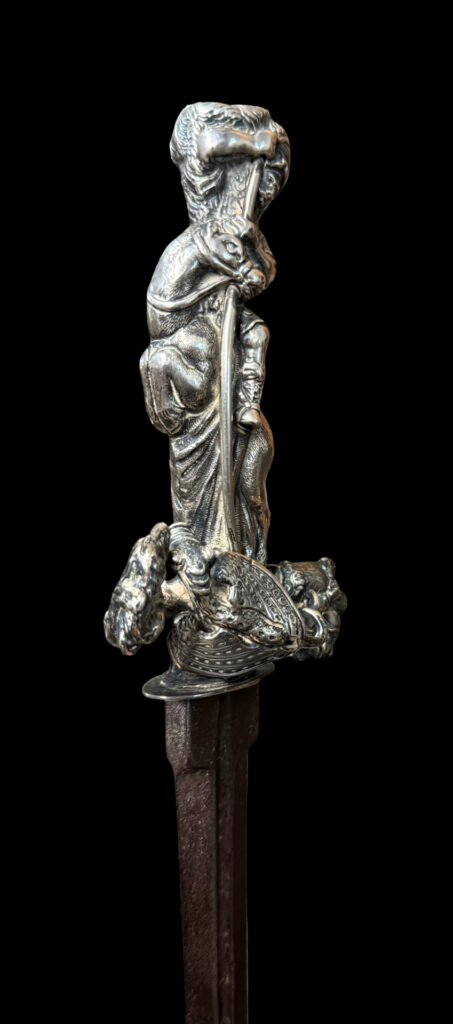
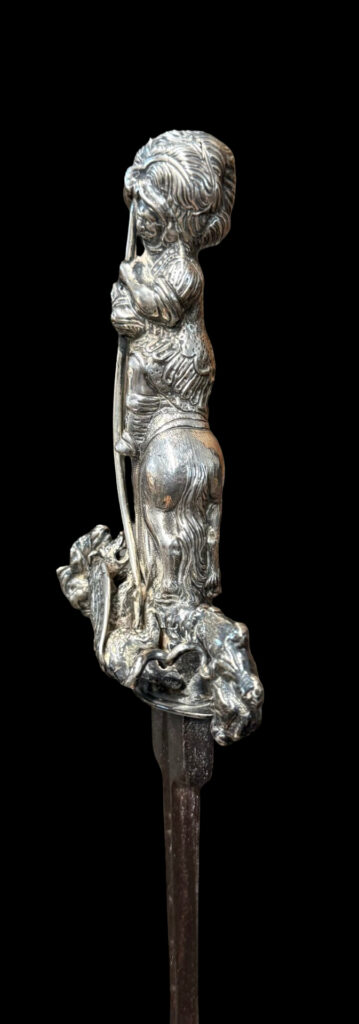
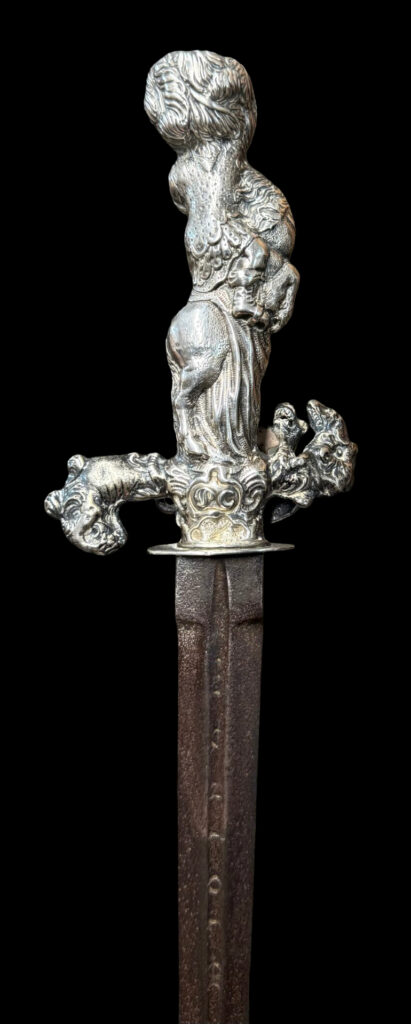
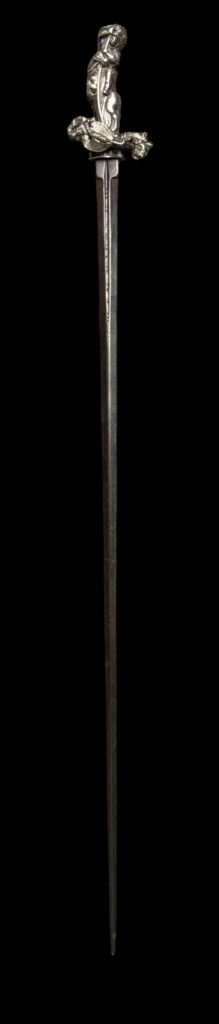
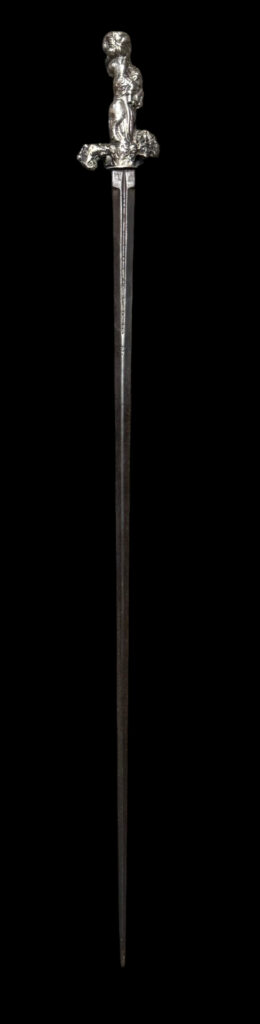
2112) A MASTERFUL SOLID SILVER HILTED GERMAN SWORD WITH THE IMAGE OF ST GEORGE CIRCA 1650:
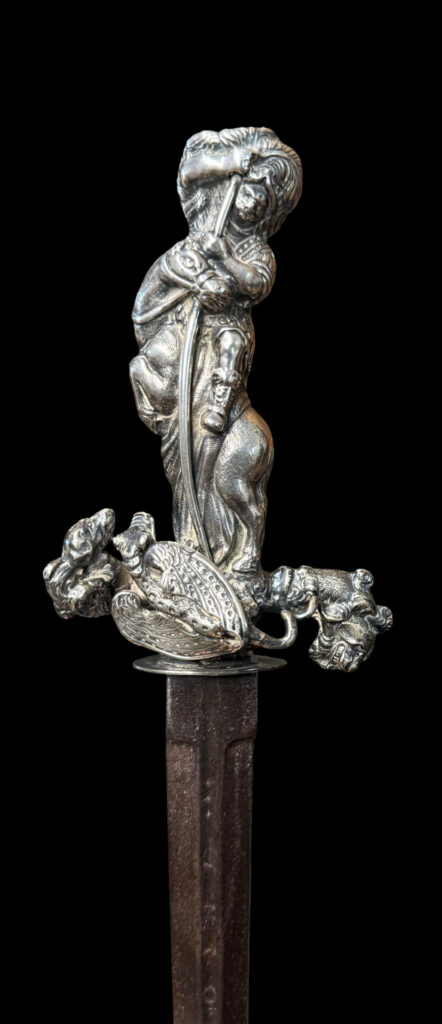
Introduction: A masterful work almost certainly by the famous steel chiseller Gottfried Leygebe of Nuremberg and Berlin. Gottfried Christian Leygebe (1630–1683) was a renowned 17th-century German sculptor, iron chiseller (Eisenschneider), sword cutler, and medallist, celebrated for carving intricate, three-dimensional figures directly from solid iron, silver and steel.
Leygebe gained international acclaim for decorating smallswords, rapiers, and hunting hangers with full-round animal and mythological figures. His pommels, quillons, and knuckle-guards frequently featured crouching lions, hounds, squirrels, monsters, and mythical scenes. Leygebe was widely considered the foremost practitioner of this demanding technique, achieving sculptural depth and fine detail normally reserved for softer metals or wood. Working primarily in Nuremberg and later at the royal court in Berlin, he became one of the most celebrated metalworkers of his era.
The original owner of this sword must have been very wealthy to afford a silver-hilt sword with a chiseled statue of St Michael slaying the Dragon. For the wealthy, a highly decorated Arms and Armor item such as this sword is a symbol of wealth and power, even more than a defensive weapon.
A highly expensive, ornate rapier such as this one was the equivalent of a person in our day and age making a fashion or opulence statement by wearing very expensive jewelry, such as a Rolex or Audemars Piguet watch. High fashion was an essential status and power symbol during the late Middle Ages and the Renaissance. High fashion mattered especially to the mega-wealthy, who wanted to outdo rivals, neighbors, and peers in the fashion arena. Not all wars were fought on the battlefield with swords, lances, and armor. A non-bloody war was in the fashion and status arena. Fashion also extended deeply to Arms and Armor. The phrase… “keeping up with the Joneses” … is not a new 20th-century concept.
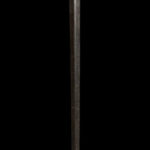
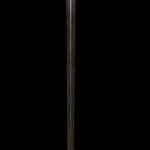
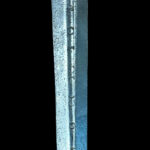
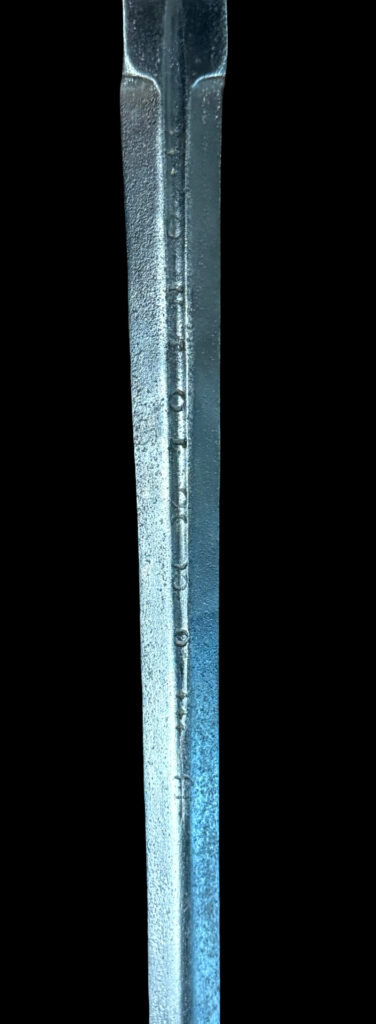
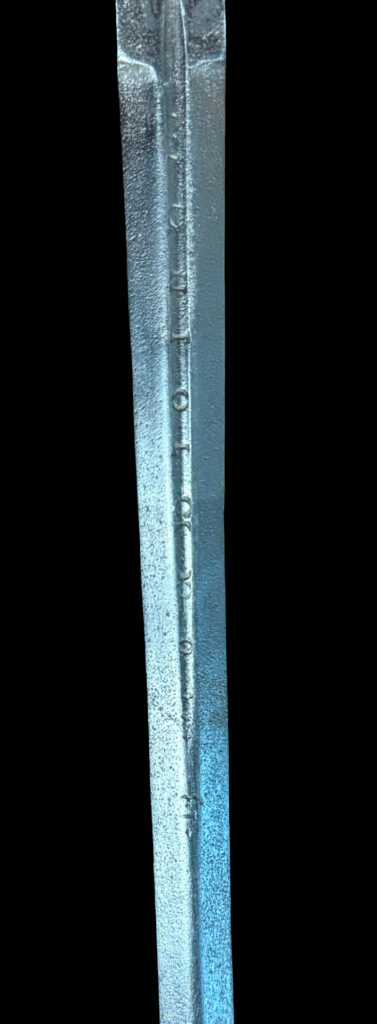
Description: Constructed with a tapering double-edged blade with some patination and edge nicks, incised ‘IN TOLEDO’ on its fuller on both sides of the forte, silver hilt cast and chased in the round as the figure of St. George on horseback spearing the dragon beneath him on one side, recurved quillons each formed as a hound amid foliage and including the initials ‘PC’ in a cartouche on the inside.
Provenance:
-Peter Dale Ltd, London, 1989
-Olympia Auction, December 2025, Lot #47.
-A prestigious American collection.
Approximate length: 38.75
Condition: Very good.
Discussion: In an age lacking effective policing, the private citizen was forced to protect himself from society’s criminal dregs. The weapon of choice was the rapier from the middle of the 16th to the end of the 17th century. The rapier is a simple yet highly effective sword against non-armored opponents. The rapier was primarily a thrusting weapon that could inflict serious injury to an adversary’s vital organs with minimal effort. It was also an exceptional slashing and cutting weapon; however, the slash was not as lethal as the thrust. The slash was used more as a feint to set up a finishing thrust. The slash was also a dire warning to a would-be assailant of the horrors to quickly follow if he chose not to acquiesce.
Because fencing is more of a thrusting art, it became commonplace throughout Europe to have as long a blade as possible to obtain an advantage. This extravagance in length reached the point that municipalities passed statutes regarding the allowable lengths of blades. Those in violation had the misfortune of having their rapier‚ blades cropped at the tip at the city gate to comply. One example of these statutes is from an English Royal Proclamation on March 17, 1557. The French adopted the phrase “espee rapiere” by 1475, which was later shortened to simply “rapiere.” The English, in 1505, spelled it”rappyer.” The Giles Duwes English/ French dictionary of 1532/3 adopted the rapier definition as “Spannyshe sworde”.
By 1550, the term rapier had been adopted to describe a slender, sharply pointed sword designed for thrusting, cutting, and slashing attacks. The rapier now consisted of a hilt protected by a handguard. The Earliest Illustration of this sword Typology is in a 1588 portrait of John Shirley, currently housed in the Metropolitan Museum of Art (#51.194.2). Also illustrated in a portrait of Luccio Foppa circa 1585 by Giovanni Antonio Figino.
Comparable: Walters Art Museum, Accession Number 51.1387.
Literature:
-S. A. Bruhn, Der Schwertfeger Gottfried, 1945; and A.V.B.
-Norman, The Rapier & Small-Sword, 1460-1820, 1980, pp. 327-328.
Conclusion: you are acquiring not just a piece of Renaissance/Baroque arms and armor but also a masterful work of art chiseled from silver by a master of his day. Truly a unique opportunity. Don’t wait; swords like this seldom make it to the collector’s marketplace. ACT-NOW!!!
This is a rare opportunity. ACT-NOW!!!
All my items come with the following:
–Free shipping.
–10-day review period.
–Certificate of Authenticity.
– Free autographed copy of my book if you do not have one.
– In the event of an international shipment, we will help assign the lowest correct Customs tariffs, so you pay the least as little as 5% or even nothing.
I believe you will be very pleased. ACT NOW!!!*