2092 Morion
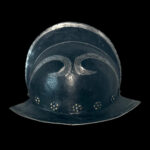
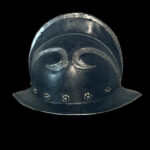
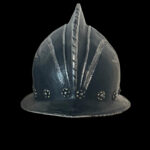
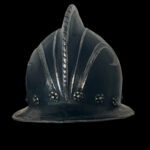
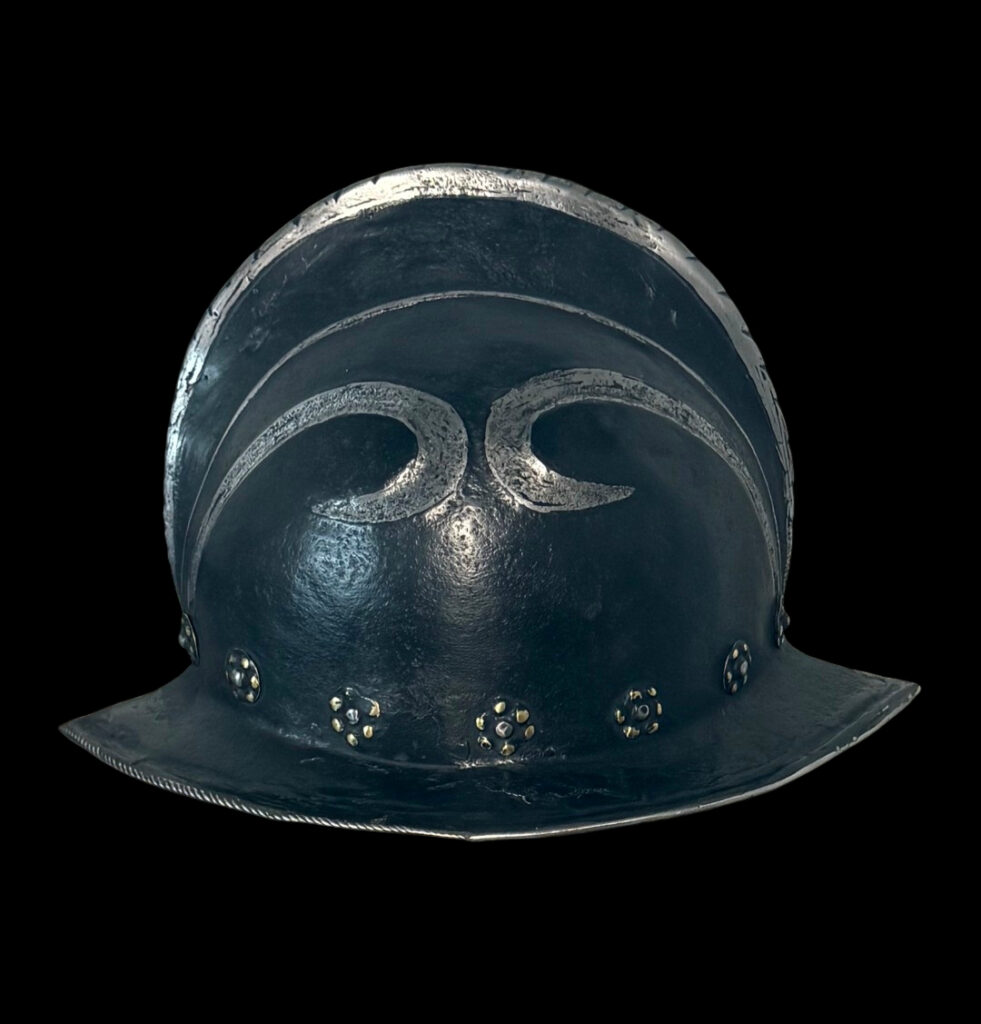
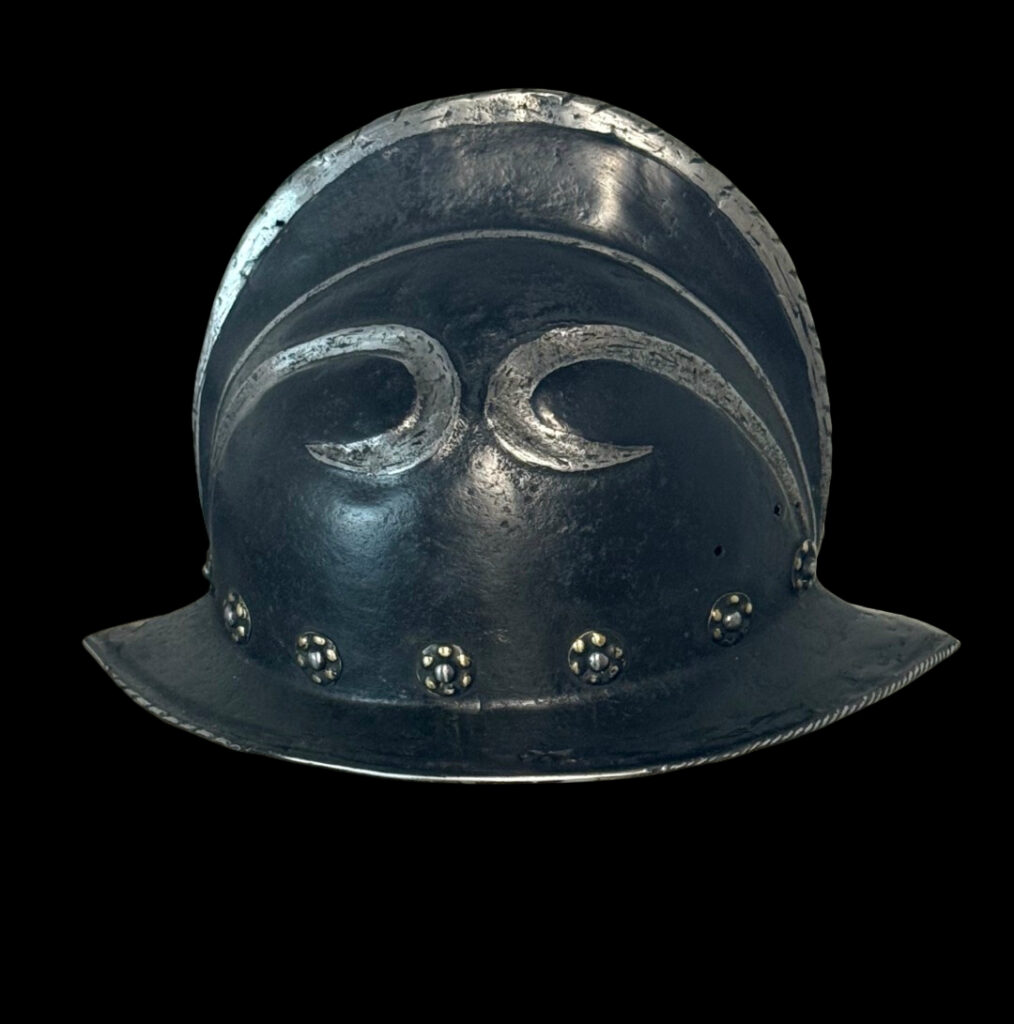
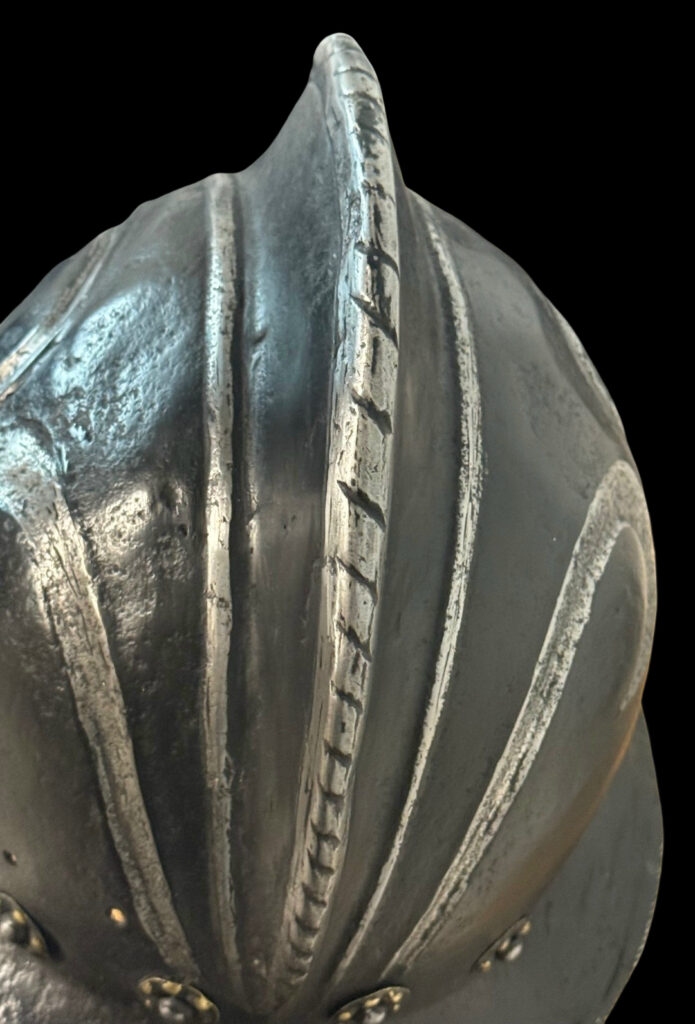
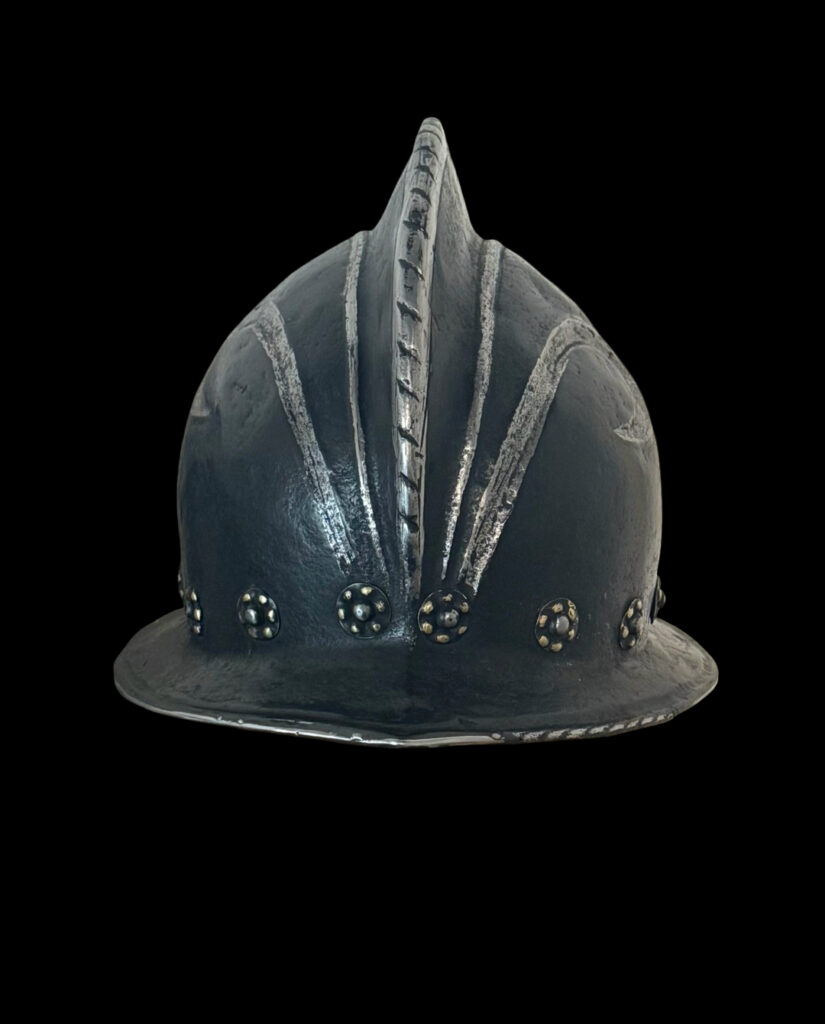
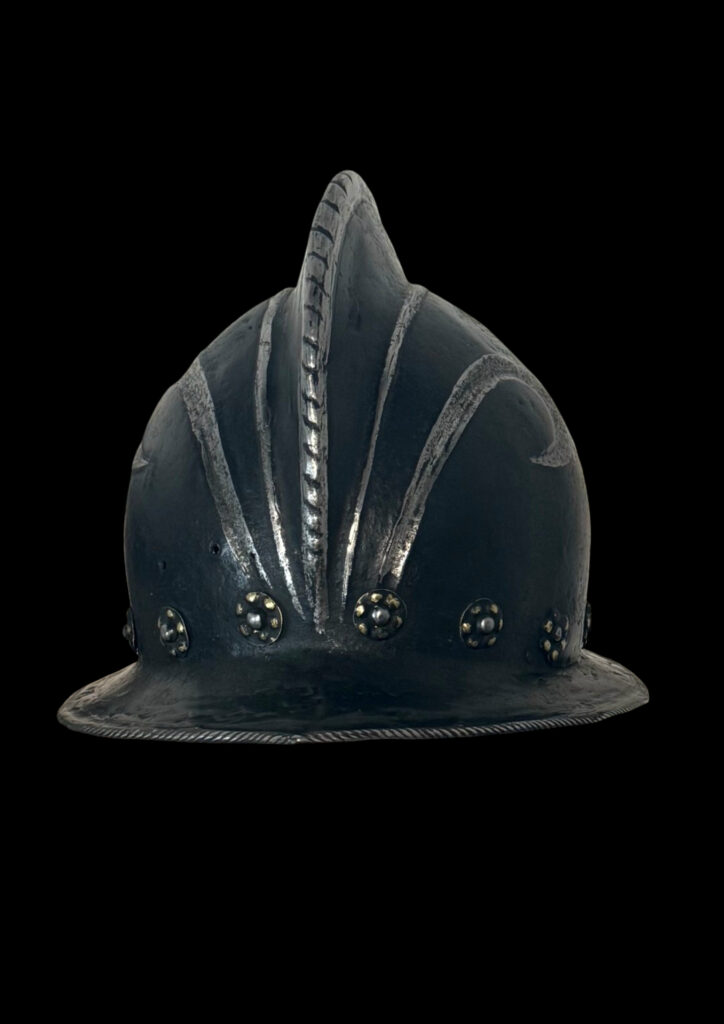
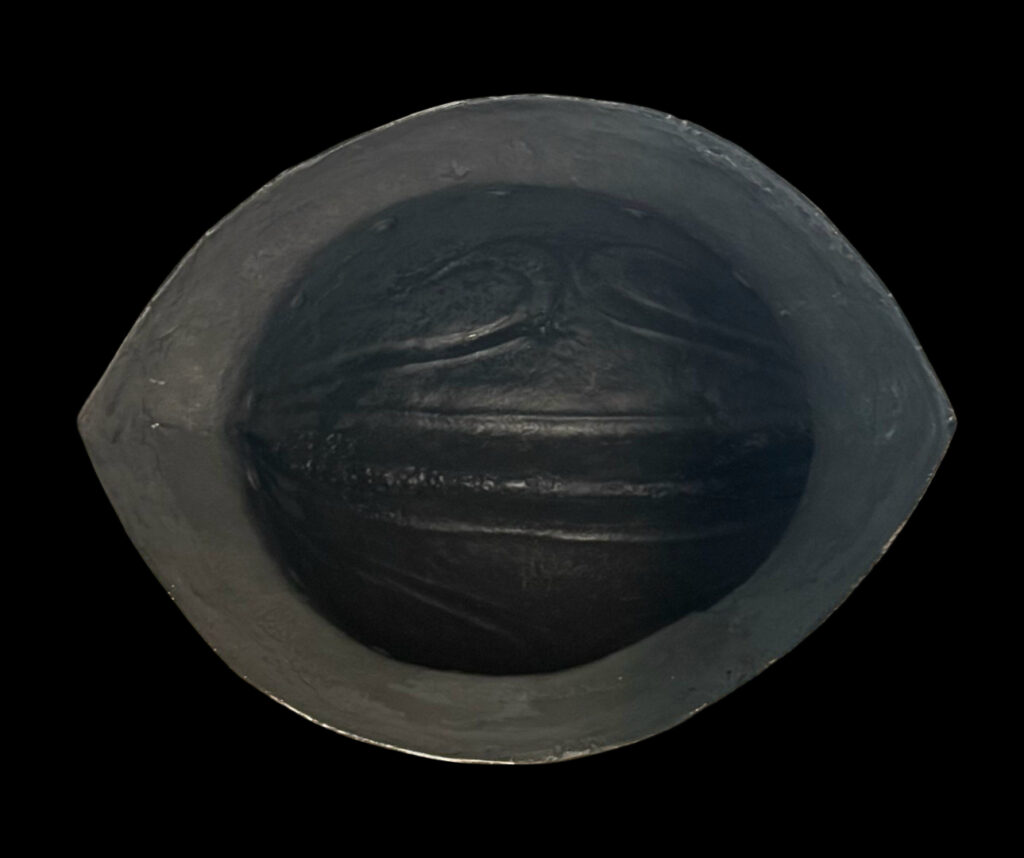
2092) RARE EMBOSSED EARLY ITALIAN MORION CIRCA 1550:
Introduction: Early Italian morions circa 1550 are quite rare and highly sought after by hardcore enthusiast collectors. Unlike later comb morions that commonly appear in the collector’s marketplace, these are seldom available for acquisition. As a result, they carry a premium.
Early morions from this period are distinguishable by their low comb and embossing. The lower the comb, the earlier the morion. They are usually smaller than the later versions and were made in much smaller quantities. Morions during this early period were made in much smaller quantities, which adds to the rarity.
One of my favorite features of early morions is that the tips of the brim at the front and back go down, as opposed to up on later morions, giving it a much more elegant, earlier, and refined look.
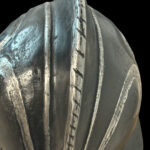
Description: Constructed in two pieces, with a rounded skull crown that curves down over the ears on each side and rises to a low roped medial comb (working life patch on the inside); an integral brim turned down on each side and slightly lowered to a point at the front and rear. The brim edge is partially decorated with roping; the other non-roped areas have restored edges. The base of the crown is encircled by lining rivets fitted with rosette washers of brass (replaced), with two holes for a missing plumb holder. The helmet is embossed in white metal with black in reverse.
Condition: Good for such an old item, expertly conserved/restored to museum standards.
Provenance: A European collection.
Discussion: The comb morion was popular in Western Europe from 1540 to 1620. The Italians generally preferred the comb morion. Conversely, the Germans preferred the burgonet.
The comb morion shape changed to adjust to the changes in warfare, military tactics, offensive arms, and fashion. Men-at-arms, palace guards, city guards, merchants, and explorers wore the morion. The morion was the Renaissance successor to the Medieval kettle hat. The morion was initially used in Western Continental Europe, mainly Iberia (Spain), Burgundy (France), and Flanders (Belgium). The primary advantage of the morion was visibility. Therefore, the largest proponents of the morion were archers and musketeers.
The morion made aiming much easier by increasing the shooter’s vision without impairment and by increasing peripheral vision. In the 1606 inventory of the Saxon Armory in Dresden, over 60 years after the morion’s introduction, it was referred to as the Spanish Shooting Helmet (Spanische Schützenhaube).
The morion evolved as early as 1540 from the Gothic Kettle/War Hat. From the third quarter of the 16th century, the comb morion was commonly provided as part of the corslet in Germany. A corslet is a type of half-armor widely worn by German infantrymen throughout Southern and Western Europe.
Conclusion: Collectors with an early taste for Arms and Armor seek out this typology of morion. Yes, it’s not in mint condition, but if it were, it would be in a museum long ago or priced at several times the asking price. Dollar for dollar, this is a great value and a prestigious piece for your collection.
ACT NOW and avoid disappointment. All my items come with the following:
–Free shipping.
–10-day review period.
–Certificate of Authenticity.
–Autographed copy of my book.
– In the event of an international shipment, we will help assign the lowest correct Customs tariff, so you pay the least.