2088 Flail
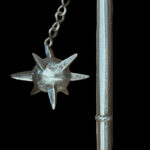
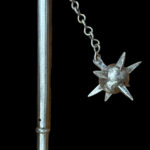


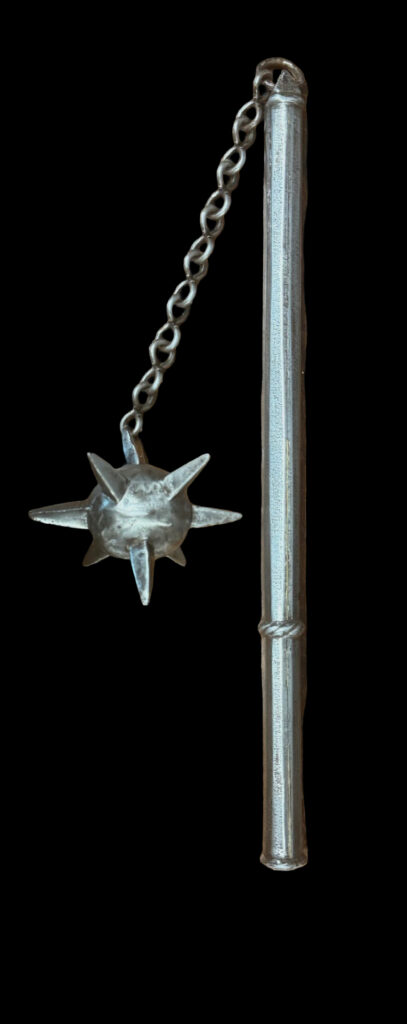
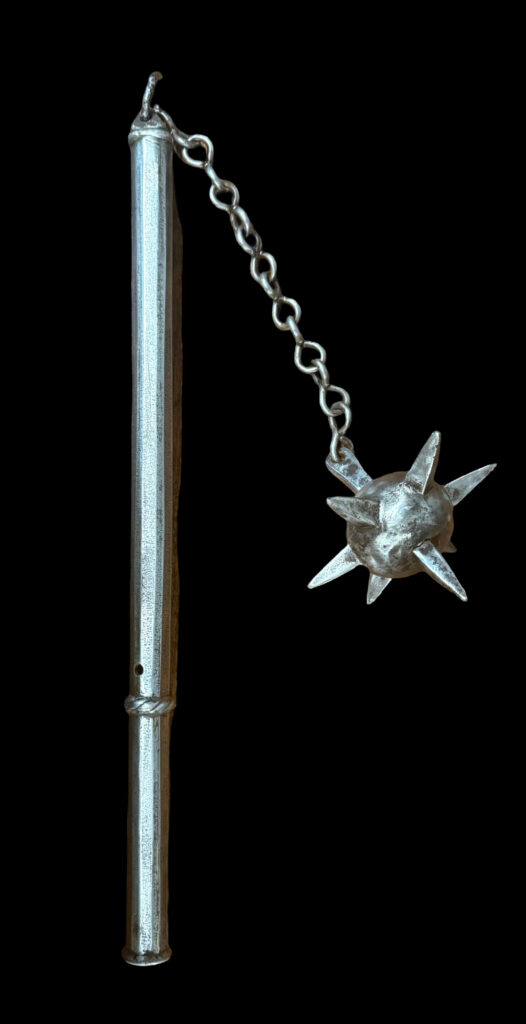
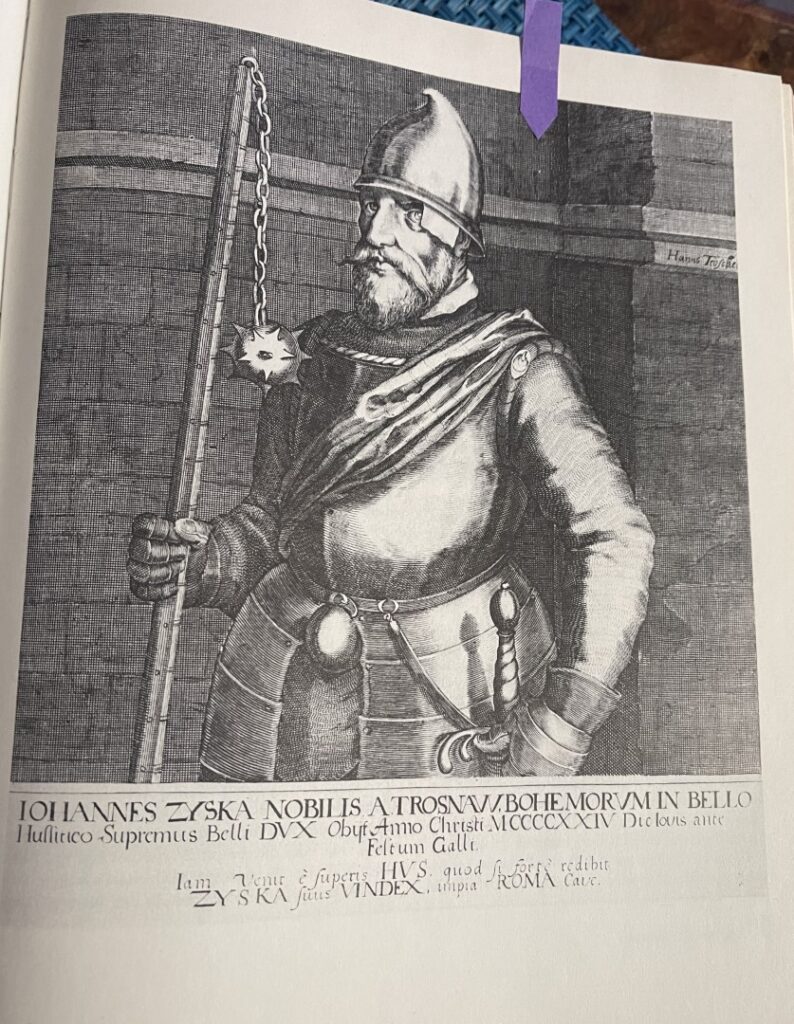
2088) GERMAN / AUSTRIAN KNIGHTLY ALL-STEEL MORNINGSTAR / FLAIL CIRCA 1590:
Introduction: The advantage of a flail in combat is threefold:
1) The spiked striking head can circumvent a shield or other defense because of the attached chain.
2) The tremendous impact created by the leverage of the spiked ball being attached to a haft by a chain and augmented greatly by the momentum of the charging horse.
3) The enormous impact is concentrated on only one or two small spike heads, giving them great penetration upon impact
Discussion: The use of flails as a weapon of war by the knightly class was detailed as early as:
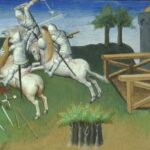
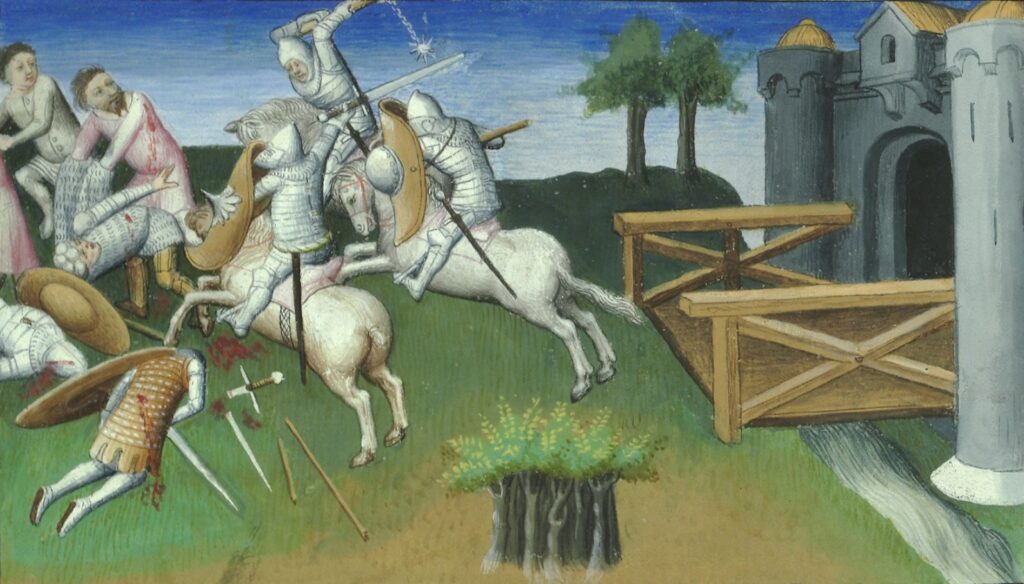
- A) 1410 in The Travels of Marco Polo, written by Rustichello da Pisa, from accounts that he had heard from Marco Polo when both were imprisoned together in Genoa. It illustrates a mounted European Knight using a steel spiked flail to strike an enemy opponent; see pictured.
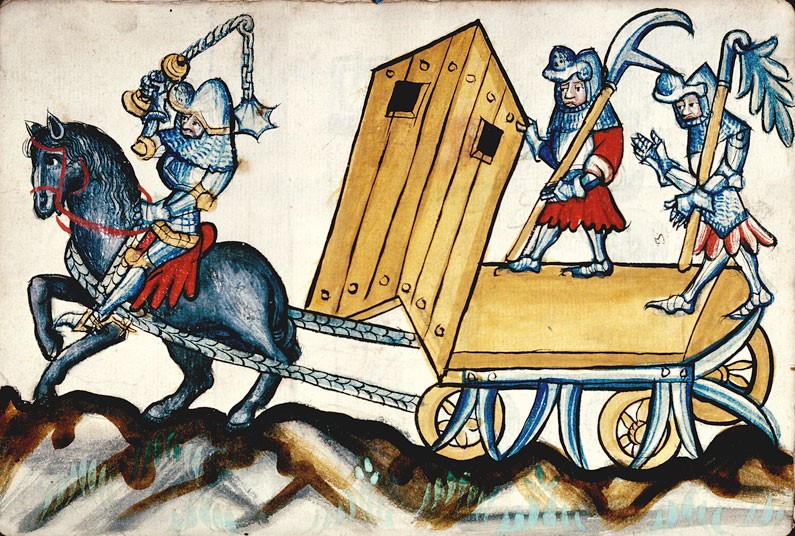
- B) 1420 in Bellifortis, written by Konrad Kyeser, the first fully illustrated manual of military technology and dating to the first quarter of the 15th century. It details a mounted knight at the head of a horse-drawn defensive structure, also with a steel spiked flail.
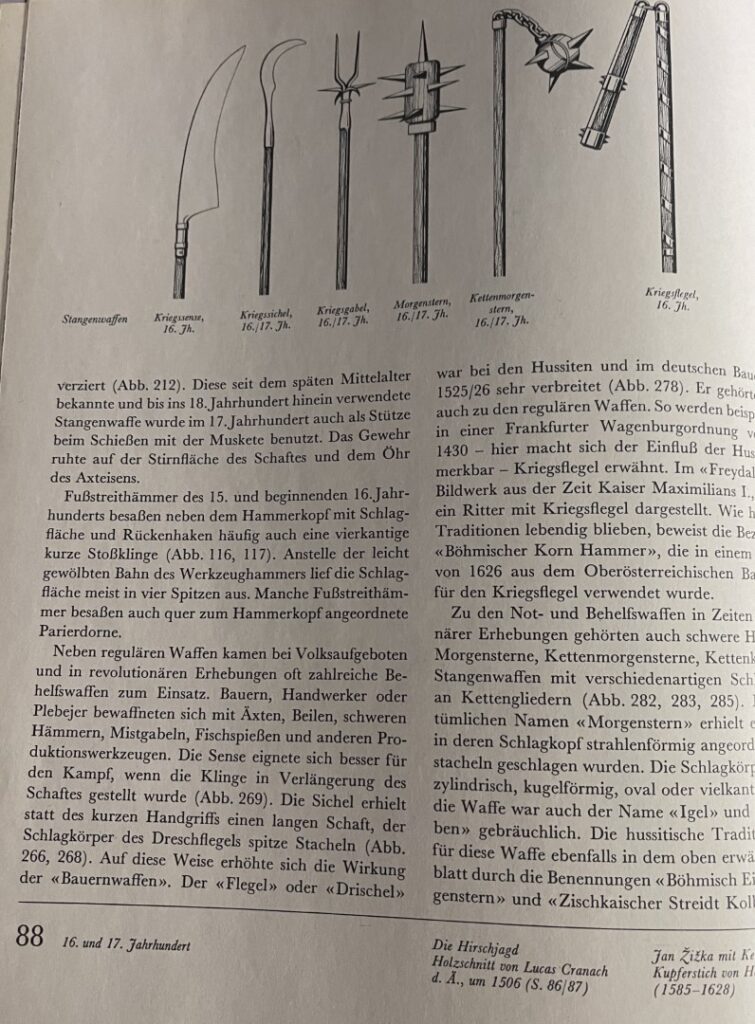
Flails can be a knightly weapon (usually made of steel) made by a master armorer or, in a simpler design, a farmer’s tool/weapon made by the village blacksmith and hafted in wood. Since flails have been used for over 500 years and the technology or design has not changed, at times, it can be difficult to date them. This example under discussion is dated to circa 1590 based on its decoration and superb Knightly construction.
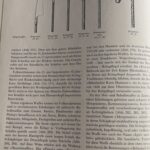
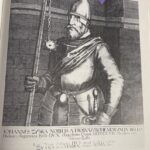
Flails were used for military purposes for many centuries. Some flails had long hafts and were used with two hands. The flail under discussion in Germany was known as a “Kettenmorgenstern,” which translates to “chain morning star.”
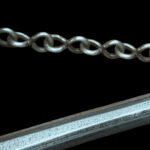
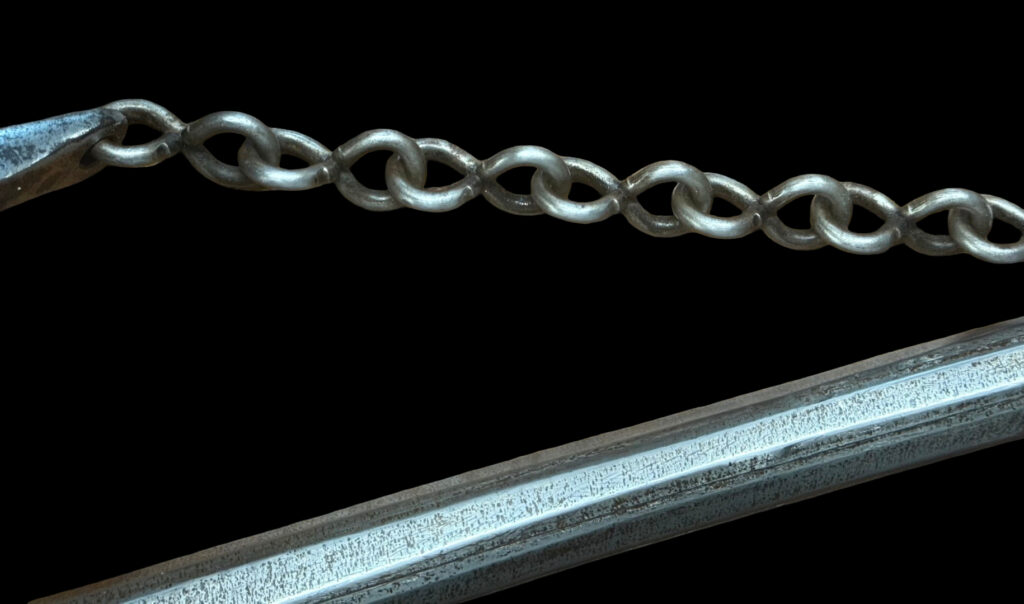
Description: Constructed of a round steel ball with 7 protruding quadrilateral spikes tapering to a tip, the chain is attached by an opening at the top of the steel octagonal haft. An eighth is used to attach a steel chain of 8 double links, which attaches to the steel octagonal haft through an opening at the haft’s tip and is threaded with the first chain link, decorated en suite. A circular rondel upper guard decorated with roping at the edges and a steel butt cap.
Conclusion: This is one of the best-made flails I have ever had. Its construction is superb, and its condition is good. The original owner must have been a very high-ranking knight or wealthy person to commission such an amazing piece. This example comes from a group that I originally acquired years ago. Cleaned and conserved to museum standards. If you want the best, this is it. Priced To Sell!!!*
All my items come with the following:
–Free shipping.
–10-day review period.
–Certificate of Authenticity.
–Autographed copy of my book.
–In the event of an international shipment, we will help assign the lowest correct Customs tariff, so you pay the least.
I believe you will be very pleased. ACT-NOW!!!*