2087 Spear
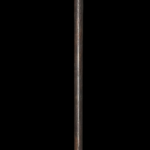
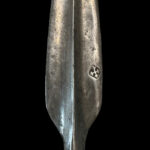
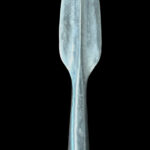
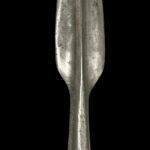
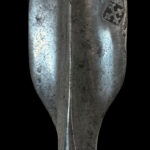
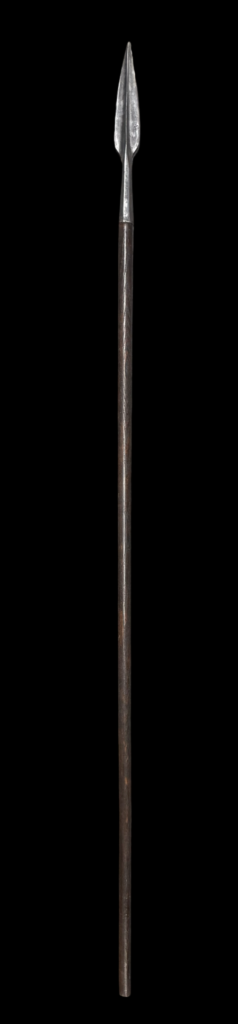
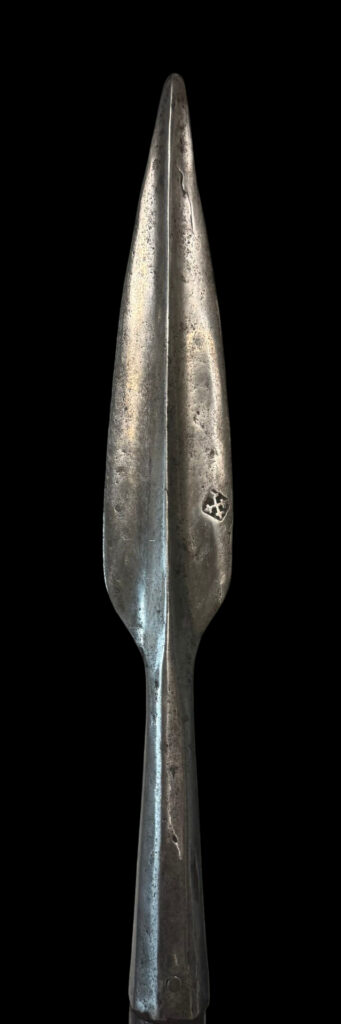
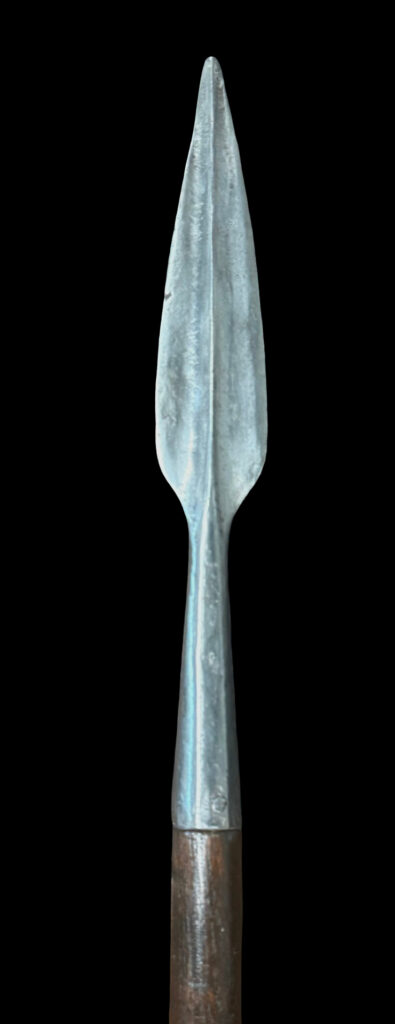
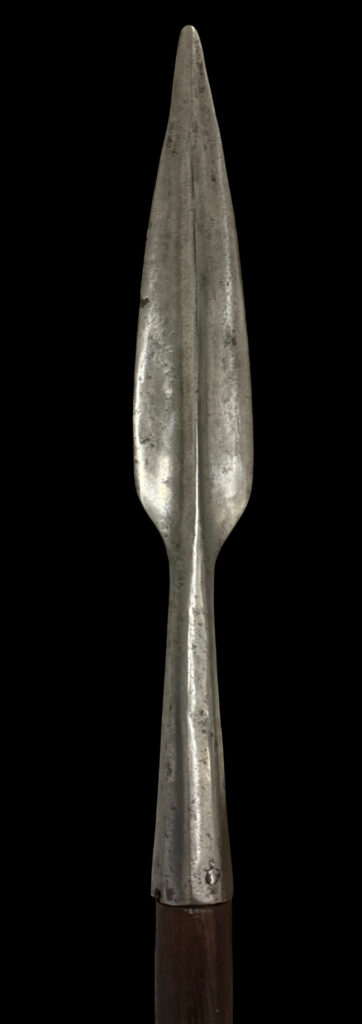
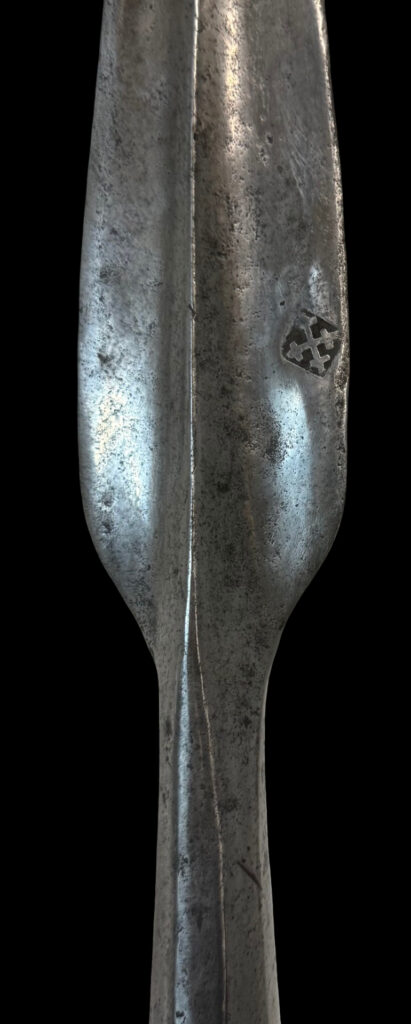
2087) WAR SPEAR CIRCA 1520 WITH MASSIVE HEAD, MAKER’S MARK AND OCTAGONAL SHAFT:
Introduction: The mark stamped into the blade of this spear is a Cross Clechée. It is sometimes referred to as a cross pommee or bottonée, which is historically associated with armorers and bladesmiths from the Bologna or Ferrara regions of Northern Italy.
Spears were mass-produced for the infantry with low-carbon steel. When an army disbanded or a war ended, unadorned spearheads had no sentimental or artistic value. Consequently, they were treated as raw scrap metal. Over the centuries, millions of simple spearheads were melted down and re-forged into everyday agrarian tools like plowshares, scythes, nails, or knives.
Discussion: The spear was likely one of the earliest human weapons. It was first developed to hunt animals during the Paleolithic era. In its most basic form, the spear consists of a sharpened stick. Eventually, people replaced the sharpened wooden tip with a stone spear point for more effective stabbing.
Spears evolved and varied, with larger spears used for stabbing and smaller, lighter ones for throwing. Spears developed into the ultimate weapon of war due to their effectiveness and ease of learning their proper use. In the 1300s, the spear was known in German as the “langspiess” or in English as the long spear. As full-plate armor evolved, mail and cuir-bouilli were no longer used, and the spearhead also evolved to a deeper, penetrating quadrangular shape.
By the late Middle Ages, the spear had evolved into the pike. Pikes were first used by the armies of Alexander the Great in the ancient world but fell out of use for many centuries. The pike was an exceptionally long spear, measuring some 15 to 18 feet in length, with a sharp steel head used for stabbing. Pikes were used in large numbers by groups of pikemen on the front lines. The pikemen would create a wall with their long pikes and effectively stop a mounted cavalry charge. The cavalry charge was the doomsday tactic of its time. Pikes were strictly used as a deterrent to the cavalry. They were not effective combat weapons; they were clumsy and only functioned at long distances.
In Grimmelshausen’s Springinsfeld text of 1676, he states: “He who kills a pikeman that he could spare kills an innocent. A pikeman harms nobody that does not run into the pike by himself.” Pikemen held their ground, forming a wall of sharp pikes to prevent the oncoming charge of cavalry and infantry.
The Swiss, in particular, were known for their successful use of pikes. Pikes were used as late as the Napoleonic Wars, serving as a line of defense against men armed with muskets. It could be argued that pikes were used as early as the Macedonian phalanx, circa 359 BC. However, the golden age of pike warfare to stop a cavalry charge was from 1450 to 1675.
Total length: about 87 inches.
Condition: Very good; wooden haft, an old working-life replacement.
Conclusion: This is a weapon of European Renaissance warfare. For a nominal price, you can add an important historical weapon that greatly influenced battle outcomes. Very reasonably priced with free shipping for a quick sale. This is only the second one I have offered in 35 years.
ACT NOW… so you won’t be disappointed!!!*
All my items come with the following:
–Free shipping.
–10-day review period.
–Certificate of Authenticity.
–Autographed copy of my book.
–In the event of an international shipment, we will help assign the lowest correct Customs tariff, so you pay the least.
I believe you will be very pleased. ACT-NOW!!!*