
2085 Antique Sword

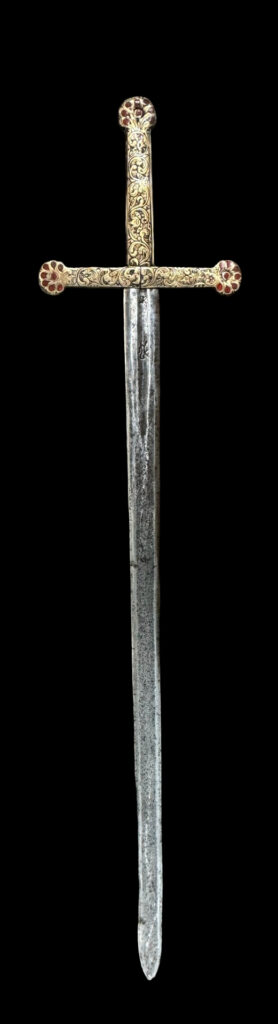
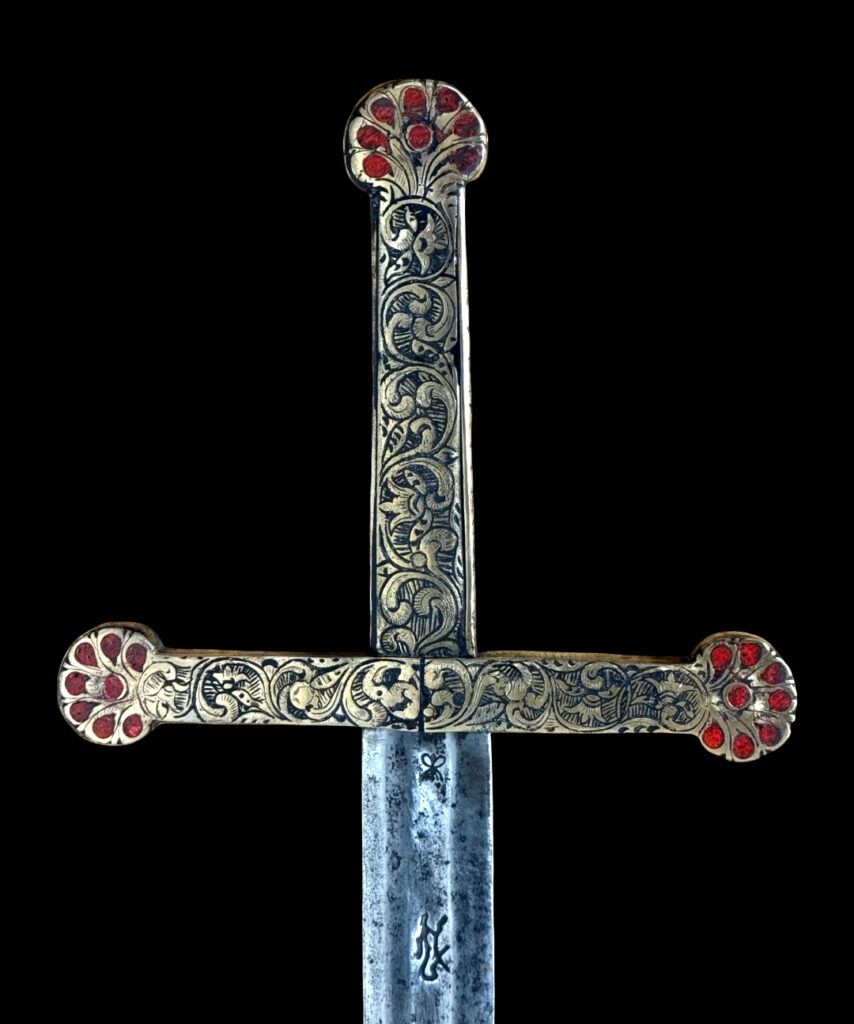
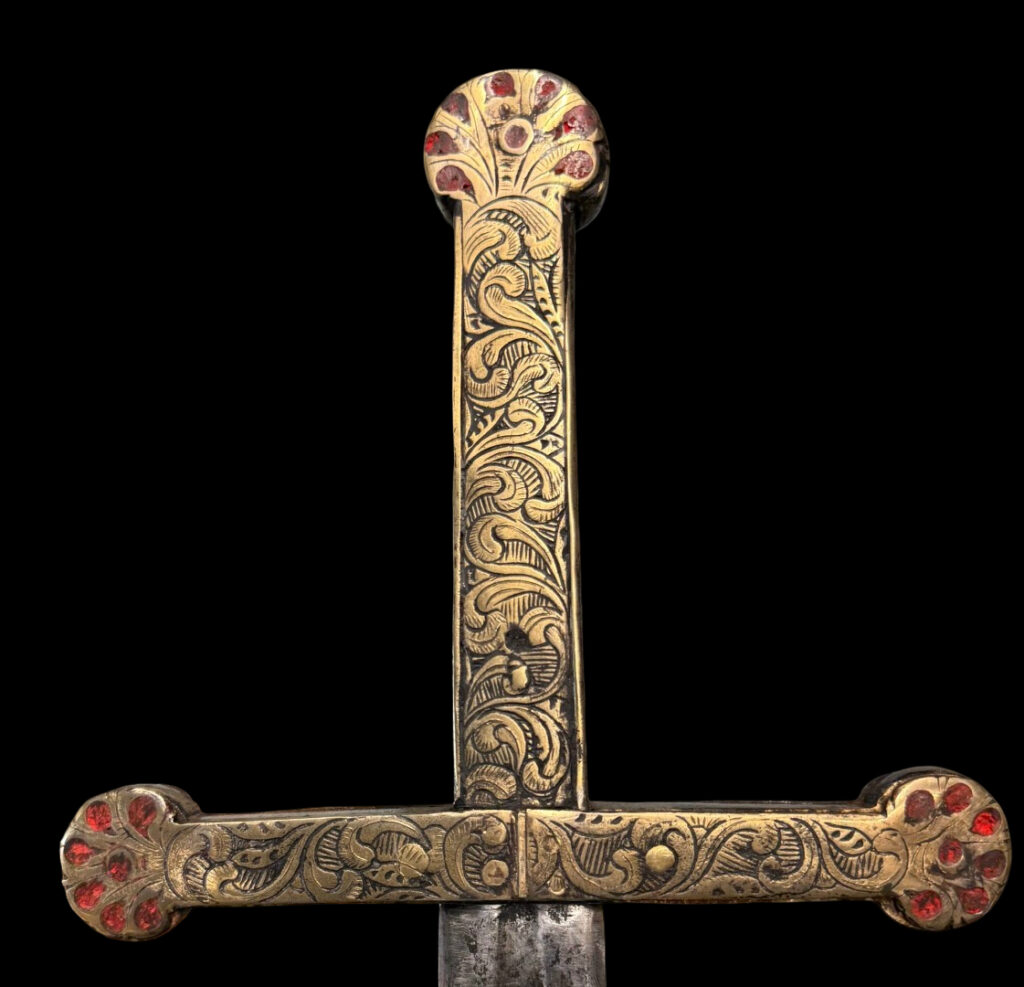
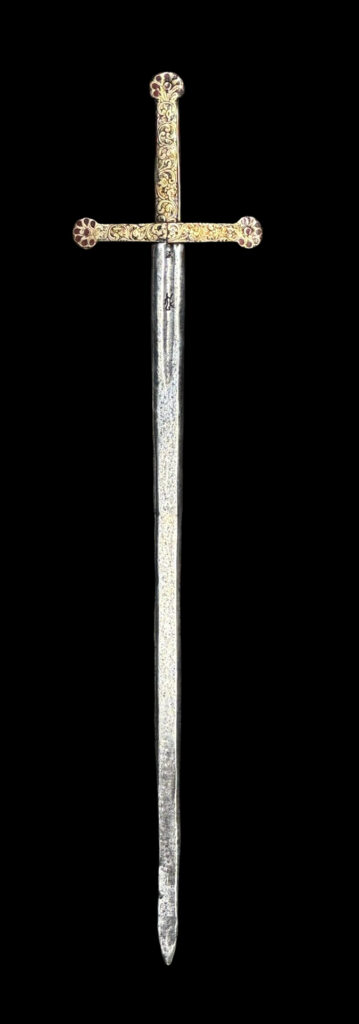
2085) TWO-HAND DECORATED GERMAN BEARING SWORD CIRCA 1580:
Introduction: This magnificent German Bearing Sword is a highly rare and prestigious example of a Renaissance ceremonial weapon. Ceremonial/Parade/Bearing swords were primarily intended for religious, court, parade, and other social functions. Swords of this type tend to be very ornate, expensive, and very large.
These swords were created to look very pretty and were not utilitarian weapons. They were usually not intended for fighting, although some fighting swords were later repurposed (modified) to become ceremonial swords after their working life.
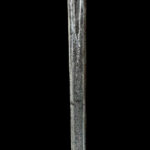
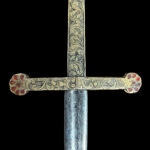
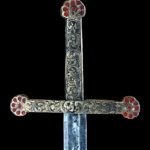
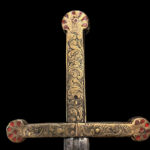
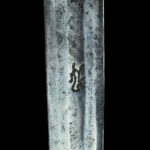
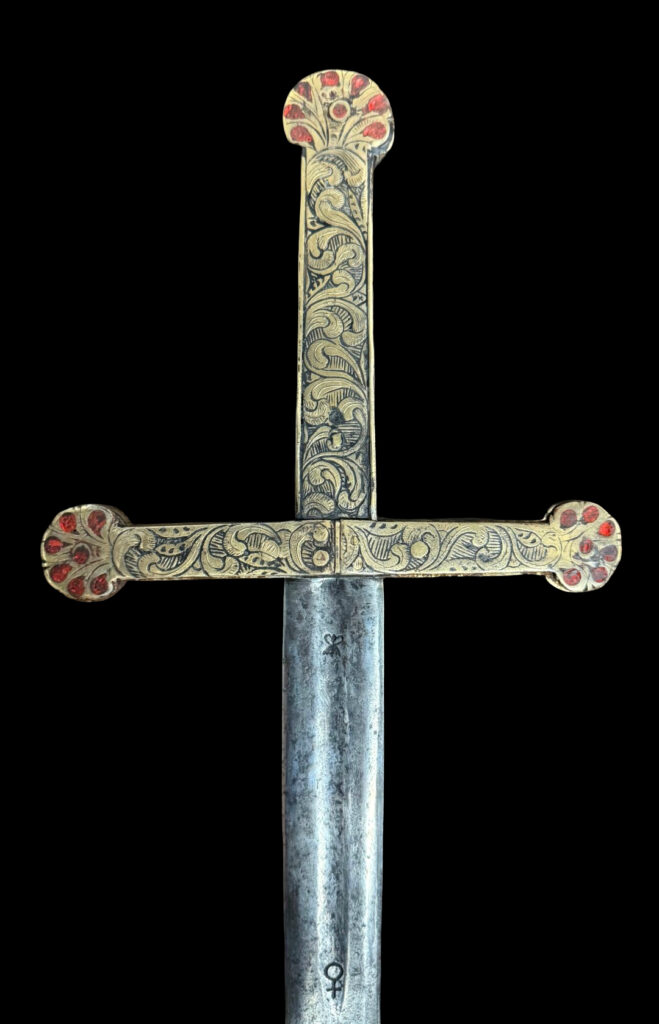
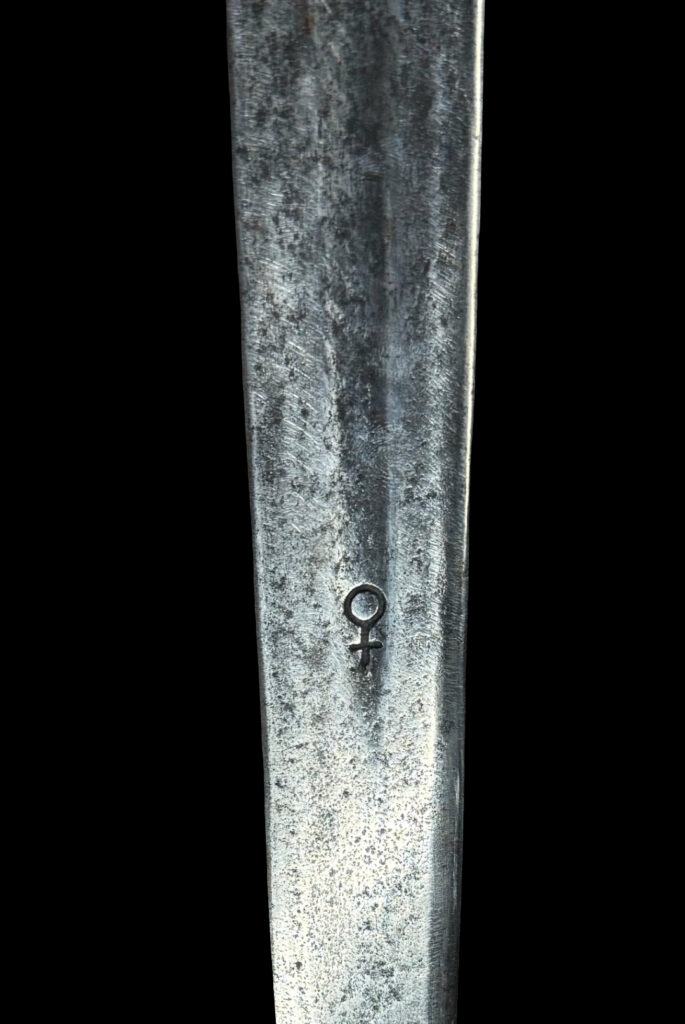
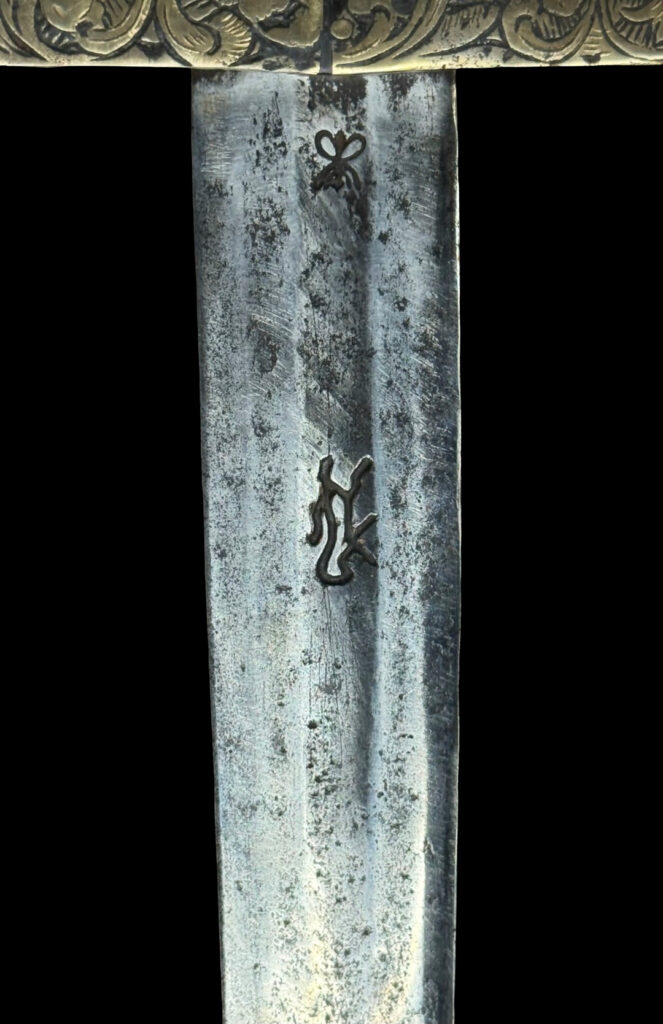
Description: Constructed with a flat, structural, cross-shaped quillons (crossguard) meeting at right angles. The hilt design balances aggressive presence with highly intricate artistry. The entire surface of the brass/gilt guard and pommel is adorned with deep, classical Renaissance scrolling foliage and stylized floral patterns. The fan-shaped terminals of the crossguard and the pommel are punctuated with teardrops and circular stone settings. Filled with contrasting red semi-precious stones (a luxury feature typical of elite court pieces), they draw the eye immediately to the hilt’s perimeter. A wide double-edged blade tapering slowly to its tip, with a short fuller decorated with the “Running Wolf” of Passau or Solingen, Germany, and with a deeply struck “Venus” symbol”, which historically doubled in European blade smithing as a maker’s mark or an alchemical sign denoting specific metal grades or talismanic protection.
Provenance: From a fine German collection started after WWII.
Comparables: European armories with bearing swords.
–The Dresden Armory (Rüstkammer) – Dresden Castle, Germany.
-The Royal Armouries – Tower of London & Leeds, United Kingdom.
-Wawel Royal Castle – Kraków, Poland. –
-The Imperial Armoury (Hofjagd- und Rüstkammer) – Vienna, Austria
Length: 43 inches.
Condition: Very good.
Discussion: Bearing swords, unlike combat swords, were balanced for static display rather than agile movement. They were deployed in very specific contexts:
Royal and Ducal Processions: Carried by a designated, robust court officer called the Sword-Bearer. He walked directly ahead of the King, Prince-Elector, or Emperor. The sword was held strictly vertical and unsheathed (point-up) to catch the light and command public reverence.
Coronations and Investitures: During the formal crowning of monarchs or the elevation of a Duke, the bearing sword was presented as a legal token of the ruler’s “Power of the Sword“ (jus gladii)—their absolute right to execute high justice and defend the realm. Civic Triumphs and Festivals: Major wealthy Renaissance city-states (like Nuremberg or Florence) paraded civic bearing swords on annual holy days or to welcome visiting foreign dignitaries, projecting the city’s independent status.
Feast Hall Displays: When not being actively paraded, these weapons were hung prominently behind the high table or in the throne room to serve as permanent, imposing decorative fixtures of state power.
Conclusion: This is an elegant sword that is, in my opinion, museum quality. All collections should have the iconic processional sword as a centerpiece. This example is very attractive not only for its condition but also because it has a wide blade marked blade. An amazing piece for any collection. Owner says, sell it today!!!*
I believe you will be very pleased. ACT-NOW!!!*
All my items come with the following:
–Free shipping.
–10-day review period.
–Certificate of Authenticity.
–Autographed copy of my book.
–In the event of an international shipment, we will help assign the lowest correct Customs tariff, so you pay the least.