2063 Antique Hammer
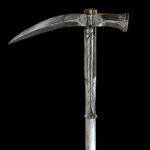
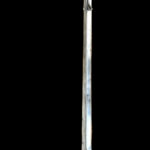
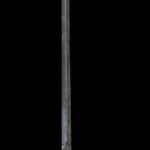
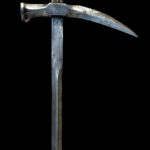
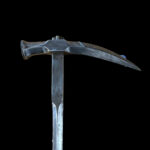

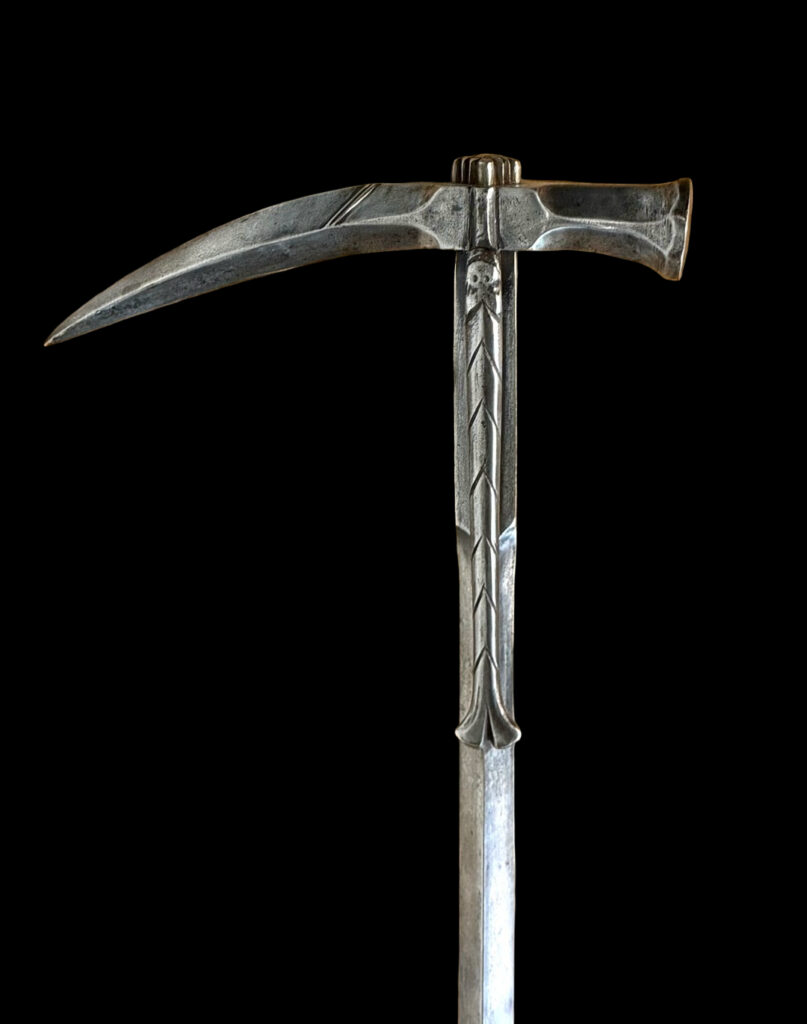
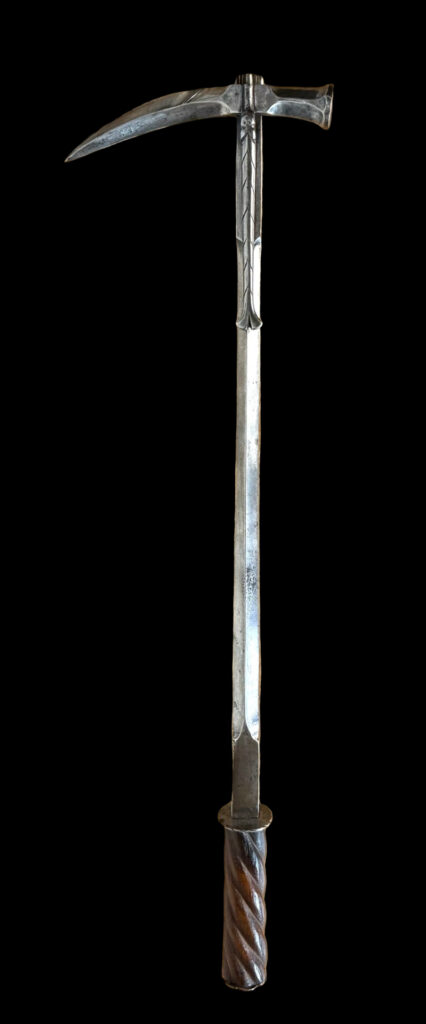
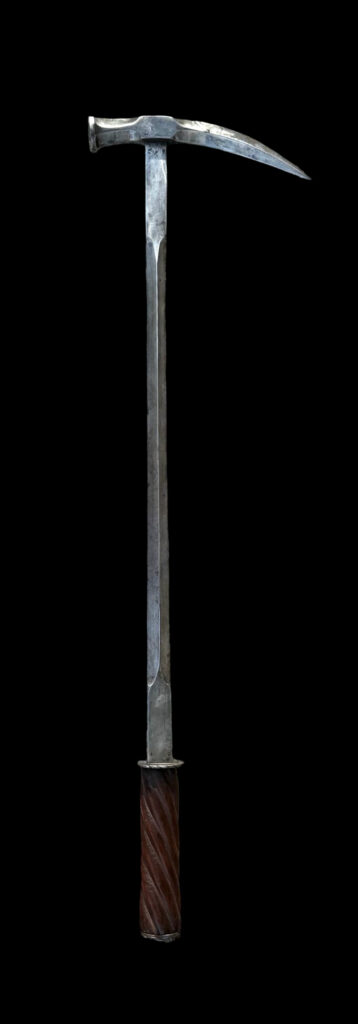
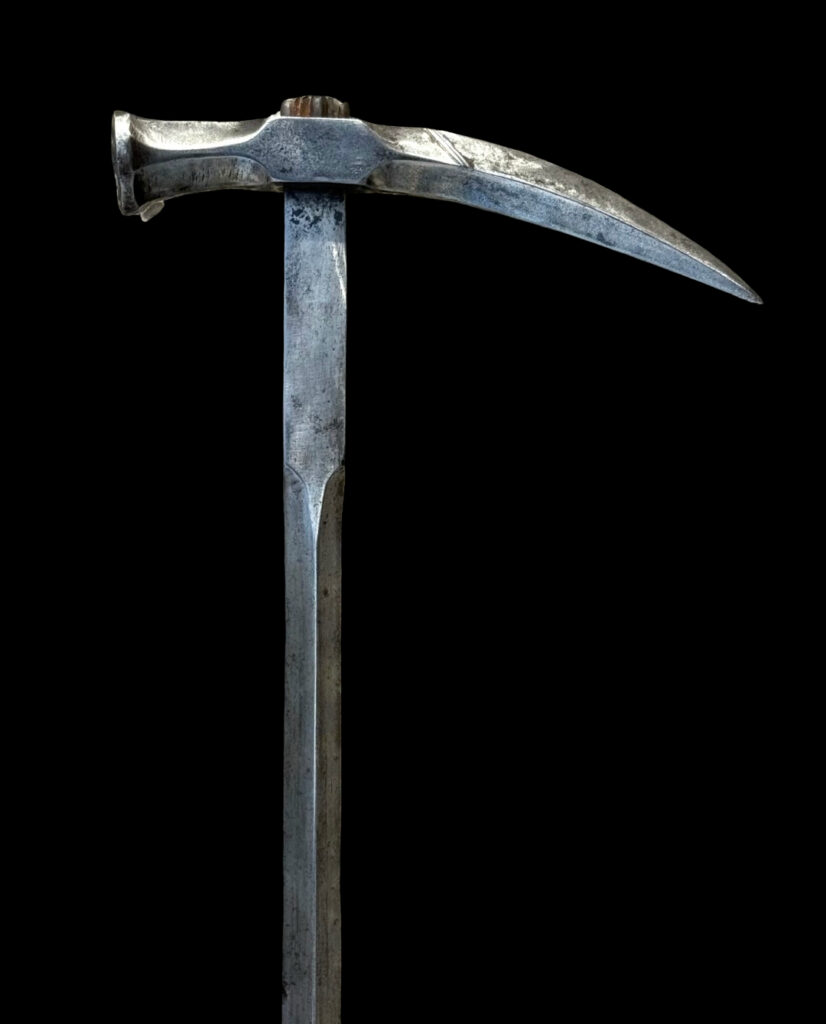
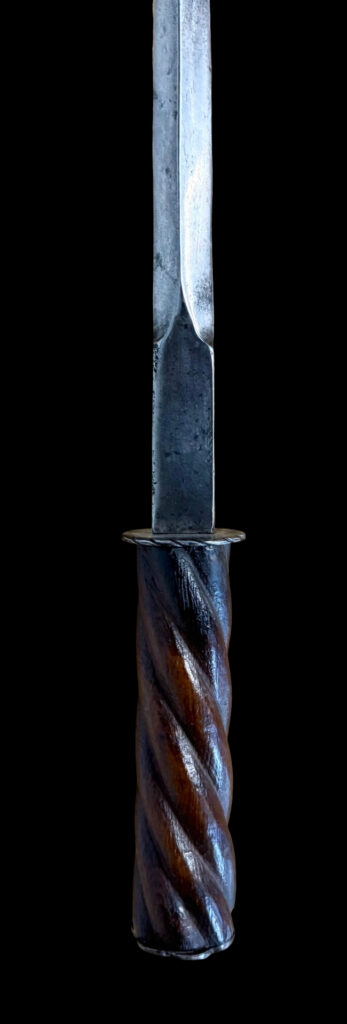
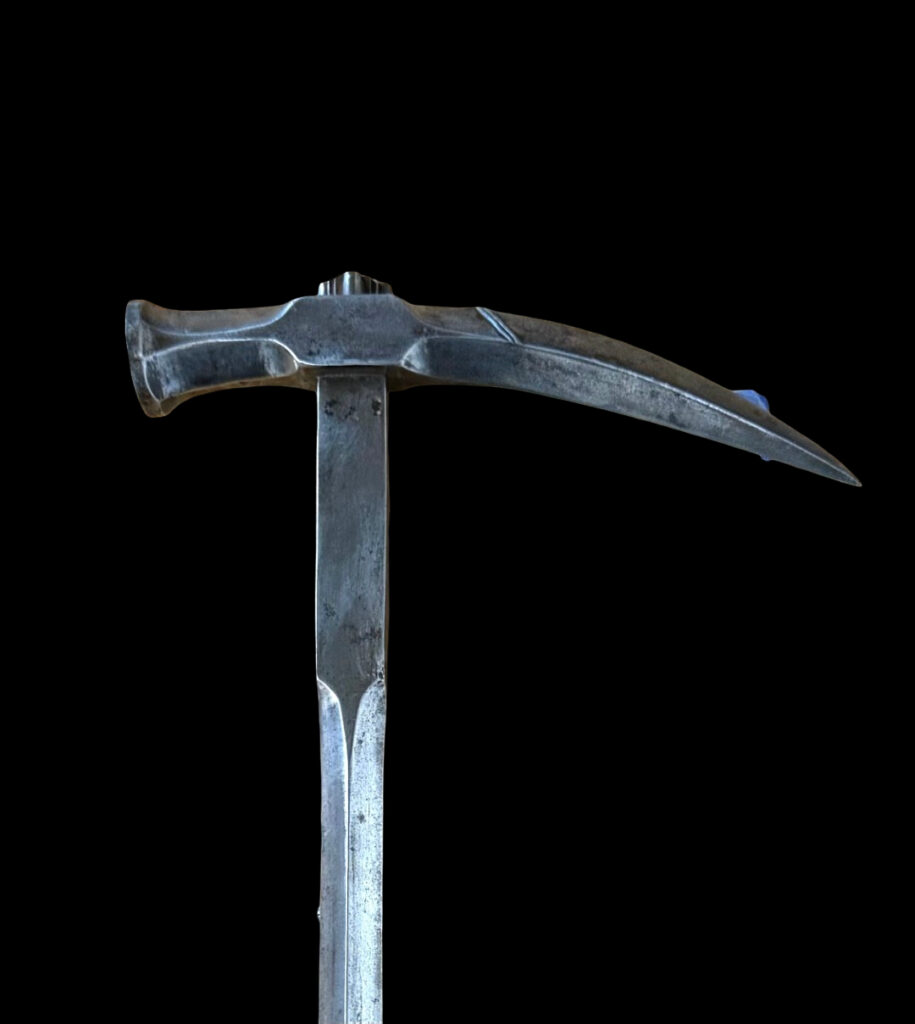
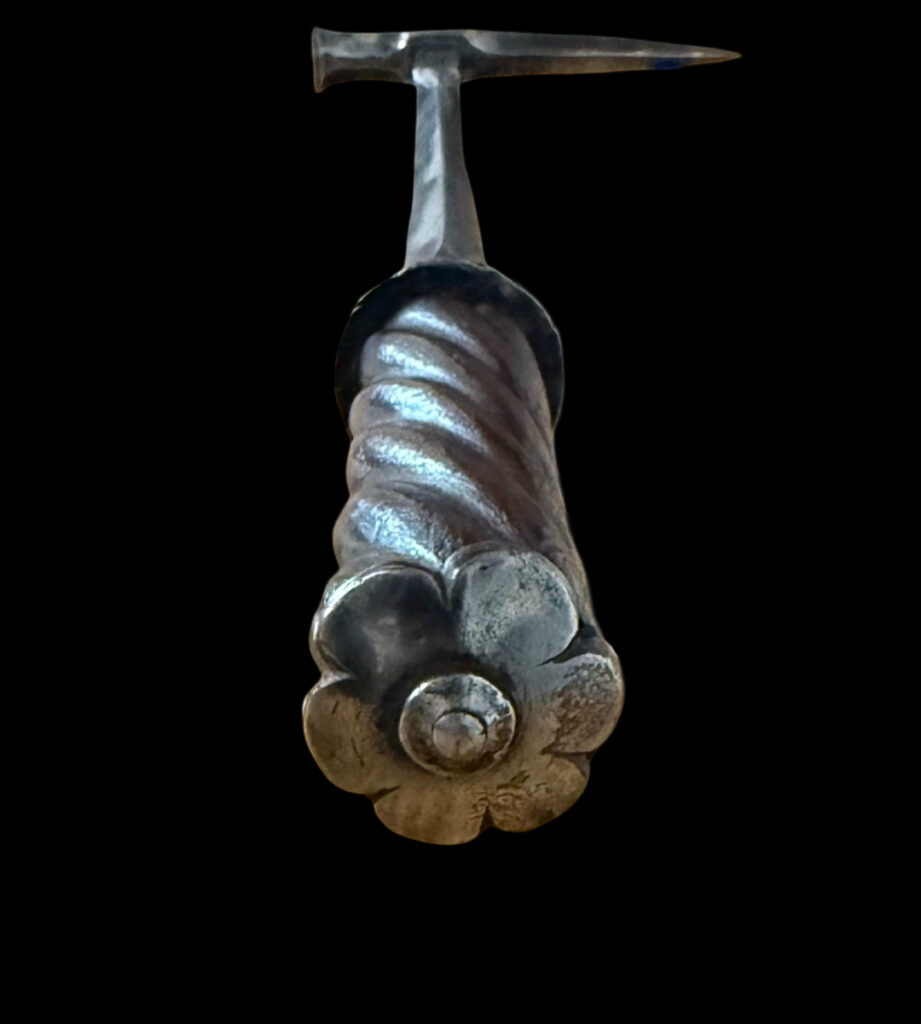
2063) SUPERB GERMAN WAR HAMMER, CIRCA 1580 MUSEUM QUALITY:
Introduction: Undoubtedly, the original owner of this superb and exceptional German war hammer was wealthy or a high-ranking officer. I am proud to say that this war hammer hung in my personal collection for several years. This typology of war hammer is representative of Western Europe from 1550 to 1600. On the surface, this masterpiece may appear like most war hammers. However, look carefully at the exceptional workmanship and attention to detail. It’s preserved in remarkable museum condition and would make a superb addition to any collection.
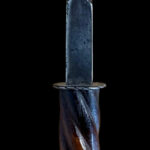
Description: Constructed in steel with a distinctively long, quadrilateral haft set in an askew position, a steel haft traversing through the center of the hammer to secure it to the haft. The area at its base, where it enters the grip, is rectangular for approximately 2 inches. A steel head formed of one forged piece of steel, engineered with a round, slightly flared flat striking face on one side and a long, sharply curved armor-piercing fluke on the other. The original belt clip, approximately the upper third of the steel shaft, features an elegant hash-mark chevron decoration that widens at its inception into a Y shape.
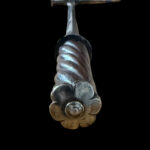
At the grip, a circular rondel hand-guard disk decorated with hash marks protects the hand from sliding up the weapon. The grip is rendered in heavy, ergonomically fluted spiral wood to ensure a secure hold, terminating in a hexagon flower-shaped pommel with a rondel cap.
Condition: Exceptional.
Approximate Length: 24.25 inches.
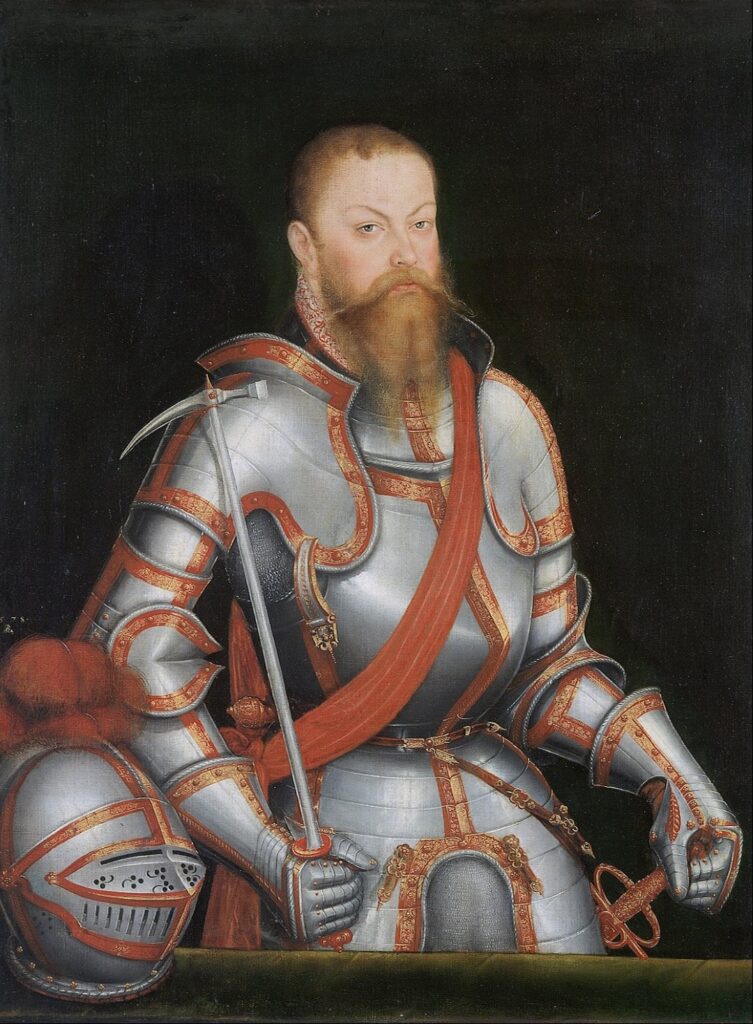
Discussion: Like the mace, the war hammer under discussion is constructed of all steel. However, it is not as heavy as a mace. A great example of this typology of hammer is in a portrait of Prince Elector Moritz of Saxony with a horseman’s hammer by Lucas Cranach the Younger, circa 1580.
The war hammer consisted of a handle (usually made of wood), more accurately referred to as a haft, with a heavy metal head. Not all hammer hafts were made of wood. This variant of the horseman’s hammer is made of all metal; it was used for smashing armor, but with its longer fluke, also for dismounting a knight from his horse.
The length of a hammer’s fluke is a reasonably good indicator to estimate a Western European hammer’s age. The war hammer typically included a hammerhead and a curved fluke on the opposite side. Many war hammers were topped with a spike. In addition, the war hammer could be used against mounted cavalry by injuring the horses and/or, as previously mentioned, dismounting the riders with the fluke. War hammers were also used in many types of polearms, including the Lucerne Hammer and Bec de Corbin. Hammers were also used in tournaments. By the 16th century, steel had become the standard material for short war hammers.
Comparable: See page 377 in my book.
Provenance:
-American Collection.
-Andrew Garcia Collection.
-From a long-established European collection.
Conclusion: An exceptionally elegant war hammer that any museum would love to display. This is not only a Renaissance instrument of war and destruction but also a Renaissance work of art. War hammers like this one are seldom available on the collectors’ market. If you’ve ever wanted one, now is the time to act!!!*
ACT NOW and avoid disappointment. All my items come with the following:
–Free shipping.
–10-day review period.
–Certificate of Authenticity.
–Autographed copy of my book.
– In the event of an international shipment, we will help assign the lowest correct Customs tariff, so you pay the least.