2057 Medieval Sword
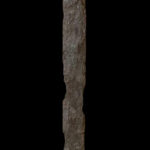
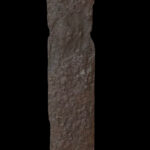
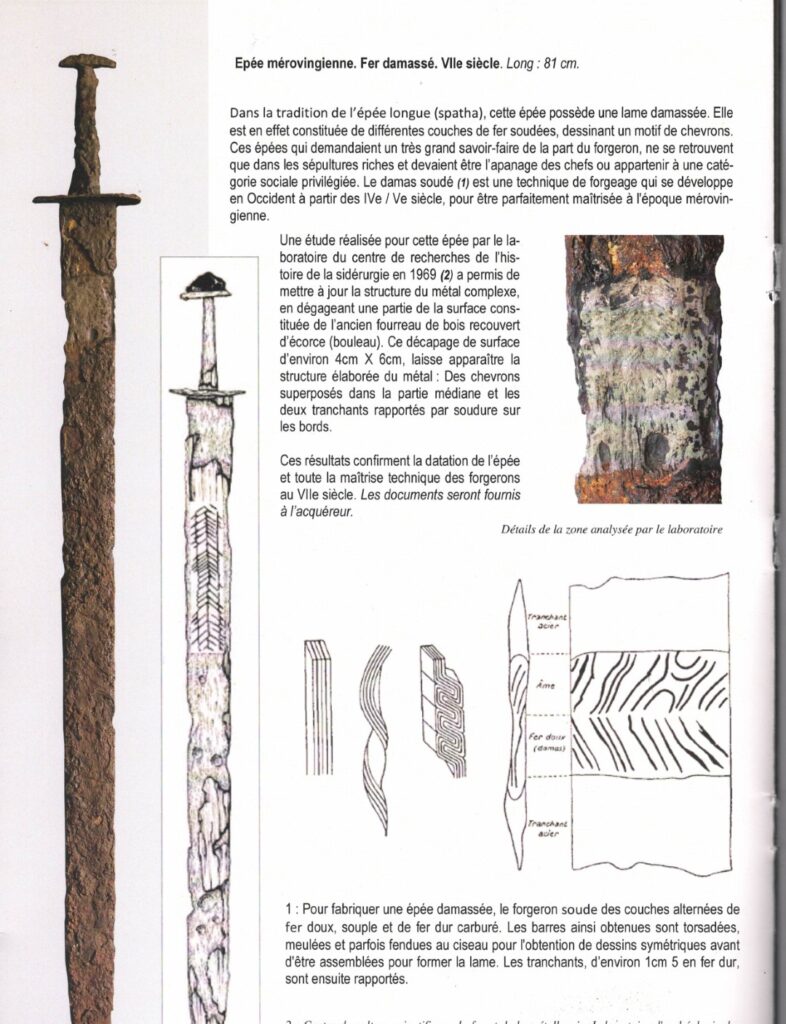
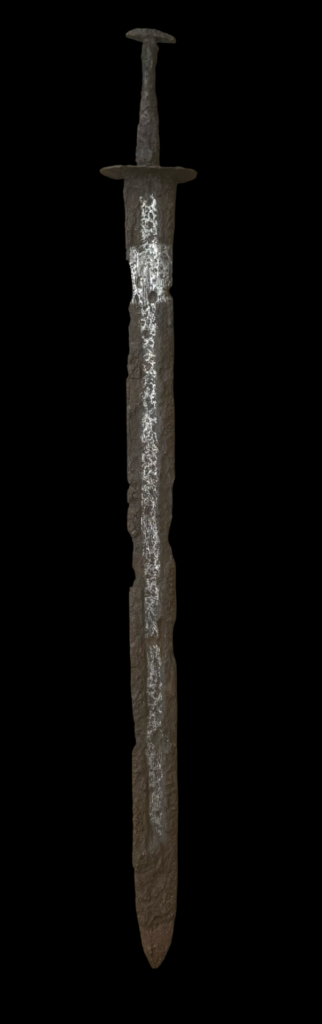
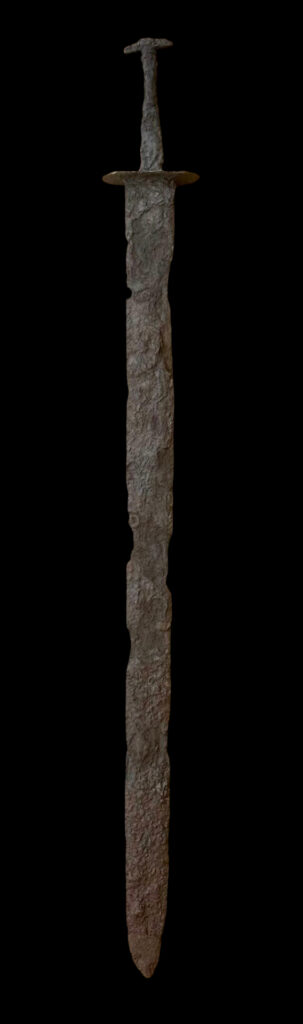
2057) Rare Merovingian Pattern-Welded Iron Sword 7th Century With Scabbard:
Introduction: An exceptional example of elite Early Medieval craftsmanship, representing the pinnacle of Germanic blacksmithing technology. Swords like this spatha were not standard battlefield issue. They were exclusively reserved for chieftains and high-ranking nobility, serving as highly visible status symbols in life and as prestigious grave goods in wealthy burial sites.
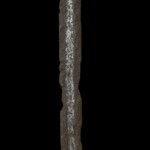
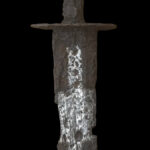
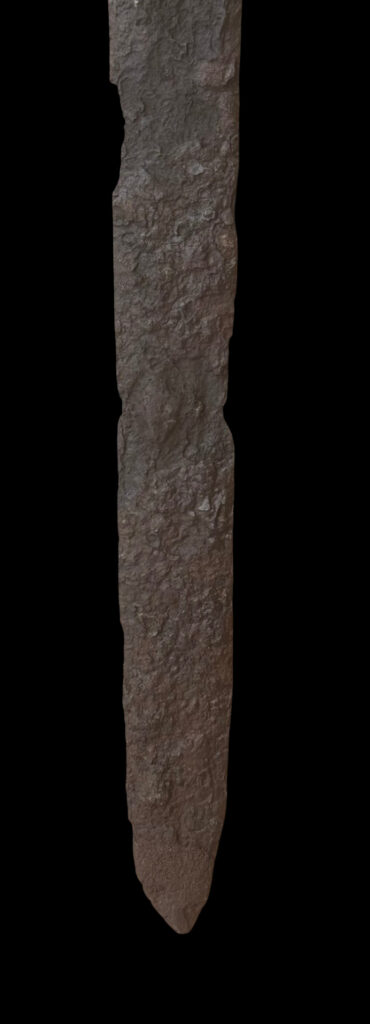
The fact that a portion of the surface retains remnants of the ancient wooden scabbard covered in birch bark is an incredibly rare archaeological feature. Organic materials normally decay entirely within centuries, making this preservation invaluable for establishing its historical provenance.
The Merovingian dynasty 5th–8th century) was famous for mastering this type of forging. It allowed them to create weapons that were both highly flexible (preventing shattering) and incredibly sharp.
To make a pattern-welded sword, the blacksmith welds alternating layers of soft, flexible iron with hard, carbonized iron. The resulting bars are twisted, ground, and sometimes split with a chisel to obtain symmetrical designs before being assembled to form the blade. The hard iron cutting edges, measuring approximately 1.5 cm, are then welded on.
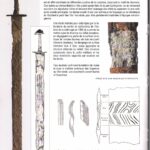
Discussion: This sword has been scientifically examined. The 1969 analysis by the Center for Research in the History of Metallurgy perfectly aligns with standard Early Medieval metallurgical practices. The cross-sectional analysis of the sword reveals a classic three-part composite structure:
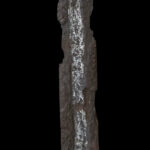
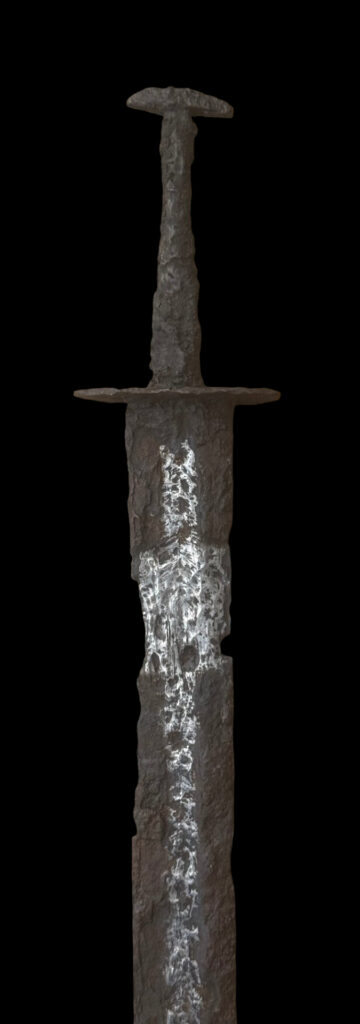
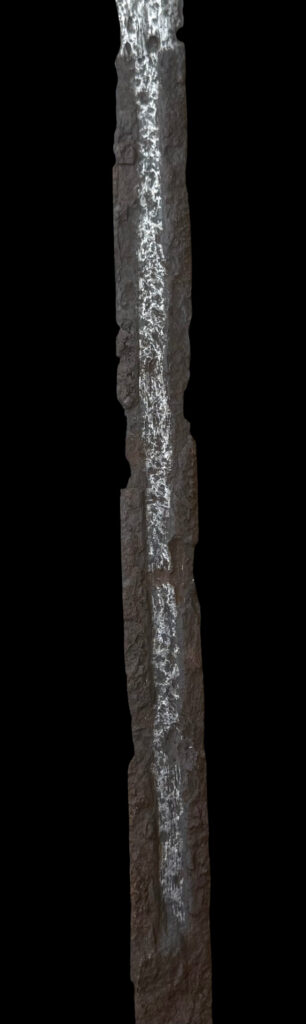
- The Soft Iron Core (Âme Fer doux): The center section of the blade consists of multiple bars of low-carbon, highly flexible iron. Blacksmiths would twist these bars and grind down the surfaces to create the beautiful, shimmering chevron pattern visible in the cleaned 4 cm × 6 cm section of your sword. This core acted as a shock absorber so the sword wouldn’t snap upon hitting armor.
- The Steel Cutting Edges (Tranchant acier): Because soft iron cannot hold a sharp edge, the smith forge-welded two separate strips of high-carbon steel (roughly 1.5 cm wide) directly onto the sides of the twisted core.
- The Final Product: The resulting weapon combined the structural integrity of flexible iron with the lethal, durable edge of hardened steel.
Description: Constructed with a short, flat cross guard and an organic, semi-circular or boat-shaped pommel typical of Behmer Type VI / VII or early Viking-age transition swords. The hilt elements are relatively compressed, meant to securely wedge the user’s hand against the guard. The “bright” vertical strip running down the center exposes the core pattern and mimics the path of a fuller (the central groove), which was used to lighten the blade without sacrificing strength. Pommel reattached as is common in such finds.
Length: 81 cm.
Condition: Very good for an item ritually burned and underground for about 1400 years.
Provenance:
-By tradition found in France before WWI but location not known.
-Purchased at Poisson St Ouen, 1969
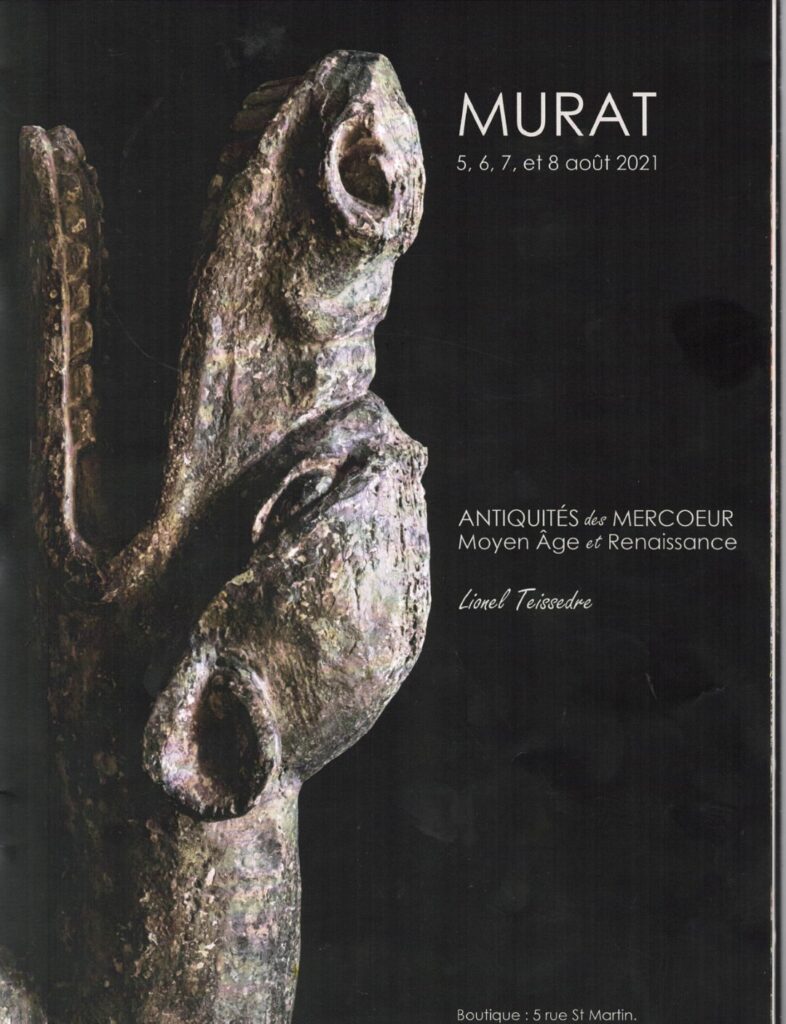
Displayed and Published: Murat Antiquities of the Mercoeur, Middle Ages and Renaissance. August 5, 6, 7, and 8, 2021.
Conclusion: An exceptional rarity that would be welcomed in any world-class museum or major collection. Imagine the history and stories this sword could tell. To get a sword like this in such good condition, without the blade being broken or the sheath missing, is an exceptional rarity. Swords like this do not come to the market very often and are highly sought out. Priced to sell today. Contact me to get the latest, lowest price possible.
ACT-NOW!!!
All my items come with the following:
–Free shipping.
–10-day review period.
–Certificate of Authenticity.
– Free autographed copy of my book if you do not have one.
I believe you will be very….very…. pleased. ACT NOW!!!!*