
2049 Antique Rapier
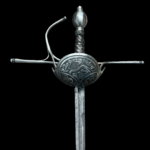
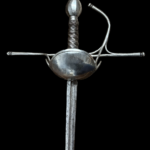

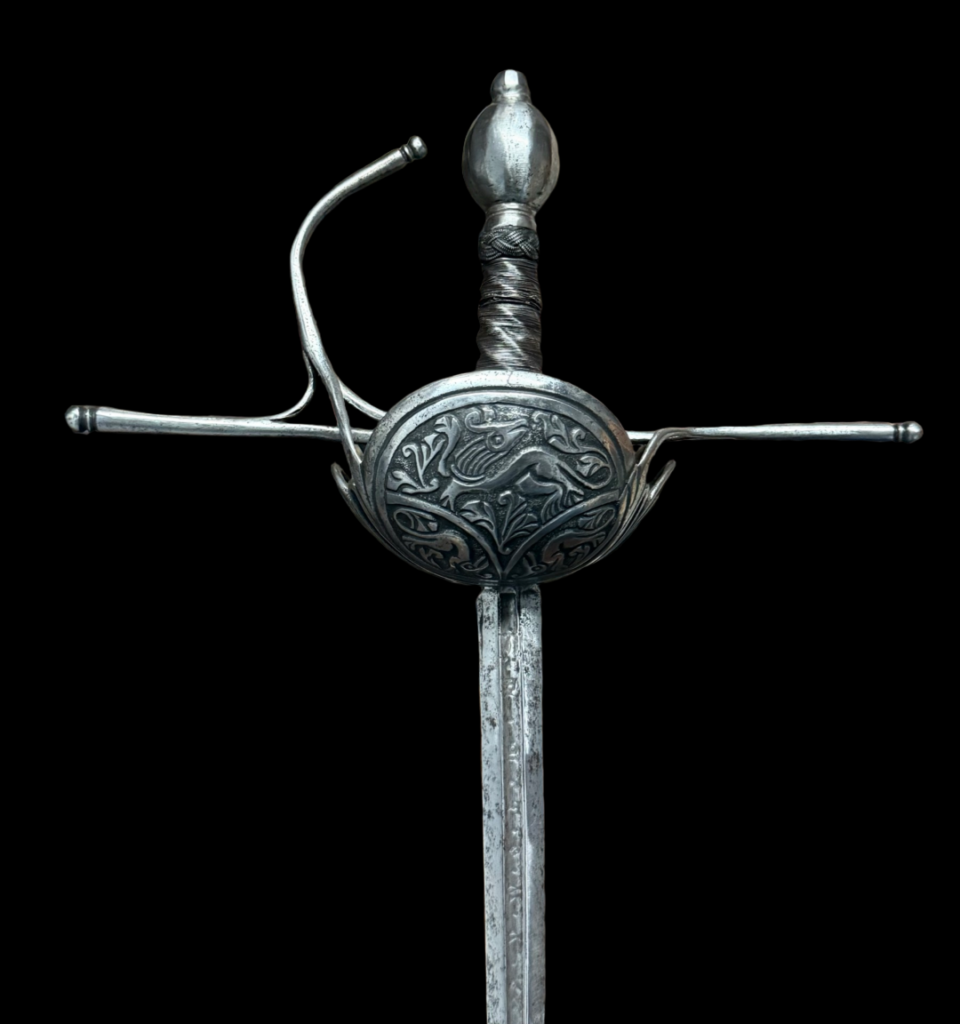
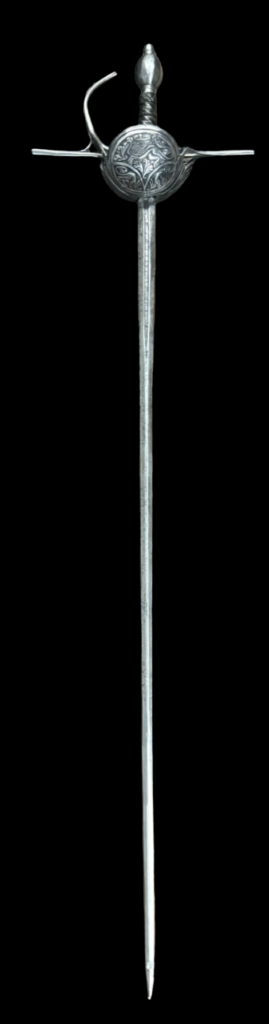
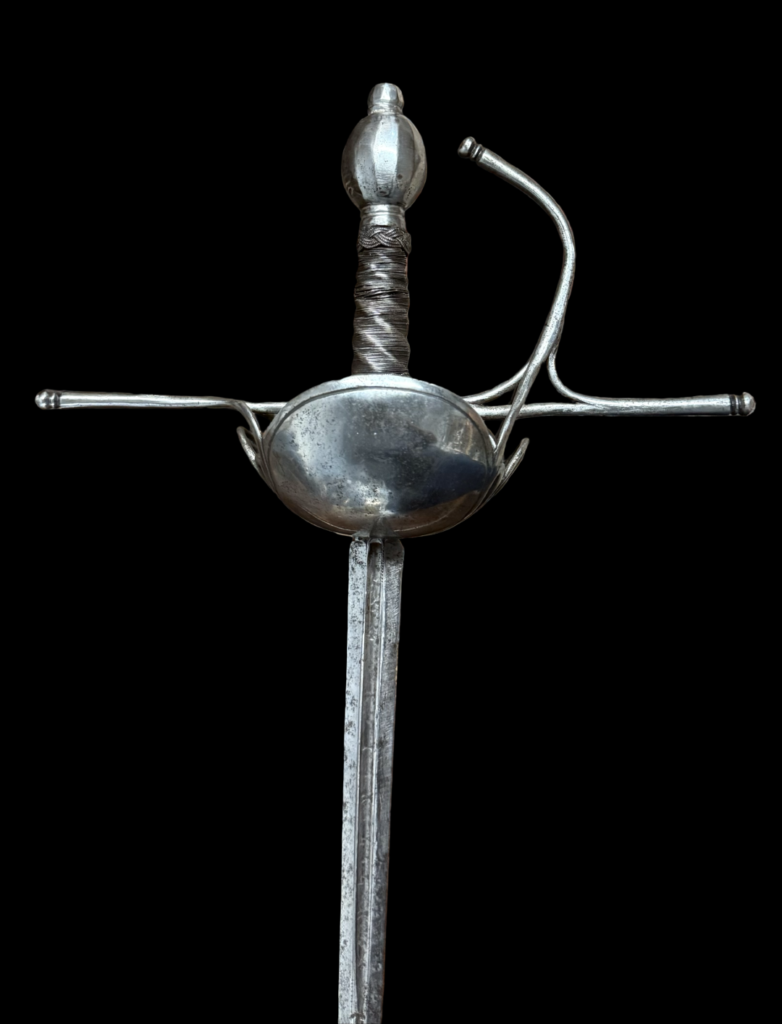
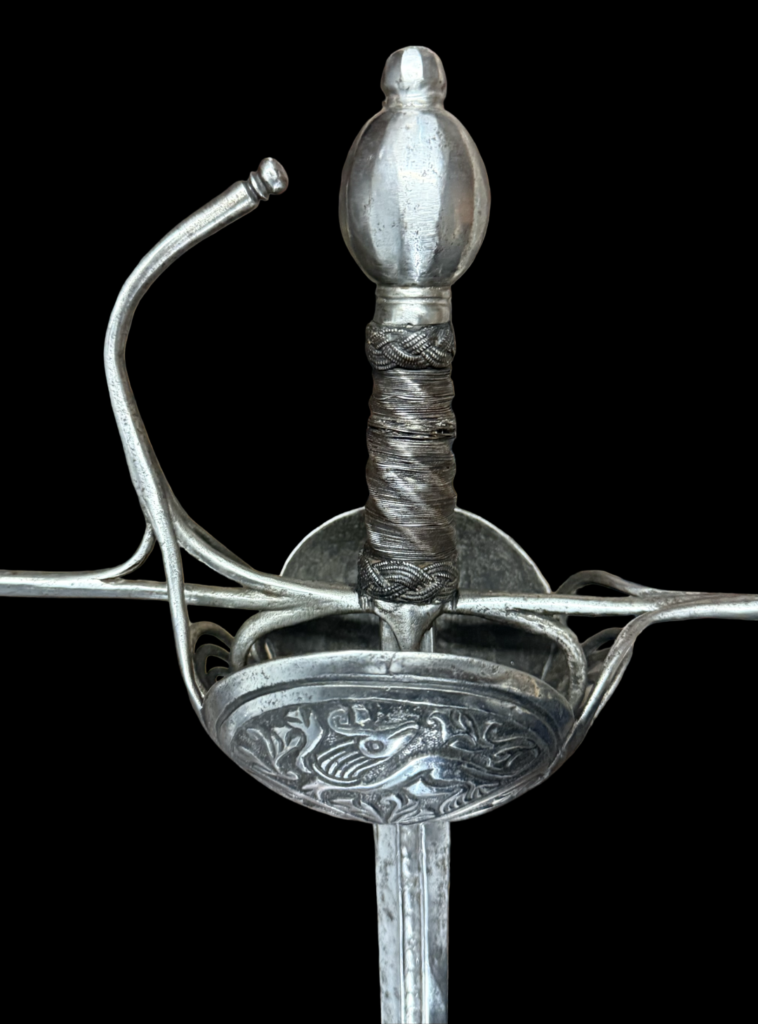
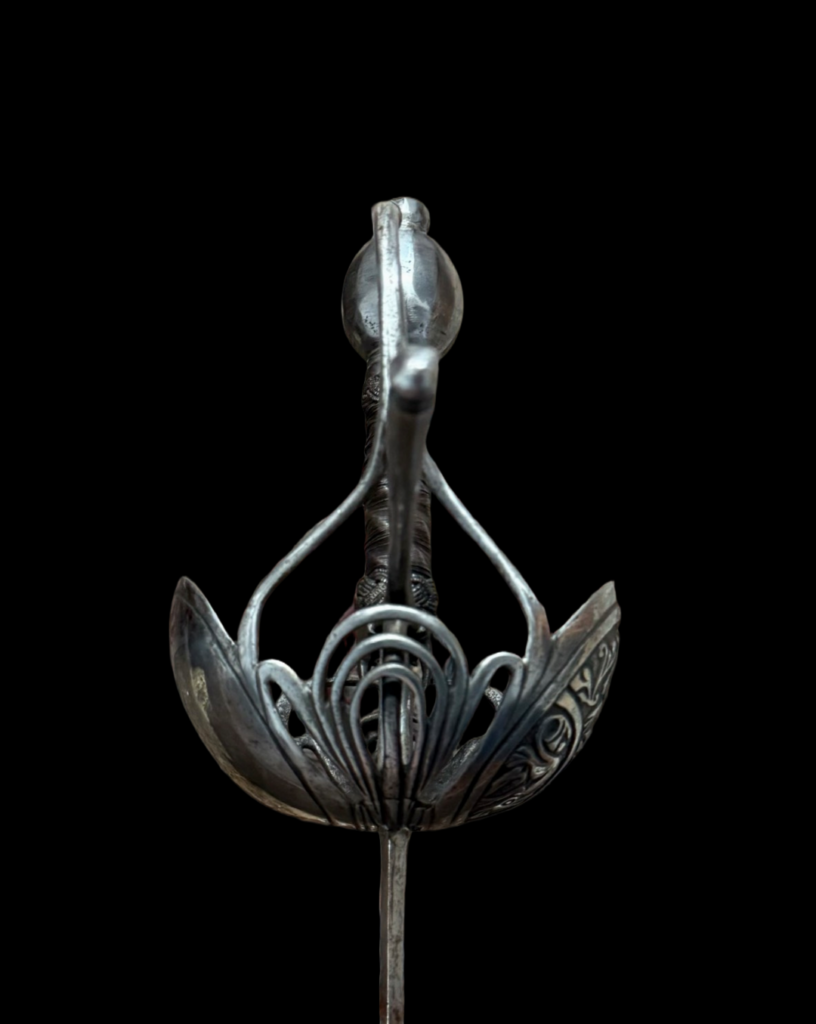
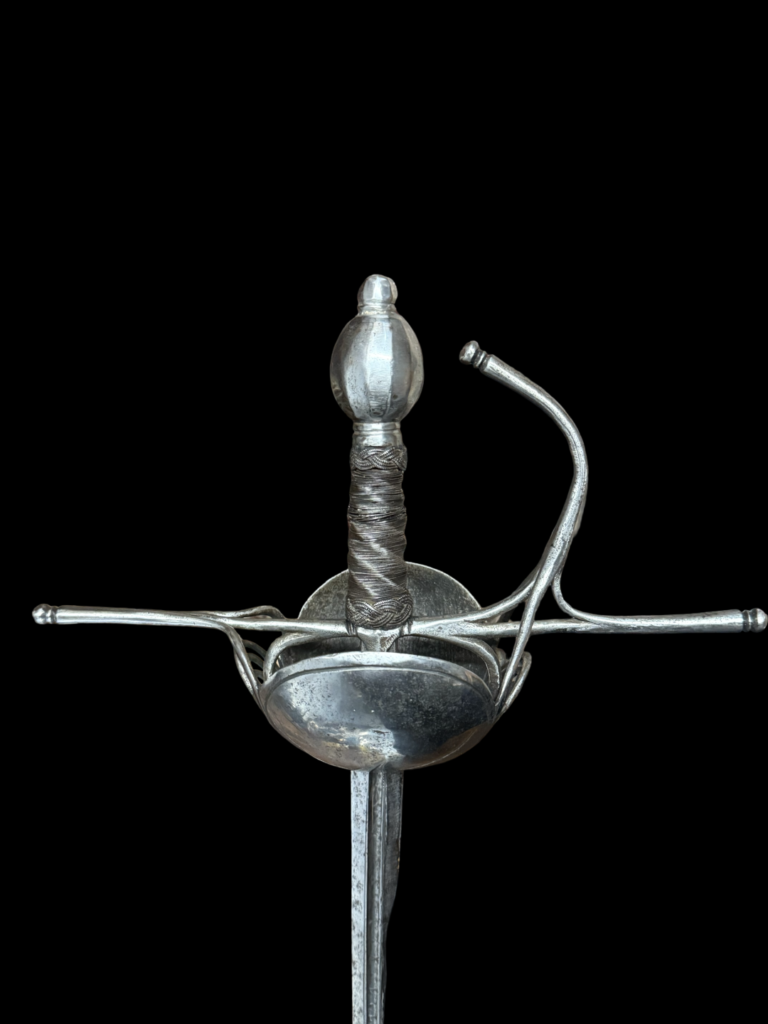
2049) HIGHLY DECORATED RAPIER BY TOMÁS DE AYALA TOLEDO CIRCA 1620:
Introduction: Tomás de Ayala (often spelled Thomás de Ayala or de Aiala) was a master swordsmith active in Toledo, Spain, during the late 16th and early 17th centuries. Circa 1620 represents the peak and final years of his active career, as records indicate he stopped working or passed away around 1625, leaving his workshop to his son, Luis.
Ayala’s work epitomizes the sobriety, solidity, and exceptional execution of classical Toledo craftsmanship. His rapiers featured slender, double-edged blades with acute points engineered perfectly for the complex, thrust-centric fencing styles (such as La Verdadera Destreza) dominating Spain and Italy.
Rapiers surviving from his workshop transition between early sweeping-hilt styles and the famous cup-hilted rapiers (espada de taza). Authentic blades often feature a shallow longitudinal fuller running down the upper third of the blade where his signature was stamped.
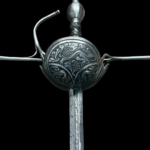
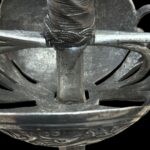
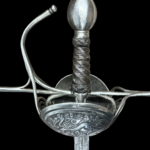
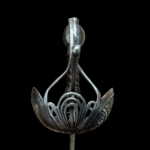
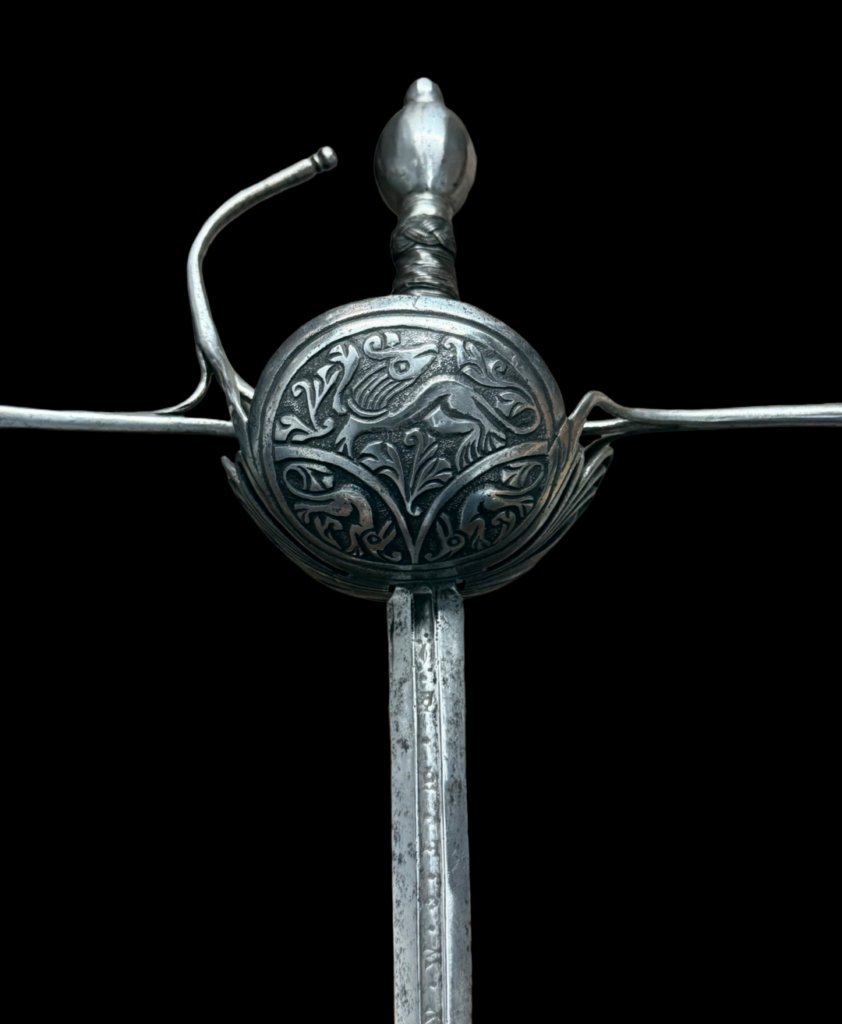
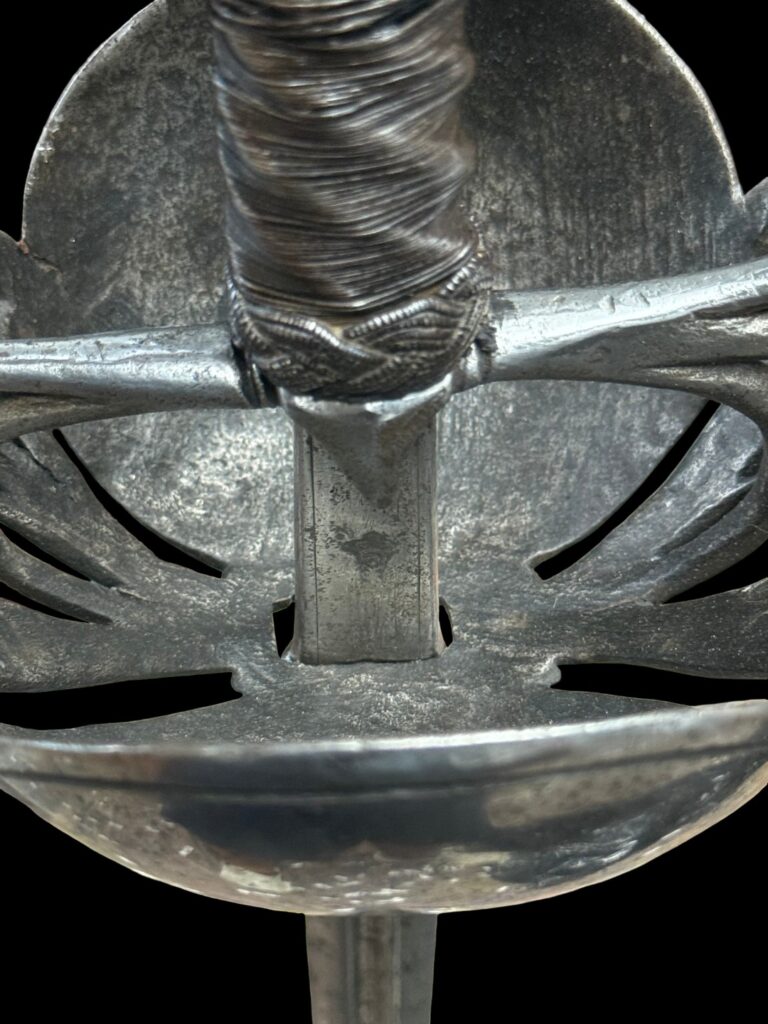
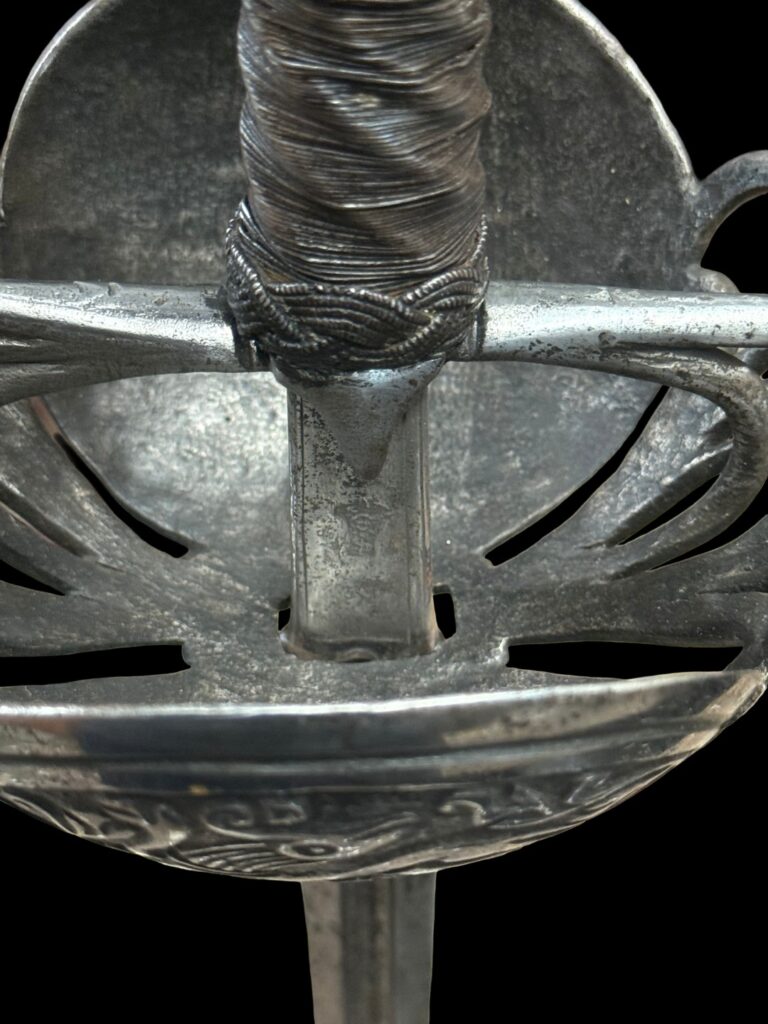
Description: Under the Norman typology, this rapier is classified as hilt 83, which was used from 1625 to 1700. The cup features a highly defined, deeply chased relief of a zoomorphic creature (resembling a stylized hound, stag, or mythical beast) surrounded by scrolling foliage and acanthus leaves. The tubular guard tapers at the tips and ends with a sphere shape with two hash marks. The swept hilt en suite with the guard and with an elongated octagonal pommel. The grip appears to be original wire with two Turks heads.
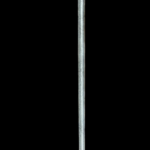
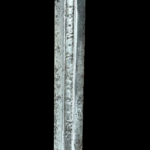
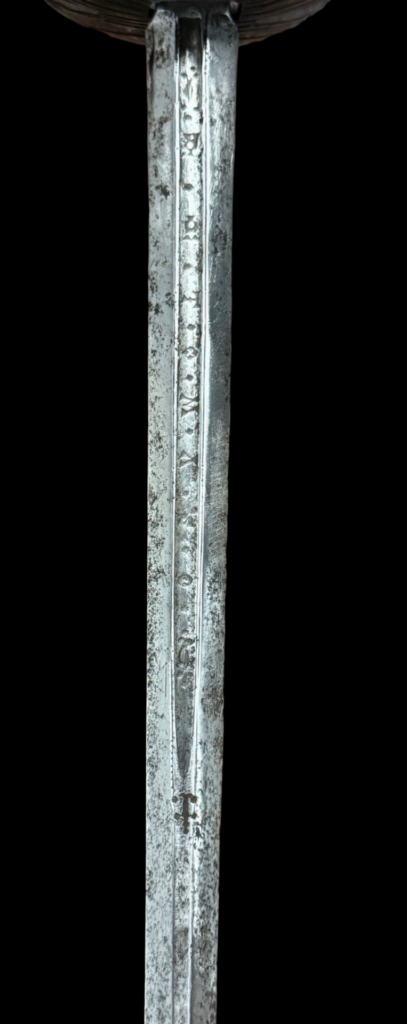
The background is heavily stippled to create contrast against the polished raised figures. This high-relief, chiseled ironwork is characteristic of high-end Spanish decorative hilts from the 1600’s. The blade is explicitly punched with · T O M A S · on one face and · A I A L A · on the alternate face of the short fuller. The lettering is flanked by stylized decorative crosses and geometric punch-marks. At the termination of the fuller, a prominent anchor-shaped symbol (or a cross-and-orb variant) is clearly visible. The blade is diamond-shaped and tapers to a sharp point.
Dimensions: 127 cm in length.
Condition: This sword is in very good condition and can be proudly displayed in any collection.
Provenance:
-A private collection in Spain.
-German art market. Hermann Historica Auction House (March 23, 1996).
Comparables:
-Metropolitan Museum of Art.
-Keinbusch Collection. Philadelphia Museum of Art.
-Wallace Collection.
-Encyclopedia of Spanish swords, page 123.
Discussion: High fashion was an essential symbol of status and power during the late Medieval and Renaissance periods. High fashion was especially important among the mega-wealthy, who wanted to outdo their rivals, neighbors, and peers in the fashion arena. Not all wars were fought on the battlefield with swords, lances, and armor. A non-bloody war was in the fashion and status arena. Fashion also extended deeply to Arms and Armor. The phrase… “keeping up with the Joneses” … is not a new 20th-century concept.
In a day and age lacking appropriate policing, the private citizen was forced to protect himself from society’s criminal dregs. The weapon of choice was the rapier from the middle of the 16th to the end of the 17th century. The rapier is a simple yet highly effective sword against non-armored opponents. The rapier was primarily a thrusting weapon that could inflict serious injury to an adversary’s vital organs with minimal effort. It was also an exceptional slashing and cutting weapon; however, the slash was not as lethal as the thrust. The slash was used more as a feint to set up a finishing thrust. The slash was also a dire warning to a would-be assailant of the horrors to quickly follow if he chose not to acquiesce.
Because fencing is more of a thrusting art, it became commonplace throughout Europe to have as long a blade as possible to obtain an advantage. This extravagance in length reached the point that municipalities passed statutes regarding the allowable lengths of blades. Those in violation had the misfortune of having their rapier‚ blades cropped at the tip at the city gate to comply. One example of these statutes is from an English Royal Proclamation on March 17, 1557. The French adopted the phrase “espee rapiere” by 1475, which was later shortened to simply “rapiere.” The English, in 1505, spelled it”rappyer.” The Giles Duwes English/ French dictionary of 1532/3 adopted the rapier definition as “Spannyshe sworde”.
By 1550, the term rapier had been adopted to describe a slender, sharply pointed sword designed for thrusting, cutting, and slashing attacks. The rapier now consisted of a hilt protected by a handguard.
Conclusion: Even if you are not a rapier aficionado, all early arms and armor collections should have at least one example of a rapier. Spanish rapiers have strong appeal to collectors, as they were Spain’s main contribution to Renaissance warfare and civilian protection.
This is a great example of a very good and rare rapier by a master swordsmith at a very reasonable price. ACT NOW, so you will not be disappointed. They seldom come this nice and at this price!!!*
All my items come with the following:
–Free shipping.
–10-day review period.
–Certificate of Authenticity.
–Autographed copy of my book.
–In the event of an international shipment, we will help assign the lowest correct Customs tariff, so you pay the least.