
2045 Antique Sword
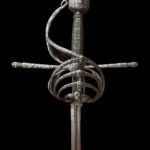

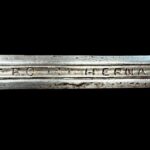
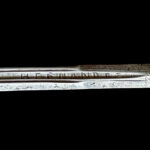
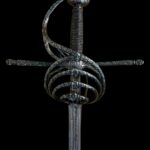
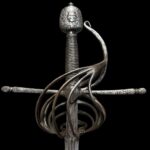




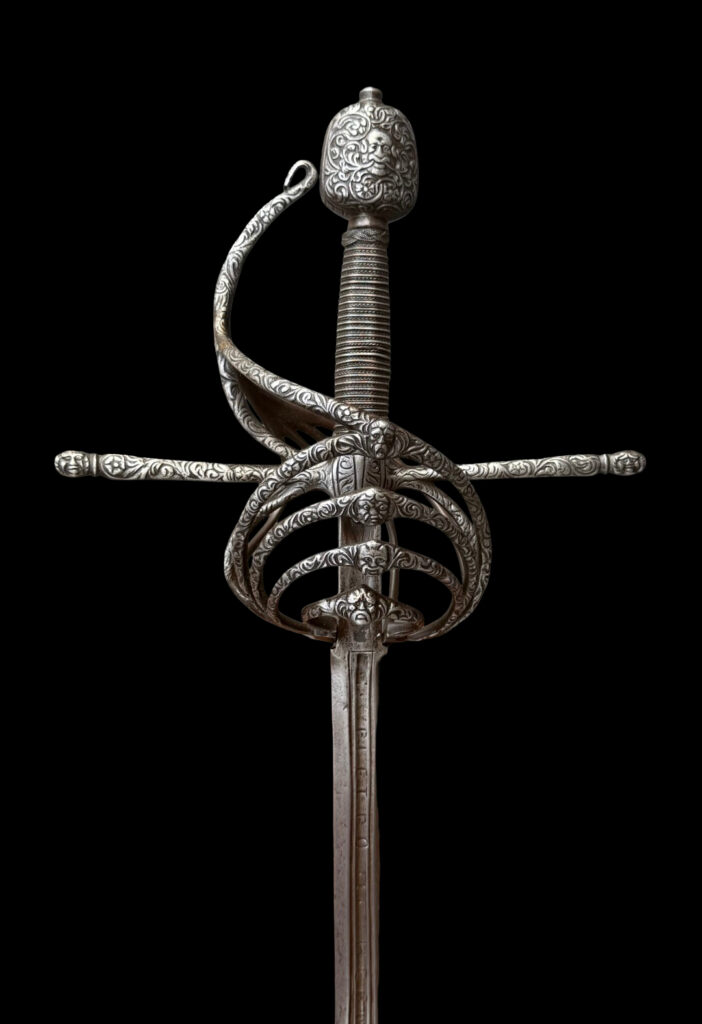
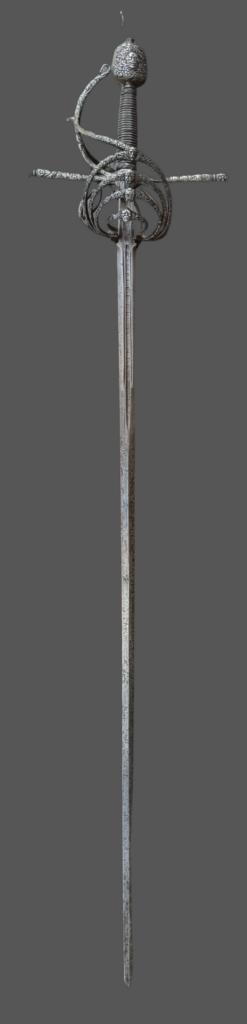
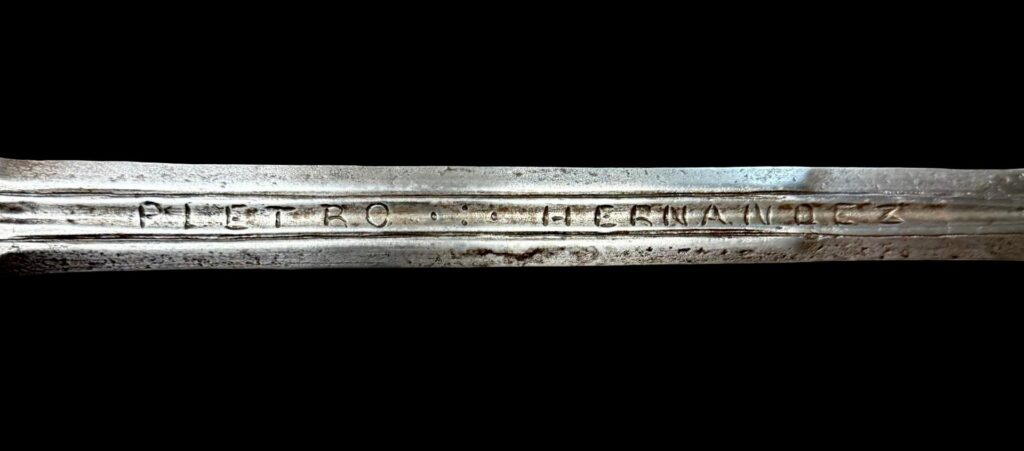
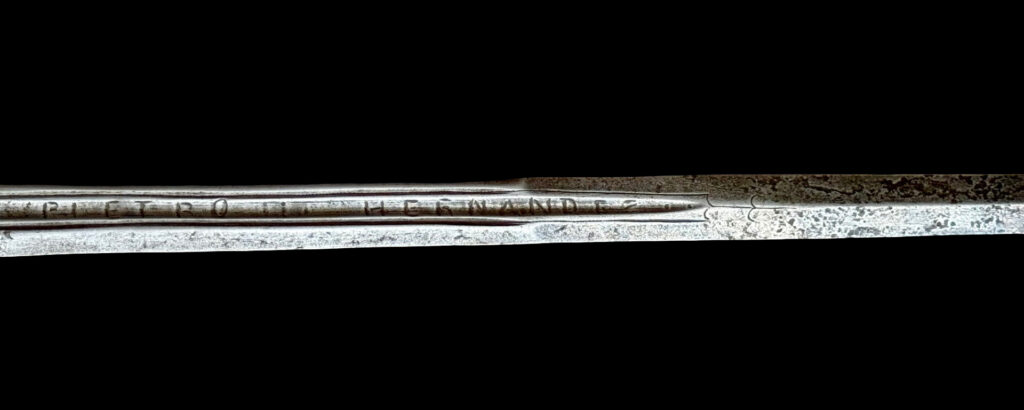
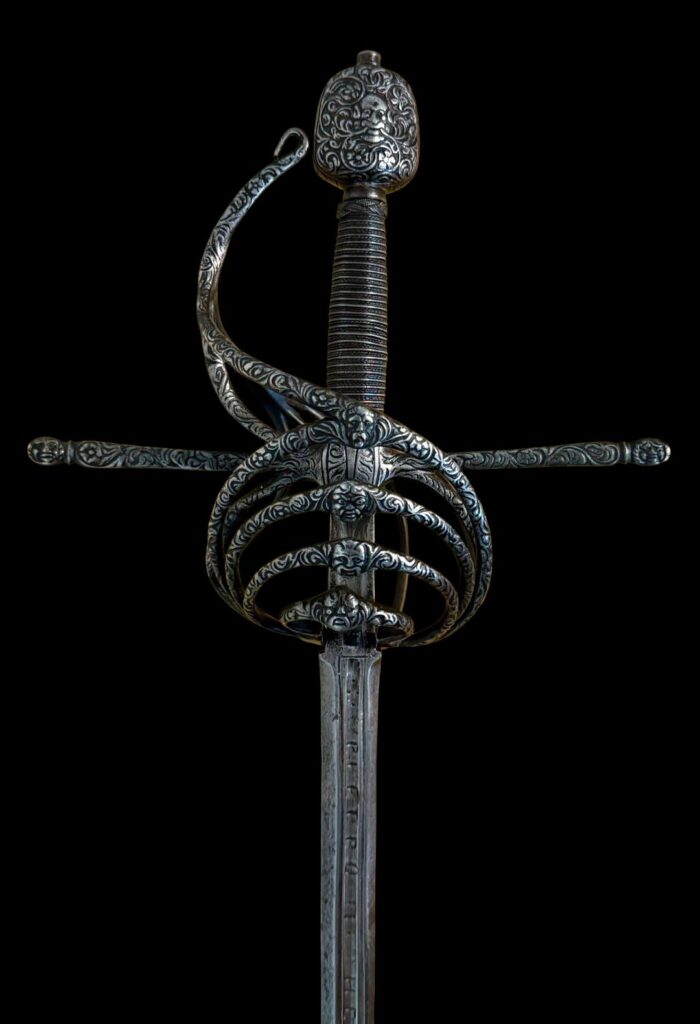
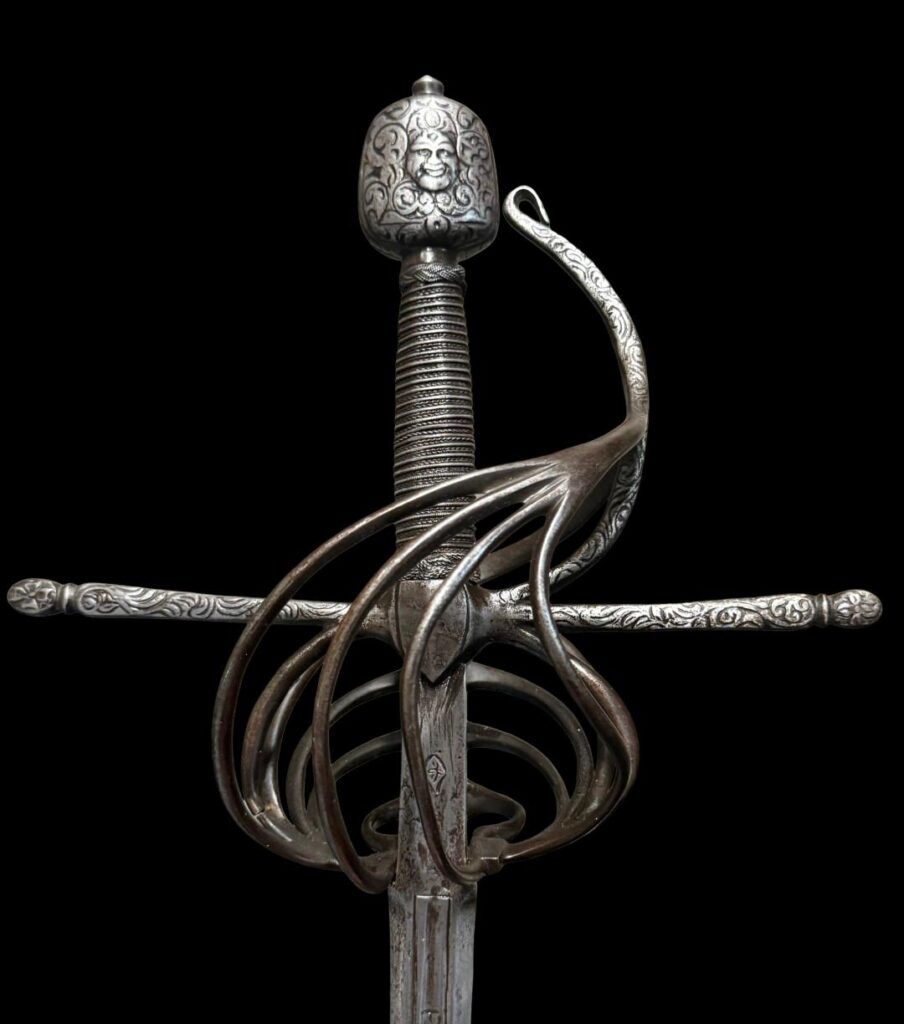
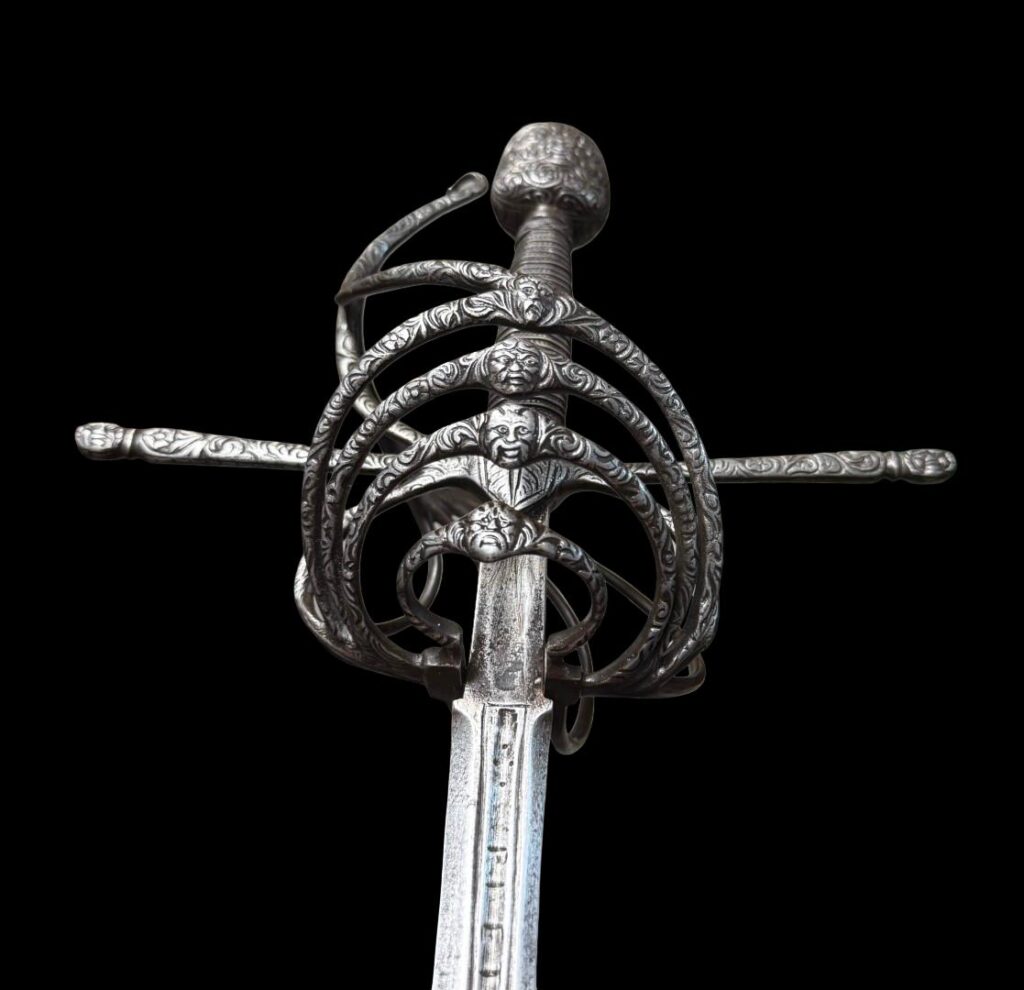
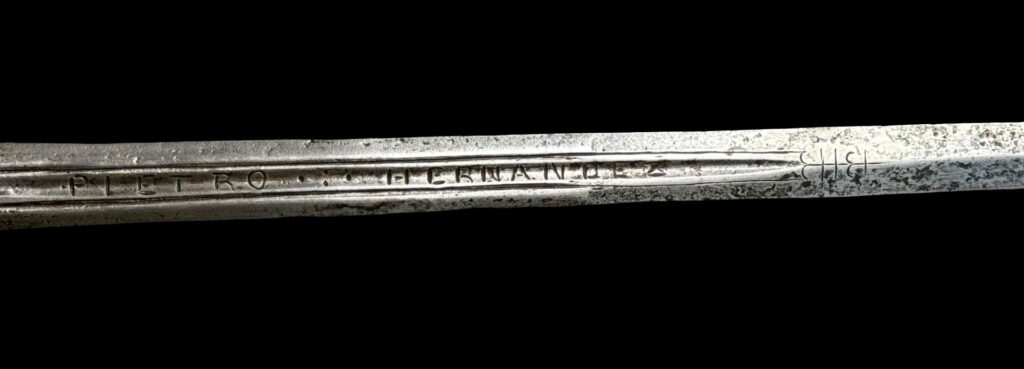
2045) A SUPERBLY ELEGANT CHISELED ITALIAN RAPIER 1630, BLADE SIGNED BY PEDRO HERNANDEZ WITH TWO MAKERS MARKS:
Introduction: A museum-quality rapier. Undoubtedly, for a high-ranking officer or a person of great wealth. Even if you are not a rapier aficionado, all early arms and armor collections should have at least one example of a rapier. Exceptionally elegant rapiers have a strong attraction for collectors and even art collectors who understand the intricate beauty of a sword like this.
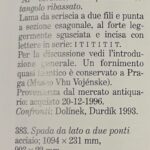
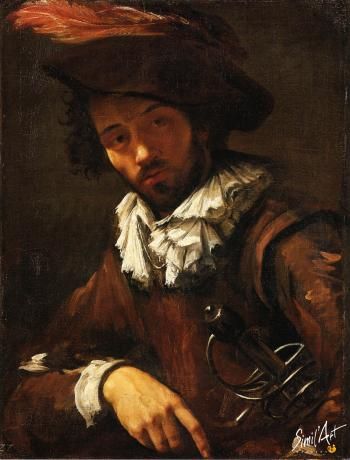
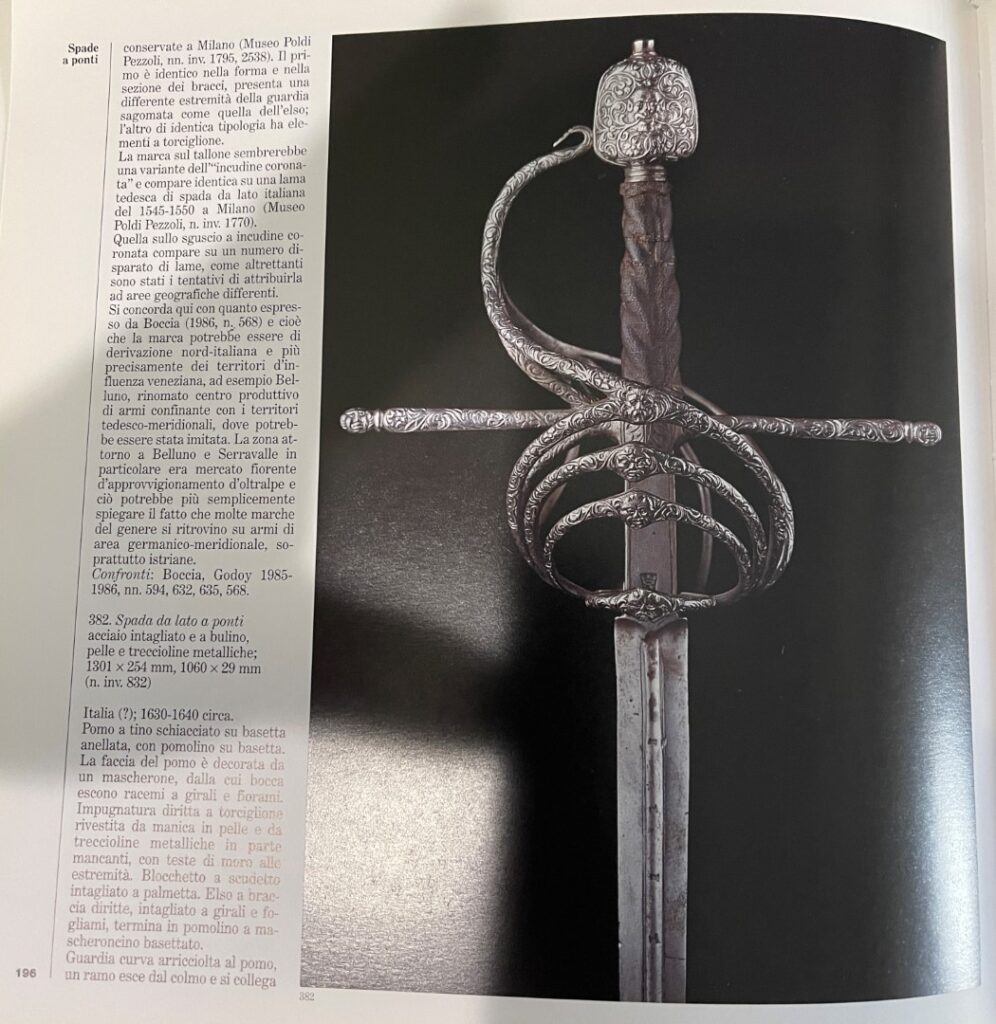
Classified as a “spada da lato a ponti“ (bridged sidesword), a versatile military and dueling sword featuring a complex hilt structure of interlocking rings (“bridges”) to protect the hand. The first illustration of this sword appears in 1610 in an equestrian portrait by Rubens representing Archduke Albrecht. Afterward, it is also illustrated in “Le Spadassin” by Simon Vouet, circa 1615 (see below). The rectangular ricasso (with two maker’s marks) terminates at the side ring; the fuller on the blade is inscribed with PEDRO HERNANDEZ, and the blade is of stiff diamond section, tapering to a sharp point.
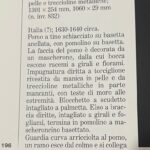
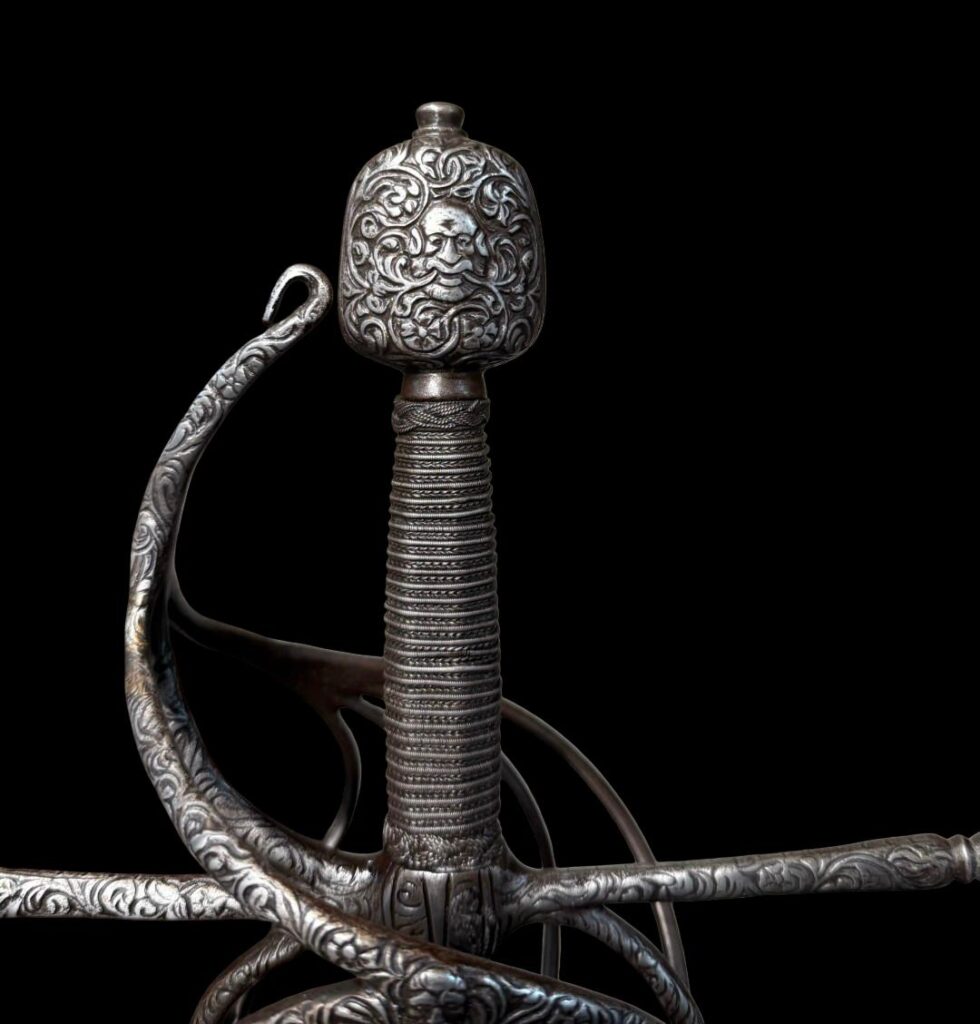
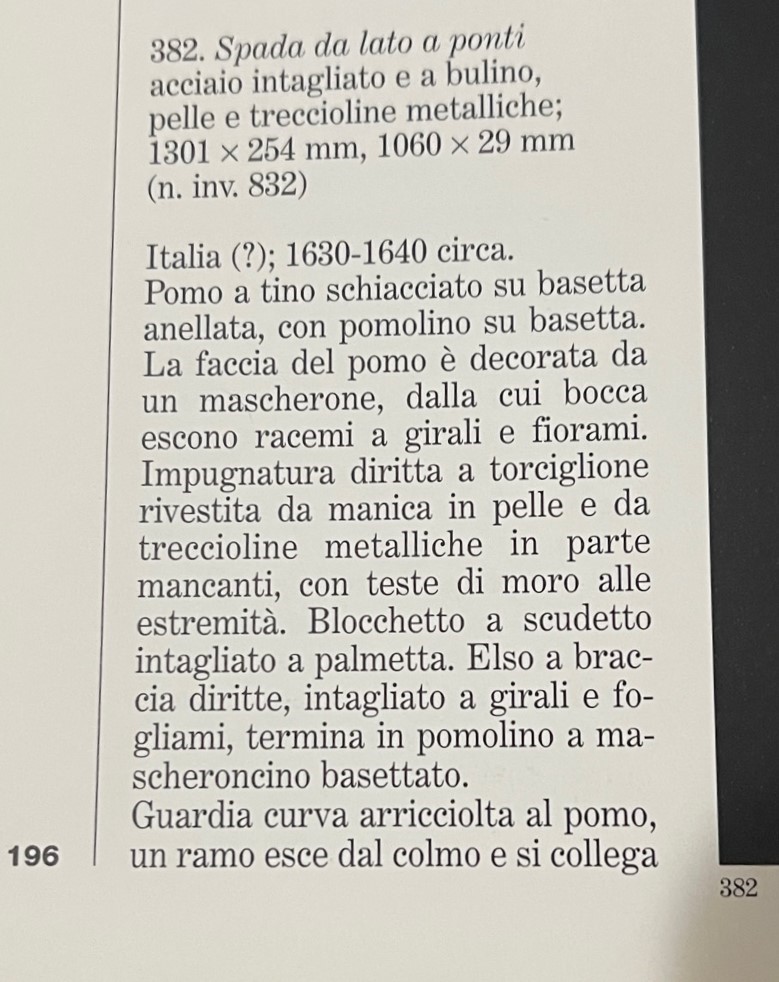
Description: Under the Norman typology, this would be a Hilt 61. Decorated en suite with chiseled grotesque faces and floral vine decoration throughout. The hilt 61 was only used for a short 40-year period. Constructed with a barrel-shaped, slightly flattened pommel (pomo a tino schiacciato). The face of the pommel is deeply carved with a large grotesque mask (mascherone) exhaling decorative floral vine scrolls (viticci e fiorami). The grip with a straight, twisted grip wrapped in leather and fine metallic wire braids (treccioline metalliche). The crossguard (elso) features straight arms intricately carved with matching scrolls and terminates in small, masked button finials. A guard curve (guardia curva) curls elegantly upward toward the pommel, featuring branch work splitting off to connect the multi-layered ring bridges. The secondary loop guards and bridges are uniformly decorated with smaller grotesque human faces, a hallmark of high-end Italian blacksmithing and chiseling from this period.
Total Length: 47 inches.
Provenance: An old European collection.
Discussion: In a day and age lacking appropriate policing, the private citizen was forced to protect himself from society’s criminal dregs. The weapon of choice was the rapier from the mid-16th century to the end of the 17th century. The rapier is a simple but highly effective sword against the non-armored. The rapier was primarily a thrusting weapon that could inflict serious injury to an adversary’s vital organs with minimal effort. It was also an exceptional slashing and cutting weapon; however, the slash was not as lethal as the thrust. The slash was used more as a feint to set up a finishing thrust. The slash was also a dire warning to a would-be assailant of the horrors to quickly follow if he chose not to acquiesce.
The rapier is almost undeniably of Spanish origin and is probably Spain’s most significant contribution to the Renaissance arms race. A highly expensive, ornate rapier was the equivalent of a person in our day and age making a fashion or opulence statement by wearing very expensive jewelry, such as a Rolex or Audemars Piguet watch. Because fencing is more of a thrusting art, it became commonplace throughout Europe to have as long a blade as possible to obtain an advantage. This extravagance in length reached the point that municipalities passed statutes regarding the allowable lengths of blades. Those in violation had the misfortune of their rapier blades being cropped at the tip at the city gate to comply. One example of these statues appears in an English Royal Proclamation dated March 17, 1557.
The French adopted the phrase ‚rapiere’ by 1475, which was later shortened to simply ‚ rapier’; the English in 1505 spelled it ‚rappyer’. The Giles Duwes English/ French dictionary of 1532/3 adopted Rapiers definition as ‚Spannyshe sworde ‘. By 1550, the term rapier had been adopted to describe a slender, sharply pointed sword designed for thrusting, cutting, and slashing attacks. The rapier now consisted of a hilt protected by a handguard.
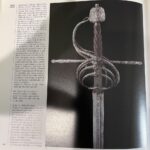
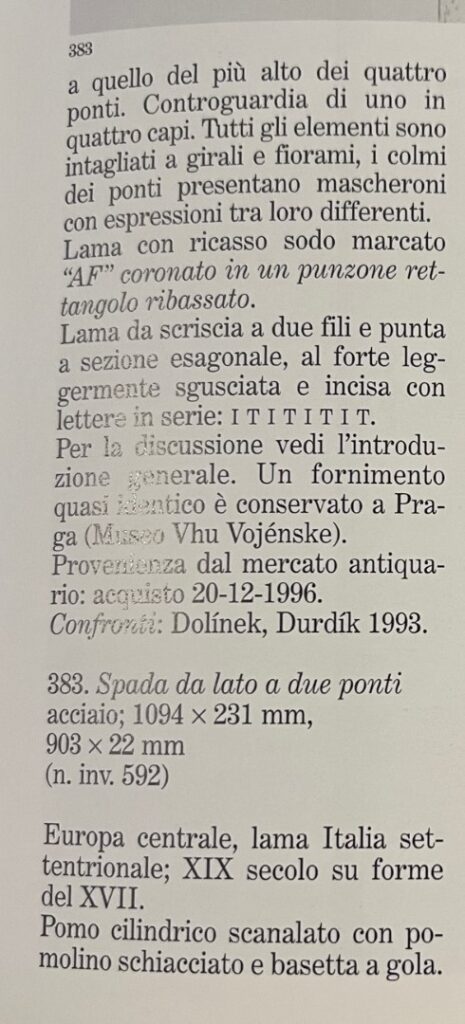
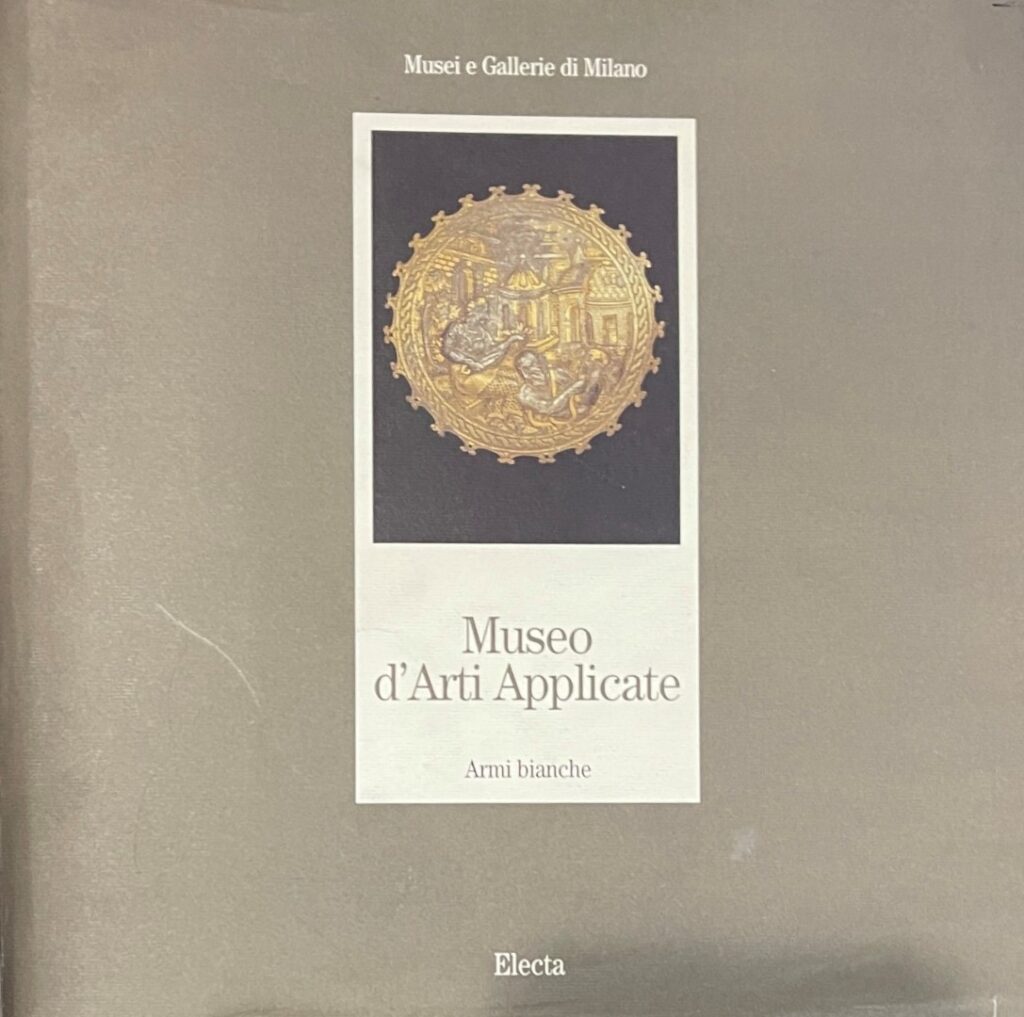
Comparables: An identical example from the same workshop can be found (see below) in the Museo di Arte Applicate, Milano, Italy. Other similar examples can be found in the Wallace Collection in London (no. A606) and the Musée de l’Armée in Paris (Cat. no. J192).
Conclusion: Rapiers of this quality and condition are seldom found in the collector’s market. This rapier is museum-quality and a strong recommendation for any collector who wants only the best. The owner wants it sold ASAP and has priced it accordingly !!!*
ACT NOW to get the lowest possible price and avoid disappointment. This one should sell fast.
All my items come with the following:
–Free shipping.
–10-day review period.
–Certificate of Authenticity.
–Autographed copy of my book.