2015 Sword
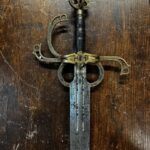
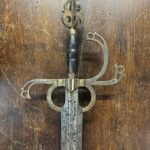
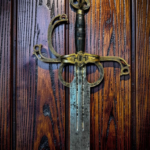
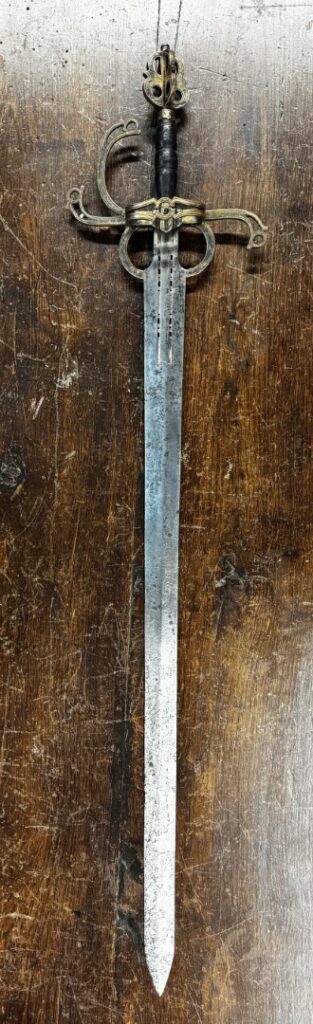
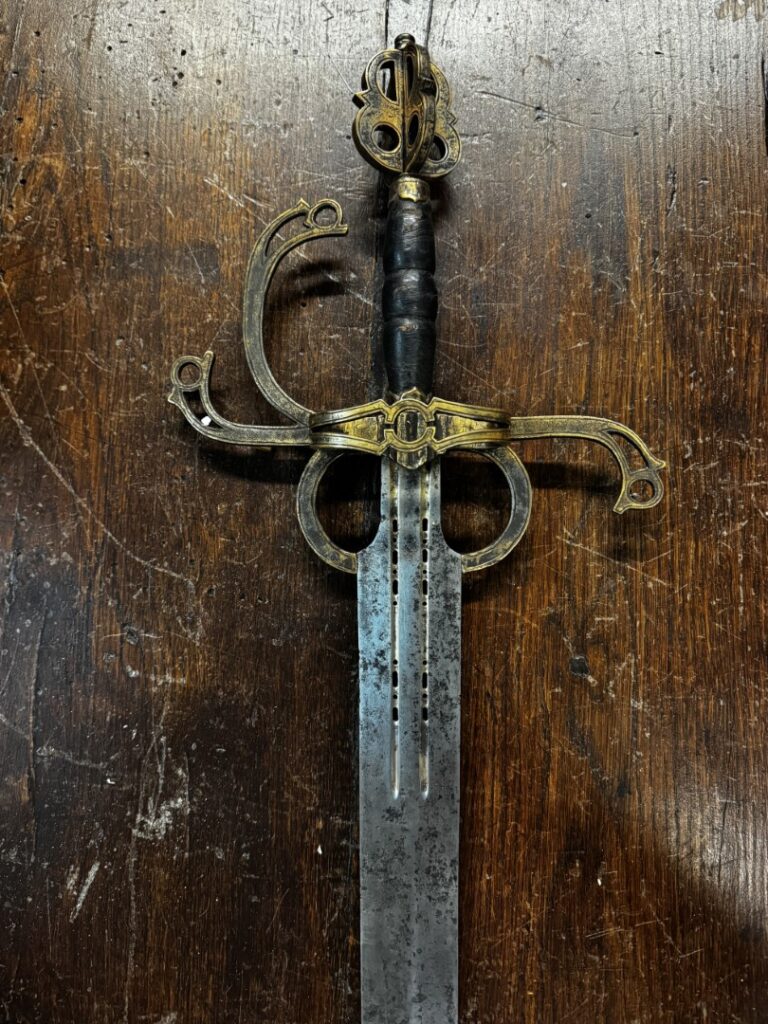
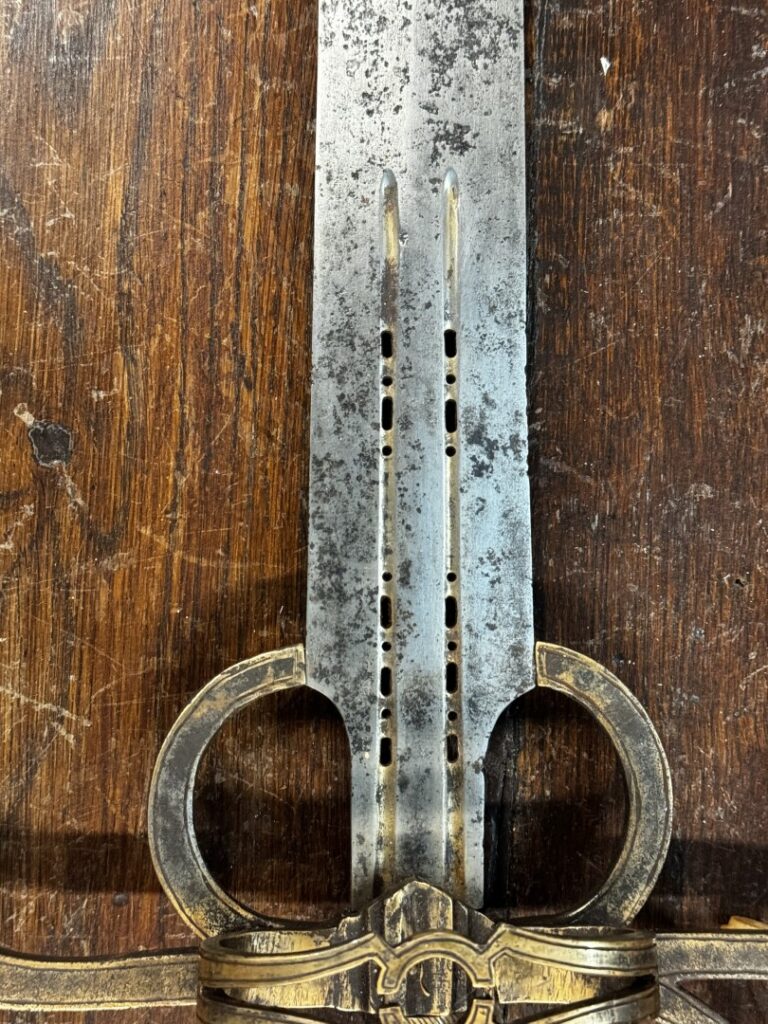
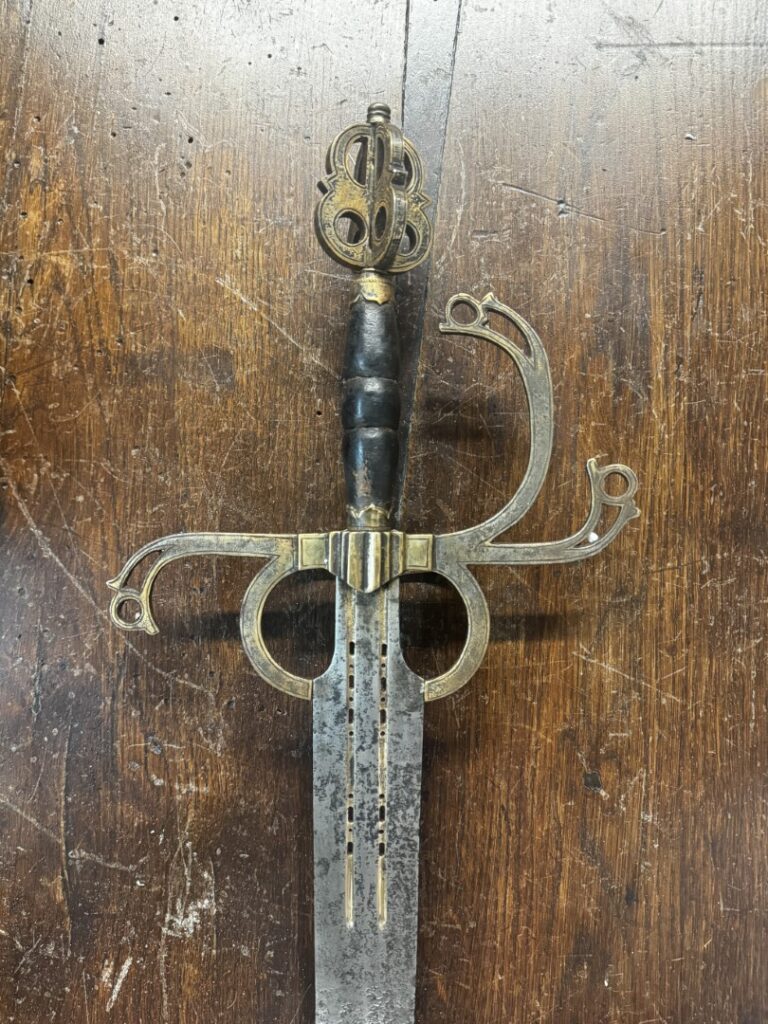
2015) AN ELEGANT ITALIAN GILDED SKELETAL BASTARD SWORD, CIRCA 1560:
Introduction: Swords with skeletal hilts in the past have been incorrectly attributed to being of Spanish origin. This attribution may have been created by the Victorians after seeing more than one example in the Royal collection at the Armeria Real in Madrid, Spain. A sword of this quality would have been commissioned by a wealthy individual of maverick taste.
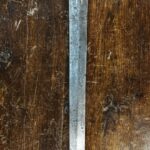
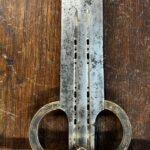
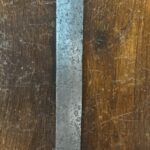
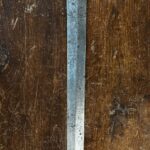
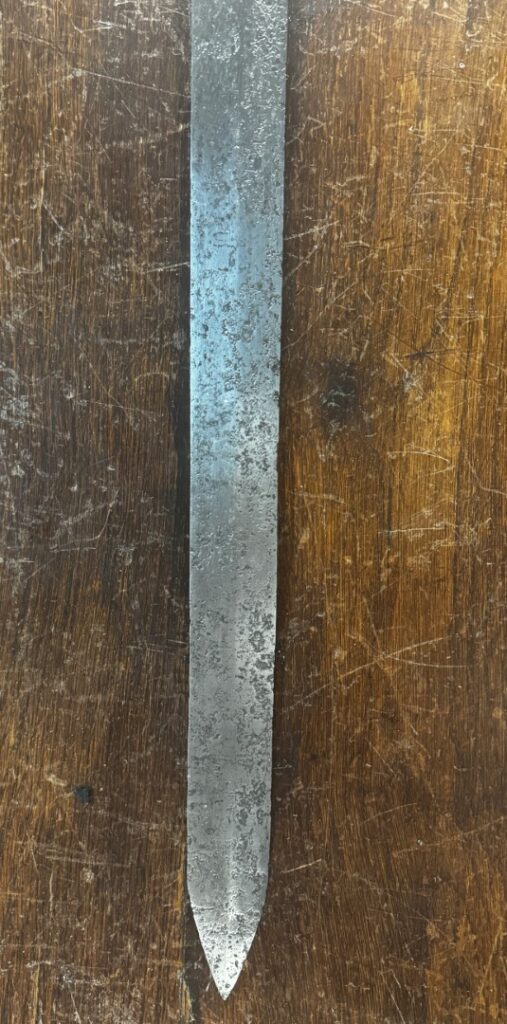
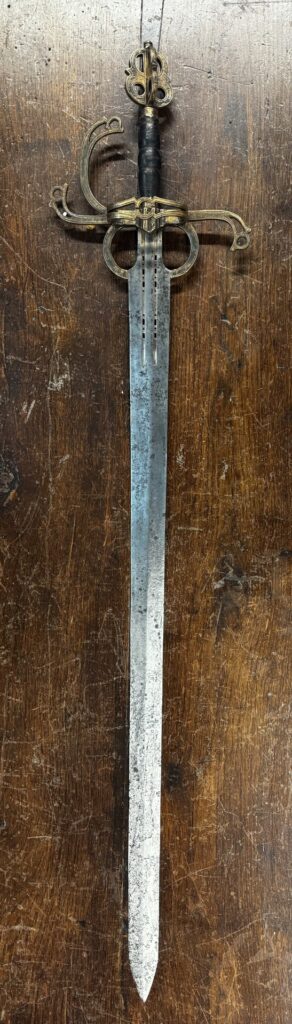
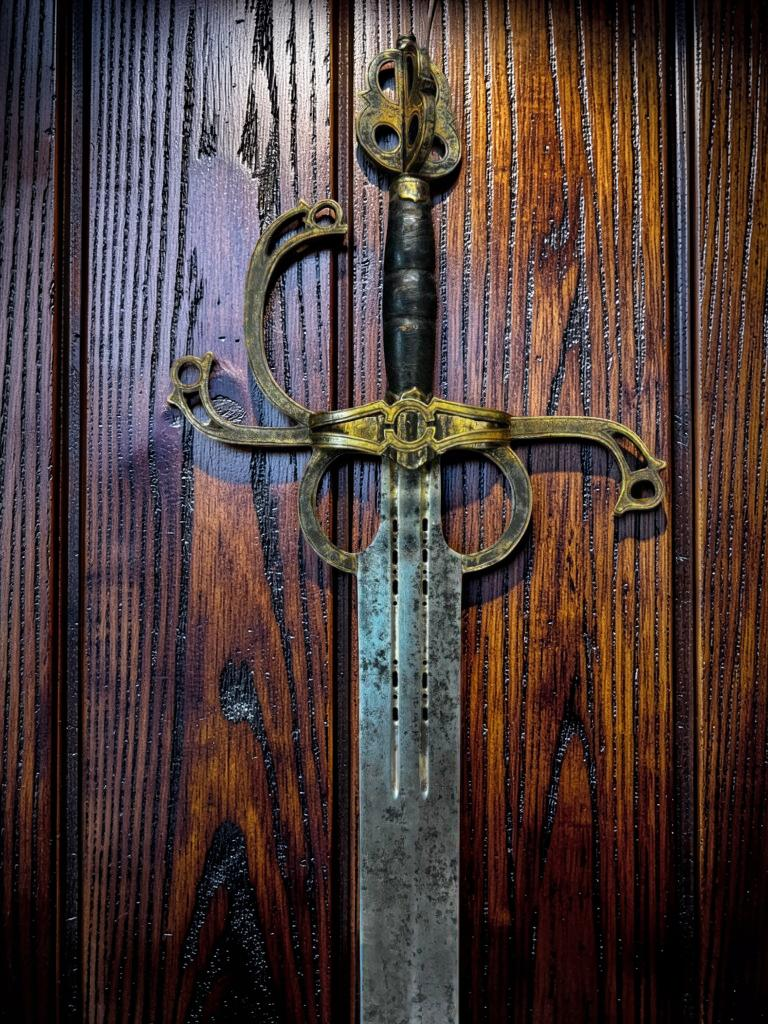
Description: Constructed with a massive yet balanced skeletal quadrilateral fishtail pommel classified as a Norman Pommel 47, a flat very wide double-edged blade with two gilded short pierced fullers, the blade with a slow taper tapering to a double-edged point, a recurving cross guard with opposite-turning quillons, the tips of the quillons with hollow isosceles triangle expanding to an osculating circle, with a skeletal button tip, the quillon block decorated with chevrons, originating from the guard are two finger guards in opposite directions both, meeting at the beginning of the rectangular widening ricasso, side ring at the quillon block with osculating circle in the center, a leather replaced grip with two ferrells at opposite ends of the grip, hilt gilded and incised at the edges with lines en-suite.
Condition: Good, some wear on the blade. Most of the gilding has survived.
Total Length: approximately 42.5 in., blade: 34.5 in.
Provenance: A European collection started after WWII.
Comparable: A similar sword sold for almost three times the price of this one at Hermann Historica, September 25, 2020, lot #50.
Discussion: The bastard sword developed circa 1250, about 75 to 100 years earlier than the two-hand sword (circa 1325). A bastard sword (called a hand-and-a-half sword by Victorian collectors, or Anderthalbhander in German) is a combination of a one-hand and two-hand sword. A bastard sword can be wielded like a one-hand or two-hand sword. It cuts and thrusts with a broad or long double-edged blade. Additional power can be employed by using the pommel and the lower area of the hilt below the pommel as a grip for a two-hand strike to increase the impact and penetration.
The term “bastard sword” was first recorded in France during a 17th-century duel. In Marc de Vulson‚ 17th-century treatise”Vray Theatre d‚ÄôHonneur” he describes the weapons used in a duel fought before King Henry II of France in 1549 as follows: Deux epees batardes pouvant server a une main ou a deux (Two bastard swords that can be used with one hand or two) I prefer the term ‚bastard sword‚ because this is the original term and not one concocted by the prudish Victorians. Interestingly, the ballock dagger (a vulgar term for testicles) was renamed the kidney dagger around the same time by the same people. Bastard swords first appeared circa 1250 and remained in use until circa 1650.
Bastard swords were widely used in Germany and Switzerland, particularly by the cavalry. Hilts varied throughout their evolution. Until circa 1550, most hilts on German bastard swords were cruciform, with some featuring S-shaped guards. After circa 1550, some hilts became more elaborate. Because they were Knightley weapons, they were used with great frequency from horseback. Sword length during this period varied from approximately 35 to 40 inches. After circa 1250, the length increased to approximately 45 to 55 inches. So why did it take until the early 1300s for the bastard sword to flourish? There are two primary reasons:
1) For the same reason, full-metal defensive armor and two-hand swords did not develop until the same period. As furnaces grew larger in Medieval Europe, steel billets (solid lengths of steel) grew accordingly. With bigger steel billets, swords could now be made with fewer (but larger) steel billets, eventually reaching their peak of one billet per sword. Larger furnaces generally meant higher temperatures, better steel, faster production, and probably lower manufacturing costs on a large scale.
2) As armor evolved, its counterpart, the sword, did the same, with larger specialized swords of superior quality and design. This was the weapons race of its day.
Conclusion: All collections should have an iconic bastard sword as a centerpiece. This example is superb, elegant, well-preserved, and highly sought after. In my opinion, this sword is very reasonably priced. ACT-NOW: this one should sell quickly!!!*
All my items come with the following:
–Free shipping.
–10-day review period.
–Certificate of Authenticity.
–Autographed copy of my book.
–In the event of an international shipment, we will help assign the lowest correct Customs tariff, so you pay the least.
I believe you will be very pleased. ACT-NOW!!!*