2012 Flamberg
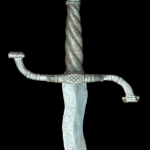
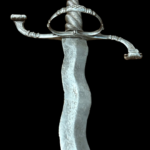
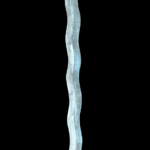
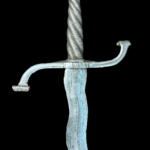
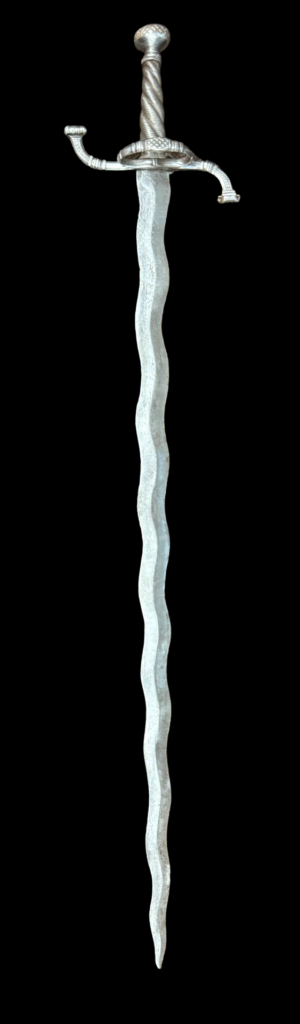
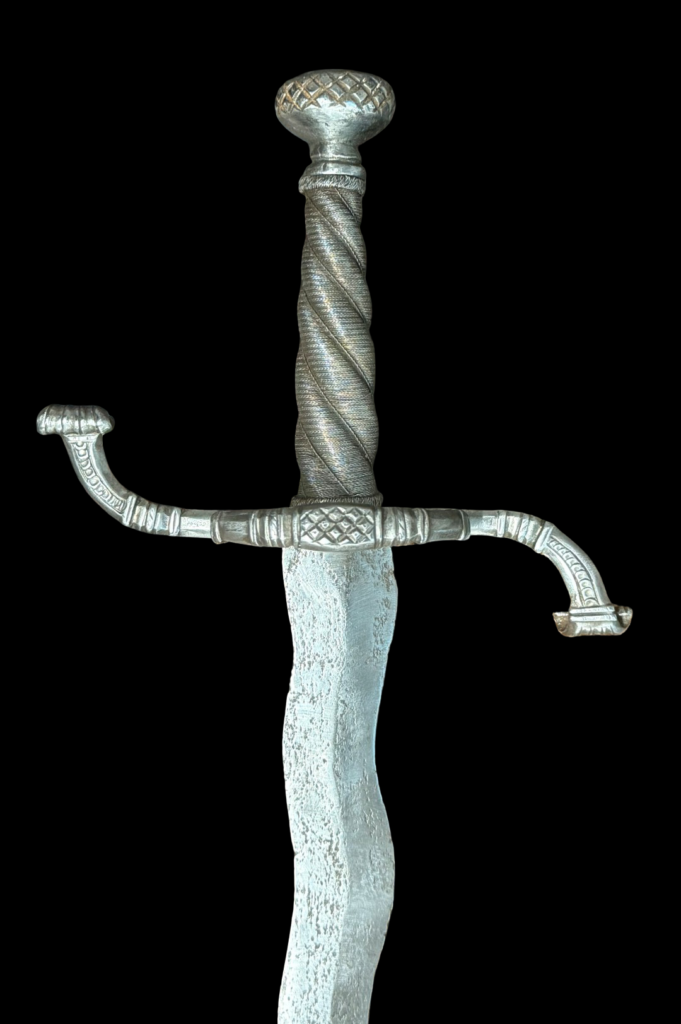
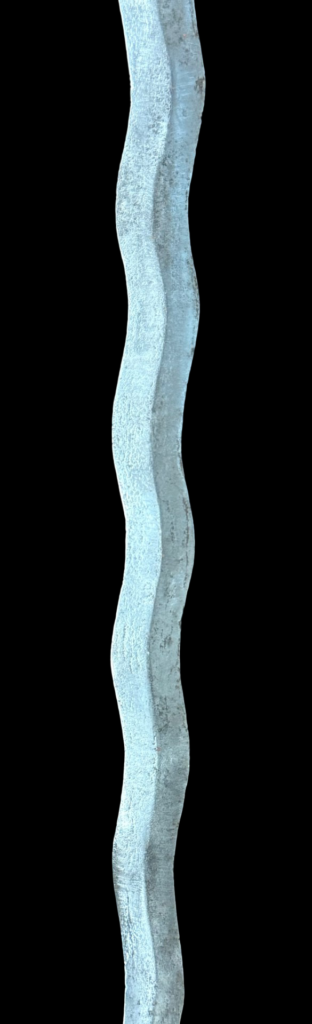
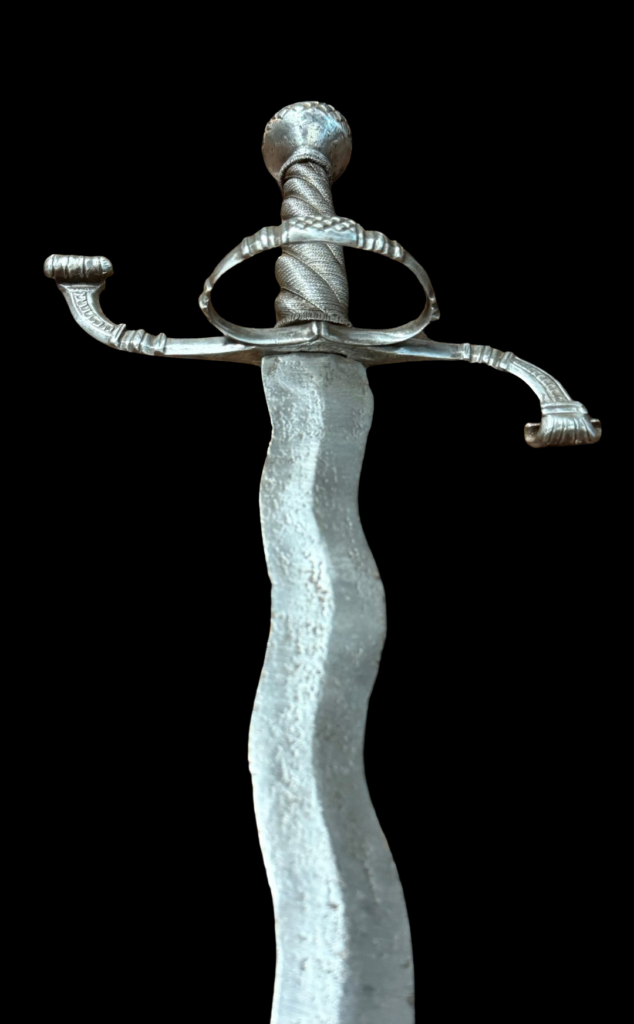
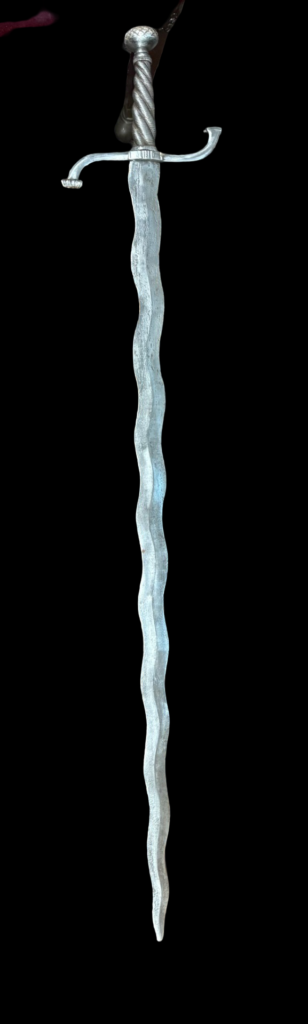
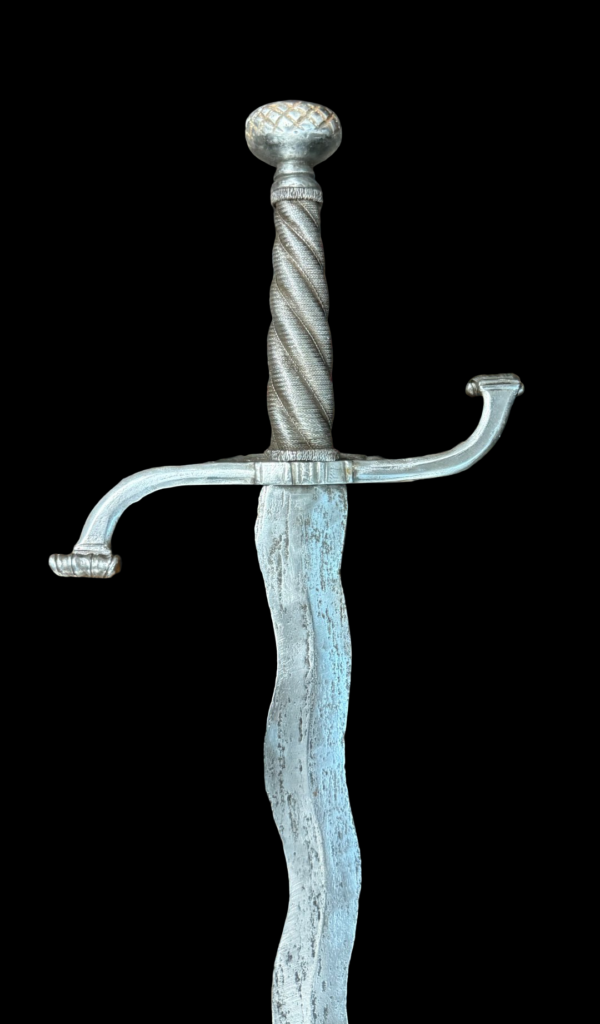
2012) A RARE ONE-HANDED FLAMBERG SWORD Circa 1590:
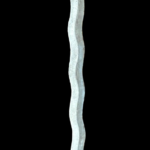
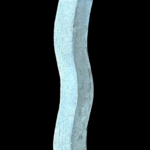
Introduction: The special undulating ‘flamberg’ (German spelling) blade is named after its flame shape. The flamberg blade was used primarily with Zweihänder (two-handed swords)
Discussion: There are three primary types of flamberg blades:
Type I: The blade has (A) scallops and an (B) empty void on opposite sides of the blade. In many instances, the (C) tip is as wide as if it were not a scalloped sword. Please see page 280 in my book for a complete description and examples.
Type II: The blade has smaller but more numerous scallops on both sides.
Type III: The blade has a wavy, undulating blade pattern constructed on a flat blade with a strong medial ridge, which follows the wave’s shape with elongated scallops.
The sword under discussion is a Type I.
The flamberg has an undulating design for five primary reasons:
1) The design creates a gripping crevice at the bottom where the scallops meet, offering the following advantages:(A) trapping and redirecting the opponent’s blade (sword) to a more advantageous position for a counterattack.
(B) making it easier to dislodge the opponent‚ grip from his sword.
2) It was believed the flamberg blade could cut deeper (especially on certain types of soft armor like cuir-bouilli, mail, or fabric) because the full impact of the sword was concentrated exclusively on the high ridges of the scallop. The smaller surface area results in deeper penetration if the sword is swung with the same power.
3) A sawing-ripping motion is possible after penetrating the impacted area, resulting in a deeper cut.
4) The flamberg is an elegant blade that could also have been adopted by civic, parade, and/or ceremonial guards such as this one under discussion.
5) The sword was lighter and easier to handle because it required less steel to make.
So why did it take until the 1300s for the two-handed sword to flourish?
There are two primary reasons:
- A) For the same reason, full-metal defensive armor and two-handed swords did not develop until the same period. As furnaces grew larger in Medieval Europe, steel billets (solid lengths of steel) grew accordingly. With bigger steel billets, swords could now be made with fewer (but larger) steel billets, eventually reaching their peak of one billet per sword. Larger furnaces generally mean higher temperatures, better steel, faster production, and, probably, lower manufacturing costs on a large scale.
- B) As armor evolved, its counterpart, the sword, did the same, with larger, specialized swords of superior quality and design. This was the weapons race of its day.
Length: Approximately 38 inches.
Condition: Good.
Provenance: From an old Austrian collection.
Conclusion: The flamberg blade on this sword is usually only seen on two-hand swords. This sword would make a great addition to any collection. One-hand swords with flamberg blades are highly sought after by collectors and decorators seeking the unique and elegant. They are seldom available in the collectors market, so ACT-NOW!!!*
All my items come with the following:
–Free shipping.
–10-day review period.
–Certificate of Authenticity.
–Autographed copy of my book.
–In the event of an international shipment, we will help assign the lowest correct Customs tariff, so you pay the least.
I believe you will be very pleased. ACT-NOW!!!*