2008 Antique Hammer
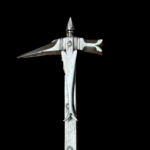
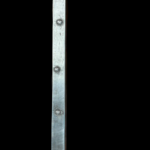
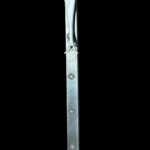
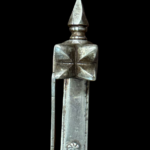
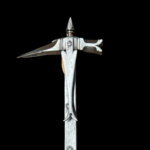
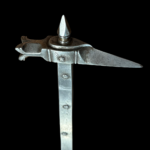
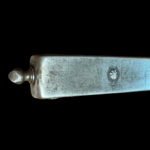
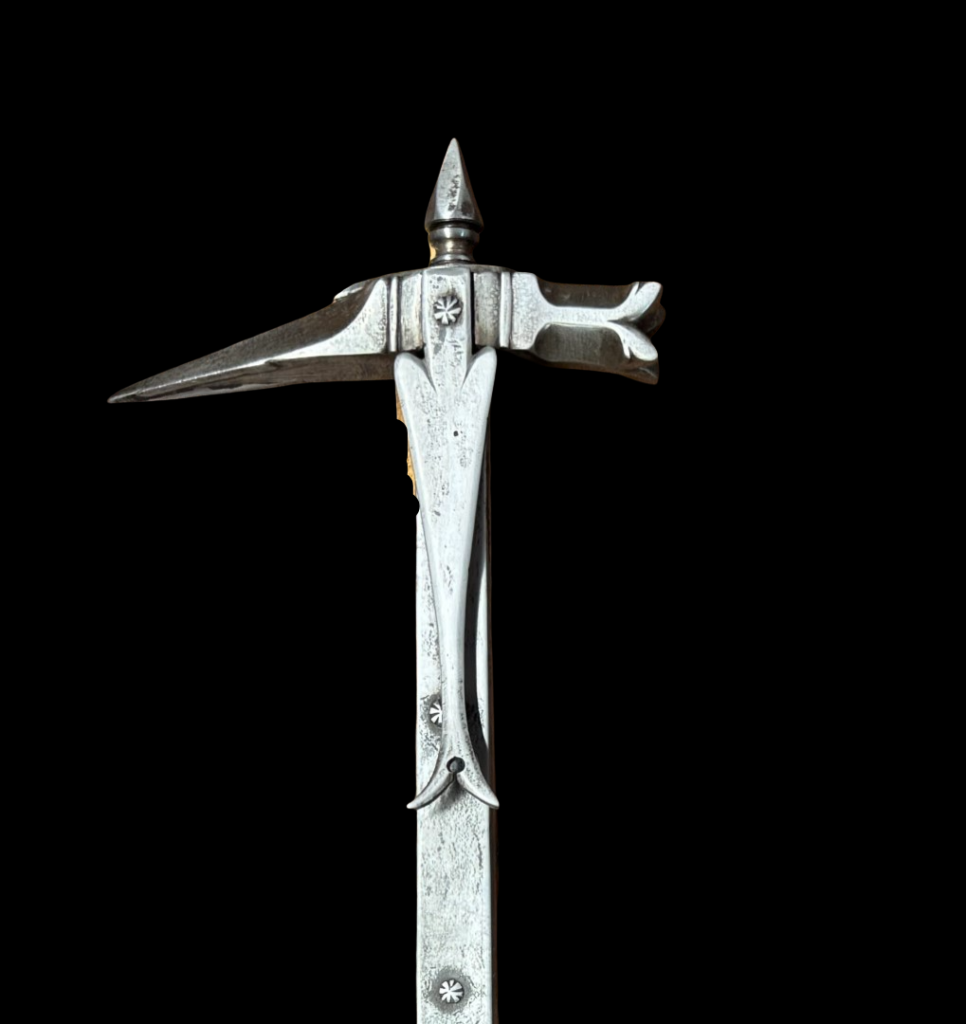
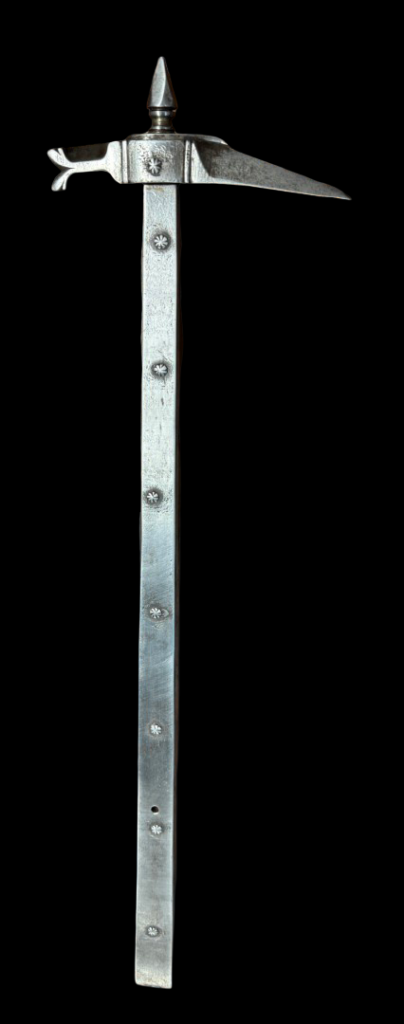
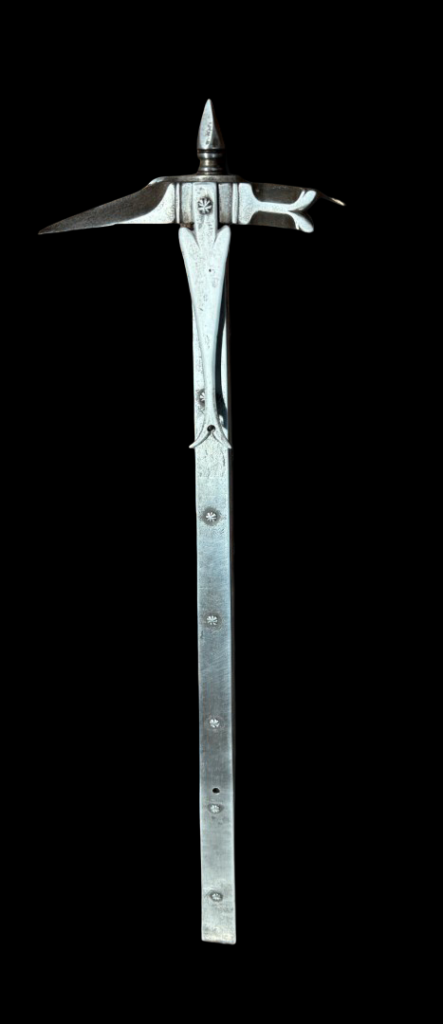
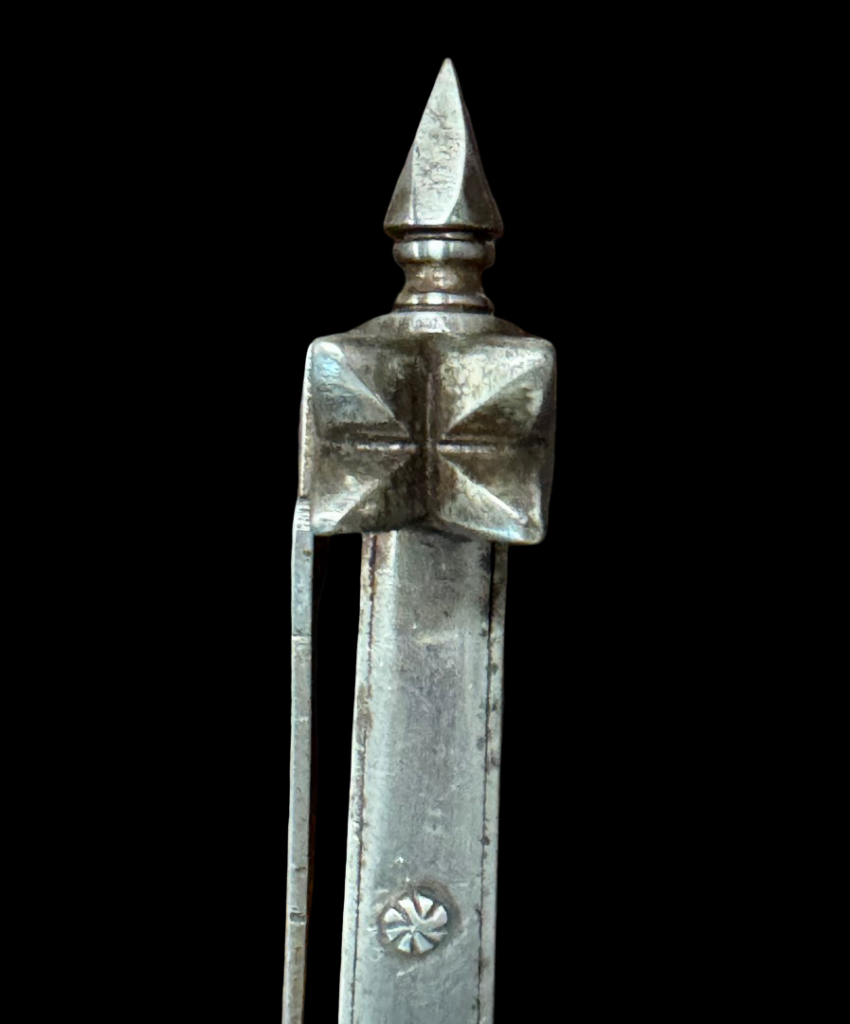
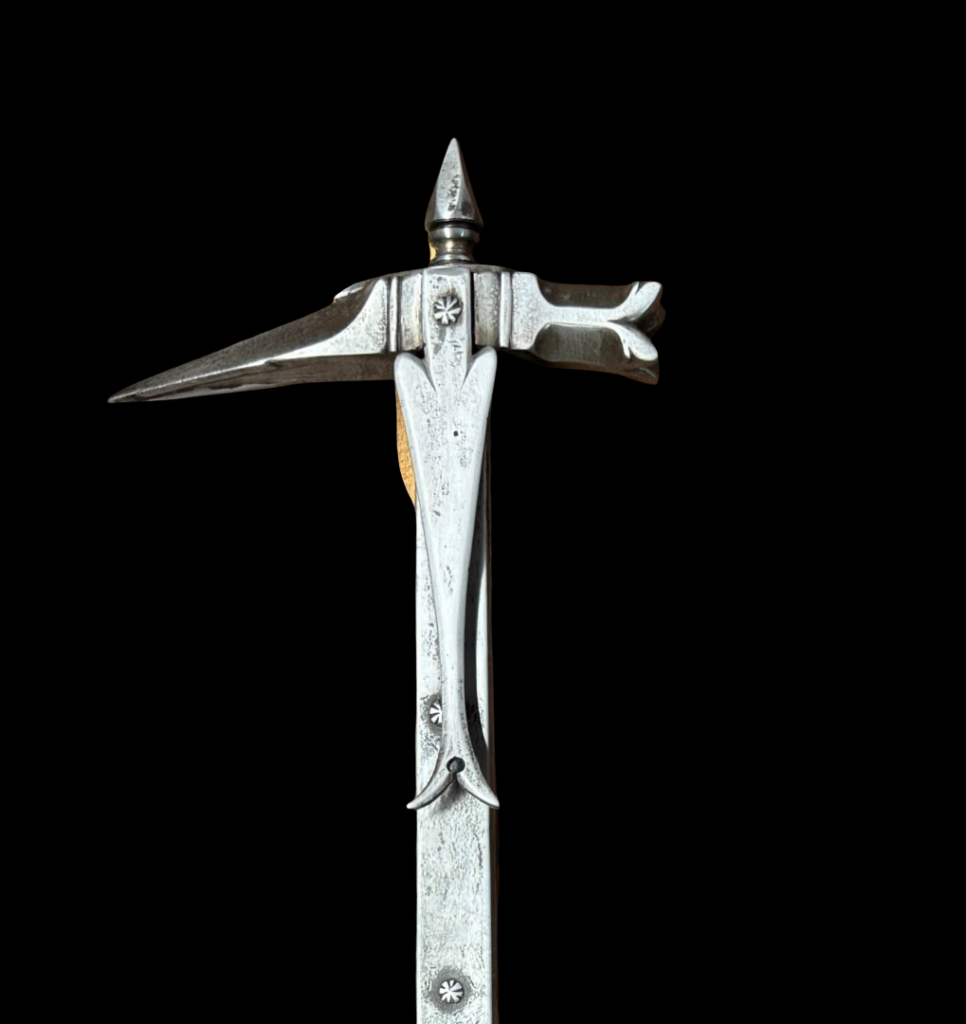
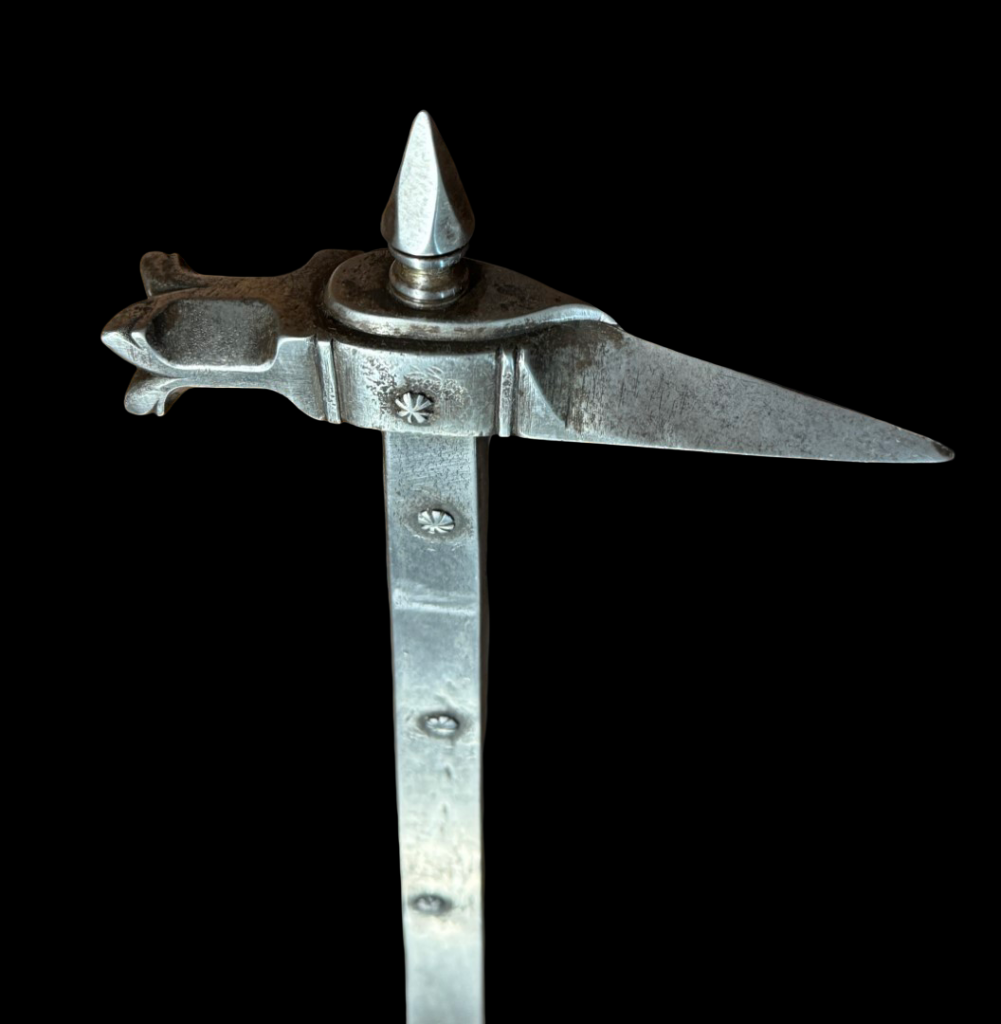
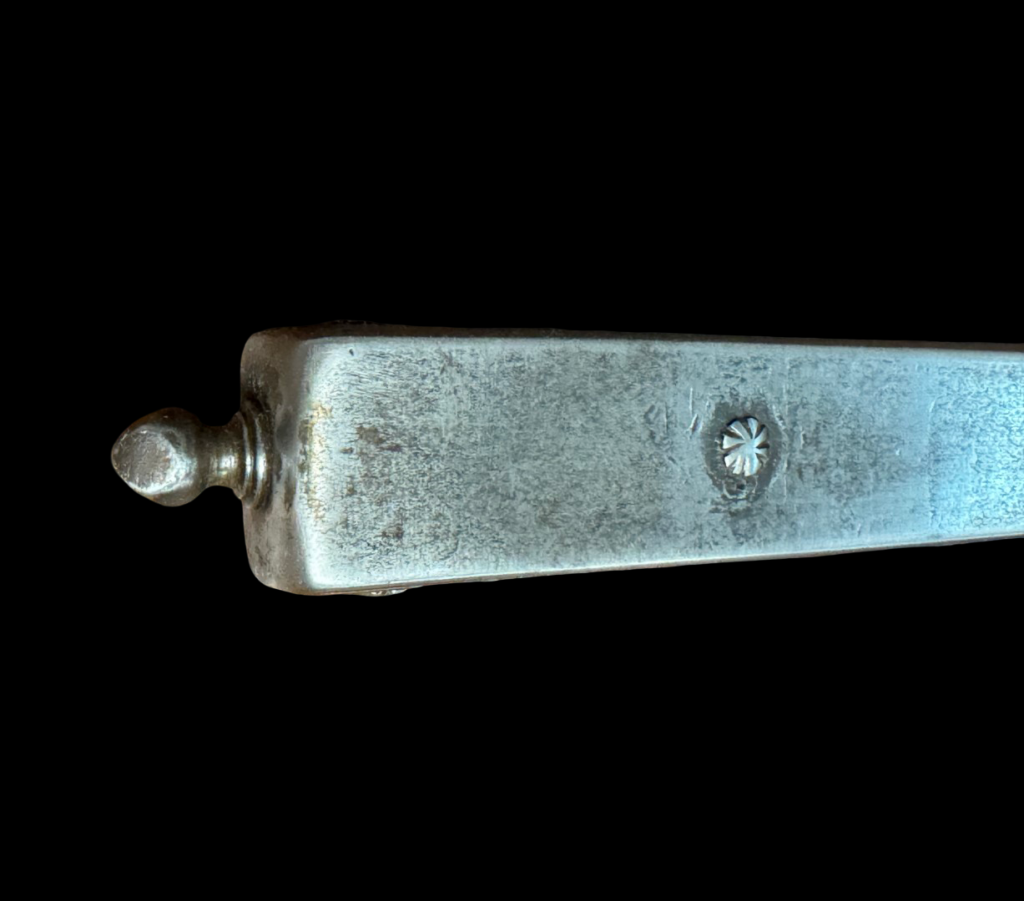
2008) STEEL GERMAN/AUSTRIAN HORSEMANS WAR HAMMER CIRCA 1580:
Introduction: A beautiful example of a classic war hammer in superb condition with a rare swelling rectangular hilt. This typology of horseman’s hammer was the most popular in Western Europe from 1550 to 1600. Like the mace, it’s constructed of all steel. However, it is not as heavy as a mace. A great example of this typology of hammer is in a portrait of Prince Elector Moritz of Saxony with a horseman’s hammer by Lucas Cranach the Younger, circa 1580, see above.
The war hammer typically included a hammerhead and a curved fluke on the opposite side. The war hammer consisted of a handle (usually wood), more appropriately called a haft, with a heavy metal head. Not all hammer hafts were made of wood. This variant of a horseman’s hammer under discussion is made of all metal with a rare rectangular haft swelling towards the end serving as a grip. Many war hammers, such as the one under discussion, were topped with a spike and a belt clip.
Hammers like this were used to smash armor. With its longer fluke, it also served to dismount a knight from his horse. The length of a hammer’s fluke is a reasonably good indicator of a Western European hammer’s age.
Condition: Very good.
Length: Approximately 23.5 inches.
Discussion: The earliest example of a hammer combatant is the manuscript illustration above (Alençon BM MS 96), showing a judicial combat circa 1151 to 1200 with hammers and shields. The story of the war hammer and its variants is, in many ways, like that of the mace. The war hammer is associated with warfare in the late Middle Ages. Like the mace, it developed in response to the growing strength of plate armor in the 14th and 15th centuries. As steel armor became more prevalent, other weapons, such as swords, became less effective in battle. The impact inflicted by a war hammer could cause severe damage even without penetrating the armor.
In my opinion, the best example of the brutality that a war hammer can inflict is from the Battle of Towton. The Battle of Towton was fought near the village of Towton in Yorkshire on Palm Sunday, March 29, 1461, during the English Civil Wars. On this day, plagued by a snowstorm, over 50,000 soldiers died in what is considered the bloodiest, most brutal battle ever in England. Excavations of mass graves show that many men were killed by massive head trauma in which their heads were caved in or split in two. The warhammer was one of the primary weapons of choice for the battle that could have caused this carnage. The war hammer consisted of a handle (usually wood), more appropriately called a “haft,” with a heavy metal head.
The war hammerhead typically included a standard hammerhead and a curved fluke on the opposite side. Many war hammers were topped with a spike. In addition, the warhammer could be used against mounted cavalry by injuring the horses and/or dismounting the riders with the fluke.
War hammers were also used in many typologies of staff weapons, including the Lucerne hammer. Hammers were also used in tournaments. Short hammers were in use from the mid-13th century, primarily by cavalry. By the 16th century, steel had become the standard material for short war hammers.
Provenance:
– An American collection.
– A European collection..
Conclusion: A rare typology of warhammer that any museum would love to display. A war hammer such as this one under discussion is seldom available in the buyers’ market. If you have ever wanted a real one at a very reasonable price, ACT-NOW and avoid disappointment!!!*
All my items come with the following:
–Free shipping.
–10-day review period.
–Certificate of Authenticity.
–Autographed copy of my book.
–In the event of an international shipment, we will help assign the lowest correct Customs tariff, so you pay the least.
I believe you will be very pleased with your new addition to your collection. However, you need to ACT NOW!!!*