1999 Sword
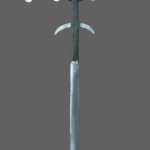
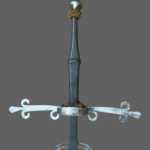
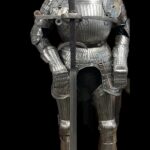
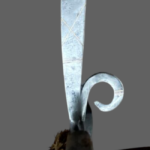
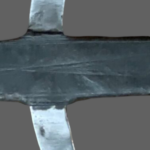
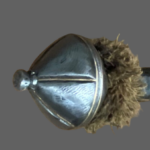
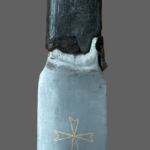
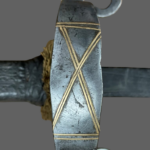
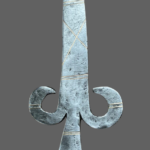
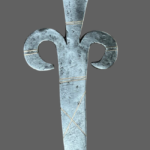
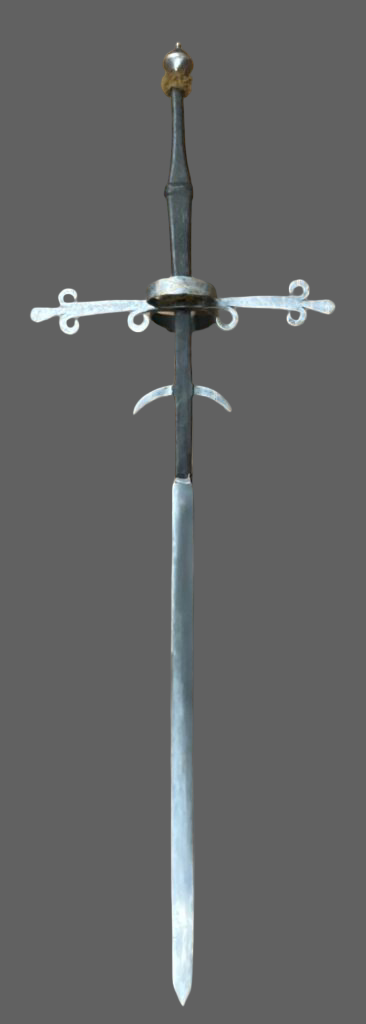
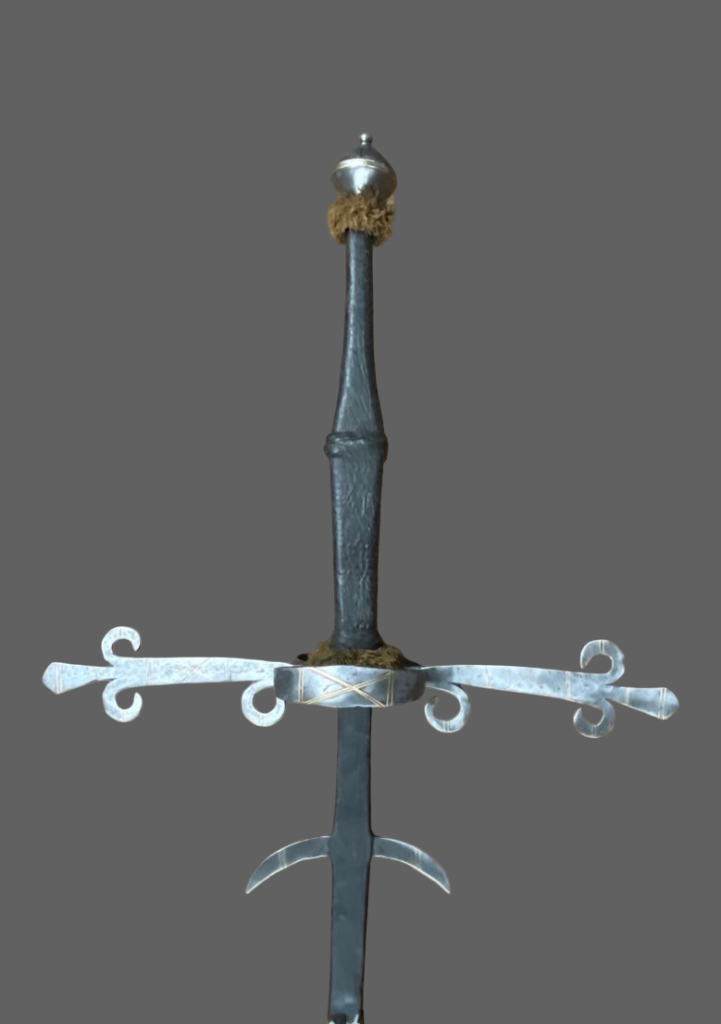
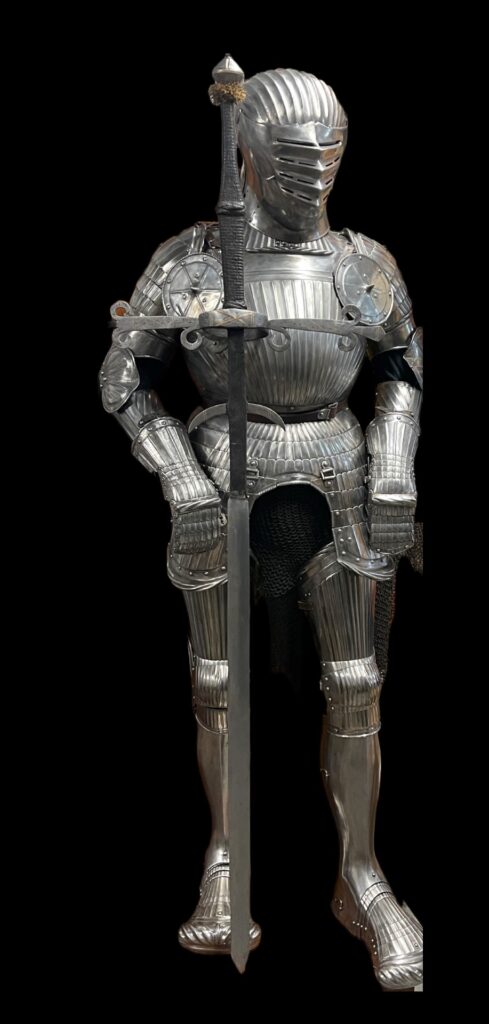
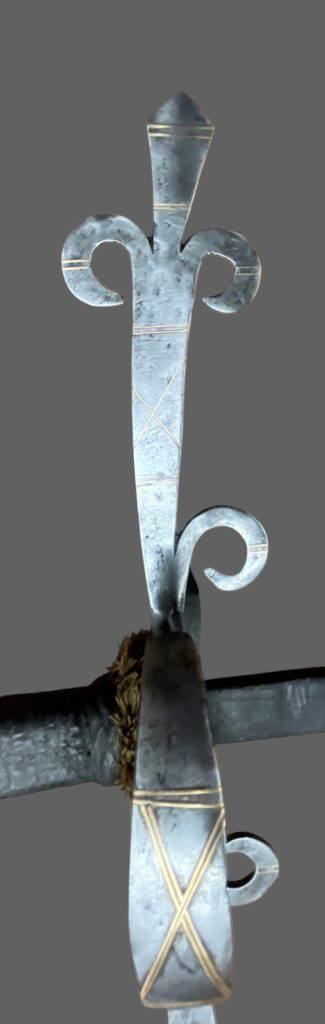
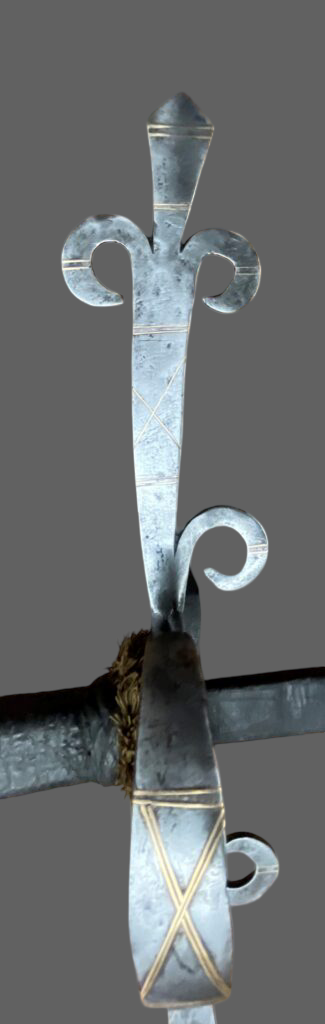
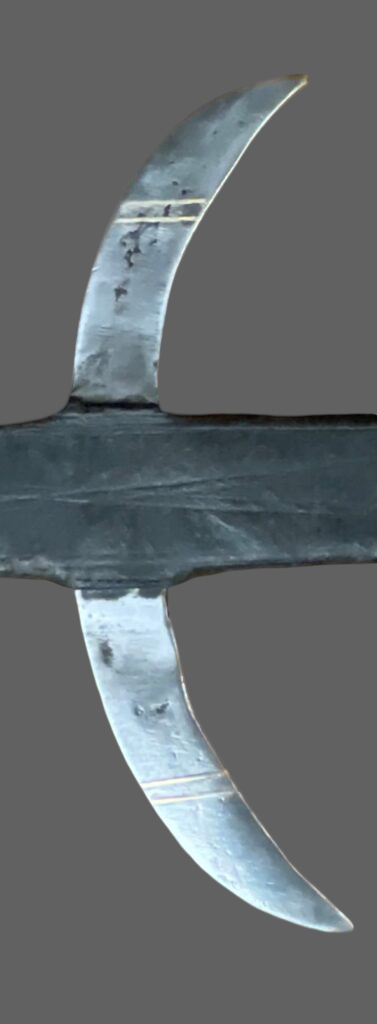
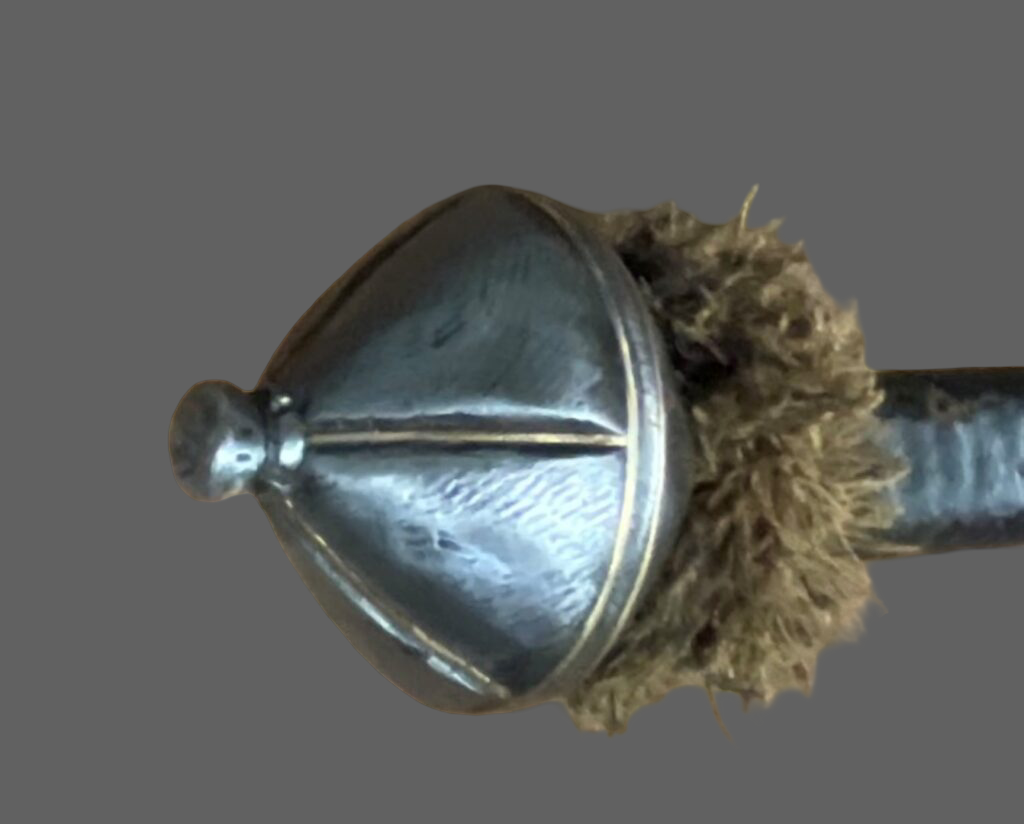
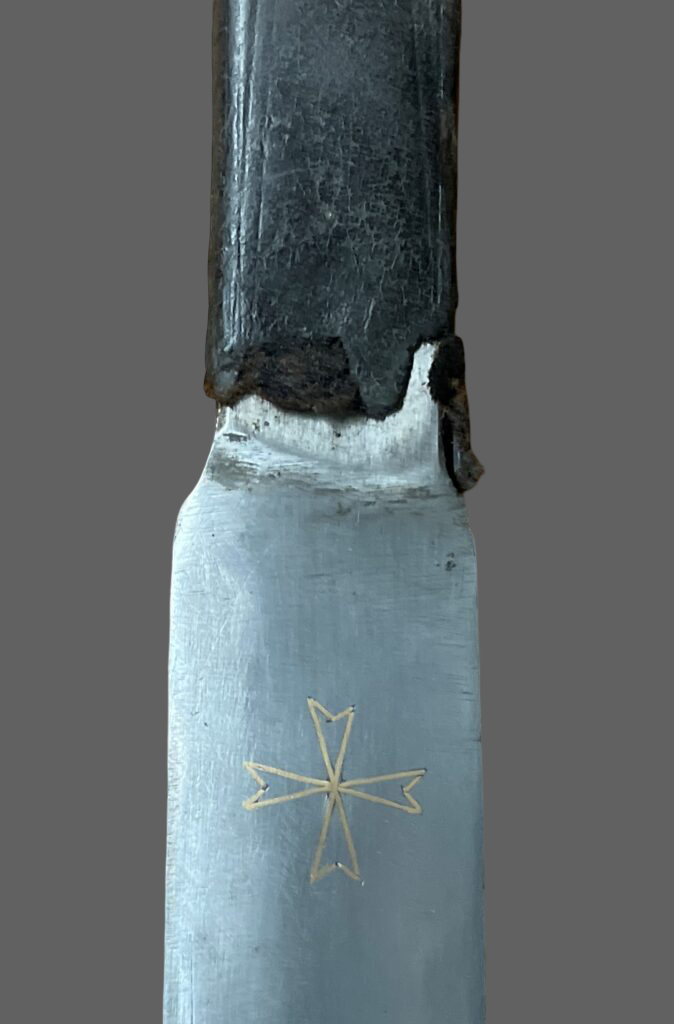
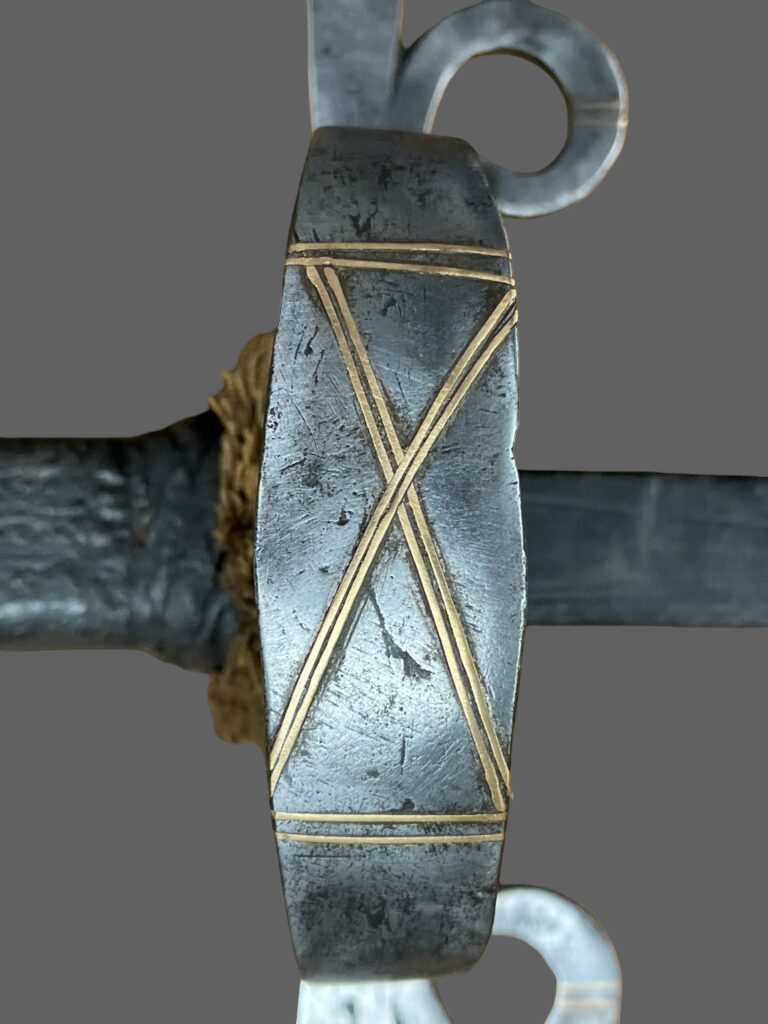
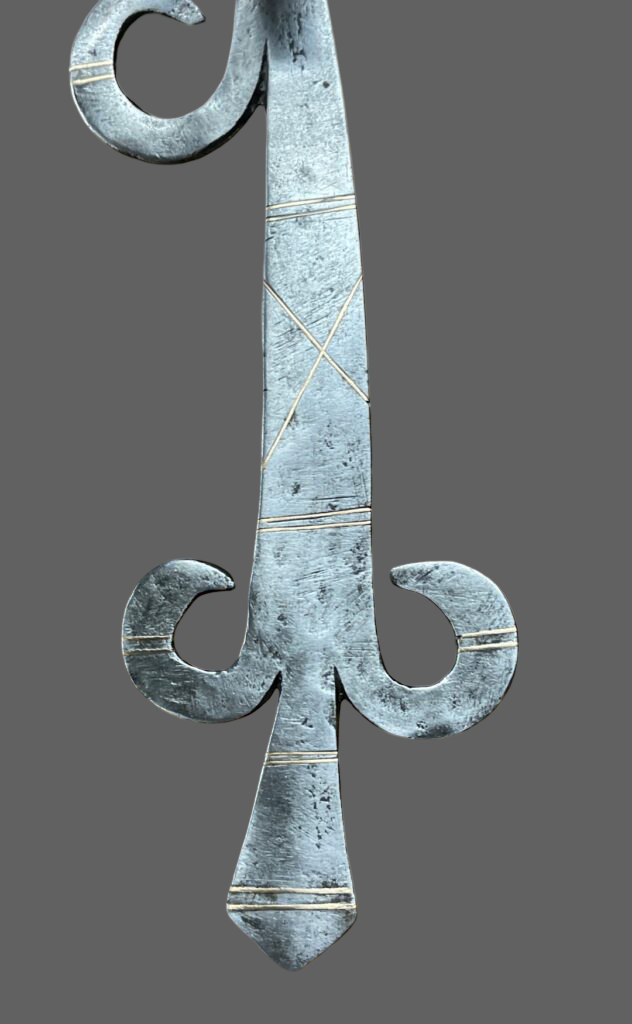
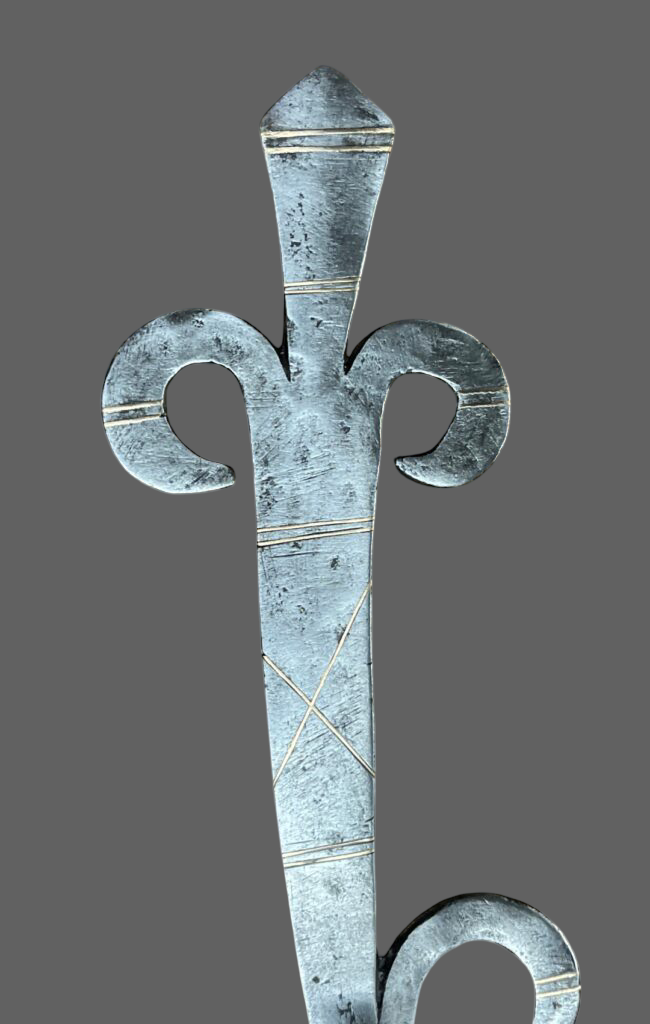
1999) MASSIVE TWO-HAND DECORATED GERMAN BEARING SWORD CIRCA 1580:
So why did it take until the early 1300s for the bastard sword to flourish? There are two primary reasons:
A) For the same reason, full-metal defensive armor and two-hand swords did not develop until the same period. As furnaces got bigger in Medieval Europe, steel billets (solid lengths of steel) accordingly increased in size. With bigger steel billets, swords could now be made with fewer (but larger) steel billets, eventually reaching their peak of one billet per sword. Larger furnaces generally meant higher temperatures, better steel, faster production, and probably less expensive to manufacture on a large scale.
B) As armor evolved, its counterpart, the sword, did the same, with larger specialized swords of superior quality and design. This was the weapons race of its day.
A two-hand sword, by definition, is a sword designed to be used with two hands for maximum effectiveness. Styles of swords can vary by nationality. Two-hand swords were popular both in the field and in the lists from the mid-15th to the early 17th centuries, though from the latter part of the 16th century, they tended increasingly to be employed in a ceremonial role. It has been suggested that the earliest references to the use of the two-hand sword are those to be found in a French copy of the Romance of Alexander of about 1180 which mentions a “bone espée a II espieus molus,” and in the chronicle of Guillaume Guiart, written in the period 1304-7, which notes that the French, when fighting the Germans in 1
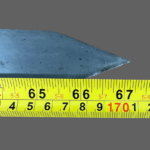
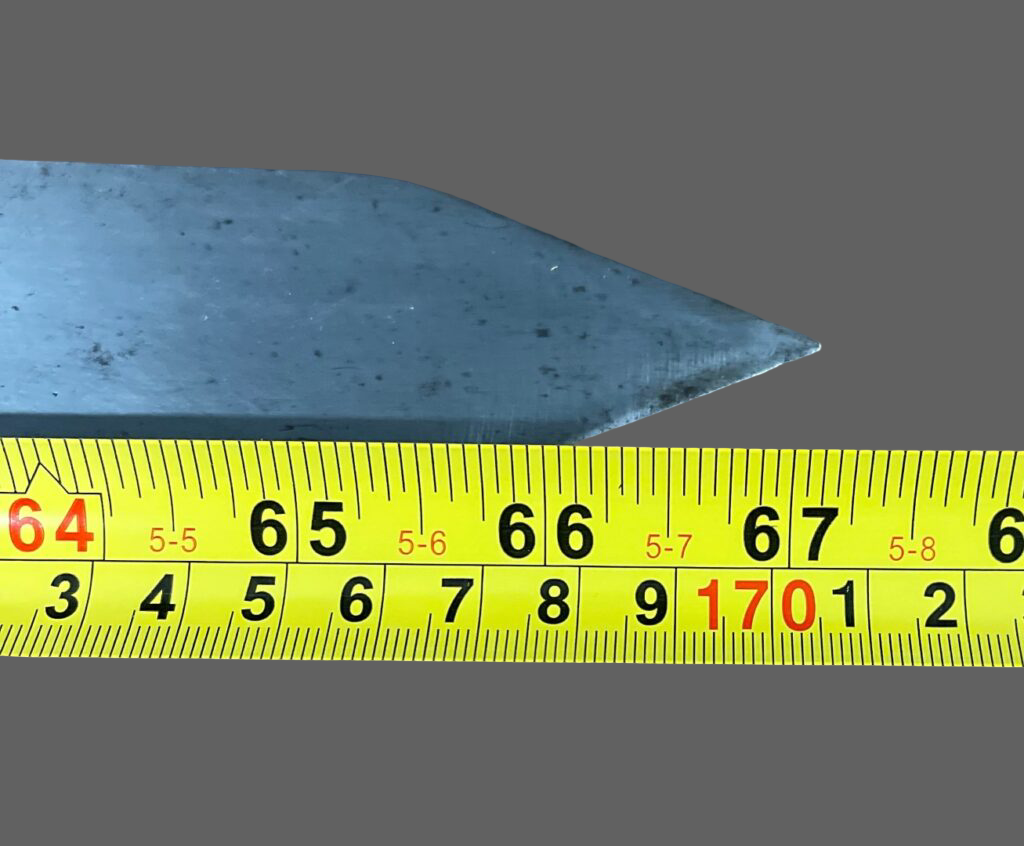
Length: 67 inches.
Conclusion: This is an elegant sword that is, in my opinion, museum quality. All collections should have the iconic two-hand sword as a centerpiece. This example is very attractive not only for its great size and condition but also because it has a wide blade. An amazing piece for any collection. Owner says sell! today!!!*