1995 Stirrups
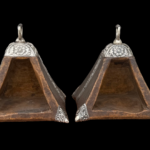
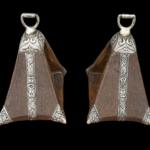
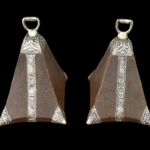
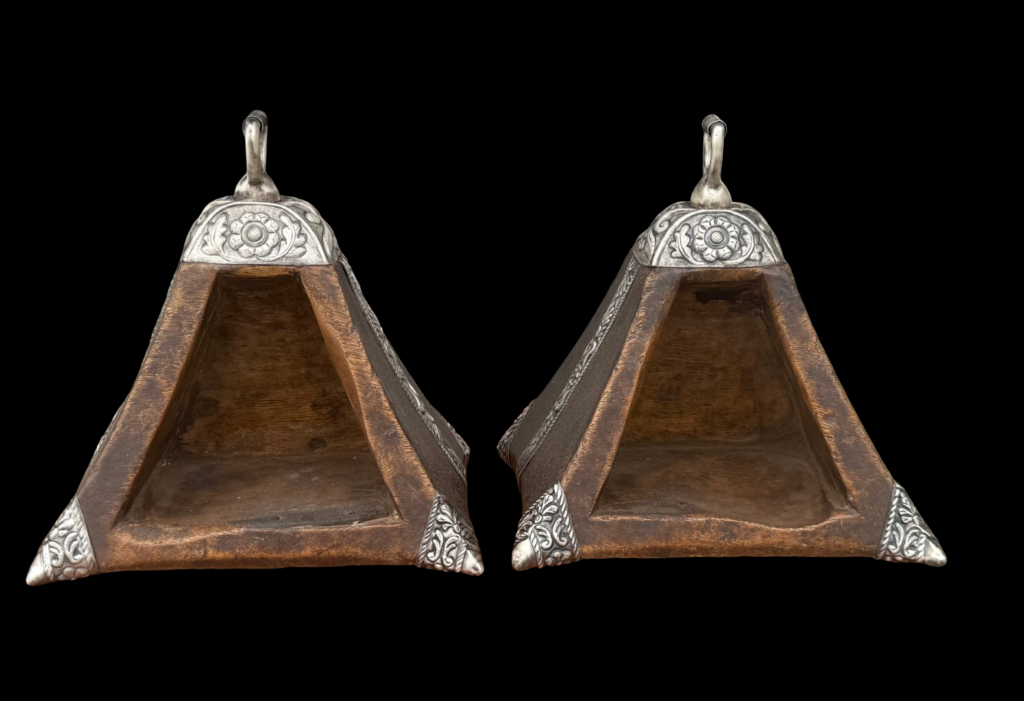
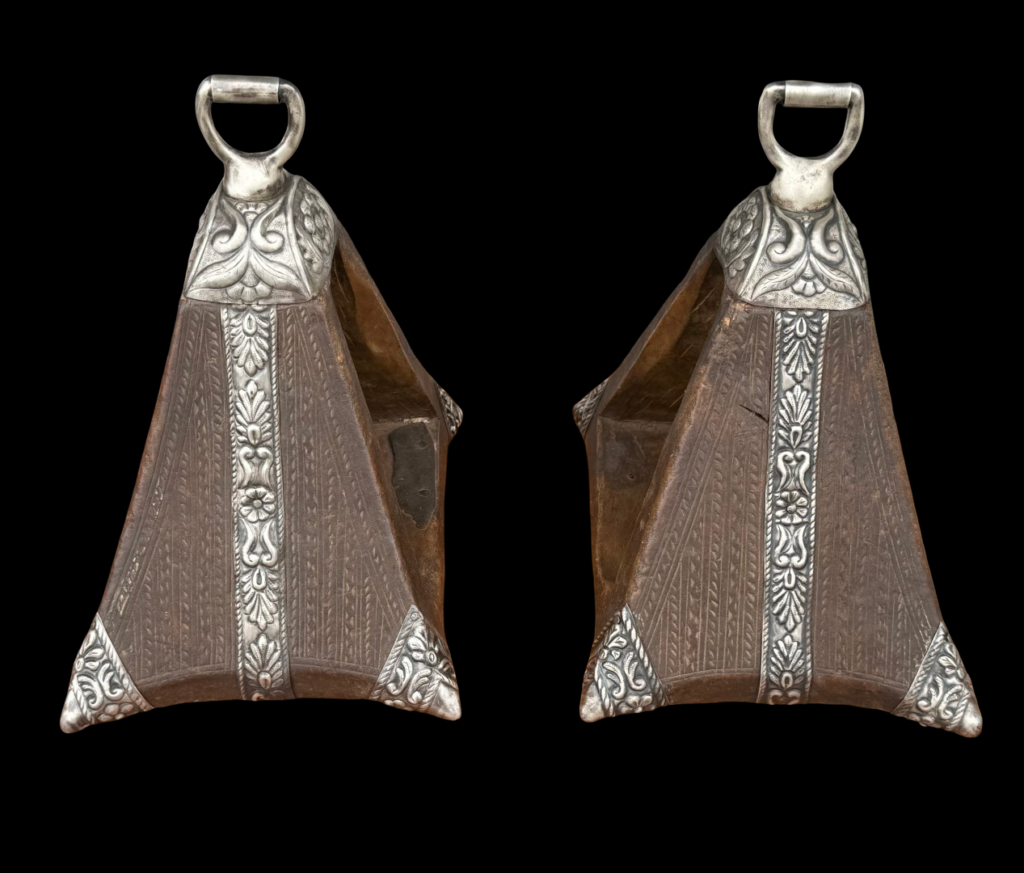
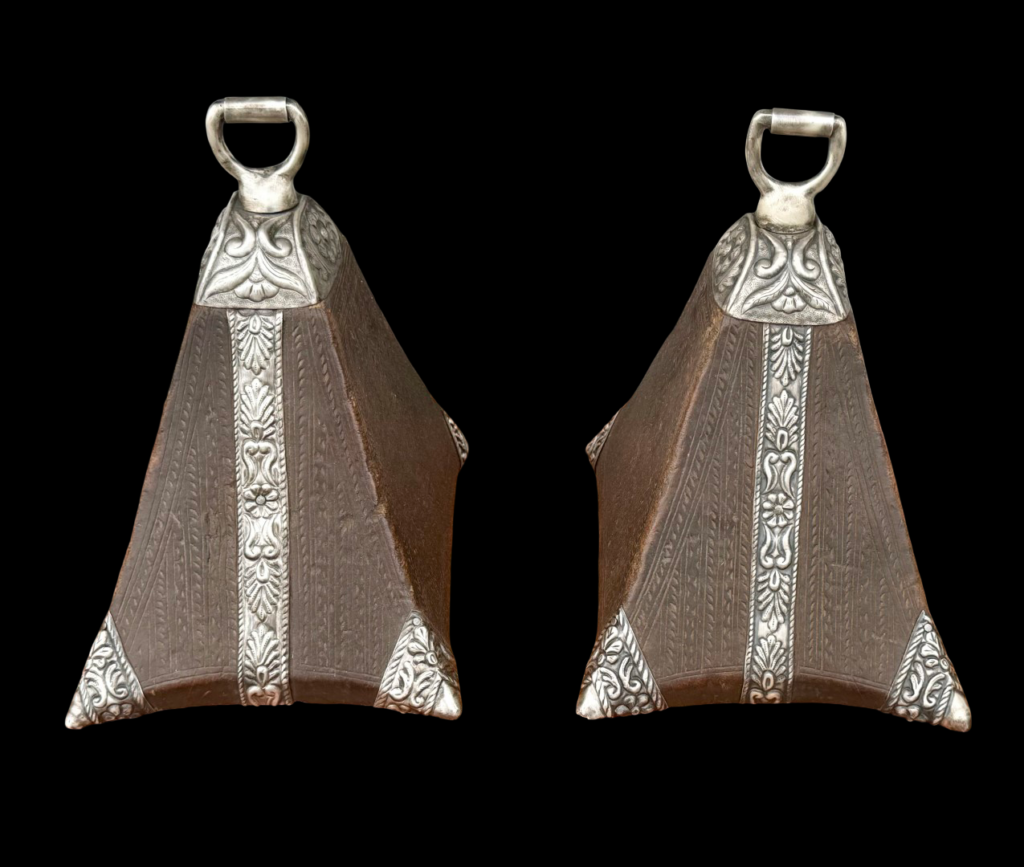
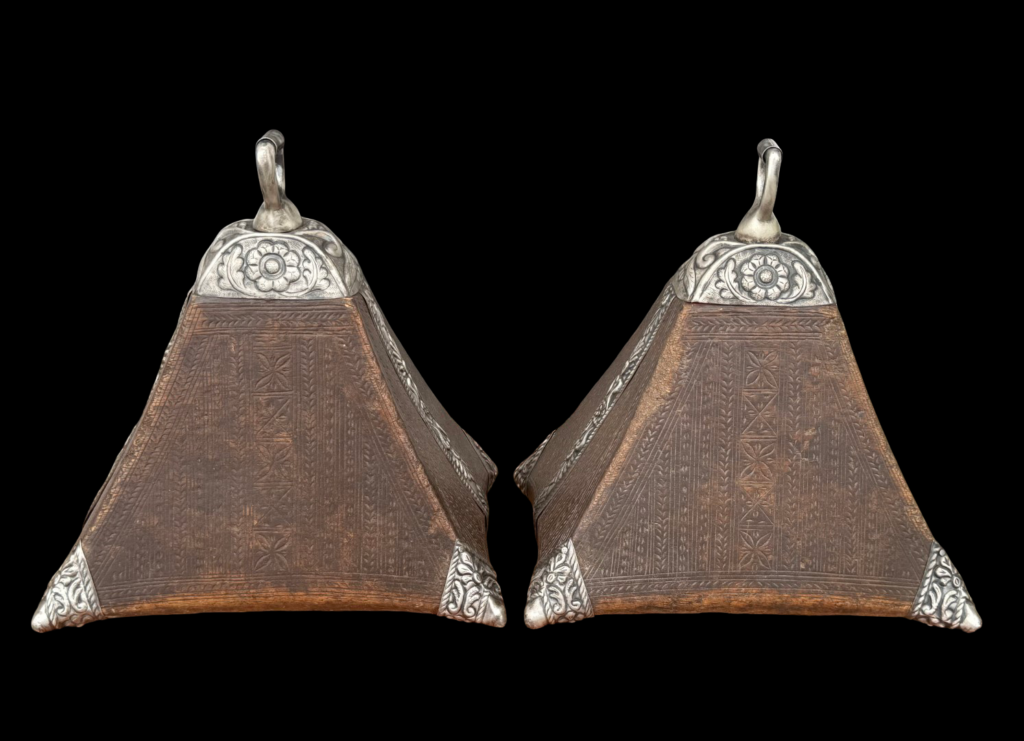
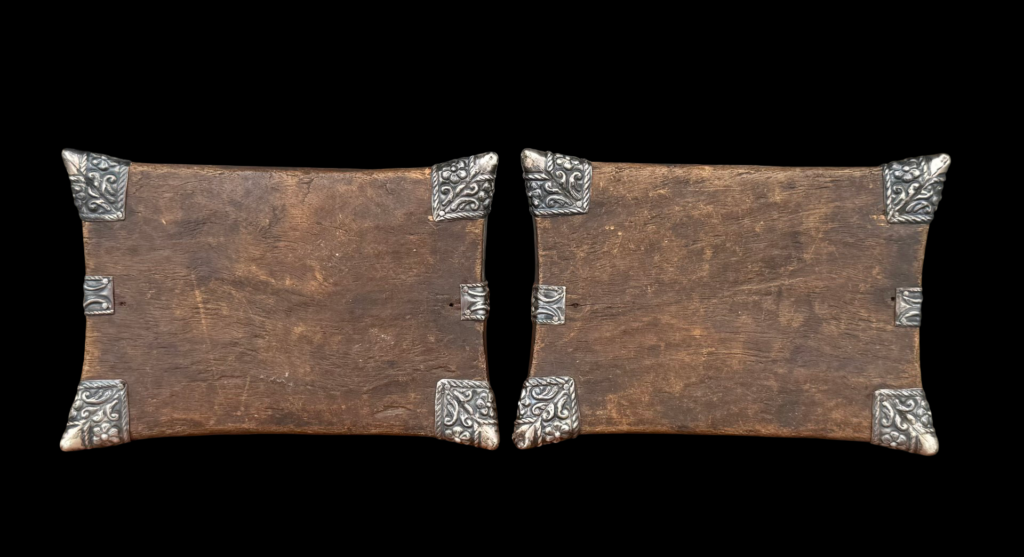
1995) MAGNIFICENT PAIR OF MINT CONDITION PAIR OF SPANISH COLONIAL CARVED SILVER STIR UPS CIRCA 1700:
Introduction: The original owner who commissioned this pair of stirrups must have been a wealthy landowner. In Spanish Colonial society, horses were a primary indicator of social standing. Elaborate horse tack, particularly silver-plated items, were commissioned by wealthy landowners for parade use during weddings, religious processions, and significant public festivals.
This magnificent pair is masterfully hand-carved from single blocks of hardwood and adorned with intricate repoussé silver overlays, these matched stirrups were more than functional gear for the elite huaso or vaquero; they were powerful symbols of social hierarchy and wealth, designed for high-profile parades and religious processions. Their unique enclosed “box” design offered vital protection against rough terrain while the wide, stable base and deep, authentic patina tell the story of decades of use. As a complete, matched pair featuring traditional floral motifs and exceptional silver work, these stirrups serve as a rare, tangible link to the storied equestrian traditions that shaped the American Southwest and South America.
Description: Carved from a single block of hardwood, which is a sign of higher craftsmanship (cheaper versions were assembled from multiple pieces). The repoussé silver overlays—with floral and foliate motifs—reflect Spanish decorative traditions blended with local styles. Silver mounts like these were not just decorative; they also reinforced areas prone to wear.
Approximante dimensions : 9.6″ x W: 6.4″ x L:9.25″.
Discussion: The use of repoussé silver—a technique where metal is hammered from the reverse to create three-dimensional relief—was often tied to the discovery of silver in the New World. Designs frequently incorporated floral motifs, which in some regions (like Florida or the Andes) were blended with local indigenous iconography to represent communication with deities or specific regional wildlife.
The enclosed, triangular “box” design (sometimes called tapaderas) was meant to protect the rider’s foot from brush, thorns, and weather—especially useful for long rides in rough terrain. The wide base also gave greater stability, which was important for working riders like vaqueros.
Dating clues to the 1700’s: 1) The deep patina and wear you mentioned suggest long-term use rather than purely decorative production. 2) The style of repoussé and the somewhat robust, hand-carved form is consistent with late colonial into early post-colonial periods (roughly late 1700s to early 1800s). 3) Earlier examples tend to be heavier and more hand-hewn; later 19th-century pieces sometimes show more refined or standardized metalwork.
Conclusion: These are a very good pair. Look at the integrity of the wood with no visible cracks, repairs, or worming. The originality of the silver mounts, the quality of its carving and repoussé detail and it’s a matched pair. Whether you are a collector of fine equestrian artifacts or an admirer of colonial history, this exquisite pair of 1700’s Spanish Colonial “bell” stirrups (estribos de campana) represent the pinnacle of status and craftsmanship in the New World. Plus, they would make the ultimate bookends.
Contact Me to Get the Latest Lowest Price Possible From the Owner*
ACT-NOW!!!* If not, you will probably regret it later.
All my items come with the following:
–Free shipping.
–10-day review period.
–Certificate of Authenticity.
–Autographed copy of my book.
– In the event of an international shipment, we will help assign the lowest correct Customs tariff, so you pay the least.