1993 Antique Sword
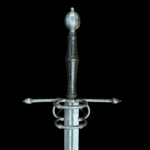
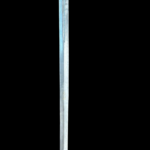
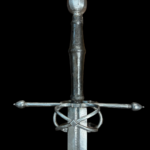
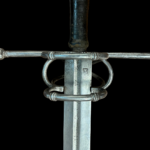
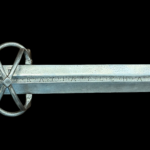
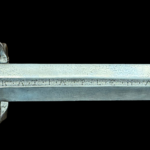
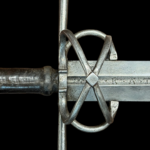
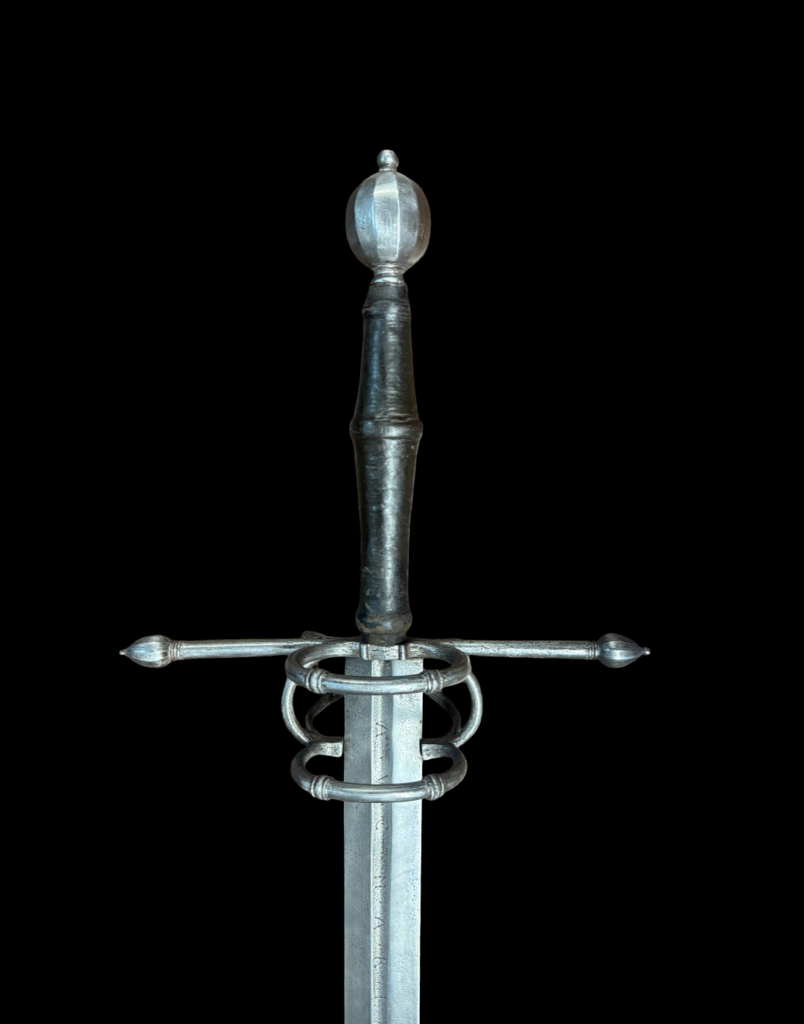
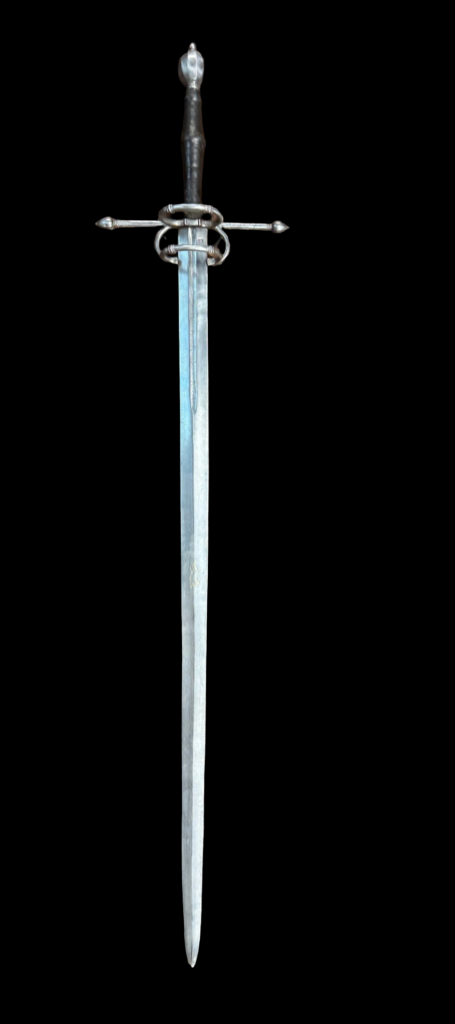
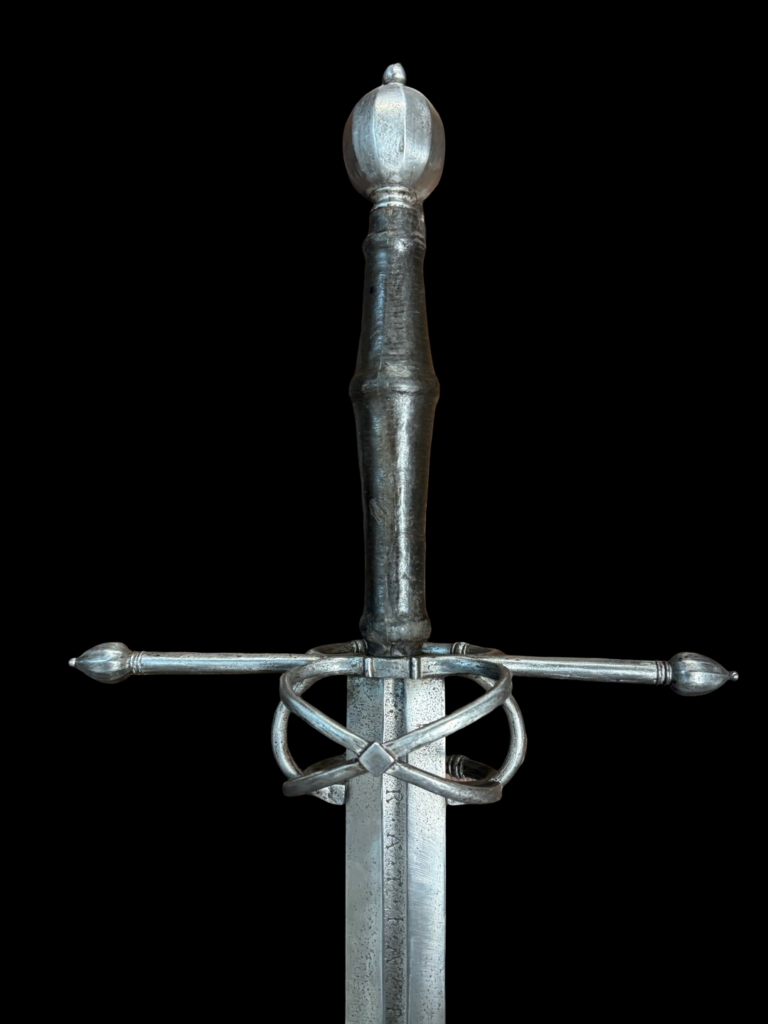
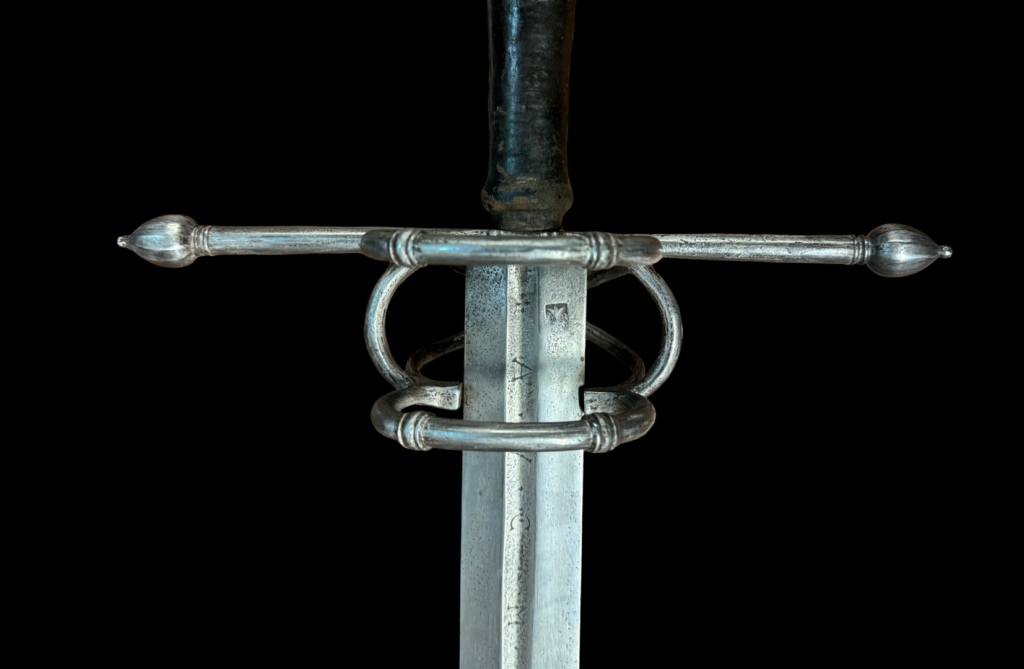
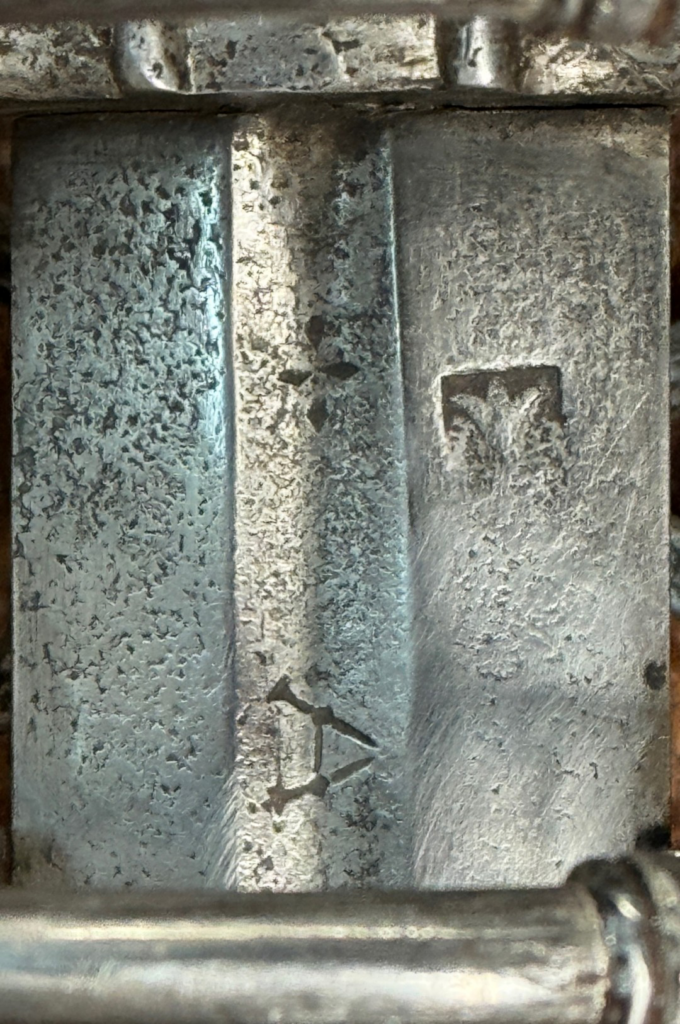
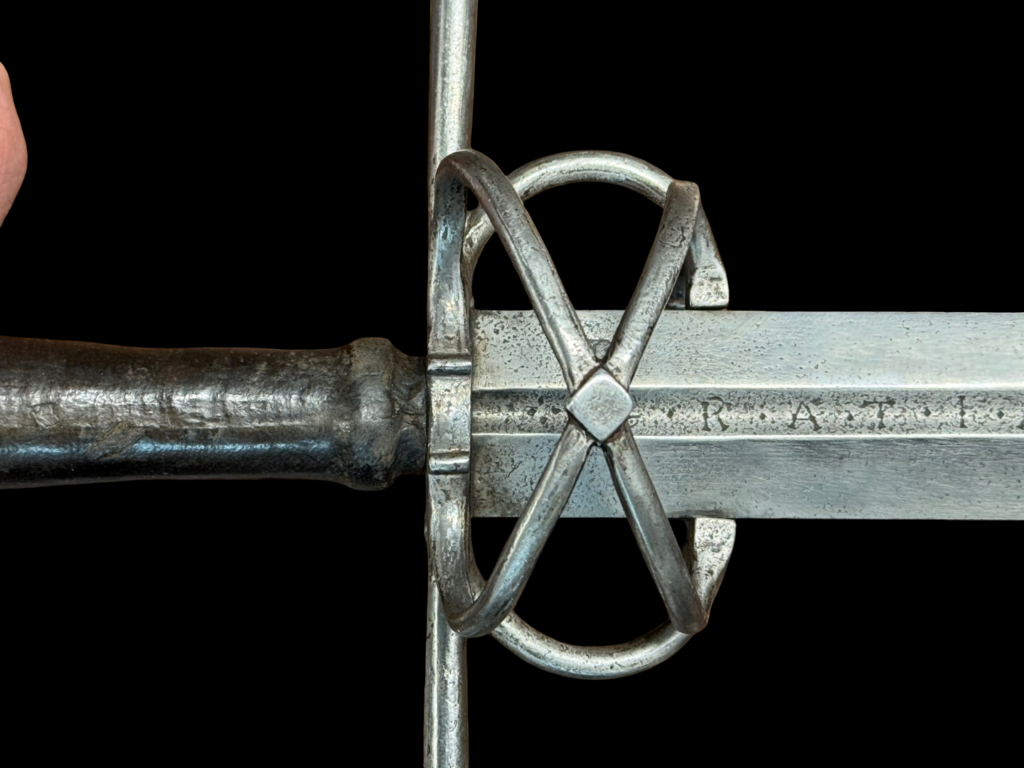
1993) SUPERB GERMAN TWO-HAND DECORATED FIGHTING SWORD CIRCA 1550:
Introduction: This is the fighting sword typology referred to by Sir John Smithe in “Instructions, Observations and Militarie” composed in 1591, published 1595, page 186. This officer’s grade two-hand sword is as original as the day it was made! They just don’t come any nicer. This is the type of sword that collectors dream of owning—a great addition to any collection or museum.
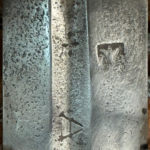
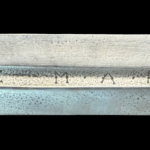
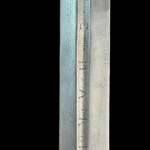
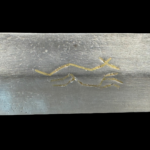
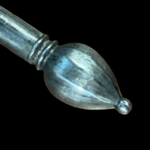
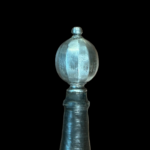
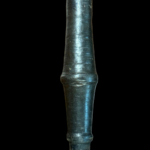
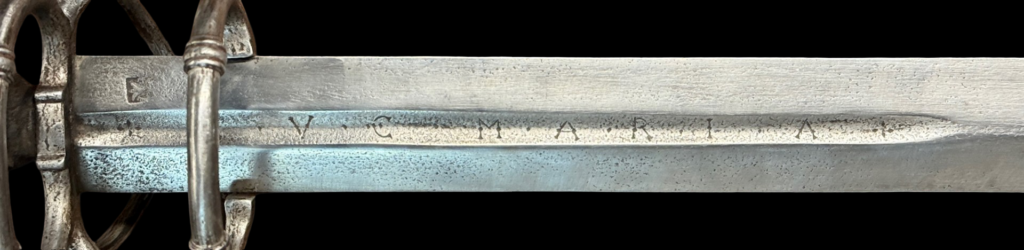
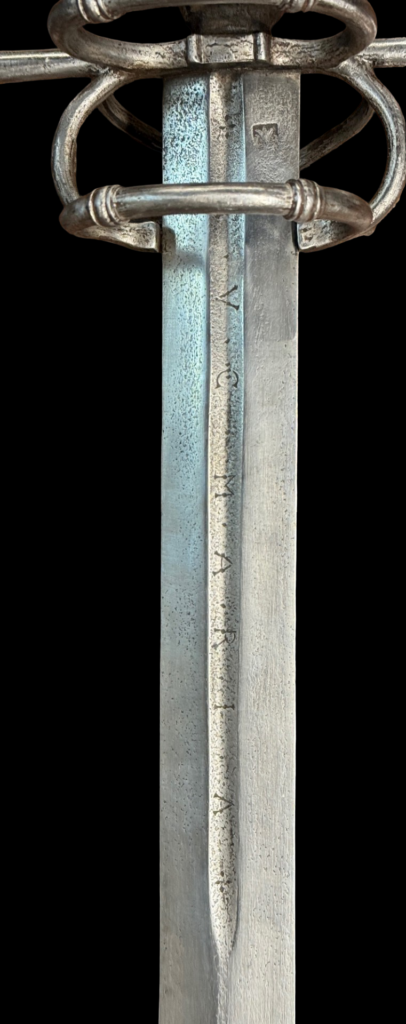
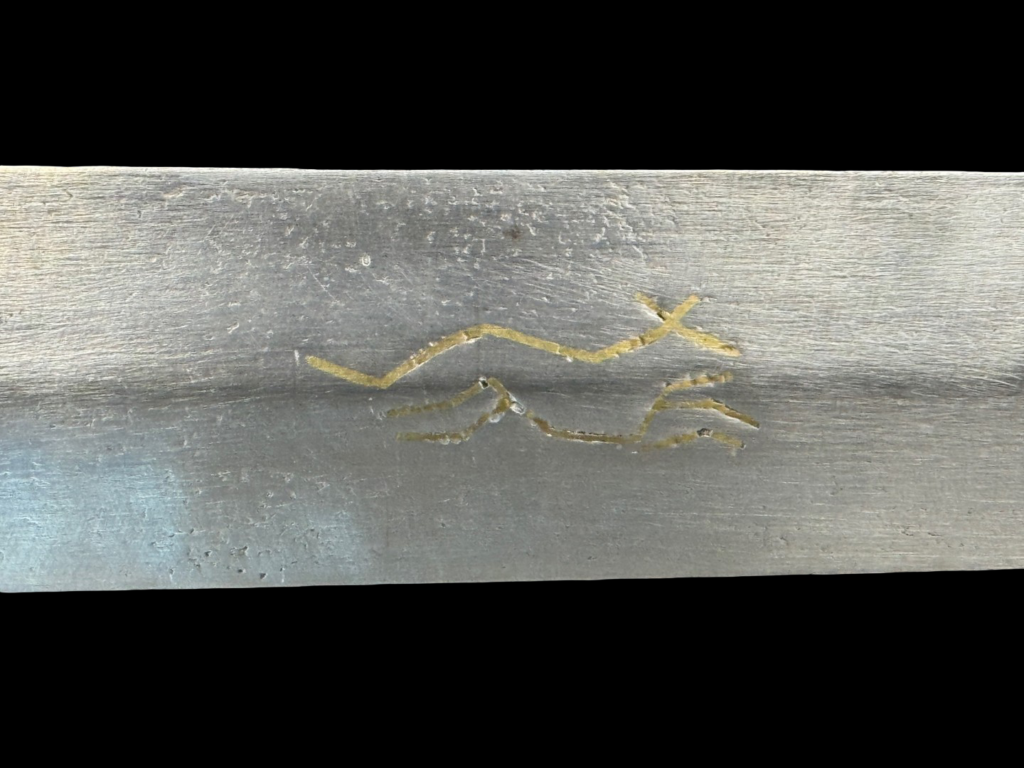
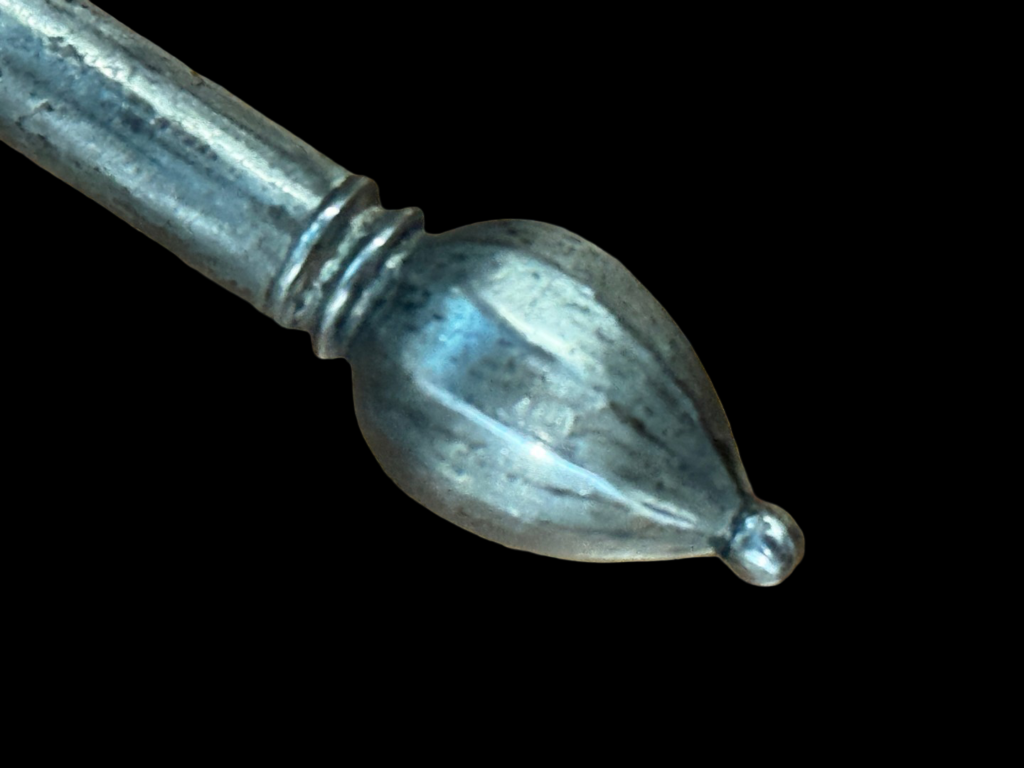
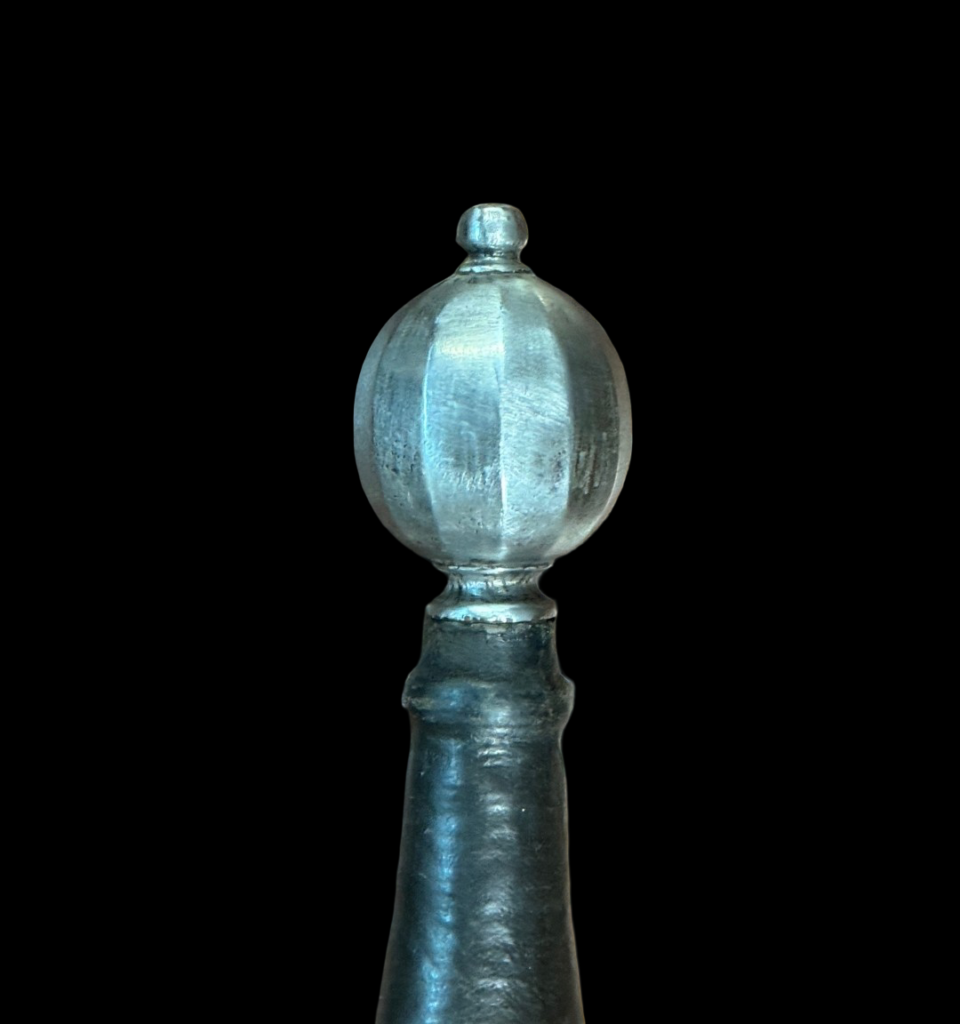
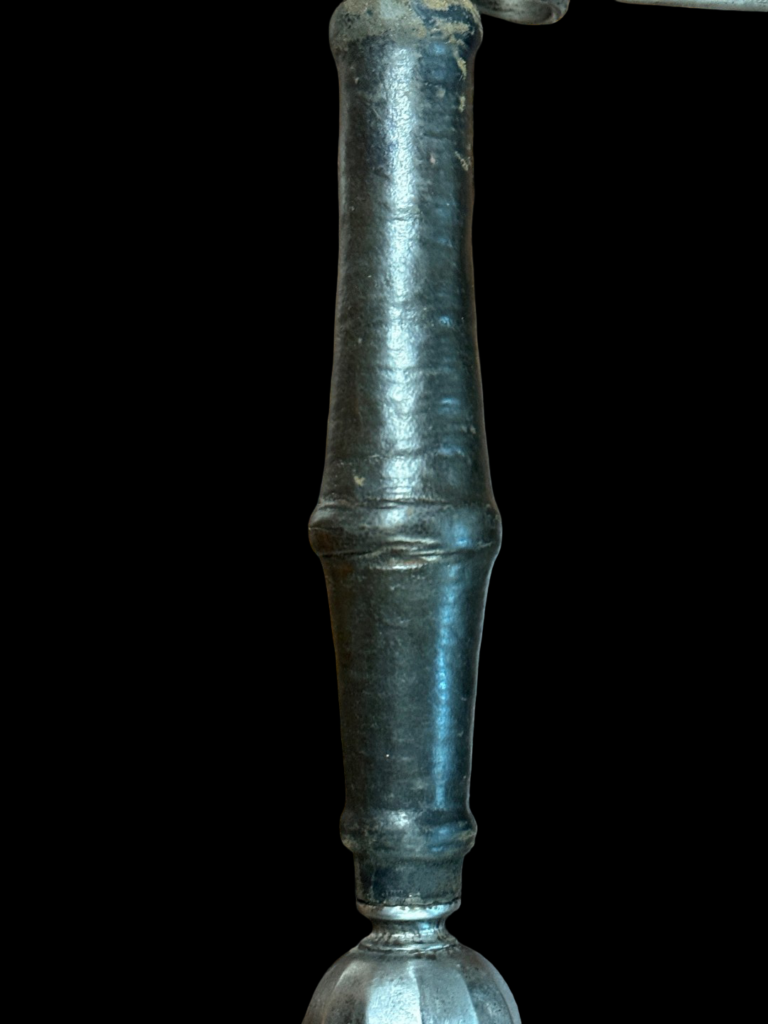
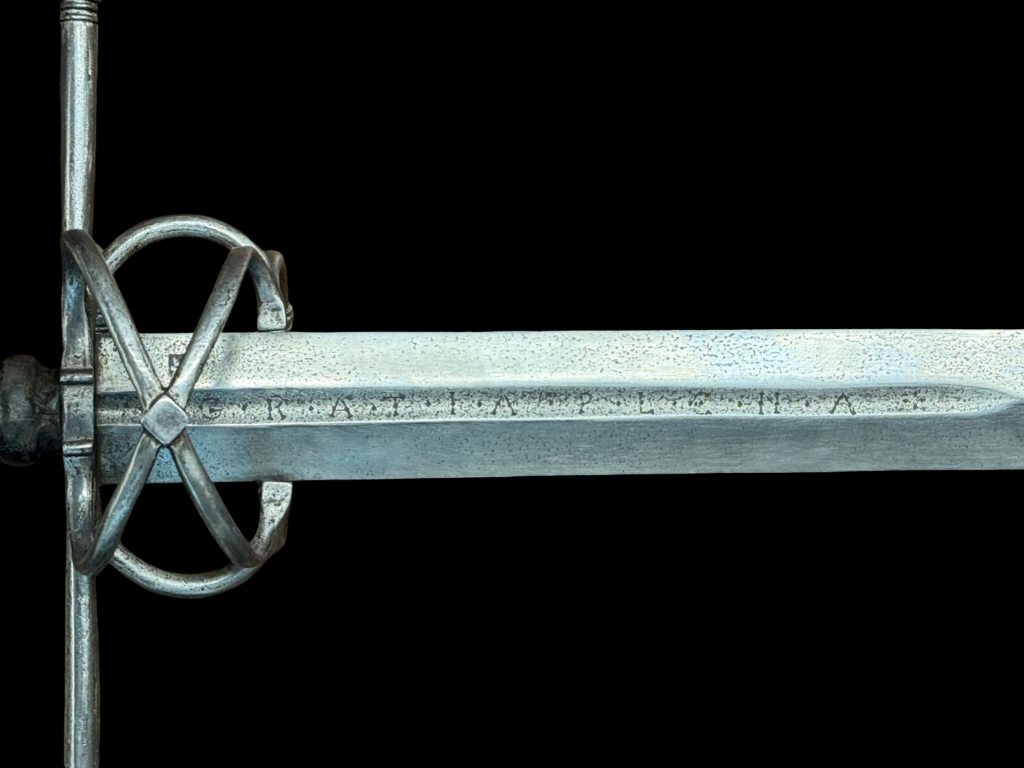
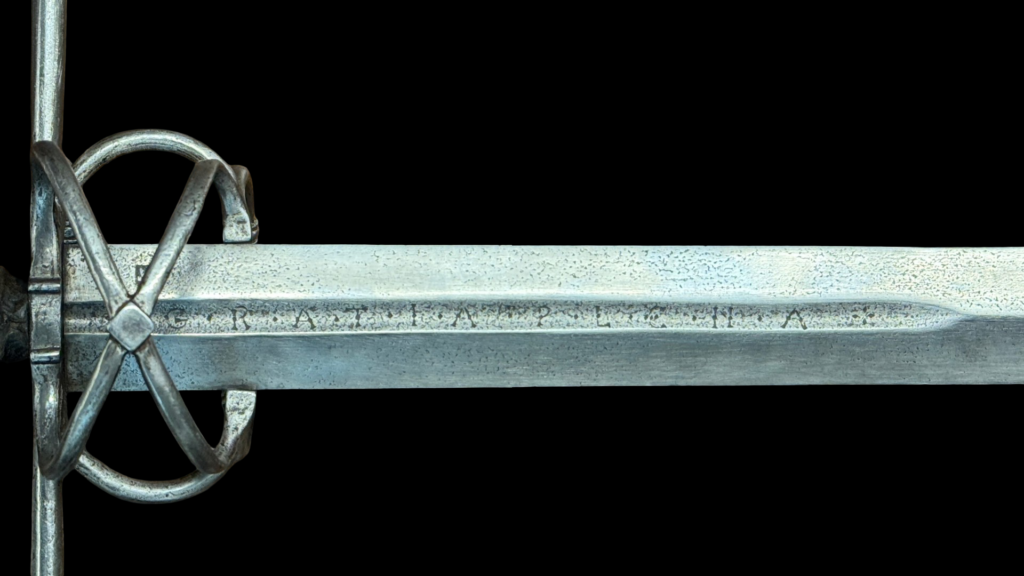
Description: Constructed on a Norman style 43 hilt, hexadecagon fluted pommel with peen on the apex, matching horizontal octagonal quillons tapering at the tips, slightly bulging quillon block with hash marks, a transverse separation on the grip under the pommel creating a comfortable two-stage, “hockbo
Condition: Very good. Some slight fading to the inscriptions.
Approximate Length: 49.5 inches.
Provenance: American and European collectors since WWII.
Comparables: See my book, Chapter 9.
Discussion: Collectors love two-hand fighting swords; they’re big, elegant, easy to display, and make a powerful statement. A two-hand sword, by definition, is a sword designed to be used with two hands for maximum effectiveness. This is not a processional or bearing sword used for processions or parades. This is a fighting war sword used by a high-ranking officer of exceptional taste.
Styles of swords can vary by nationality. Two-hand swords were popular both in the field and in the lists from the mid-15th to the early 17th centuries; though from the latter part of the 16th century, they increasingly tended to be employed in ceremonial and parade rolls.
It has been suggested that the earliest references to the use of the two-hand sword are those to be found in a French copy of the Romance of Alexander of about 1180 which mentions a “bone espée a II espieus molus”, and in the chronicle of Guillaume Guiart, written in the period 1304-7, which notes that the French, when fighting the Germans in 1264, had to adjust their tactics “Car les deux mains en haute levées /Giètent d’unes longues espées” More certain evidence of the use of the two-hand sword is provided by Jean Froissart (1337-1410) who, when writing in his chronicles of the year 1358, noted that the Canon de Robesart “tenoit une espée a II mains, dont il donnoit les horions si grands que nul les osoit attendre”, while Bertrand du Guesclin (c. 1320-80) recorded in his chronicle that Oliver de Manny carried “D’une espée a II mains” (J. Hewitt, Ancient Armour and Weapons, Vol. II, London, 1855, p. 256).
Conclusion: This is a sword that any collector or museum would love to own. Rare pieces such as these seldom reach the collectors’ market. If you want a superb officer’s grade sword that screams Renaissance military history. ACT-NOW!!!* If not, you will probably regret it later.
All my items come with the following:
–Free shipping.
–10-day review period.
–Certificate of Authenticity.
–Autographed copy of my book.
– In the event of an international shipment, we will help assign the lowest correct Customs tariff so you pay the least.