1985 Polish Saber
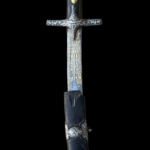
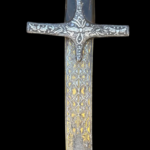
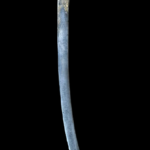

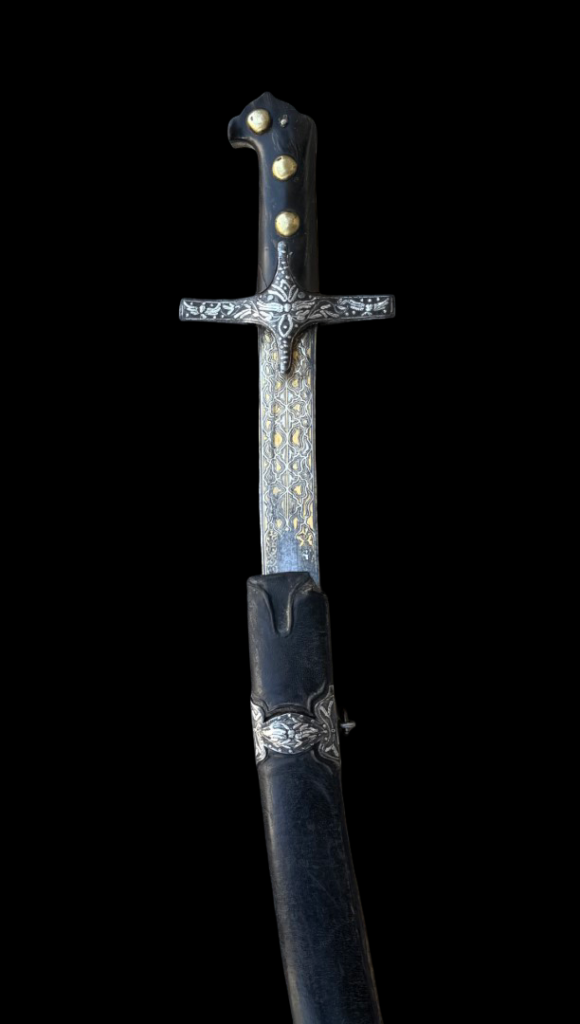
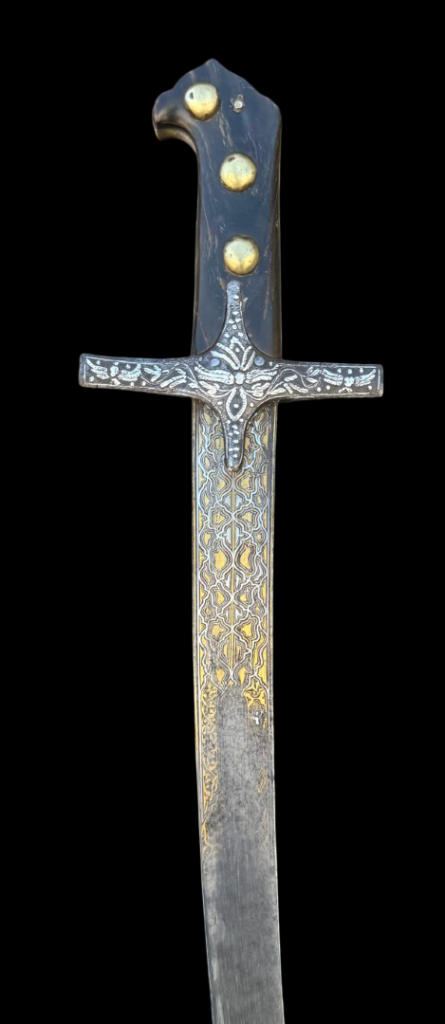
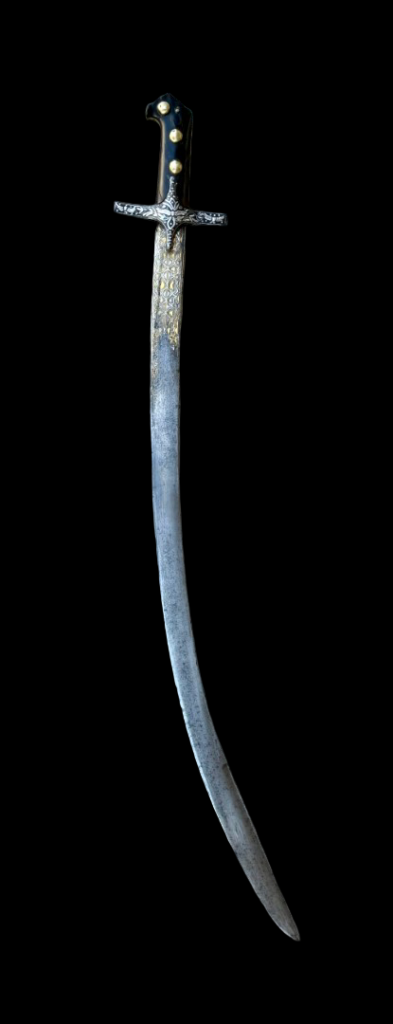
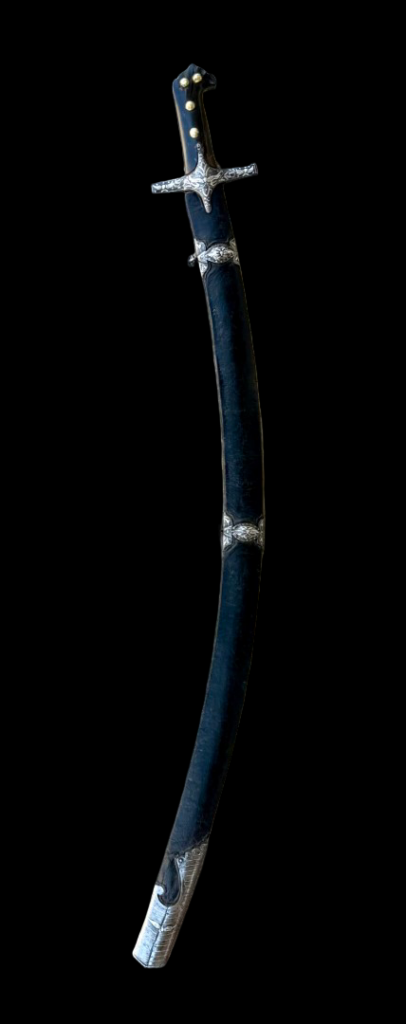
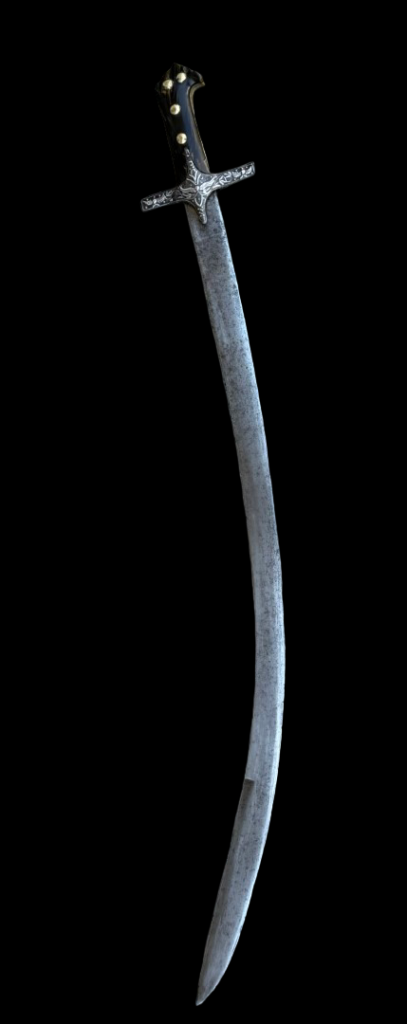
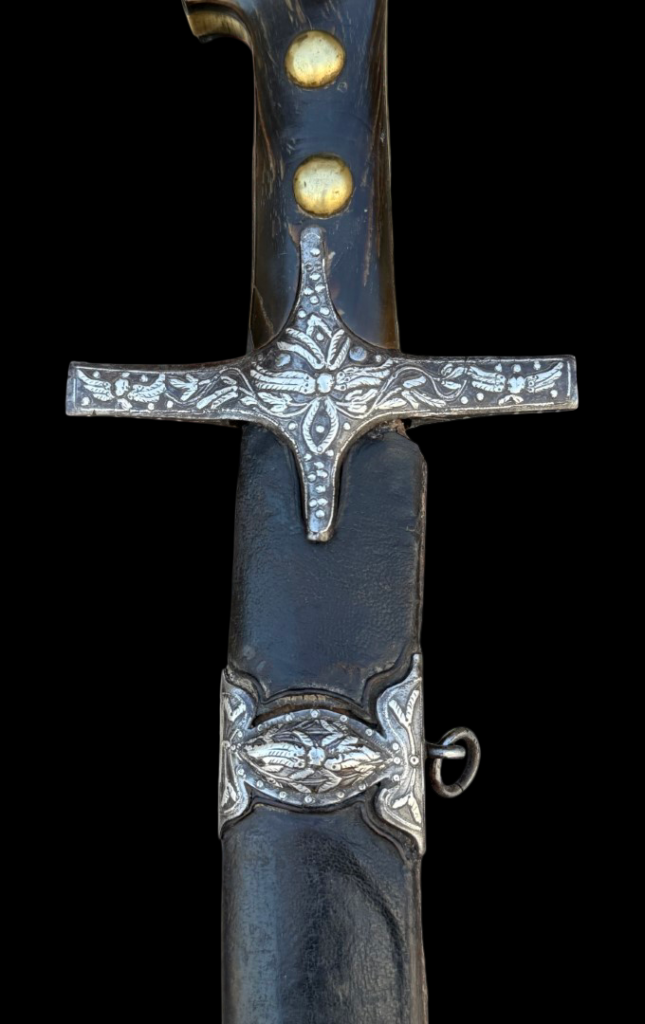
1985) RARE SILVER AND DAMASCENED POLISH SABER WITH SCABBARD CIRCA 1680:
Introduction: The karabela (Polish saber) is the quintessential “national sword” of Poland, a sabre that transitioned from a specialized combat weapon to a supreme symbol of noble status during the 17th and 18th centuries. A silver-inlaid and Damascened example from around 1700 represents the peak of this “Sarmatian” style, in which functional Persian and Ottoman influences were refined into high-status Polish art. The ornamental patterns of silver inlay and damascening of the iron crossguard (quillons) and the forte of the blade were a hallmark of the szlachta (nobility), intended to catch the light during parades or ceremonies.
Discussion: By 1700, many karabelas used high-quality imported Persian or Turkish blades, often with a yelman (a widened, double-edged tip) that shifted the weight forward to increase the power of downward slashing motions. A scabbard from this period would be wood covered in a fine leather, fitted with silver-inlaid iron or brass mounts that matched the hilt’s decoration.
The karabela was central to “Sarmatism,” a cultural ideology where the Polish nobility claimed descent from ancient Eastern warriors. Carrying this sword with the traditional kontusz (noble robe) was a legal right and a visual declaration of one’s status as a “defender of the faith”. Owning a karabela—especially a silver-inlaid one—meant you were likely part of the szlachta (nobility) . It signaled:
-
- Honor
- Martial tradition
- National identity
While many karabela’s were jewel-encrusted “parade pieces”, the karabela was a devastatingly effective light cavalry sword. Nobles would often have one expensive hilt and swap out a decorative scabbard for a leather “combat” version when going to war. Some karabelas were even worn more as fashion and identity pieces than battlefield weapons of war.
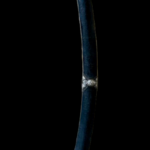
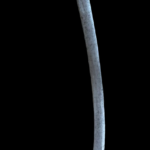
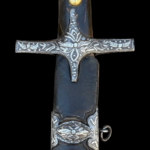
Description: Constructed with a classic eagle-head pommel carved from dark horn, the iconic silhouette of the Polish-Lithuanian nobility (szlachta). The grip is secured to the tang by three decorative domed silver studs (rosettes). The iron cross-guard (quillons) is expertly chased with intricate foliate and feathered motifs. Its surface is further embellished with fine silver damascened patterns, reflecting the owner’s high social status and the opulent aesthetic of Sarmatism. The Blade is a curved, single-edged steel blade of high quality, featuring a pronounced yelman (a double-edged point). It is richly decorated at the forte with extensive gilt and silver inlays, likely depicting traditional floral or celestial motifs characteristic of elite 17th-century commissions. The scabbard of a wood core tightly bound in fine black leather. It is fitted with a suite of silver mounts, including suspension bars and a chape, all decorated en suite with the hilt’s silver inlays.
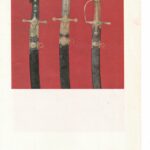
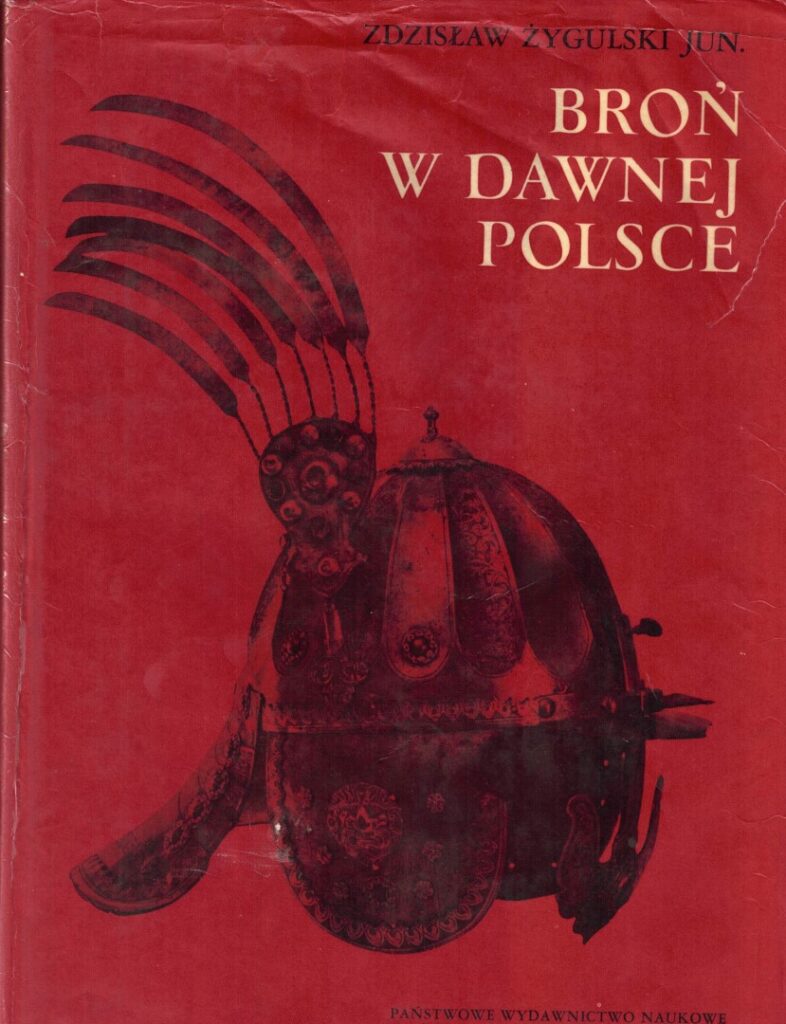
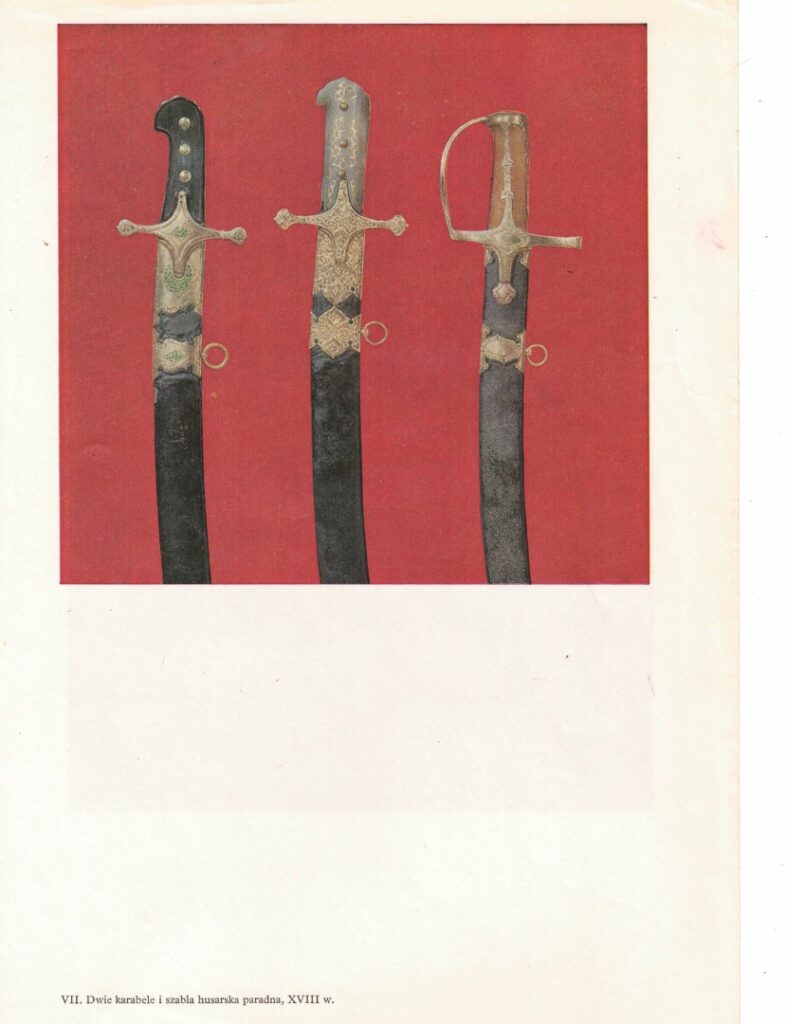
Condition: Superb.Comparables: See above, Bron W. Dawnej Polsce. Notice the example here under discussion is, in my opinion, superior to the three museum examples.
Length: 39.5 inches.
Provenance: American and Polish collections over the last 40 years.
Conclusion: By the late 17th century, the Karabela existed in two forms: combat and parade. Given the extensive silverwork and damascening visible, this piece was likely a parade or ceremonial weapon, serving as a vital part of a nobleman’s formal attire and a symbol of his military prowess and heritage. This is a rare and highly collectable item that any museum or world-class collection would love to own.
Act Now!!!
Swords like this seldom make it to the collectors’ market.
All my items come with the following:
–Free shipping.
–10-day review period.
–Certificate of Authenticity.
–Autographed copy of my book.
–In the event of an international shipment, we will help assign the lowest correct Customs tariff so you pay the least.