1971 Rapier
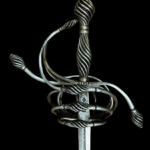
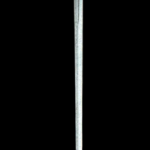
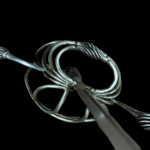
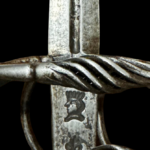
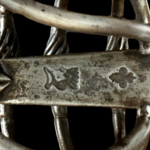
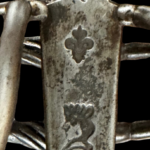
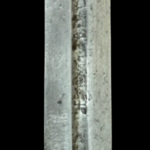
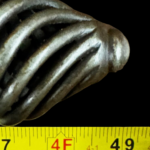
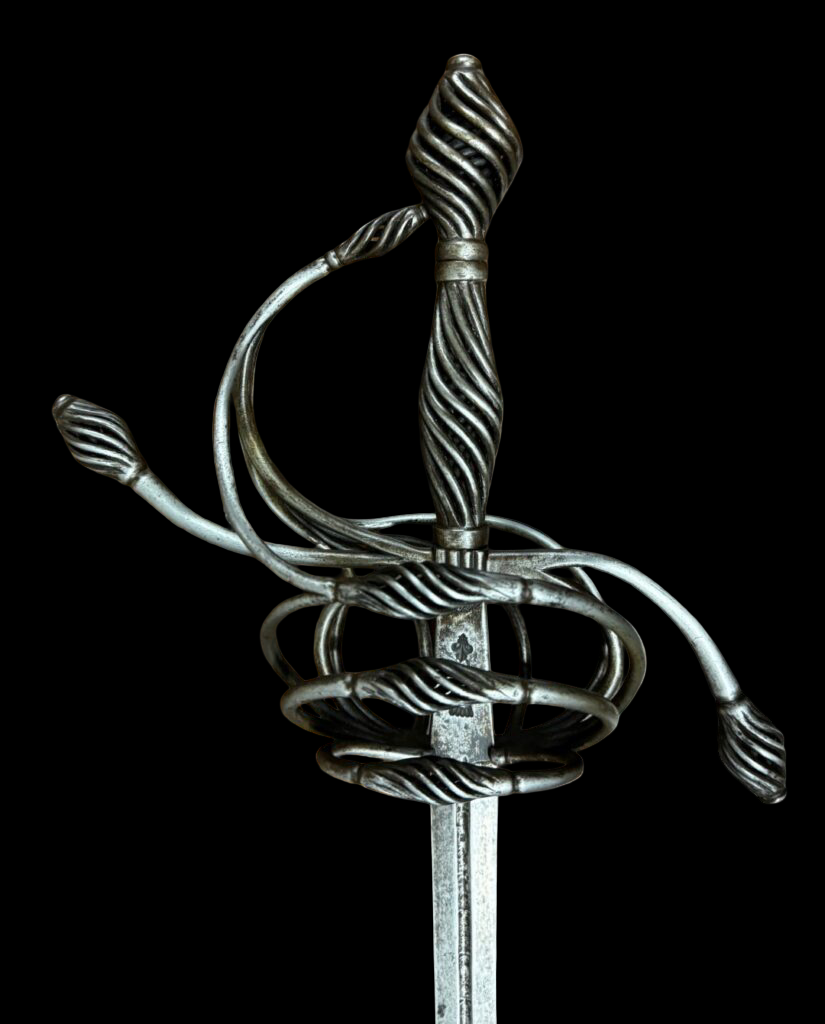
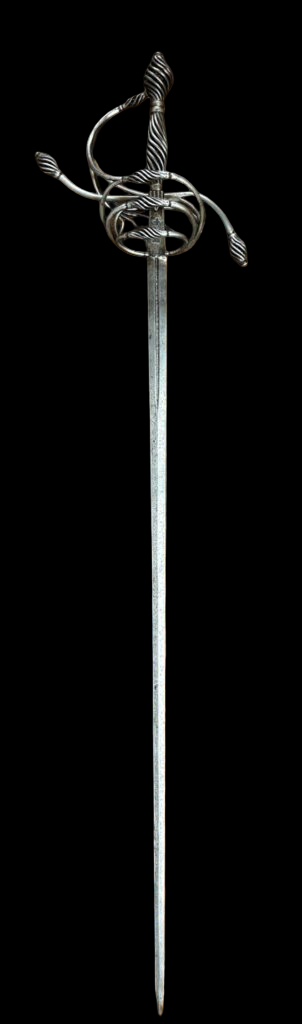
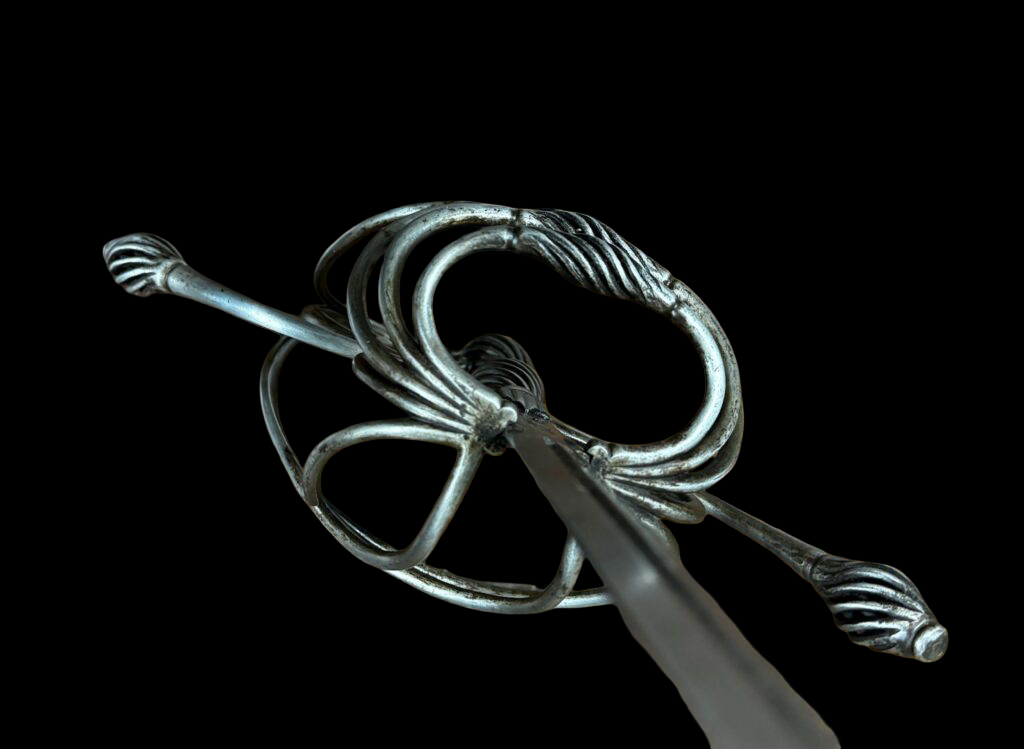
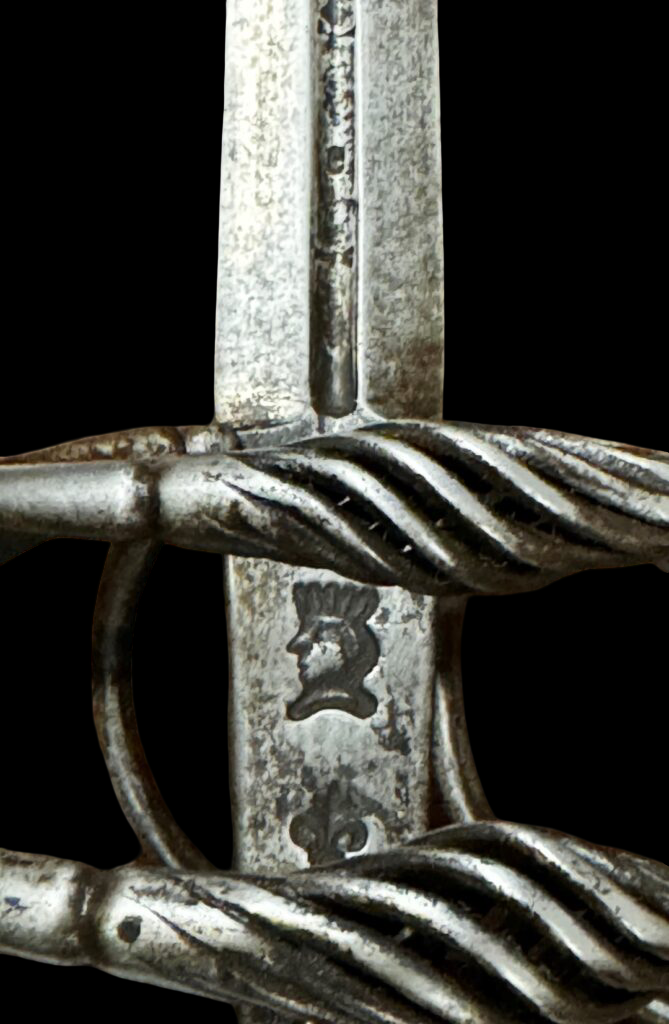
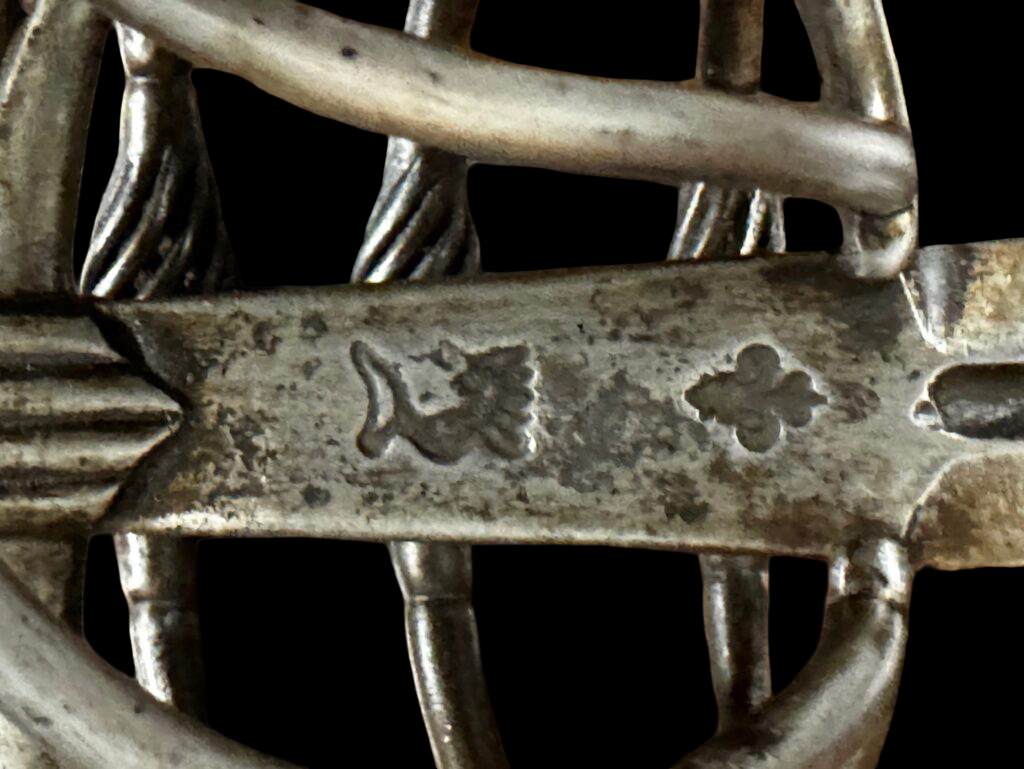
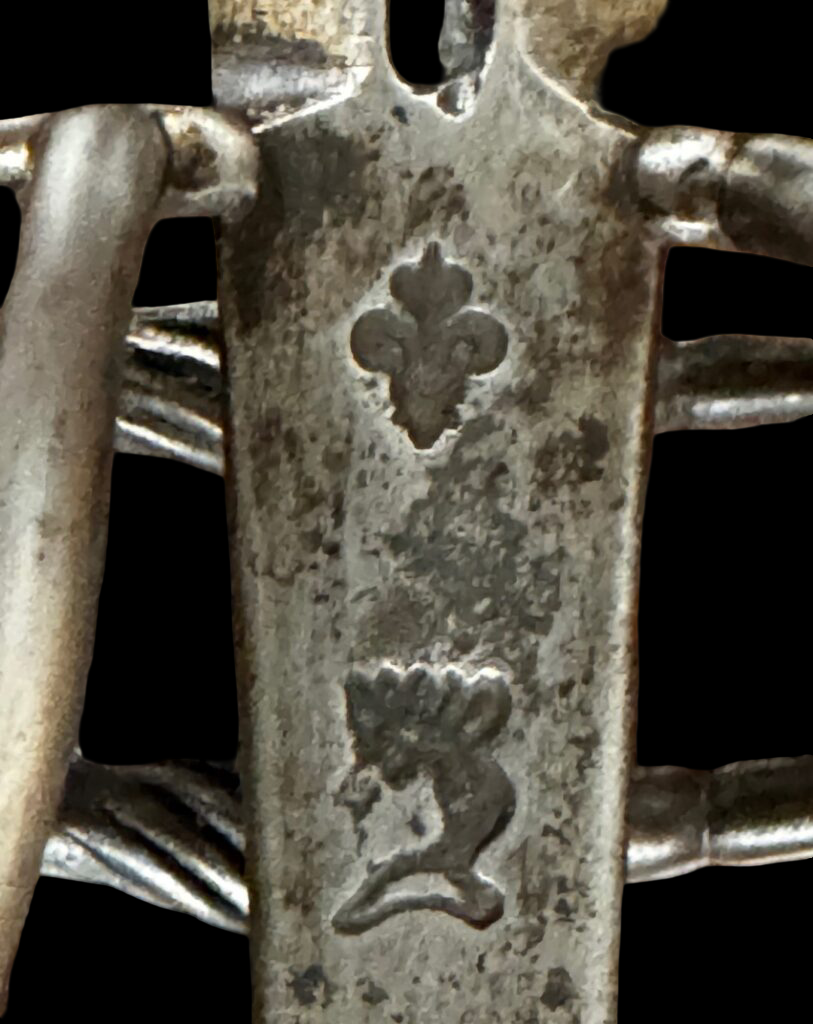
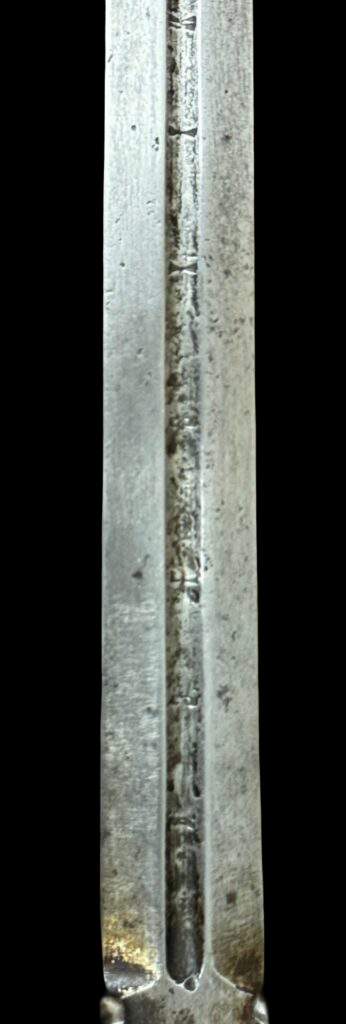
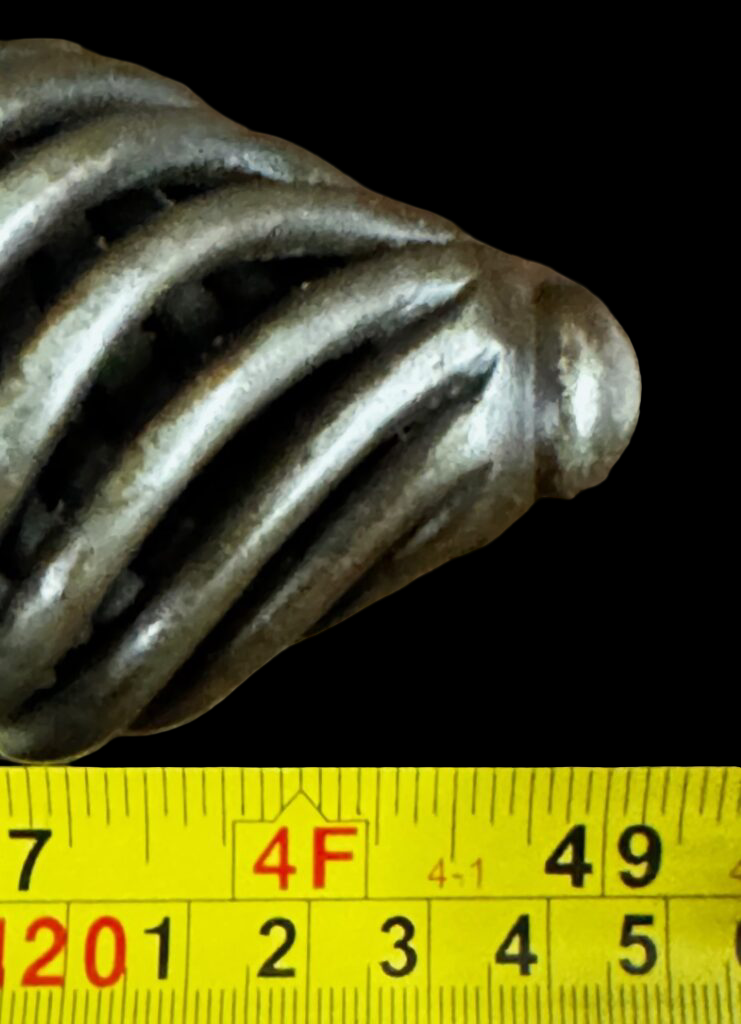
1971) ELEGANT AND RARE ITALIAN WIRE-WORK RAPIER CIRCA 1590 WITH MAKER’S MARKS: I sold this one several years ago, and now the heirs have returned it to find it a new, good home. I have only had two in 35 years, and here’s your chance to acquire what one long-time collector calls “rare as a unicorn.”
Introduction: The zenith of this unique typology of Italian rapier was circa 1580–1620. They were probably made in Brescia or Milan, Italy. The “wire-work” swept hilt uses twisted iron rods forming a complex protective hilt designed to guard the hand without the weight of solid steel. This “wire-built” hilt has several unique features that will make the owner stand out among his friends and peers:
1) Less common than contemporary swept hilts.
2) Structurally lighter and visually dynamic. While the hilt appears to be made of “wire,” it is actually constructed from forged iron or steel bars, though the grip itself is frequently wrapped in twisted wire to provide a secure, decorative surface.
3) Highly artistic with very elegant symmetry.
4) Often associated with higher-end civilian pieces , which only the wealthy and powerful could afford. A highly expensive and ornate rapier such as this one was the equivalent of a person in our day and age making a fashion or opulence statement by wearing very expensive jewelry, such as a Rolex or Audemars Piguet watch. High fashion was an essential status and power symbol in the late Middle Ages and the Renaissance. High fashion was especially important among the mega-wealthy, who wanted to outdo their rivals, neighbors, and peers in the fashion arena.
Comparable: A near-identical one was sold by me in 2018, but with horizontal quillons, which is from the Galopin’s collection. It was exhibited at the Geneva Museum in 1913 and is cataloged and listed under Table 11, item.
Discussion: In a day and age lacking appropriate policing, the private citizen was forced to protect himself from society‚ criminal dregs. The weapon of choice was the rapier from the middle of the 16th to the end of the 17th century. The rapier is a simple yet highly effective sword against unarmored opponents. The rapier was primarily a thrusting weapon that could inflict serious injury to an adversary‚ vital organs with minimal effort. It was also an exceptional slashing and cutting weapon; however, the slash was not as lethal as the thrust. The slash was used more as a feint to set up a finishing thrust. The slash was also a dire warning to a would-be assailant of the horrors to quickly follow if he chose not to acquiesce.
The rapier is almost undeniably of Spanish origin and is probably Spain‚ most significant contribution to the Renaissance arms race. Because fencing is more of a thrusting art, it became commonplace throughout Europe to have as long a blade as possible to obtain an advantage. This extravagance in length reached the point that municipalities passed statutes regarding the allowable lengths of blades. Those in violation had the misfortune of having their rapier‚ blades cropped at the tip at the city gate to comply. One example of these statutes is from an English Royal Proclamation on March 17, 1557. The French adopted the phrase “espee rapiere” by 1475, which was later shortened to simply “rapiere.” The English, in 1505, spelled it”rappyer.” The Giles Duwes English/French dictionary of 1532/3 adopted the rapier definition as “Spannyshe sworde”. By 1550, the term rapier had been adopted to describe a slender, sharply pointed sword designed for thrusting, cutting, and slashing attacks. The rapier now consisted of a hilt protected by a handguard. The Earliest Illustration of this sword Typology is in a 1588 portrait of John Shirley, currently housed in the Metropolitan Museum of Art (#51.194.2). Also illustrated in a portrait of Luccio Foppa, circa 1585, by Giovanni Antonio Figino.
All my items come with the following:
–Free shipping.
–10-day review period.
–Certificate of Authenticity.
–Autographed copy of my book.
– In the event of an international shipment, we will help assign the lowest correct Customs tariff so you pay the least.