1955 Bastard Sword
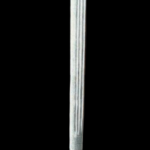
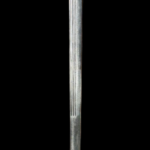
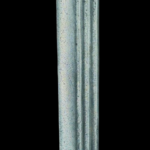
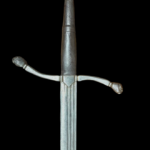
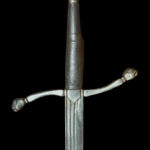
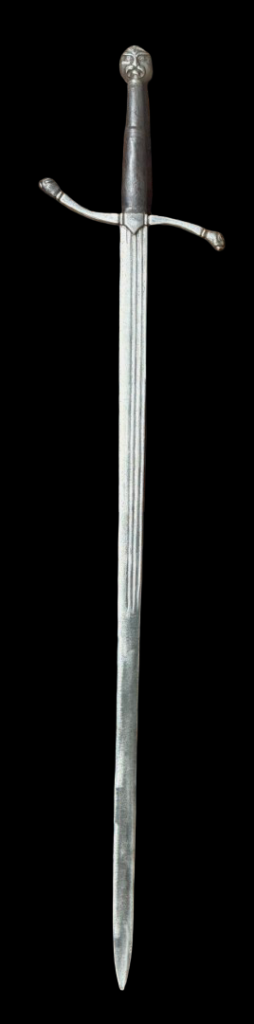
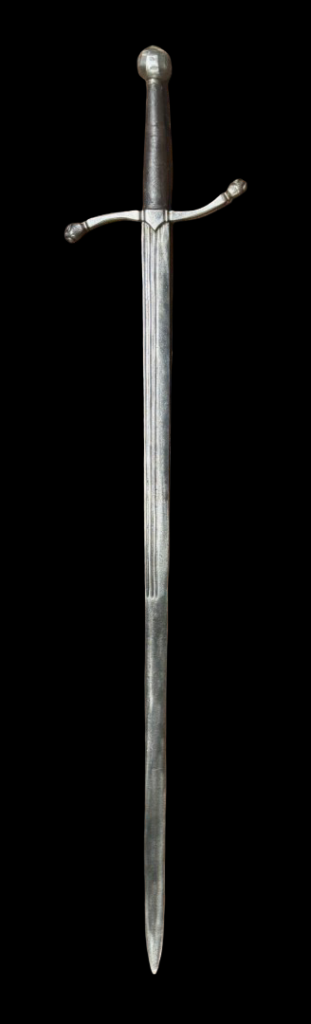
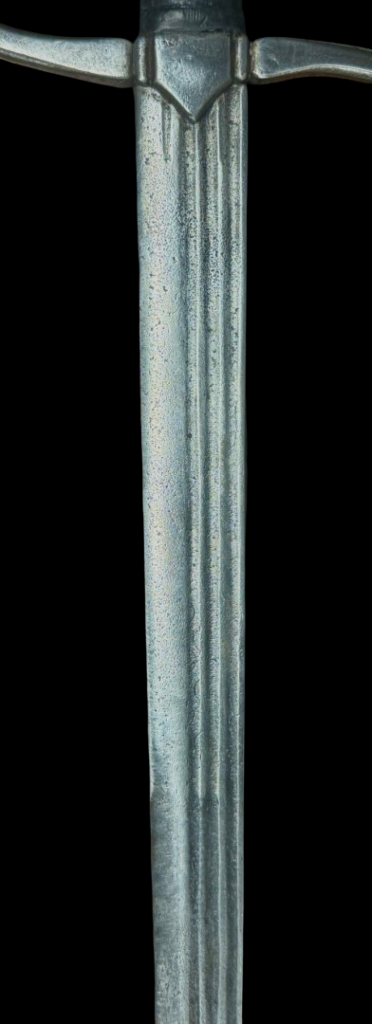
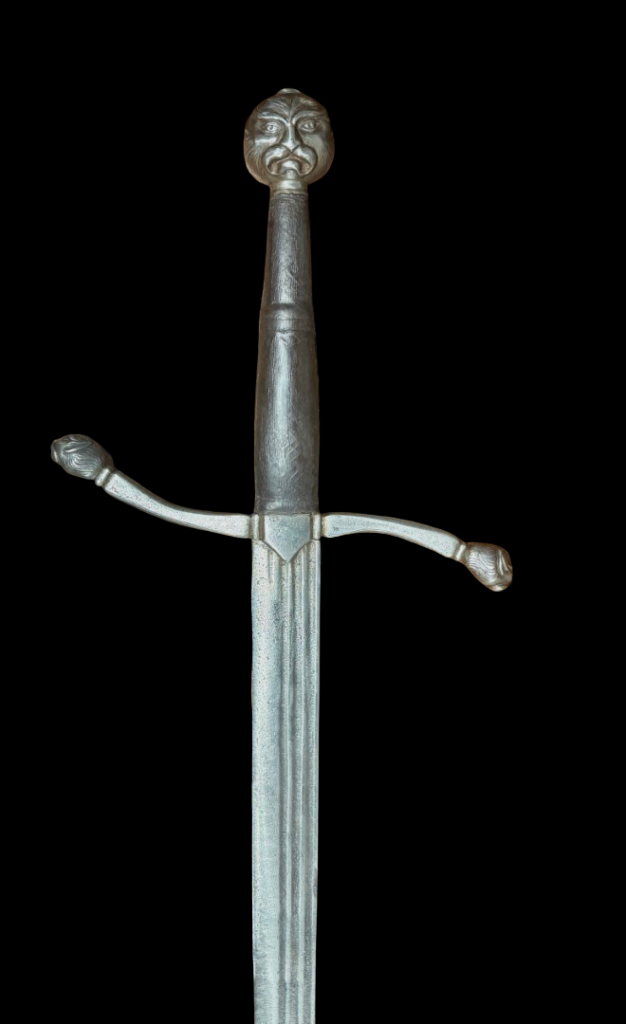
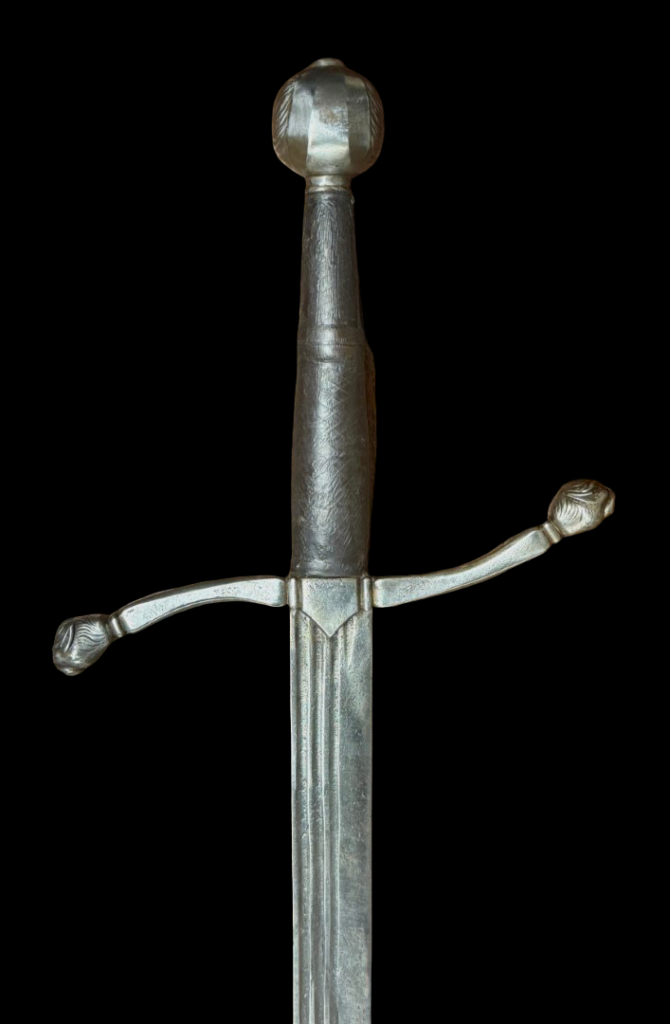
1955) AN IMPORTANT AND RARE VENETIAN CHISELED BASTARD SWORD CIRCA 1550: It’s in superb museum condition. I sold a very similar one several months ago, but I prefer this one, and it is priced lower.
Discussion: The bastard sword developed circa 1250, about 75 to 100 years earlier than the two-hand sword (circa 1325). A bastard sword (called hand-and-a-half sword by Victorian collectors, or Anderthalbhander in German) combines a one-hand and two-hand sword. A bastard sword can be wielded like a one-hand or two-hand sword. It cuts and thrusts with a broad or long double-edged blade. Additional power can be employed by using the pommel and the lower area of the hilt below the pommel as a grip for a two-hand strike to increase the impact and penetration.
The term “bastard sword” was first recorded in France during a 17th-century duel. In Marc de Vulson‚ 17th-century treatise” Vray Theatre d‚ÄôHonneur” he describes the weapons used in a duel fought before King Henry II of France in 1549 as follows: Deux epees batardes
Bastard swords were widely used in Germany and Switzerland, and were most prevalent among cavalry. Hilts varied throughout their evolution. Until approximately 1550, most hilts on German bastard swords were cruciform, with some featuring S-shaped guards. After circa 1550, some hilts became more elaborate. Because they were Knightley weapons, they were frequently used on horseback. Sword length during this period varied from approximately 35 to 40 inches. After circa 1250, the length increased to approximately 45 to 55 inches. So why did it take until the early 1300s for the bastard sword to flourish? There are two primary reasons:
1) For the same reason, full-metal defensive armor and two-hand swords did not develop until the same period. As furnaces got bigger in Medieval Europe, steel billets (solid lengths of steel) accordingly increased in size. With bigger steel billets, swords could now be made with fewer (but larger) steel billets, eventually reaching their peak of one billet per sword. Larger furnaces generally meant higher temperatures, better steel, faster production, and probably less expensive to manufacture on a large scale.
2) As armor evolved, its counterpart, the sword, did the same, with larger specialized swords of superior quality and design. This was the weapons race of its day.
Conclusion: All collections should have at least one iconic bastard sword in their collection. This example is superb, elegant, and highly sought-after. They seldom come this nice. This one should be in a museum; however, if you act fast, it can be in your collection for much less than you think.
Contact Me To Get The Latest Lowest Price Possible From The Owner*
Bargain-priced for a quick sale. Don’t wait and act now. !!!*.
All my items come with the following:
–Free shipping.
–10-day review period.
–Certificate of Authenticity.
–Autographed copy of my book.
–In the event of an international shipment, we will help assign the lowest correct Customs tariff, so you pay the least.
I believe you will be very pleased. ACT-NOW!!!*