1920 Helmet
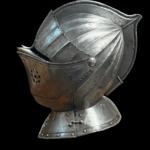
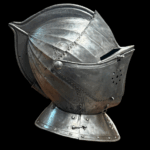
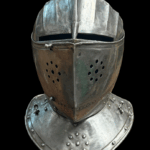
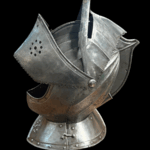
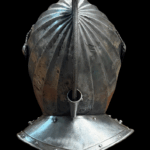
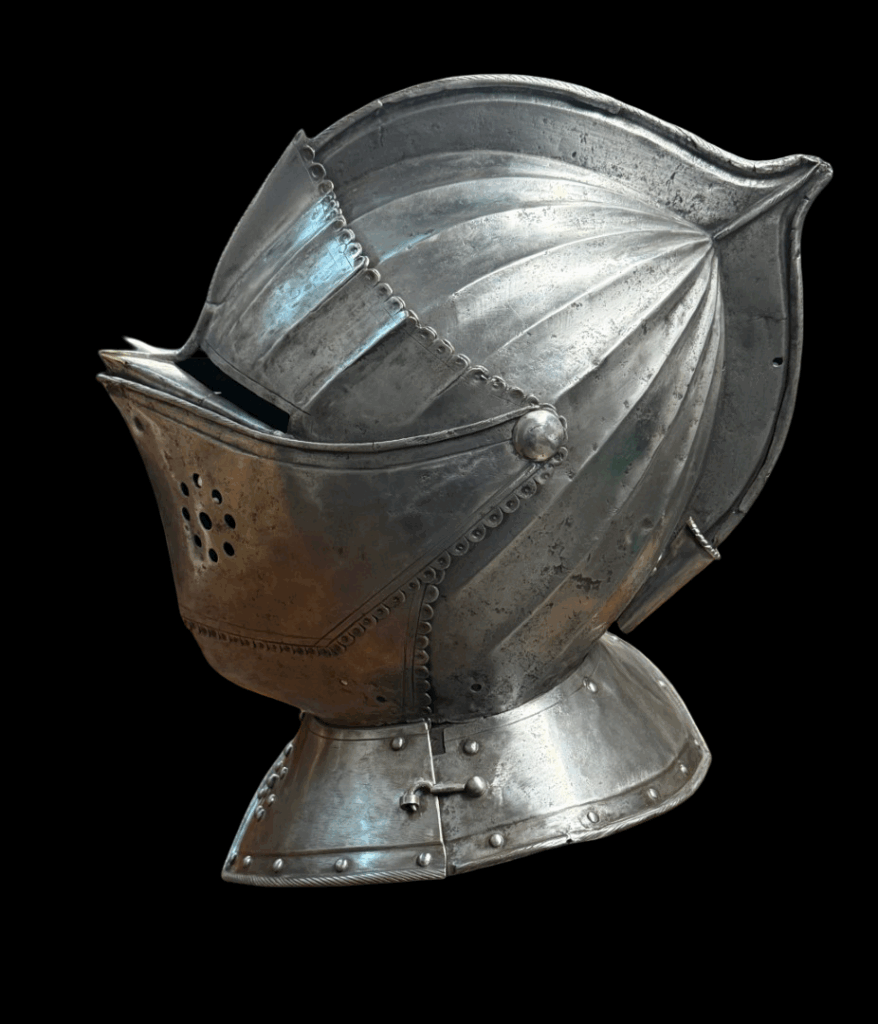
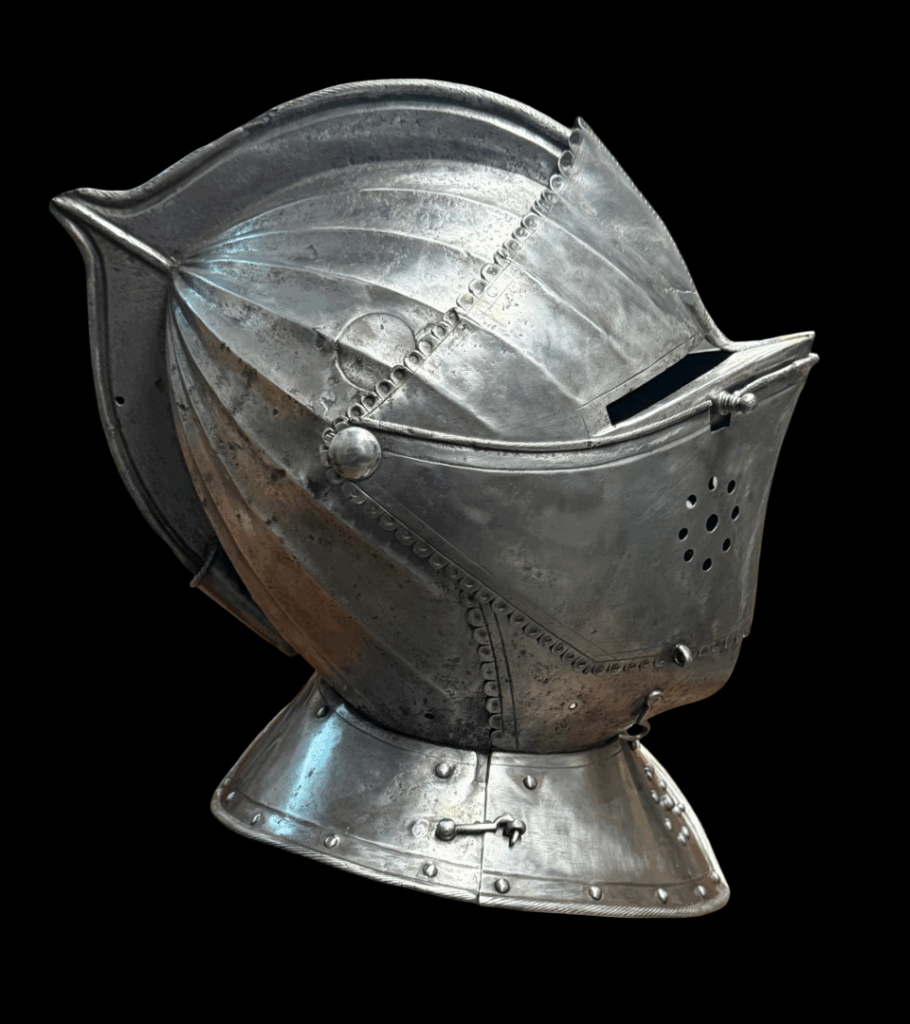
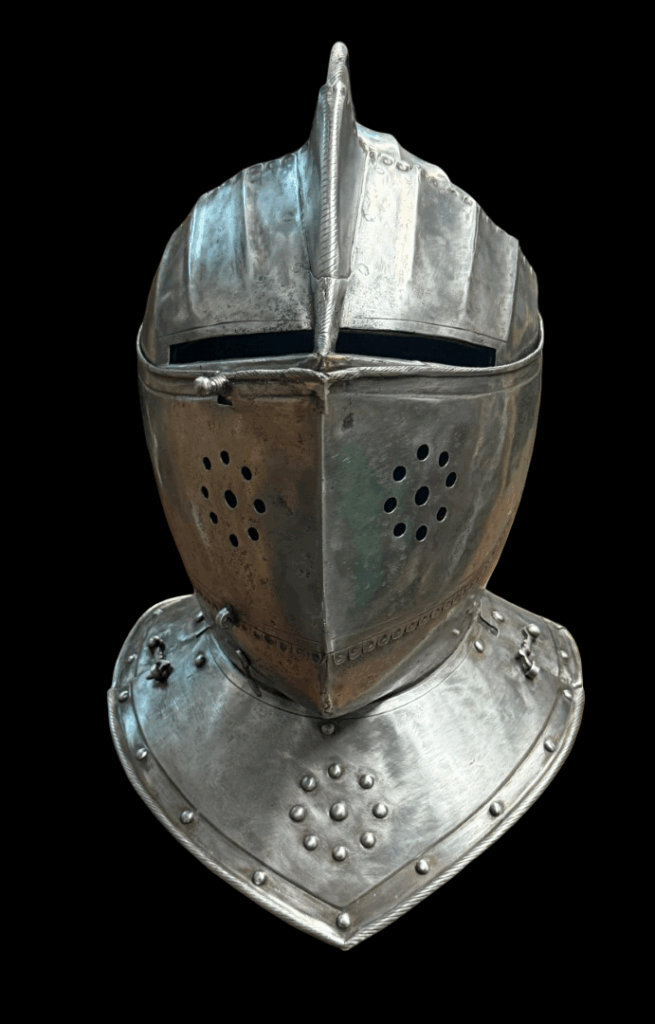
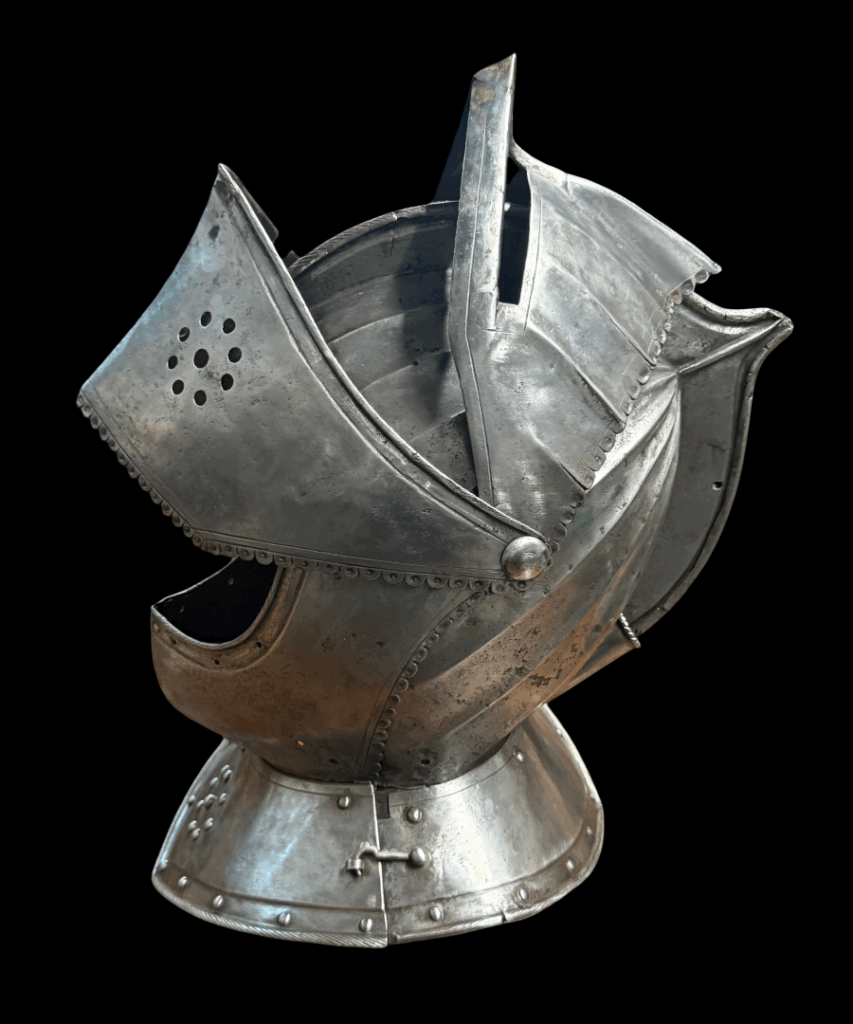
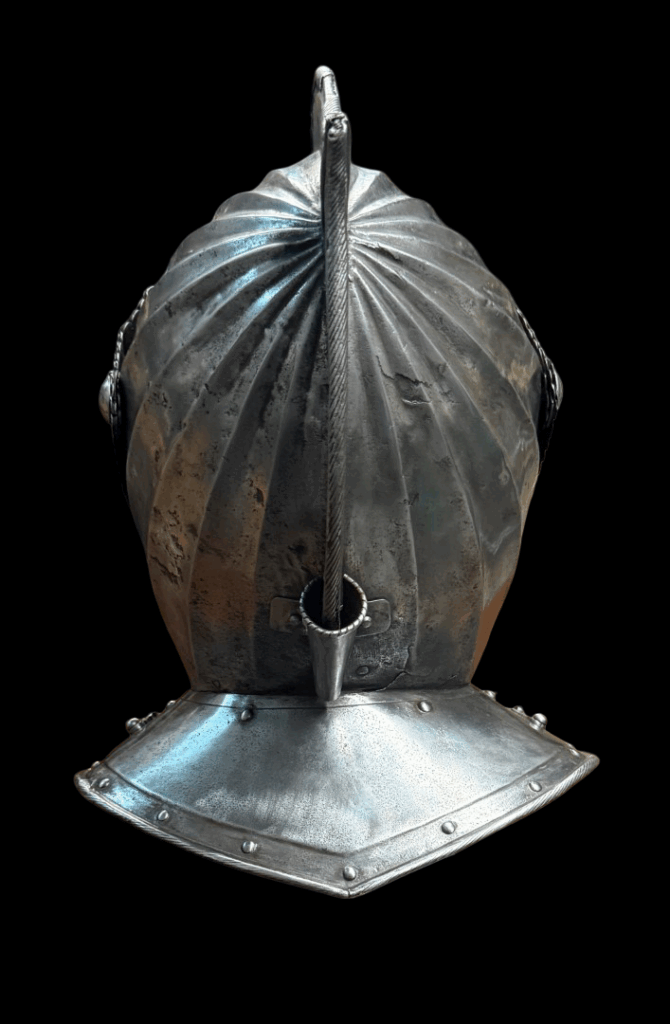
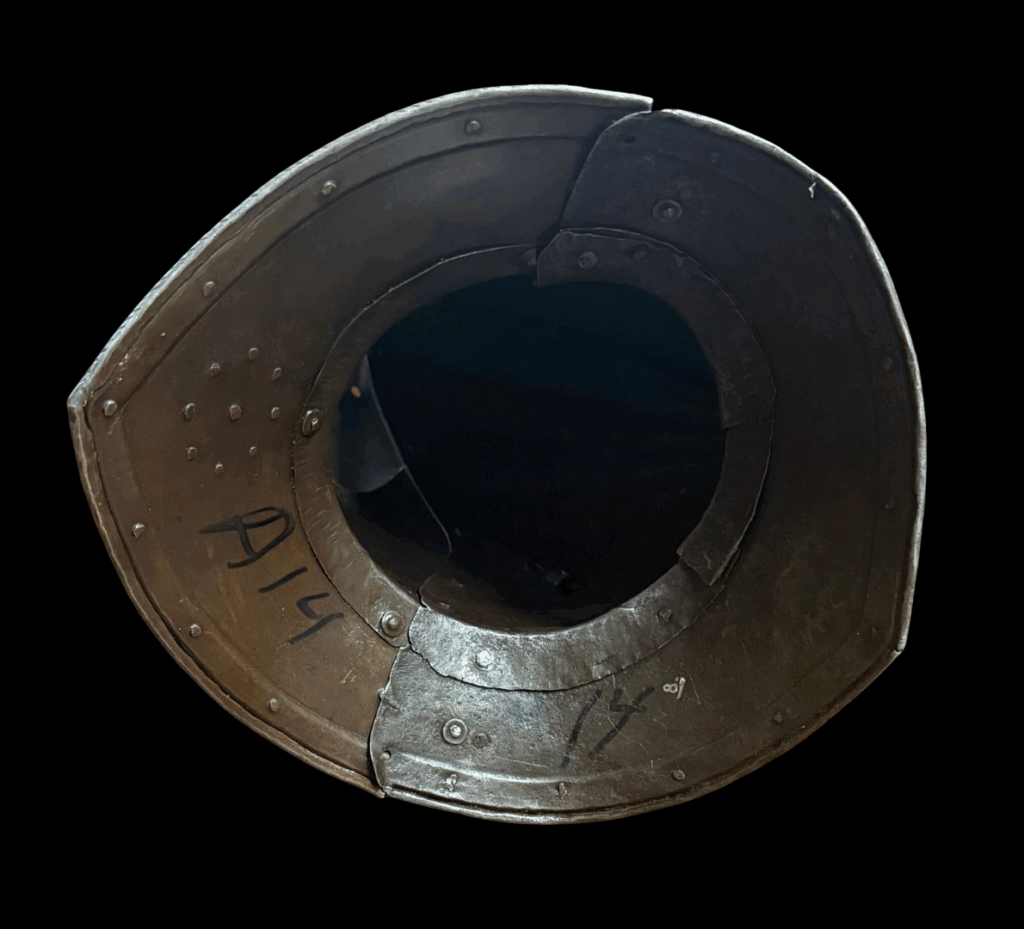
1920) A STUNNING AND ELEGANT FLUTED CLOSE HELMET, CIRCA 1600: For use by a very high-ranking cuirassier officer, probably French.
Provenance: Owned for over 50 years by a distinguished American collector who is now beginning to thin the herd.
Comparable: A nearly identical example is in:
– The Wallace Collection (A179),
– The Musee de Armee p. 111 and PL 47 dated 1602, at – –The Fitzwilliam Museum.
-A line drawing of this type of helmet is inserted on page 196 of Belleval’s La Panoplie at the Metropolitan Museum of Art.
Discussion: Helmets are the earliest form of body armor. Both aristocratic knights and simple infantrymen used them. Helmets are the most challenging item to make in a suit of armor because of their elegance, workmanship, and symbolism of power and chivalry. Helmets are readily accepted by most as works of art, even by non-collectors.
Description: Constructed with an egg-shaped skull formed in two pieces joined by rivets, with a low medial comb that rises to a finial at the apex. It’s embossed at the skull with a pattern of outwardly extending lobes and shaped flutes radiating in a V-pattern with double incised lines repeated to either side of the flutes. It is fitted at the nape with an elaborate plume holder. The visor, upper bevor, and bevor proper are attached to the side center of the skull by common domed-shaped pivots with washers. The visor is decorated at its brow with flutes, a continuation of the skull, the bevor cut at each side with ventilation holes in a circular pattern, and the upper edge of the visor has a broad rectangular notch forming the vision slit, two original gorget plates front and rear, the right side of the visor has a lifting peg within a rectangular notch in the bevor, and nine ventilation holes on each side of the bevor. It also has a swivel hook to secure the bevor, is cut at the chin with an oval-shaped opening, and is decorated at its main edges with inward turns and, original finial point—an inventory control # A14 on the inside of the front gorget.
Condition: Good. A minor patch repair to the left side of the skull, the size of a coin, and as you would expect with some dings and signs of wear from a helmet used in combat.
Conclusion: Even a person who knows very little about Arms and Armor will recognize a Medieval/Renaissance helmet and understand its historic value and beauty. Helmets, like fine statues, look well on flat surfaces such as shelves, tables, or desks. This helmet makes a statement of chivalry and elegance. This helmet would make a great addition to any collection. It is exceptionally well-priced for a close helm, which is the most sought-after addition to any Medieval or Renaissance arms and armor collection. This example is very reasonably priced and ready to find a new home!!!*
Priced to sell immediately. Don’t wait; ACT NOW!
This one should sell quickly, and I don’t want you to be disappointed!
All my items come with the following:
–Free shipping.
–10-day review period.
–Certificate of Authenticity.
–Autographed copy of my book.
– In the event of an international shipment, we will help assign the lowest correct Customs tariff so you pay the least.
Please contact me for the best available price.
I believe you will be very pleased. ACT-NOW!!!*