1918 Antique Sword
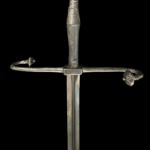
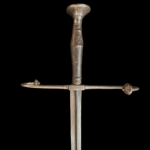
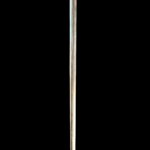
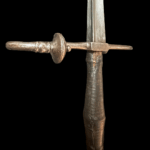
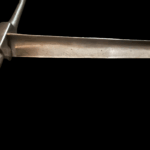

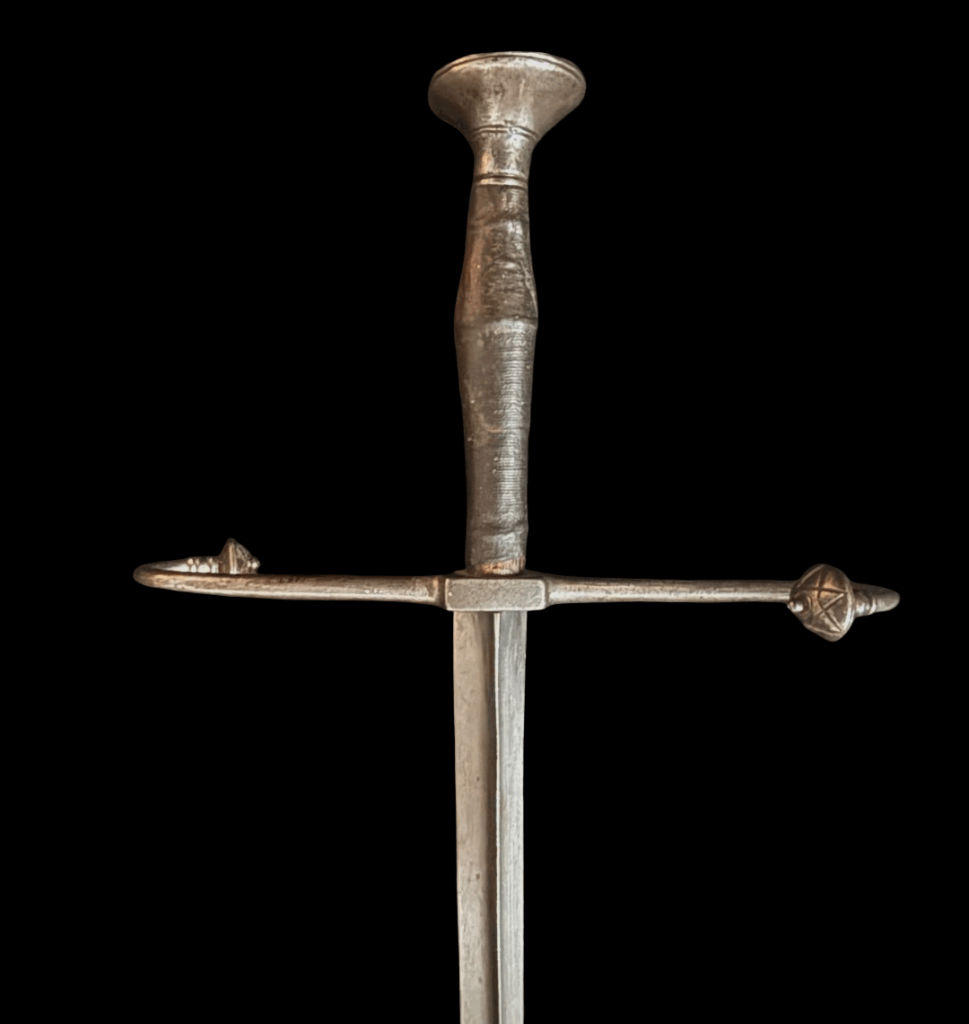
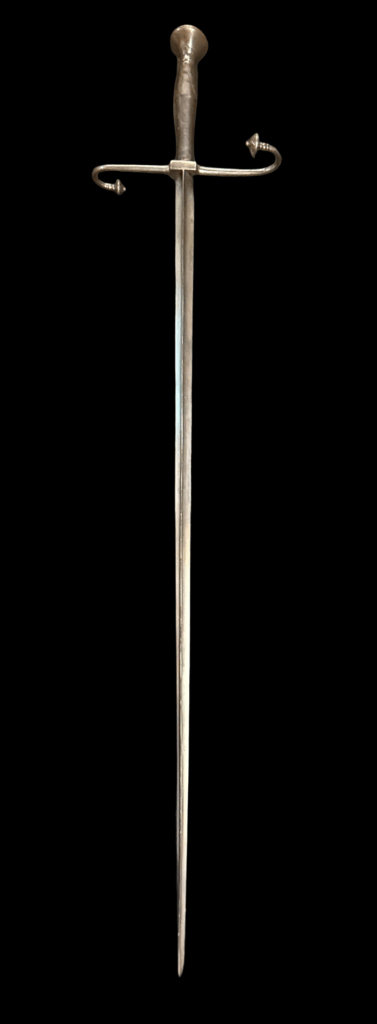
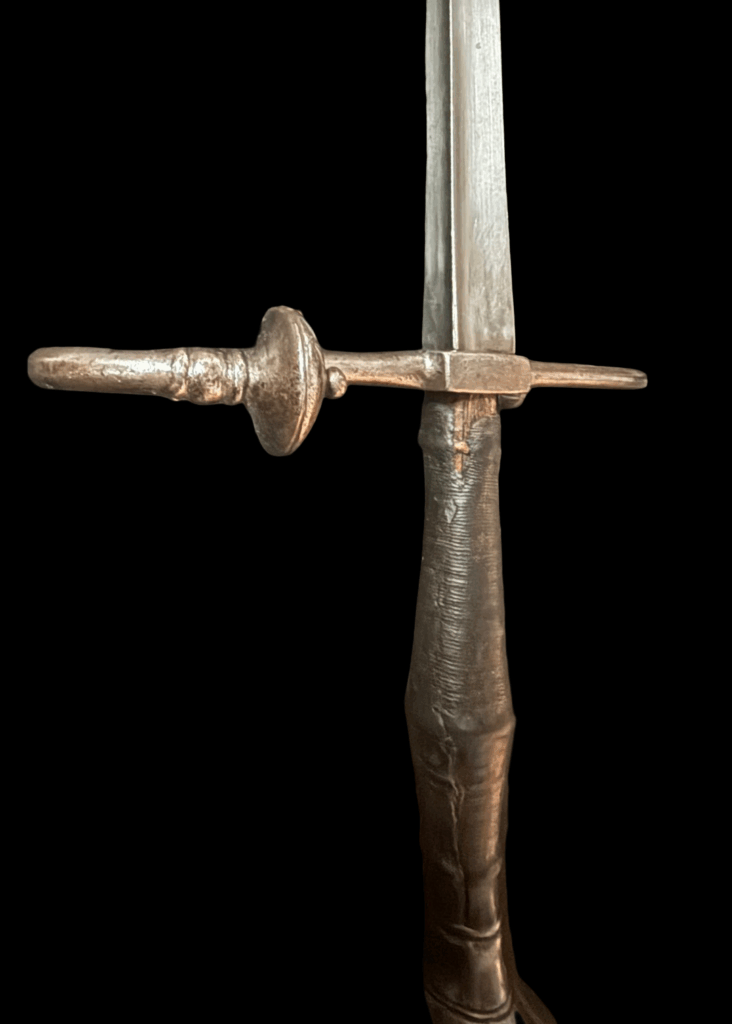

1918) RARE AND IMPORTANT MASSIVE GERMAN ESTOC THRUSTING WAR SWORD CIRCA 1520: Mint museum condition and quality at its best!
Introduction: The estoc (or Panzerstecher in German) is the apogee of the thrusting sword for the armored knight. Estocs are rare and highly sought after. This superb world-class example features a three-sided blade, representative of the quintessential, most sought-after estoc thrusting sword.
Discussion: An estoc is a type of sword that was used from the 14th to the 17th century. In the 14th century, estocs mirrored the size of the knight‚ arming sword. By the 15th century, they became larger. The estoc is characterized by a cruciform hilt with a grip for one or two-handed use and a straight, powerful, and sharply pointed blade from 38 to over 58 inches. The estoc is an exceptionally deadly weapon, especially when used from horseback.
Estocs all share a very thick (the best being three-sided) blade, resulting in a sharp, acute tip for deep penetration. The closest Oakeshott typology for an estoc is Type XVII, which was designed for the same purpose: powerful, deep penetration. The blades of an estoc are sharp, but it is not a traditional slashing sword. Estocs after the 15th century were very long and hung on the knight‚ saddle. Imagine a razor-tipped, three-sided, thick blade coming at you on horseback at thirty miles an hour. As you can imagine, the penetration would be deep, very powerful, and high-impact.
Later, the estoc was carried in a sheath by infantry. Infantry estocs tend to be shorter and slightly more diminutive than cavalry estocs. Estocs can have a one-handed, bastard, or two-handed hilt. There are five primary types of estoc blades; this one has the most sought-after, the three-sided.
Description: Constructed with a long, deep, three-sided blade, a Norman Type 52 hilt consisting of a recurved guard decorated at the tips with an eight-pointed button star, a wide pommel en suite to the quillon tips , original leather and wood grips. This estoc is in an exceptional state of conservation. A superb addition to any world-class collection or museum.
Provenance: A German and an American collection.
Publication: The Collectors Course On Medieval Arms and Armor,2021, Garcia, pages 295-296.
–Free shipping.
–10-day review period.
–Certificate of Authenticity.
–Autographed copy of my book.
– In the event of an international shipment, we will help assign the lowest correct Customs tariff so you pay the least.