
1870 Spears
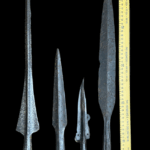
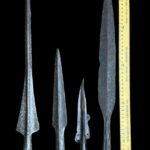
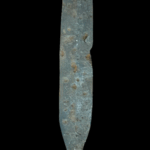
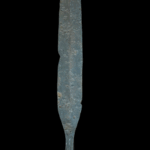
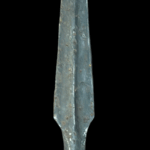
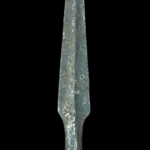
1870) THE SPEAR WAS AN ESSENTIAL WEAPON OF THE MEDIEVAL AND RENAISSANCE PERIODS FOR 8 IMPORTANT REASONS:
1) When properly used and deployed, the spear has a significant advantage related directly to its length. The haft of a spear can range from 5 feet in length to as much as 16 feet in length. The spear enables the user to be out of the reach of many shorter weapons, such as swords. This has a significant advantage related directly to their reach advantage, which allows the man-at-arms to effectively attack without needing to defend himself from attacks.
2) Spears were notoriously effective at stopping the cavalry charge, which was one of the most devastating strategies of the Medieval and Renaissance periods.
3) Since spears were made in great part from wood, they were inexpensive and easy to manufacture, making them a practical choice to arm many men quickly at a low cost.
4) If the haft broke, the head could be reused on a new wooden pole. Because the design of the head was relatively simple, they could be made by a village blacksmith quickly and inexpensively.
5) Spears are easy to use, requiring relatively little training to become competent in their use.
6) Spears require the use of multiple large muscles; therefore, the body fatigues more slowly than with some other weapons. Less fatigue in battle provides a substantial advantage during a pitched battle that could last days.
7) Since spears are long and provide leverage, they generate deep penetrating strikes.
8) Military formations with large numbers were easy to coordinate with the spear, thus maximizing an army’s effectiveness.
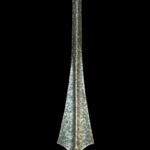
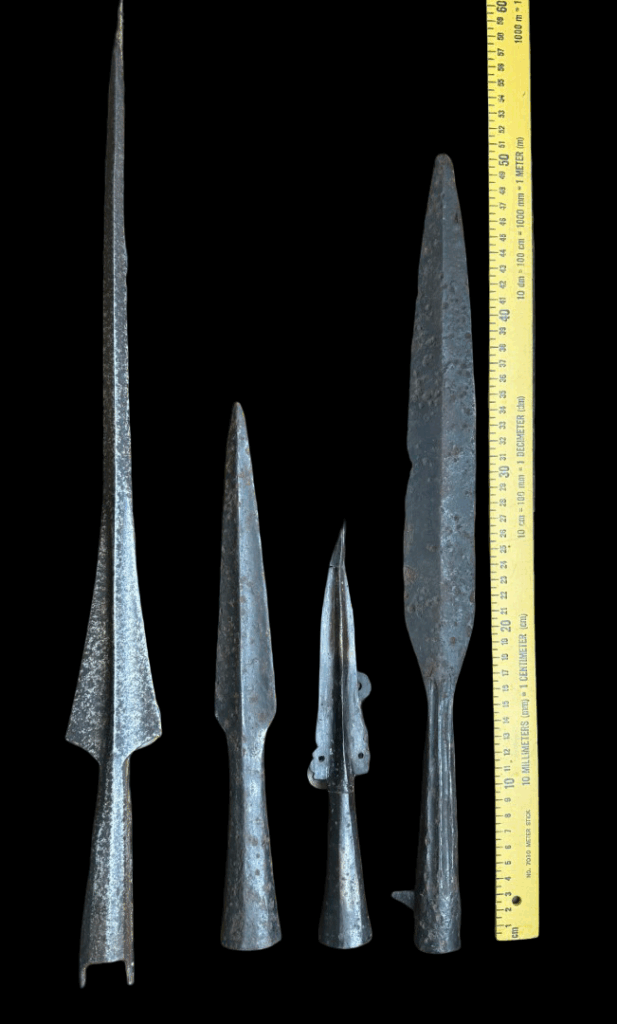
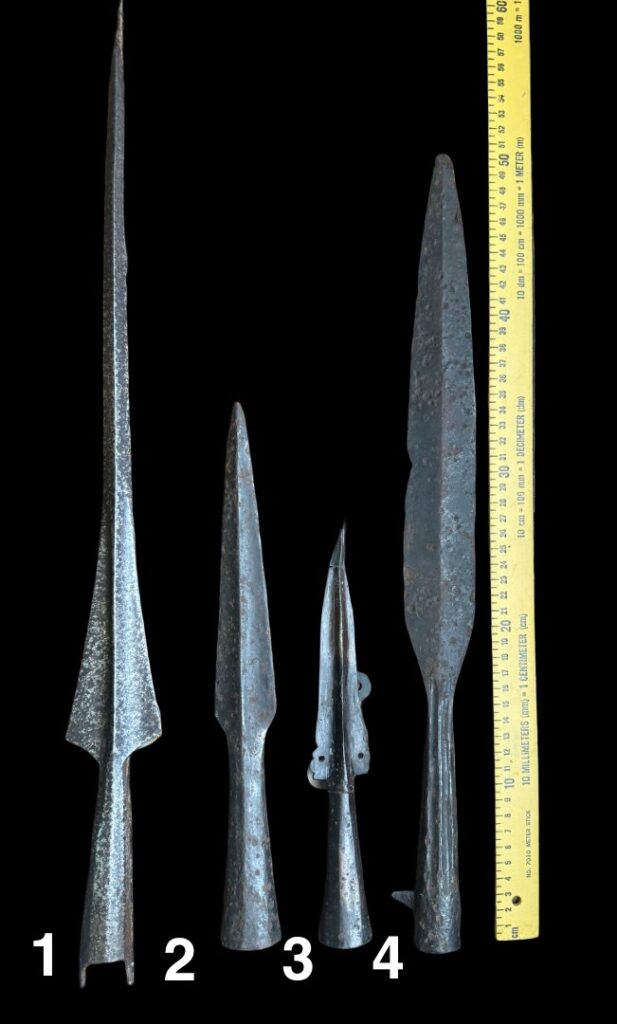
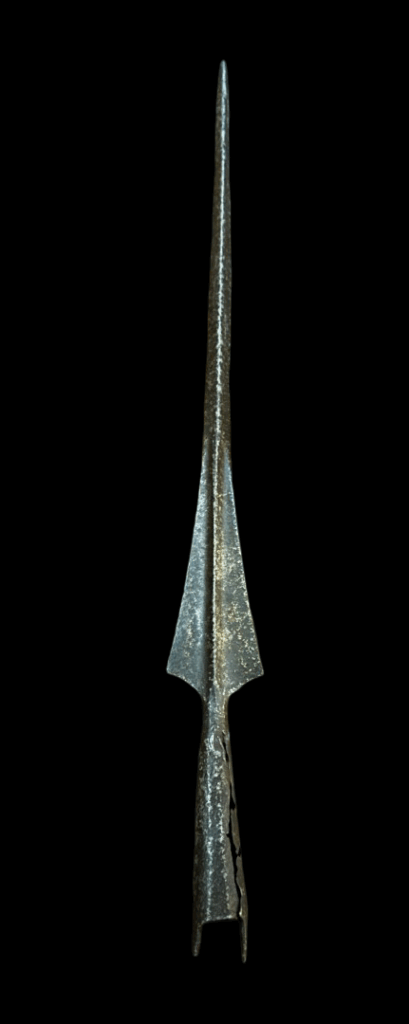
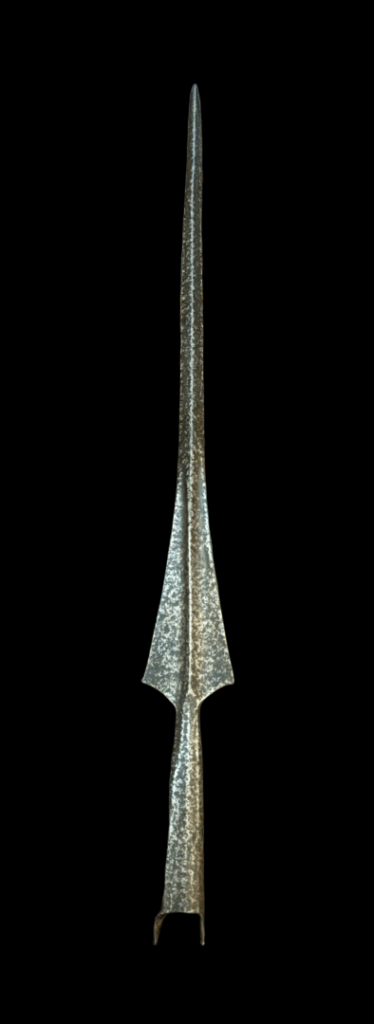
1) A RARE GOTHIC LONG SPEAR CIRCA 1450: This is NOT a ground find. Can be cleaned to white metal.
Description: Constructed with a strong medial ridge running down the center of the blade to a quadlateral tip about 2/3 the length of the spear, an octagonal reverse conical shaft (damaged on one side), remnants of the langets. No rust, no resin, black patina with white metal showing.
Length: 45cm; 18 in.
Provenance: Andrew Garcia, USA.
Publication: The Collectors Course On Medieval Arms and Armor,2021, Garcia, page 340 (1C).
Comparables: Spears of similar form are preserved in the Historisches Museum, Bern, and in the Deutsche Historisches Museum, Berlin.
2) SUPERB MEDIEVAL SPEAR CIRCA 900-1200: A very effective stout design that was used for over 300 years.
Description: Constructed with a reverse conical octagonal shaft, medial ridge, the length of the spear, stout, thick construction, opening at the base of the shaft to apply two horizontal rivets facing each other and secure the shaft to the haft.
Condition: Very good with no resin or filler. Almost appears not to be a ground find.
Length: 13 inches
Provenance: Andrew Garcia, USA.
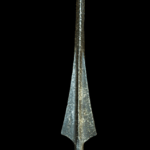
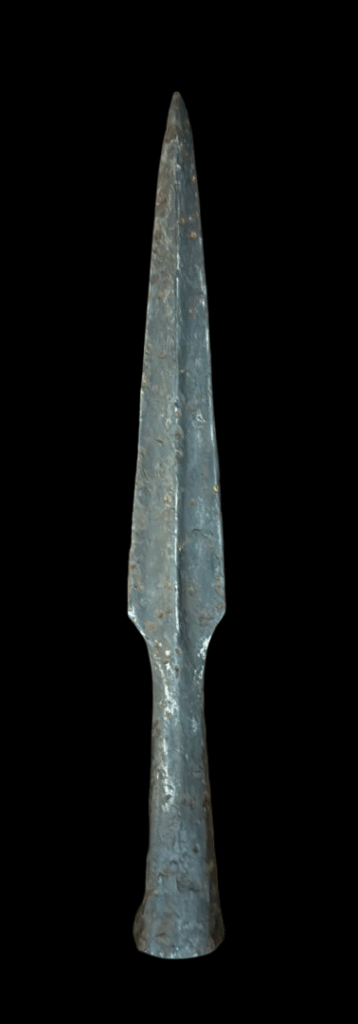
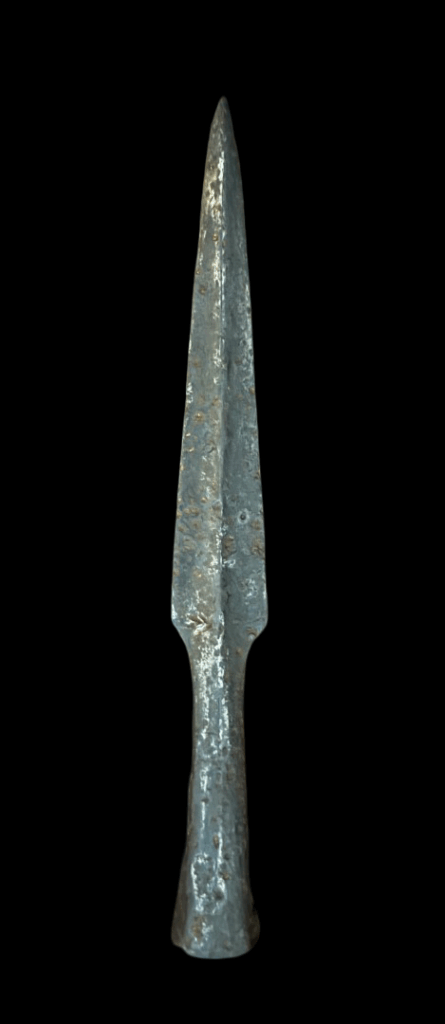
3) A BEAUTIFUL STOUT FOUR-SIDED SPEAR WITH STRONG DEEP MEDIAL RIDGES CIRCA 1300: I originally dated this spear later in my book; however, further research has revealed that it’s actually earlier, circa 1300:
Description: Superb construction with a tapering reverse conical octagonal shaft, two-sided blade with a hole at each base possibly to tie an identifying color, two strong, deep, and wide medial ridges, and double gutters where the blade meets the shaft.
Length: Approximately 10 inches.
Provenance: Andrew Garcia, USA.
Publication: The Collectors Course On Medieval Arms and Armor,2021, Garcia, page 340 (1A).
Comparables: This is a rare typology, but another example was found in Central Europe.
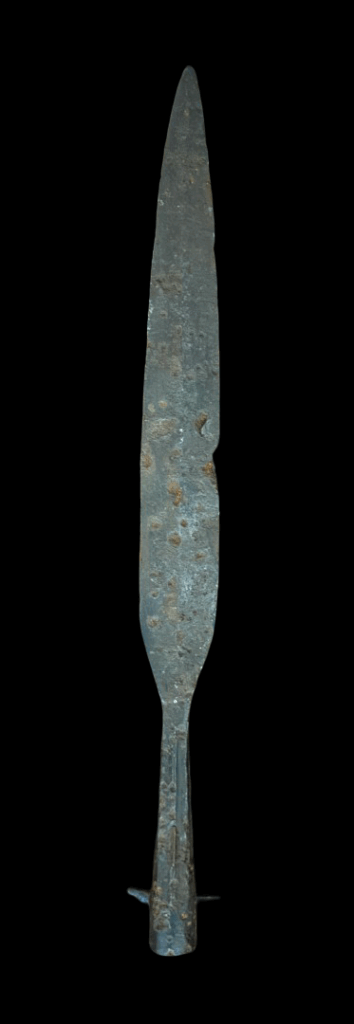
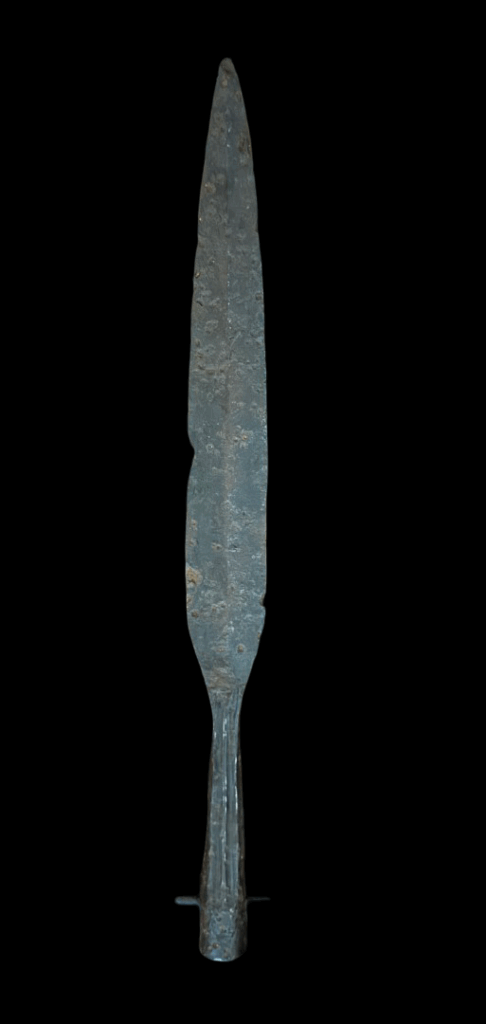
4) A RARE LUGGED SPEAR, CIRCA 7TH to 10TH CENTURY: Exceptional condition for such an old spearhead.
Description: Constructed with a long, wide blade of a flattened diamond section and a tapering socket incised with elongated panels on opposite sides, formed with a pair of small fluted lugs and an elegant, deep black patina throughout.
Length: 45cm; 18 in.
Condition: Very good. As you would expect, there are some minor losses, as shown. No resin or filler added.
Provenance: Andrew Garcia, USA.
Publication: The Collectors Course On Medieval Arms and Armor,2021, Garcia, page 343.
Comparables: Spears of similar form are preserved in the Historisches Museum, Bern, and in the Deutsche Historisches Museum, Berlin. See M. Trosso 1988, p.105, no. 4 and H. Müller and H. Kölling 1990, p. 178-179, no. 62.