1864 Suit
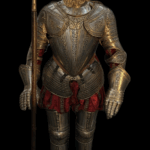
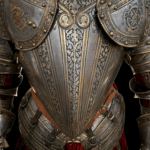
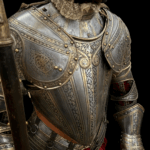
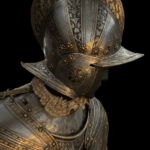
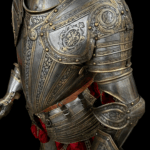
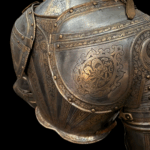
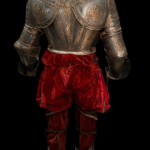
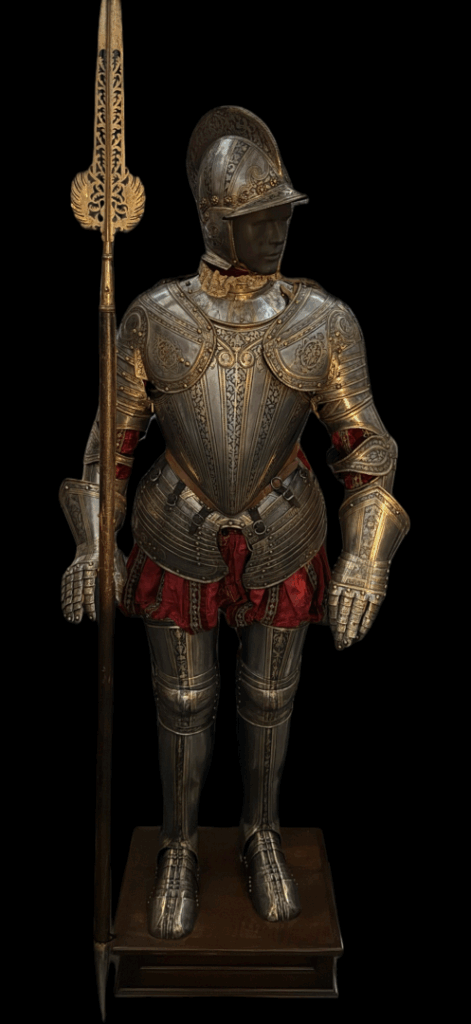
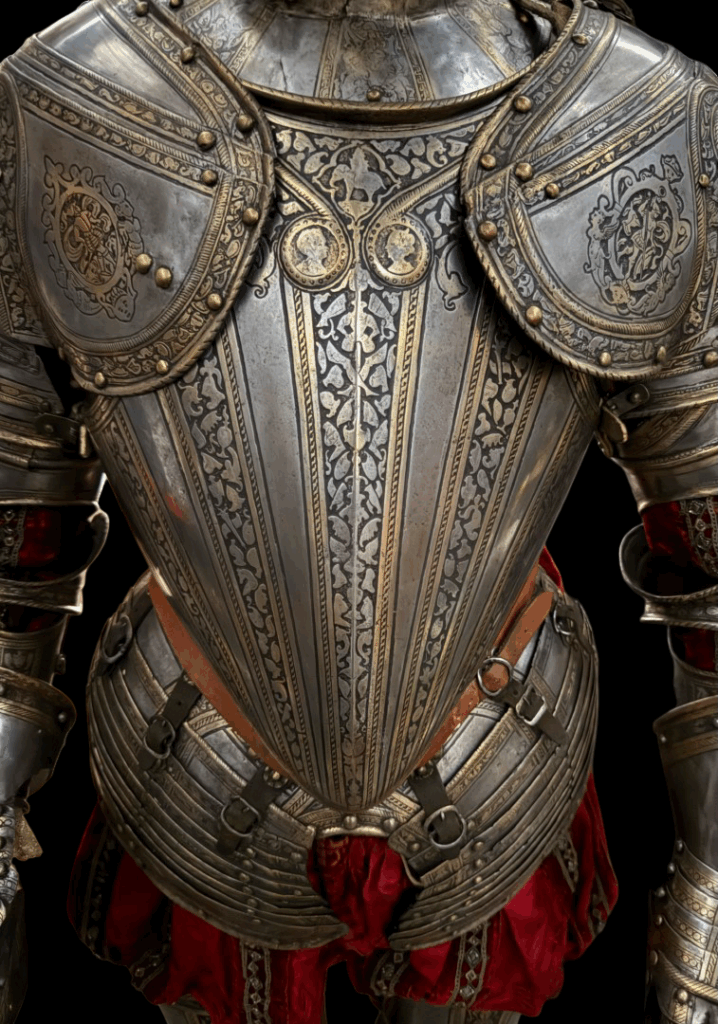
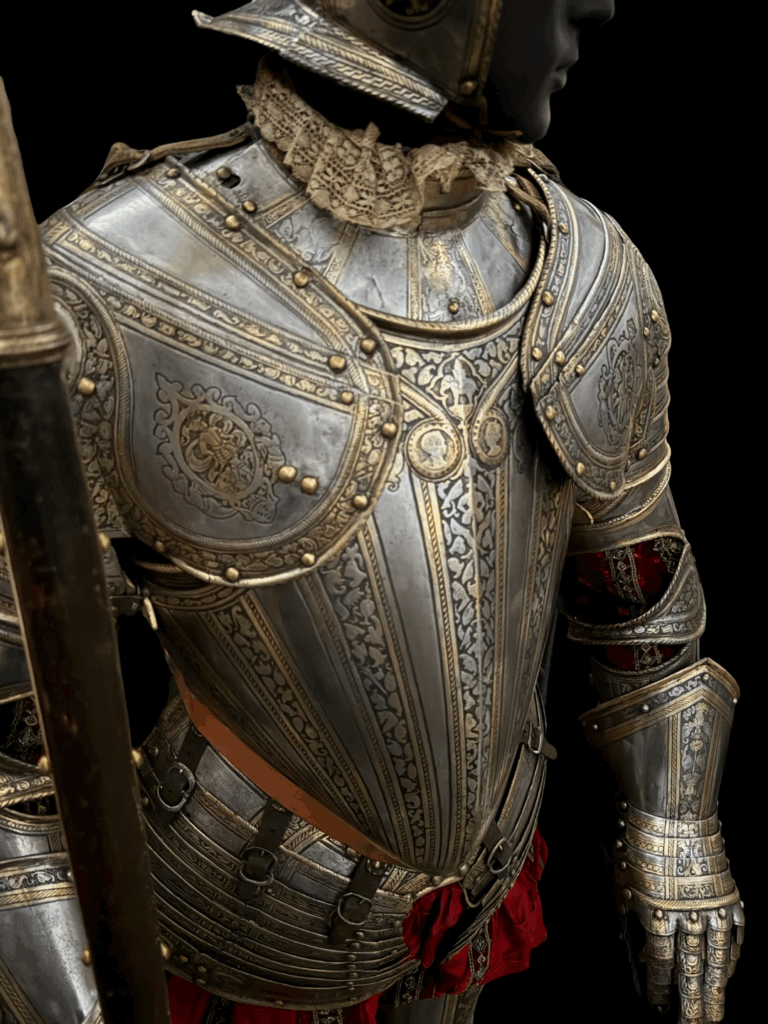
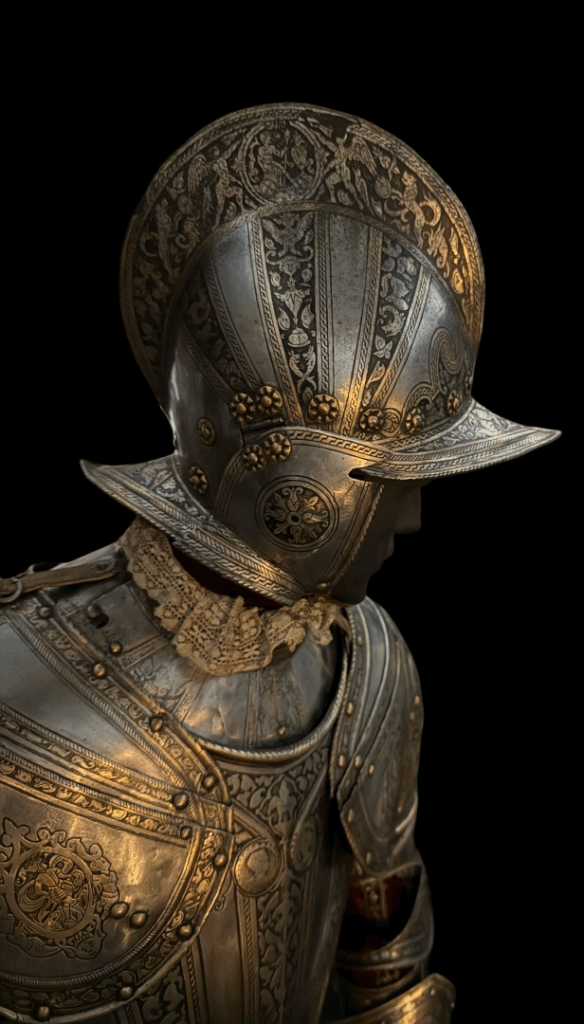
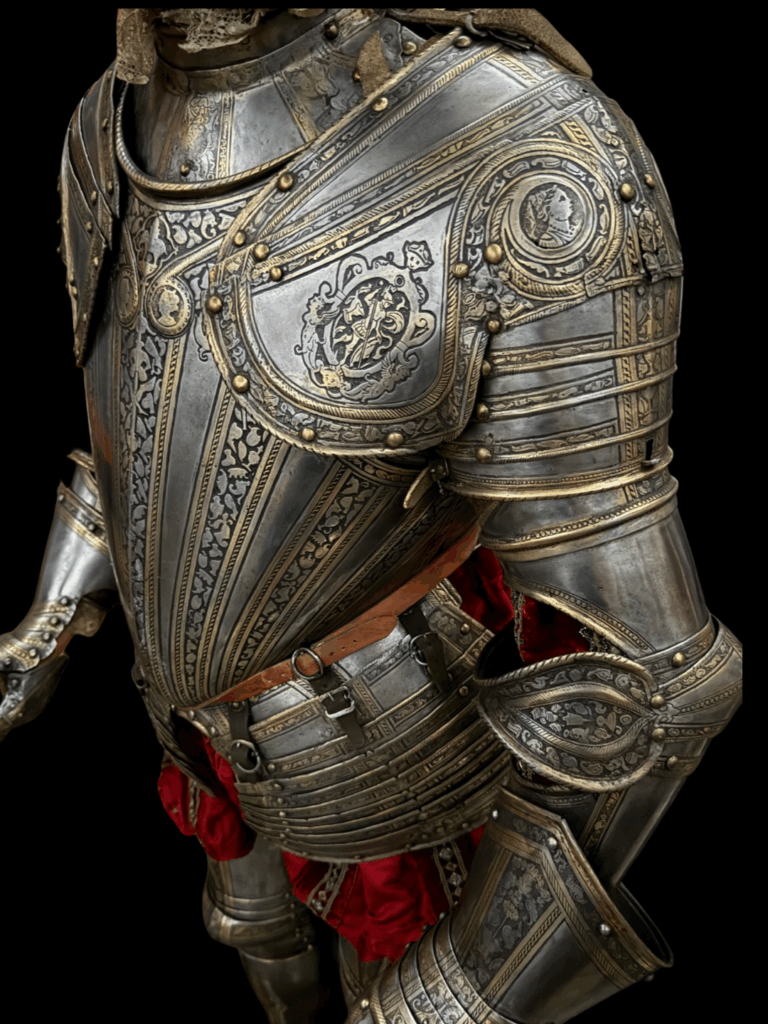
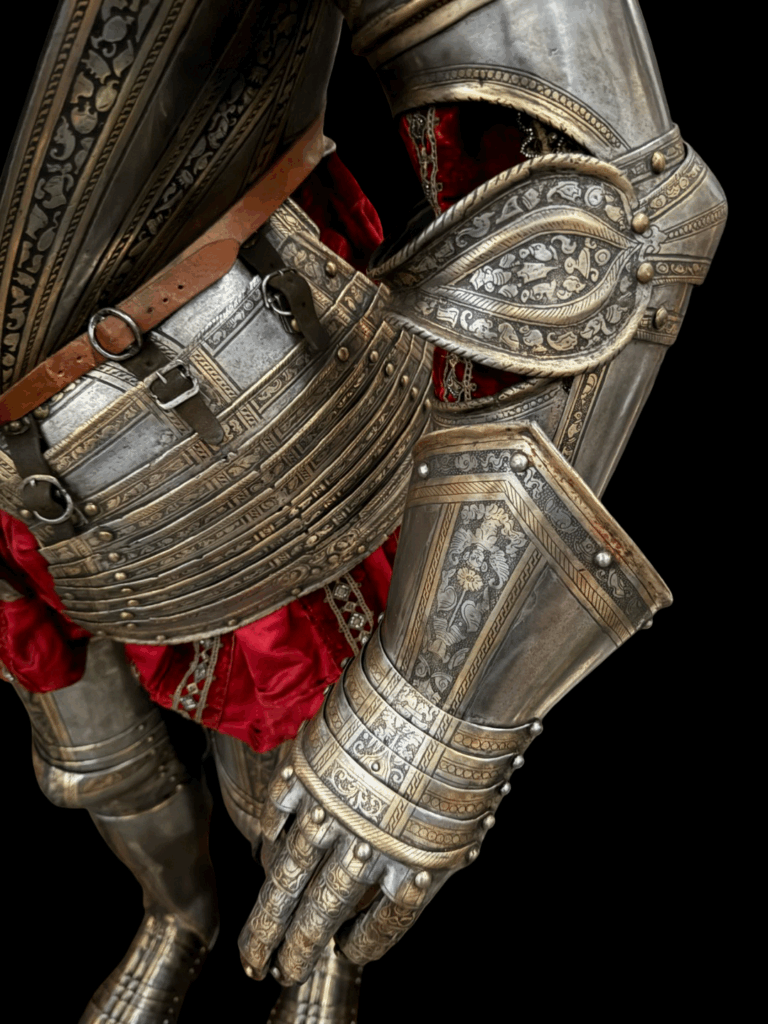
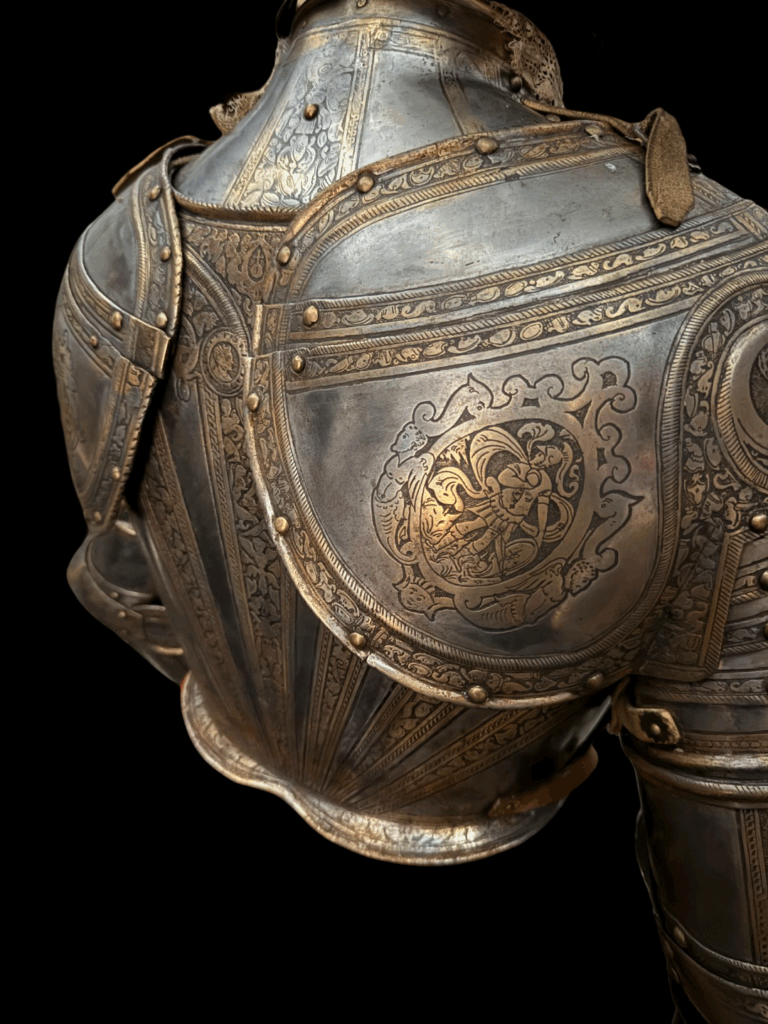
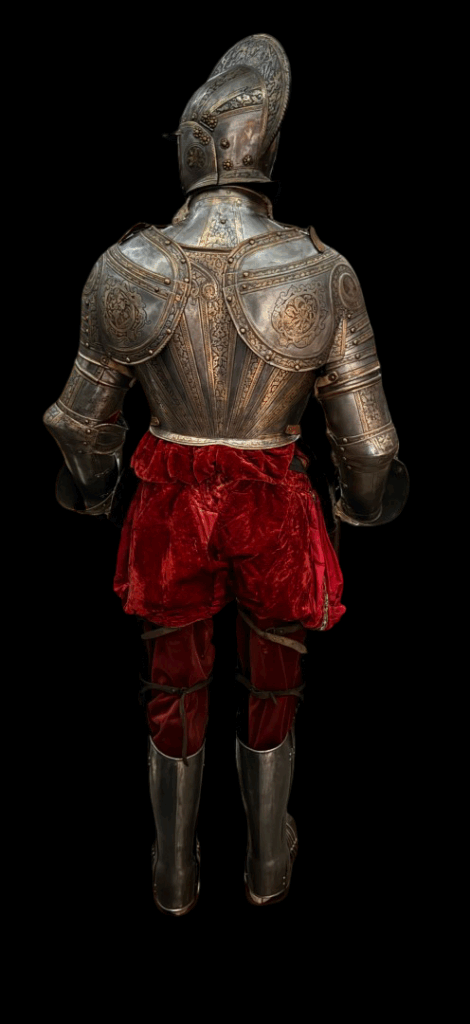
1864) AN EXCEPTIONALLY ELEGANT ETCHED AND GILDED ITALIAN FULL ARMOR CIRCA 1590 BY MAESTRO P: This armor is in superb museum condition. From a private American 80-year collection that started after WWII. When you walk in the room and see this full armor, it makes a very profound statement of class….elegance….wealth …..and chivalry- you have to see it in person to believe it!!!
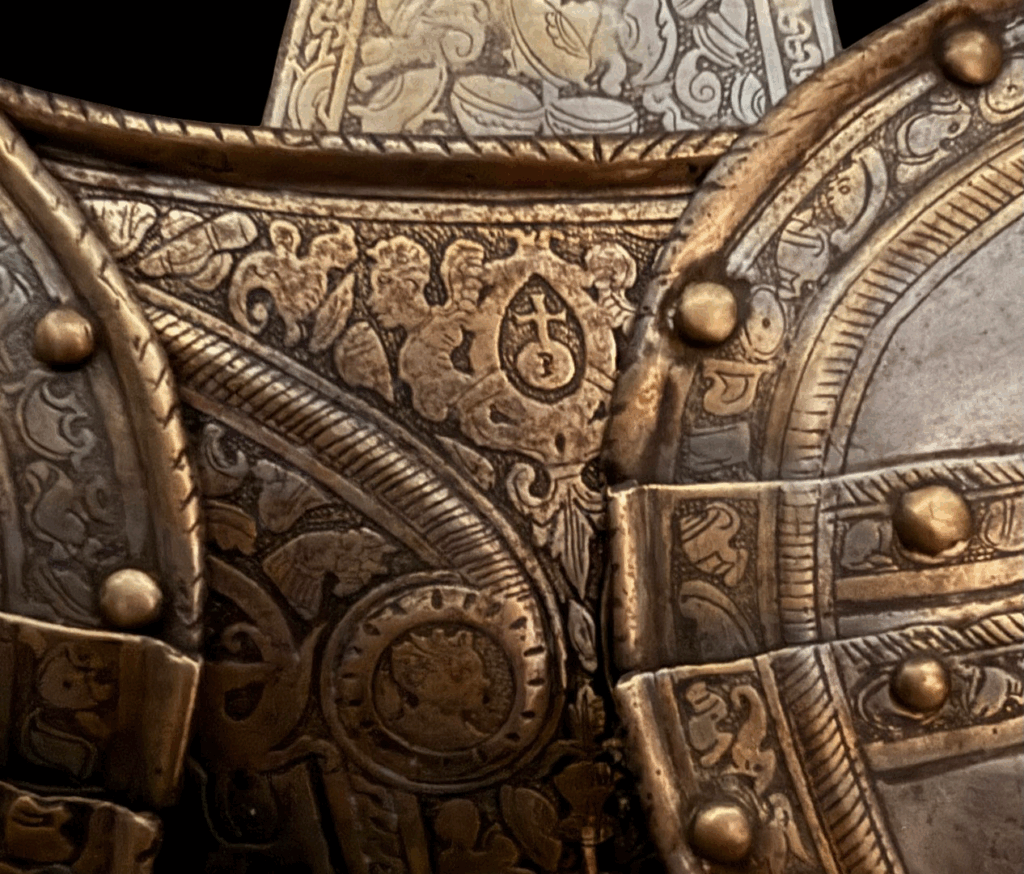
Introduction: The backplate is marked by “Maestro P,” which is an exceptional rarity since the Italians after 1520 stopped marking their armor, and only the best of the best armorers did. It’s classified as Pisan, which were primarily manufactured in Milan, Italy from 1590 to about 1610. The original owner of this armor must have been very wealthy or a very high-ranking member of the military or civic guard. You are getting both an artistic masterpiece and a piece of Renaissance military history.
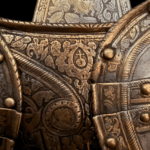
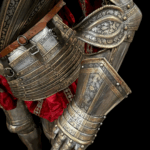
Description: This composite cap-a-pie armor is constructed with a high-comb rounded two-piece skull burgonet rising to a high medial comb, fitted at the brow with a broad obtusely pointed movable visor that pivots at the center of the skull with flat common pivots, at the bottom of the nape a matching neck guard, fitted at each side with a hinged cheek piece flanged outwards at its lower edge to serve as a continuation of the neck guard, and pierced at its center with an auditory hole at its center. The main edges of the helmet are formed with inward turns and gutters, and its surfaces are decorated with recessed bands burnished bright, along with each side of the comb, against a blackened ground and gilt, in very good condition with original cheek pieces, which is quite rare. A gorget of two lames front and rear. A breastplate formed of a main plate fitted at its arm-openings with fixed gussets and flanged outwards at its lower edge to receive a fauld of one lame carrying a trapezoidal tasset, the left of nine lames and the right of nine lames; one-piece back-plate with a broad shallow neck-opening and flanged lower edge, the backplate is marked by “Maestro P”; two large symmetrical pauldrons each formed of seven lames of which the lowest four extend inwards only to the armpit and two fully articulated tubular vambraces each fitted at its upper end with a turner that of the left of two lames the main edges of the armor formed with inwards turns decorated and accompanied at points by in some cases terminating in volutes. A pair of cuisses, each formed of a gutter-shaped main plate, rising to a convex upper edge and fitted at its lower edge with a poleyn of four lames formed at the outer end of its second with a small medially puckered oval side-wing, tubular full-length greaves, the sabatons are made from old metal and double fullered but exceptionally well done. Decorated with etching and gilding en suite, consisting of bands with trophies, foliage, and figures. Accompanied by a gilded staff weapon of an unidentified civic guard. Mounted on a plinth with rollers so it can be easily moved.
Height: Approximately 76 inches.
Condition: Superb. Needless to say, some light wear that is associated with even the best conserved Renaissance period pieces. Some areas slightly retouched, conserved/restored to the highest standards.
Discussion: Etching was known in Europe by the late 1300s; however, it was not used on armor until the late 1400s. Surviving examples of early etched armor date as early as the late 1400s and are rather basic, with designs such as foliage and basic figures. There are two primary methods of etching for Arms and Armor.
1) The first and oldest etching method involves covering the entire metal piece being etched with a protective coat, such as wax (combined with pitch and oil), called the ground, or paint called a mask. After drying, the artist used the protective coating as a canvas that he then scratched with an etching needle to create his design. The decoration is next treated with a corrosive mineral acid. This mineral acid eats away at the exposed area unprotected by the ground. This process creates the etched decoration onto the metal in relief. When the ground is removed, the etched decoration can be blackened to create contrast. This method is not to be confused with superficial micro-etching, where organic acid (for example, vinegar) is used and only penetrates about 50 microns into the metal.
2) The second method entails painting the design directly on the metal and then acid etching as in the first method. Some of the most prominent artists of Renaissance Europe etched suits of armor, including Albrecht Durer, Daniel Hopfer, Hans Holbein the Younger, and Hans Burgkmair, to name a few. They produced religious decorations of subjects such as the Trinity, the Crucifixion, and many other stories from the New Testament. The saints chosen were protective, like St. Michael, St. George, and St. Barbara.
Provenance: From a private American 80-year collection that started after WWII. Acquired from the 65-year-old granddaughter.
Conclusion: In today’s collectors’ market, armors such as this are seldom seen. Even someone who knows very little about Arms and Armor will recognize this armor as a work of art and a rare and highly sought-after masterpiece. When you walk in the room and see this full armor, it makes a very profound statement of class….elegance….wealth …..and chivalry- you have to see it in person to believe it! Priced for quick sale. ACT-NOW , or you could be very disappointed. Armors like this don’t come often , especially at bargain basement prices!!!*
All my items come with the following:
–Free shipping.
–10-day review period.
–Certificate of Authenticity.
–Autographed copy of my book.
–In the event of an international shipment, we will help assign the lowest correct Customs tariff so you pay the least.–