1793 Maximilian Helmet
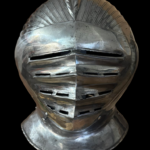
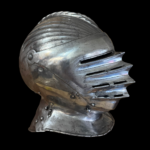
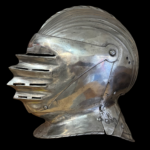
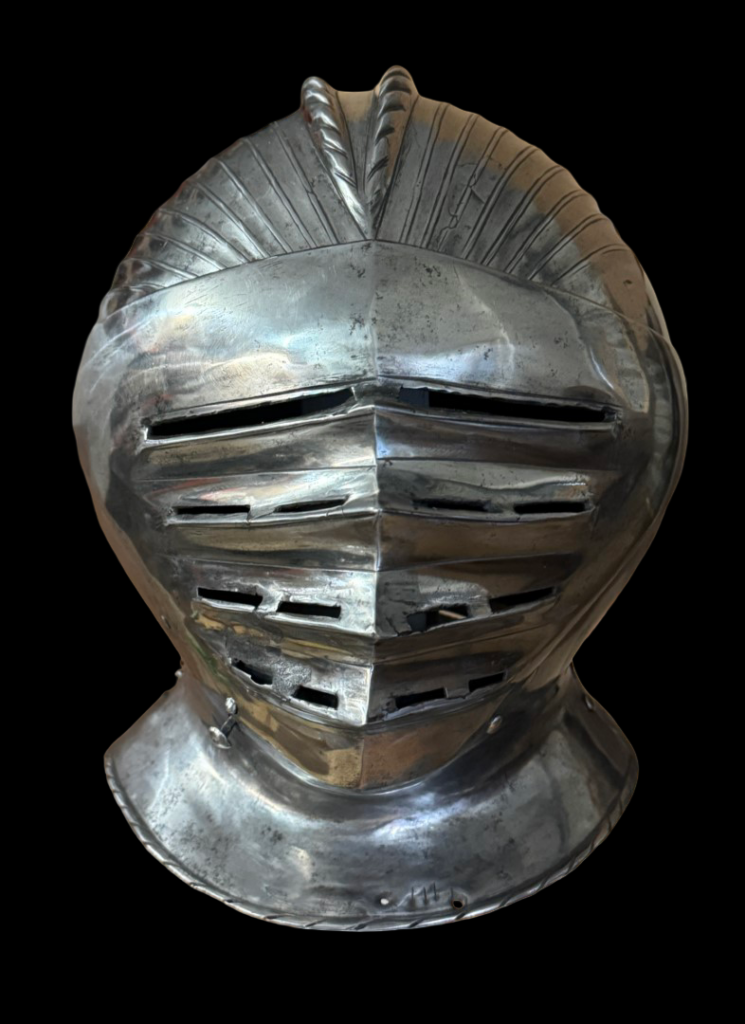
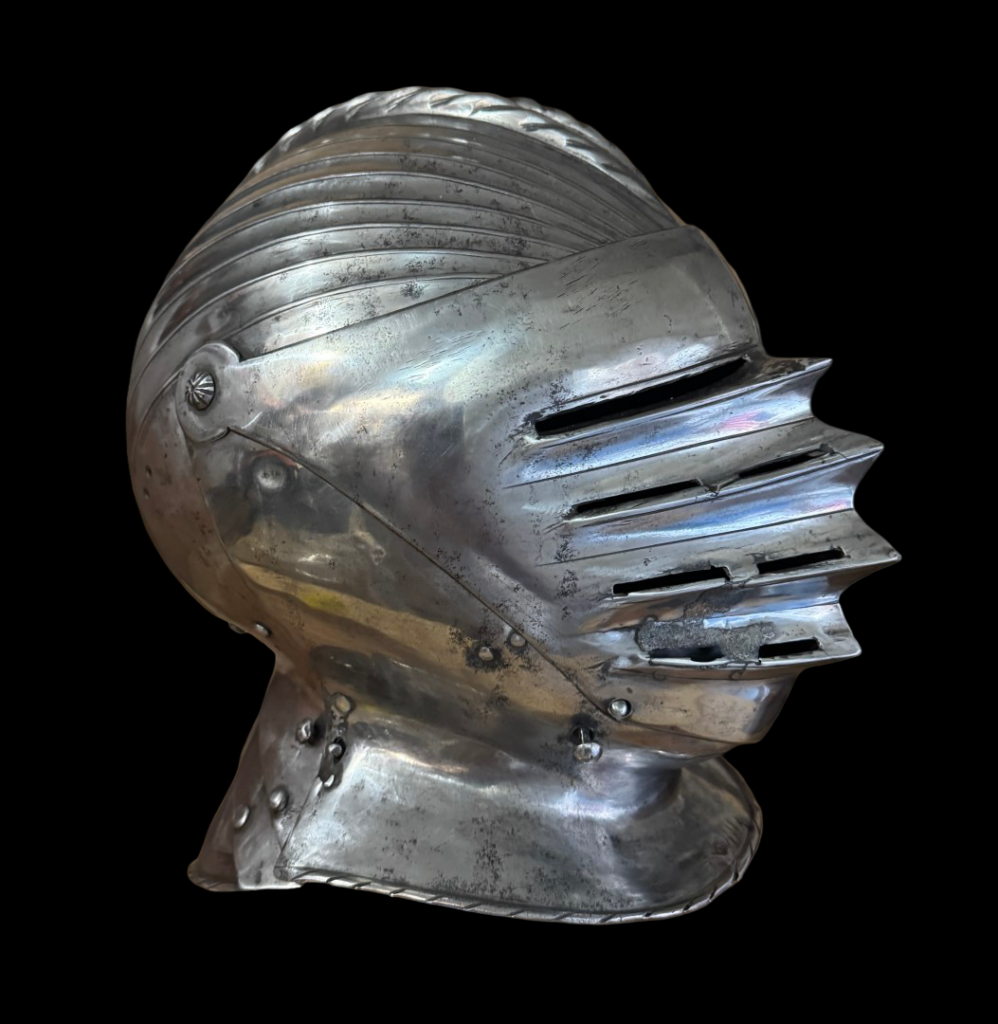
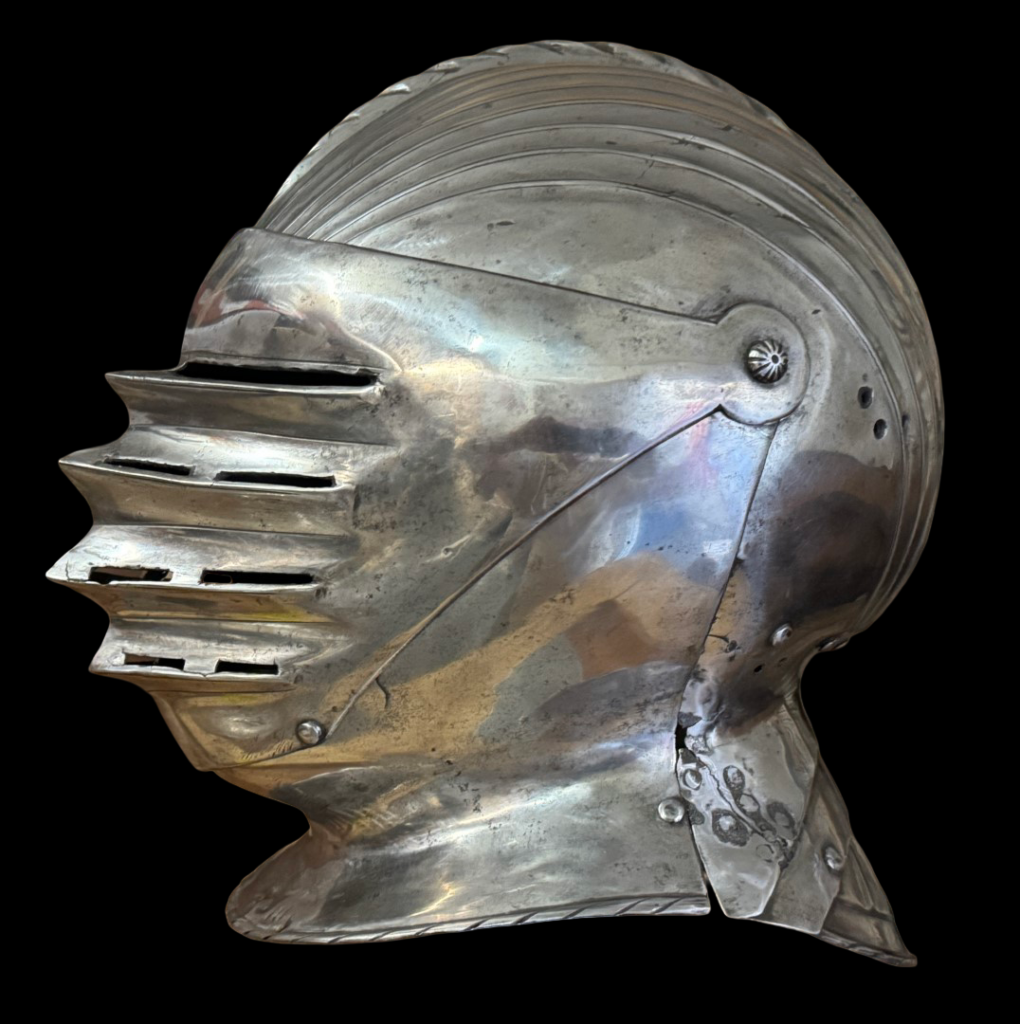
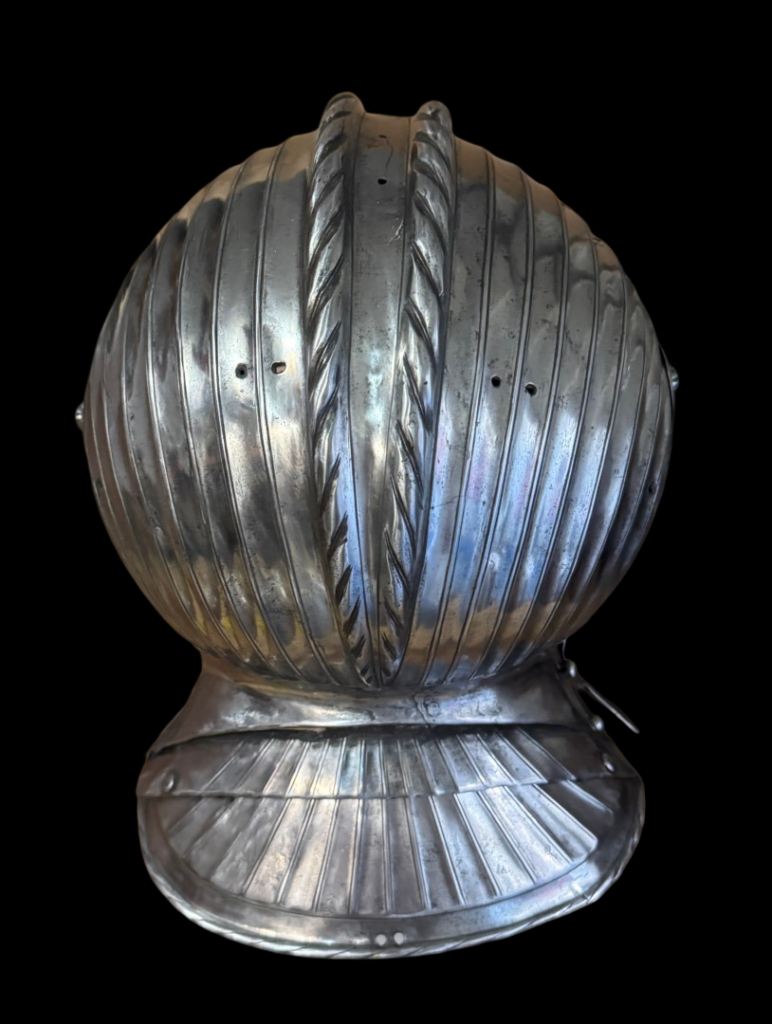
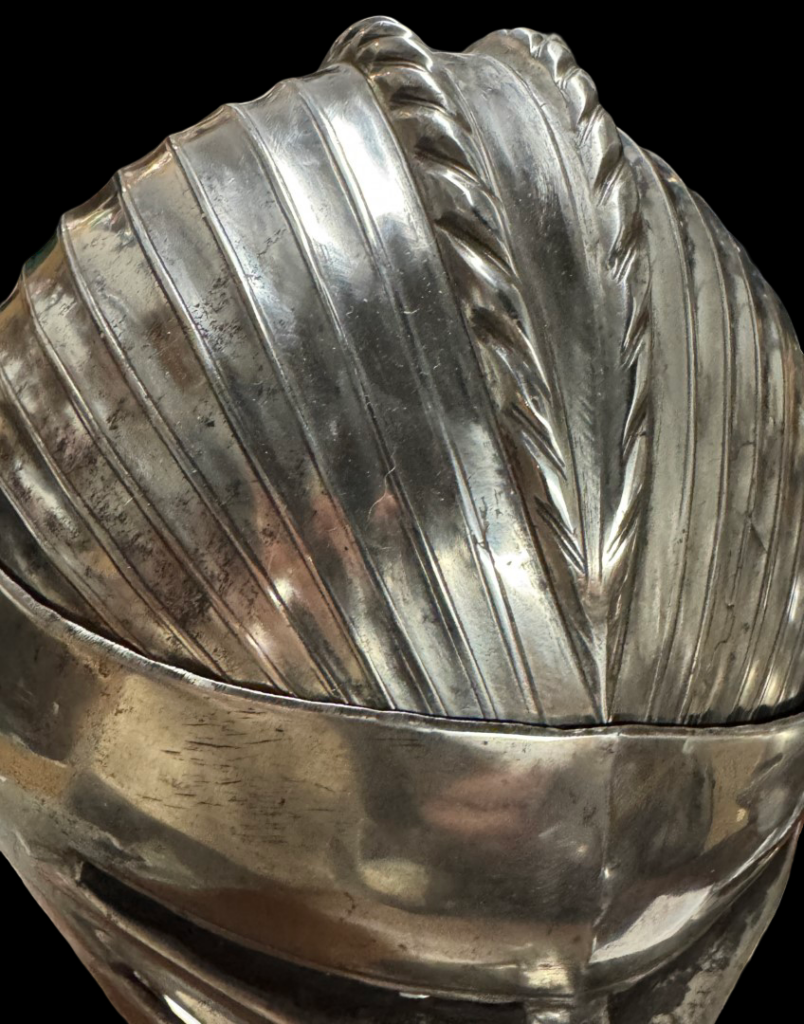
1793) RARE AND IMPORTANT DOUBLE COMB MAXIMILIAN HELMET CIRCA 1520 FROM A NOBLEMAN’S COLLECTION: This is not only a Maximilian helmet but a double comb, the rare among the rare! It’s the only one I have had on offer in 40 years! Of all collectible armor, A Maximilian helmet is arguably the most sought after by collectors and decorators.
— During the first 35 years of the century, fluted armor evolved (what the Victorians named Maximilian armor). The Maximilian fashion was originally an early 1505 Innsbruck reproduction of the contemporary pleating fashion found in close-fitting civilian jackets (doublets). Early breastplates in this fashion were embossed with only a few decorations (see page 132 in my book).
The term Maximilian is first recorded in a large, two-volume lithographic work by F. Gille and A. Rockstuhl in 1840 in the armor collection in the Mussée de Tzarskoé-sélo ou Collection d’armes (St. Petersburg and Karlsruhe, Russia, 1835–1853). Ironically, there is no proof that Emperor Maximilian was responsible for its original design. However, it appears that Maximilian did take an active part in the goings-on at his armory.
Maximilian armor came to fruition with no period of evolution. It quickly started after the commencement of the Italian Wars , after 200 years of peace. Maximilian armor was so well accepted that it didn’t go out of fashion until 15 years after Maximilian’s death. The genesis of Maximilian armor in both Italy and Germany was the merger of the Italian globose-bellied breastplate fashion and the adaption of fluting by the Italians. Non-fluted armor during this period was most popular outside of Germany.
Maximilian armor is constructed of white steel, but its structural strength is augmented with fluting that also helps deflect the points of blades, spears, and arrows without needing additional metal. The owner’s taste dictated changes to his Maximilian armor. To own a noble’s or knight’s suit of armor in the early 16th century, you had to be exceptionally wealthy. Having a cap-á-pie (full) Maximilian armor custom-made required being measured the same way a custom-tailored suit is measured by a tailor today. The wealthy owner could select many options and garnitures (auxiliary pieces).