
2100 Mace
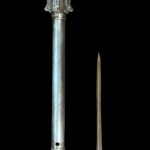

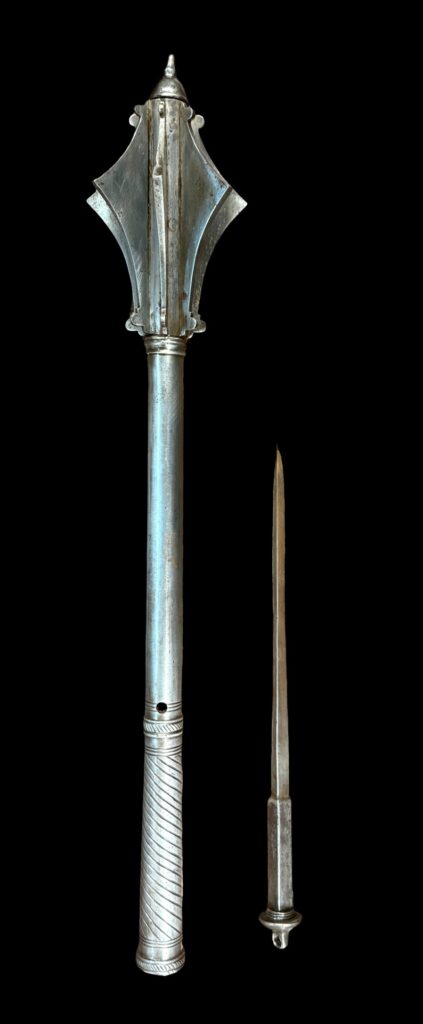
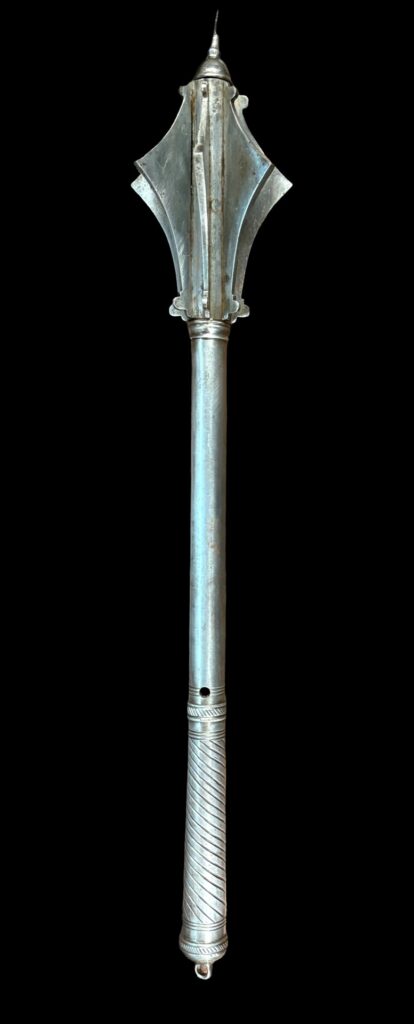
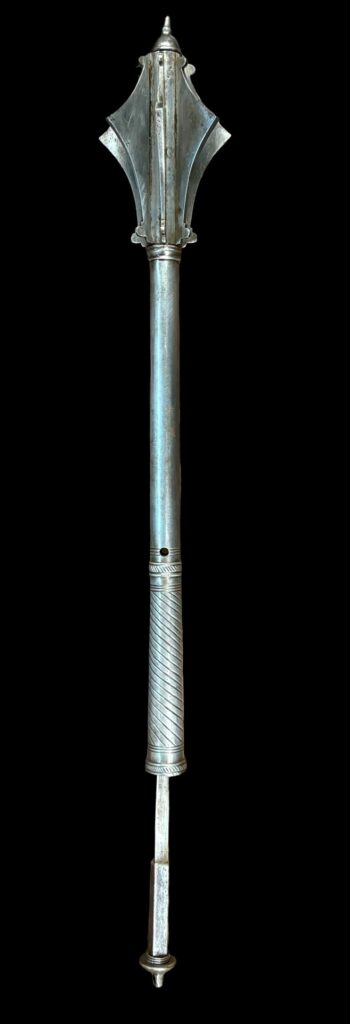
2100) ULTRA RARE GOTHIC GERMAN COMBINATION WAR MACE AND DAGGER CIRCA 1530:
Introduction: Real combination weapons are exceptionally rare. This is the earliest combination weapon I have had. A late Gothic combination mace such as this one is an exceptional find. The vast majority of Renaissance combination weapons were commissioned by the mega-wealthy as interesting novelties or exorbitant curiosities earmarked for the owners’ “Kunstkammer” (cabinet of curiosities) towards the end of the 1500s. ]
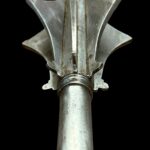
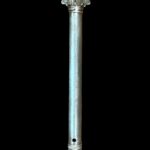
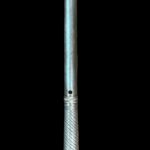
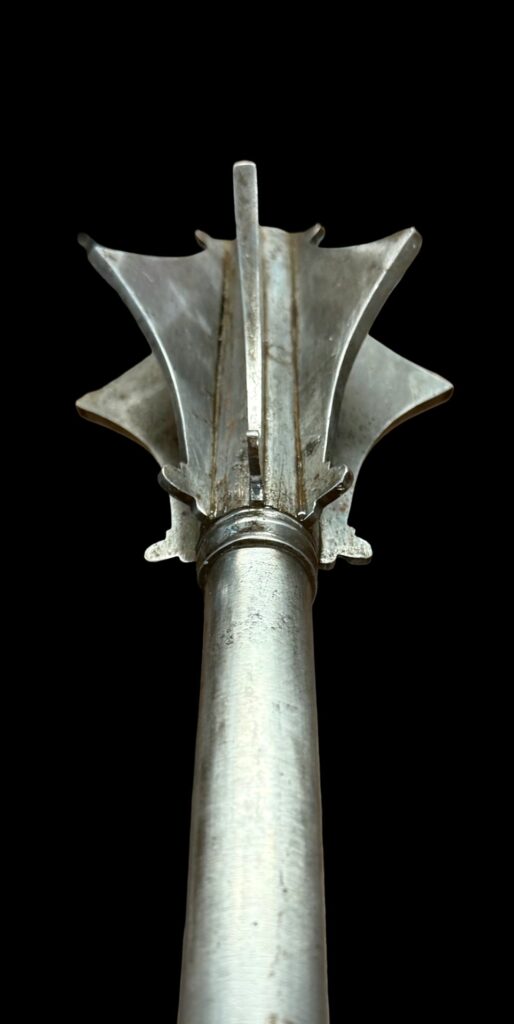
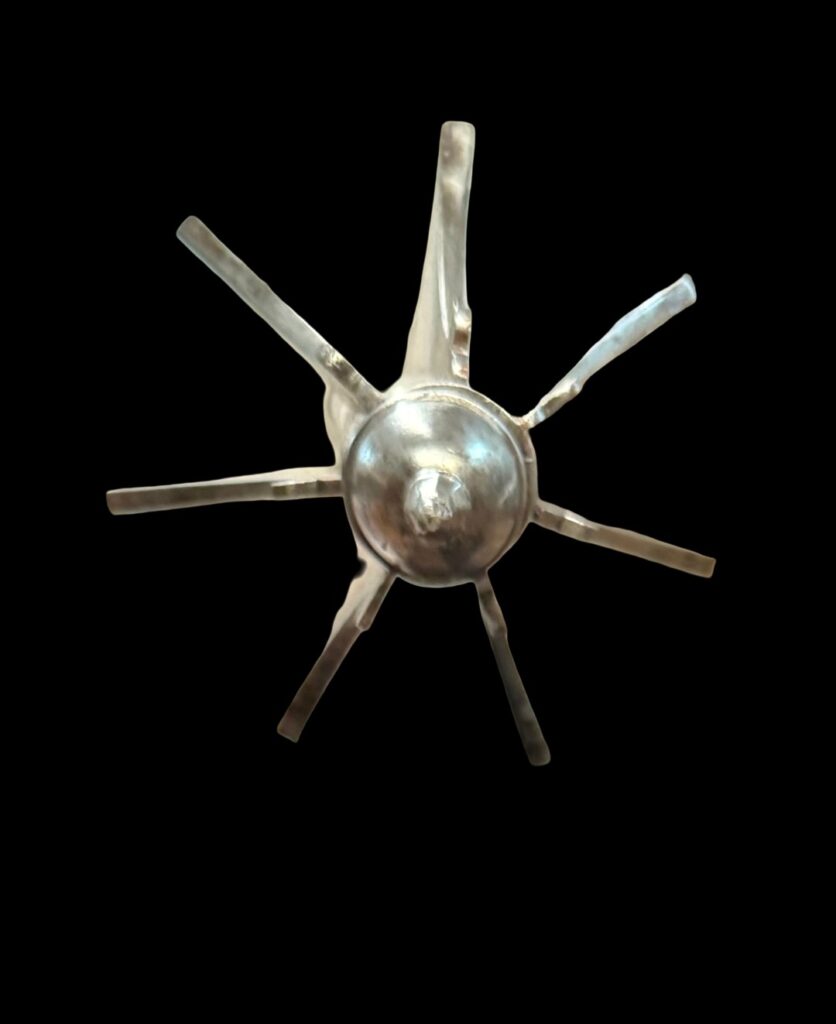
Description: Constructed entirely of iron with a head of seven cusped, brazed flanges of stylized diamond silhouette, each terminating in a delicate scroll cutout at its base. The head terminates in a turned baluster finial. Below the head, a molded collar connects to a slightly tapering brazed tubular haft. The grip is of circular section, decorated with a tight pattern of deeply cut spiral lines bordered by horizontal turned bands. A transverse hole for a wrist-loop is drilled just above the grip. The grip section terminates in a swelling pommel cap decorated with fine hash marks at its edge; the pommel cap unscrews to extract a concealed dagger featuring a long, rigid, slender spike blade of square cross-section tapering to a sharp point.
Dimensions: Approximate length 25 inches.
Condition: Superb.
Provenance: A fine European collection.
Discussion: The apex of combination weapons was from 1550 to 1600. Most weapons were hafted weapons such as maces, axes, and hammers, whose haft was a firearm barrel, namely a wheellock. Other firearm combination weapons include shields (see page 412 in my book, Henry the VIII Gun Shields), swords, and spears that used a small firing mechanism attached to the blade. The inference of combination weapons is that firearms were still unreliable or only effective at short range, so rapid reloading was impossible. Combination weapons without firearms include a blade hidden within a secondary weapon.
War maces, axes, and war hammers are all heavy weapons held in hand, often with a two-handed grip. They were primarily used to crush rather than slice or stab. Blunt-force weapons became increasingly crucial as plate armor developed and swords could no longer penetrate it.
As iron billets became more available, the mace evolved around 1320 to a whole-metal mace with vertical flanges on the head and a rounded grip with a pommel (see pages 369-371 in my book). During this period, Italian “Cavalieri” mercenaries based in Milan used the mace heavily, outside the reach of Papal rule.
The next major change in the mace is the Gothic mace, which evolved with cusping and piercings, following Gothic art and architecture. This was followed by Renaissance-period maces (see pages 366-371 in my book). Western European mace production substantially decreased after 1600, except for Central Europe (mainly Hungary and Poland), where they were still actively used from horseback.
Comparable: The Collectors Course on Medieval Arms and Armor, Andrew F. Garcia, 2022, page 327.
Conclusion: If you have ever wanted an exceptionally rare and very early real combination fighting weapon, this is your opportunity. Priced to sell for much less than you expect. ACT NOW; this one should sell quickly, and I will probably never have another one again!!!*
This is a rare opportunity. ACT NOW!!!
All my items come with the following:
–Free shipping.
–10-day review period.
–Certificate of Authenticity.
– Free autographed copy of my book if you do not have one.
– In the event of an international shipment, we will help assign the lowest correct Customs tariffs, so you pay the least as little as 5% or even nothing.
I believe you will be very pleased. ACT NOW!!!*