2081 Breastplate
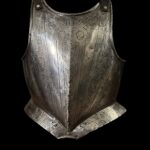
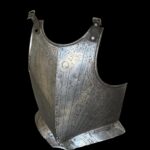
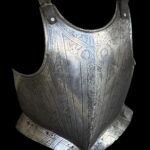
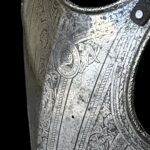
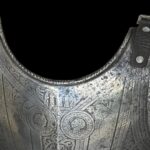
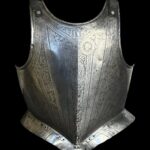
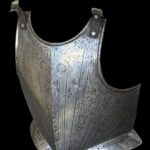
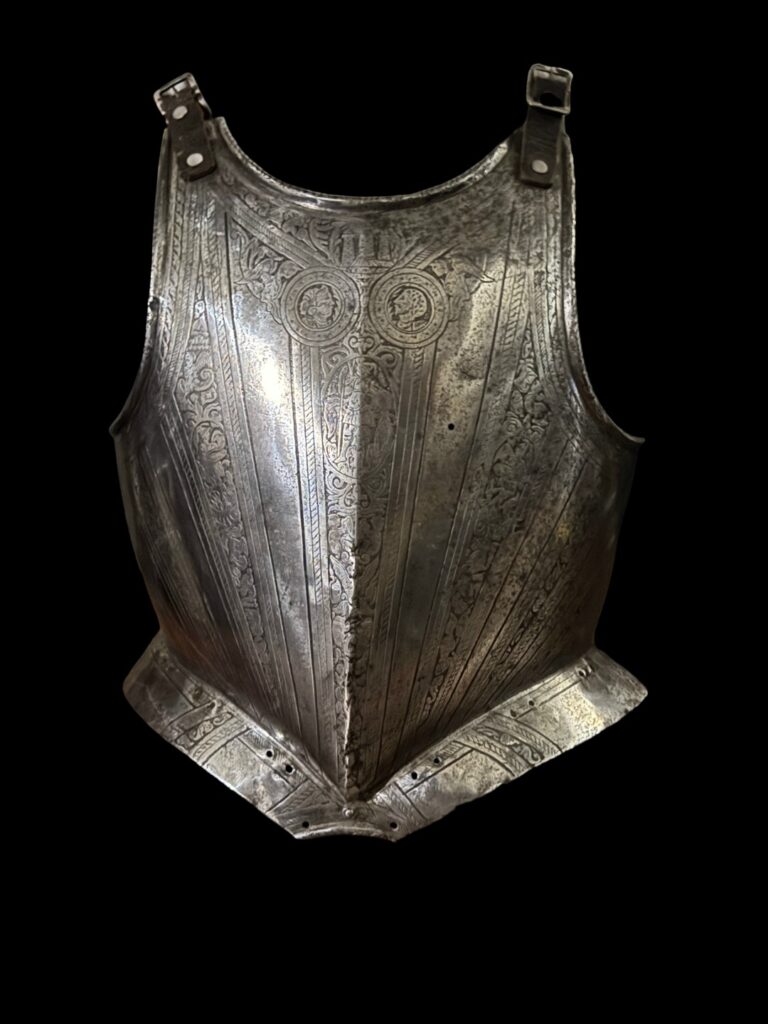
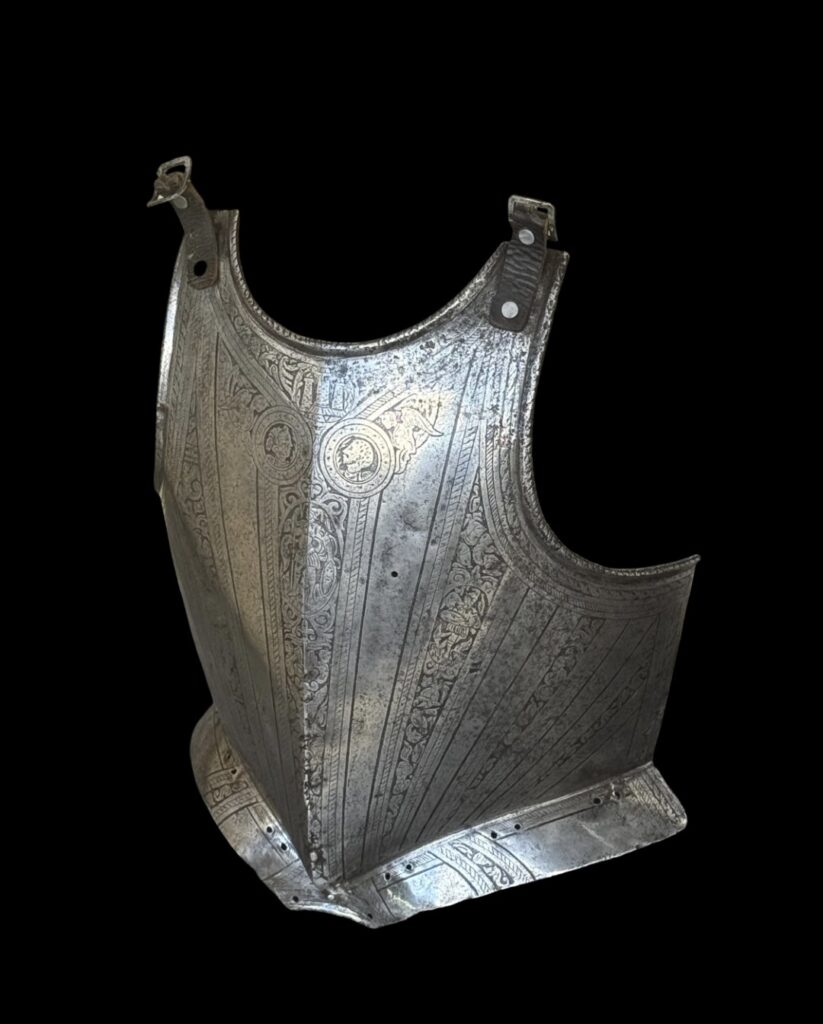
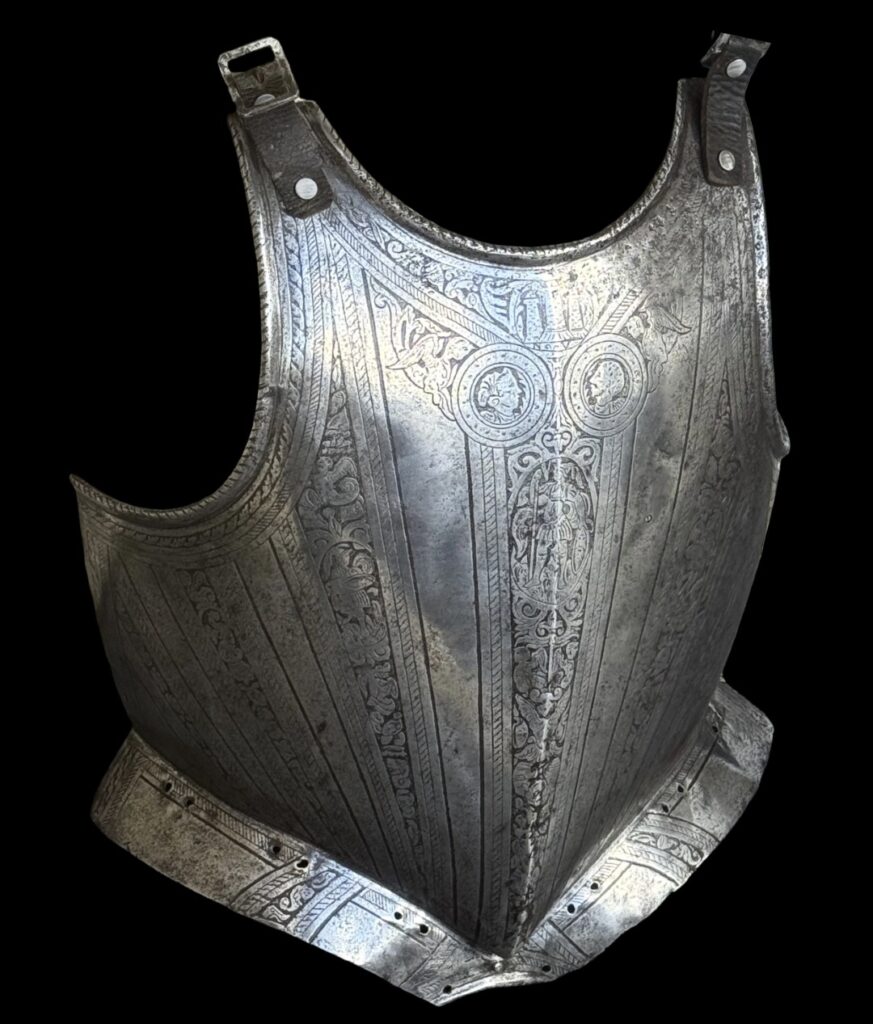
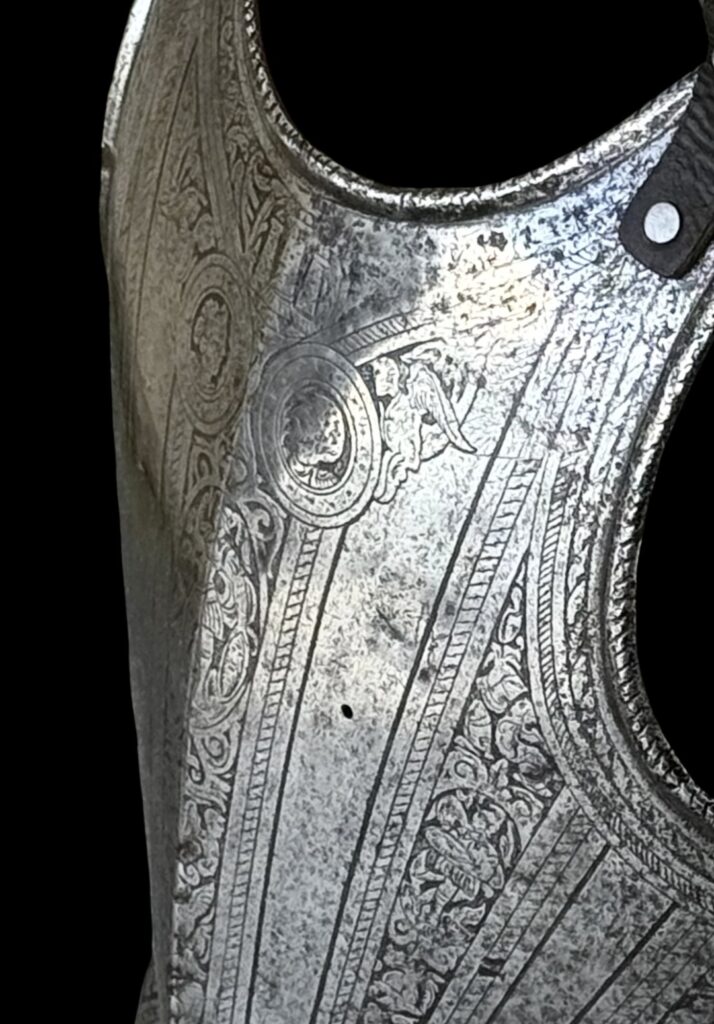
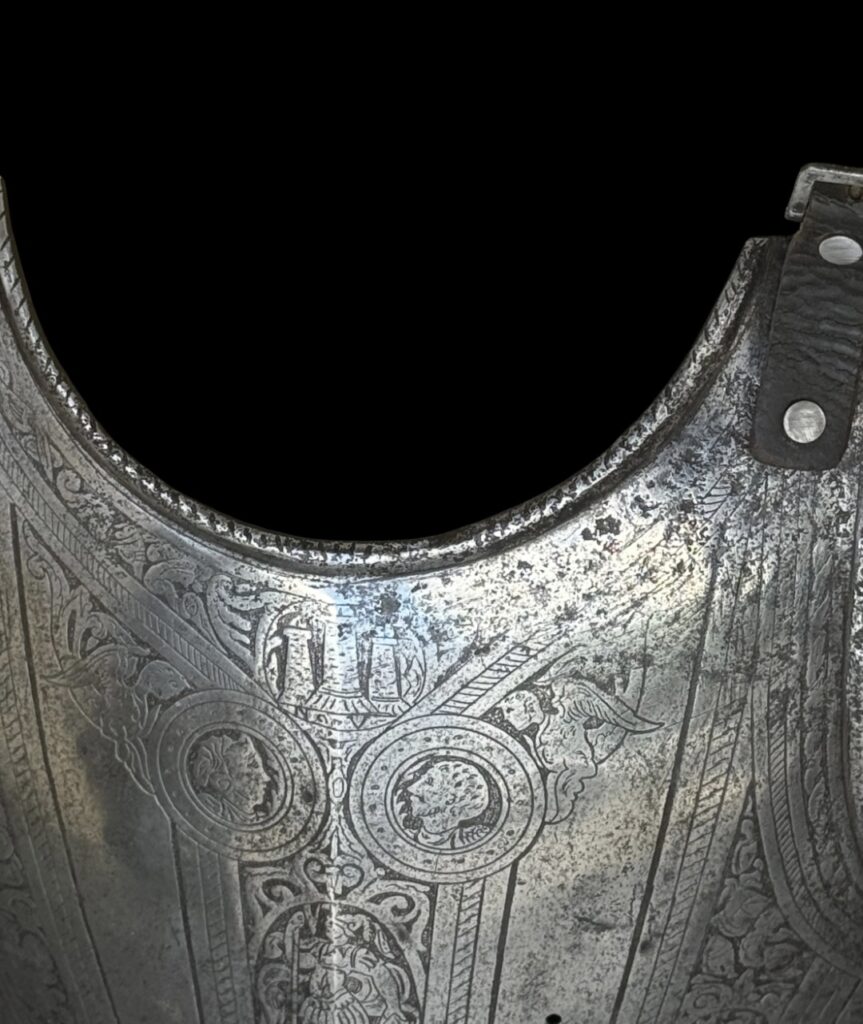
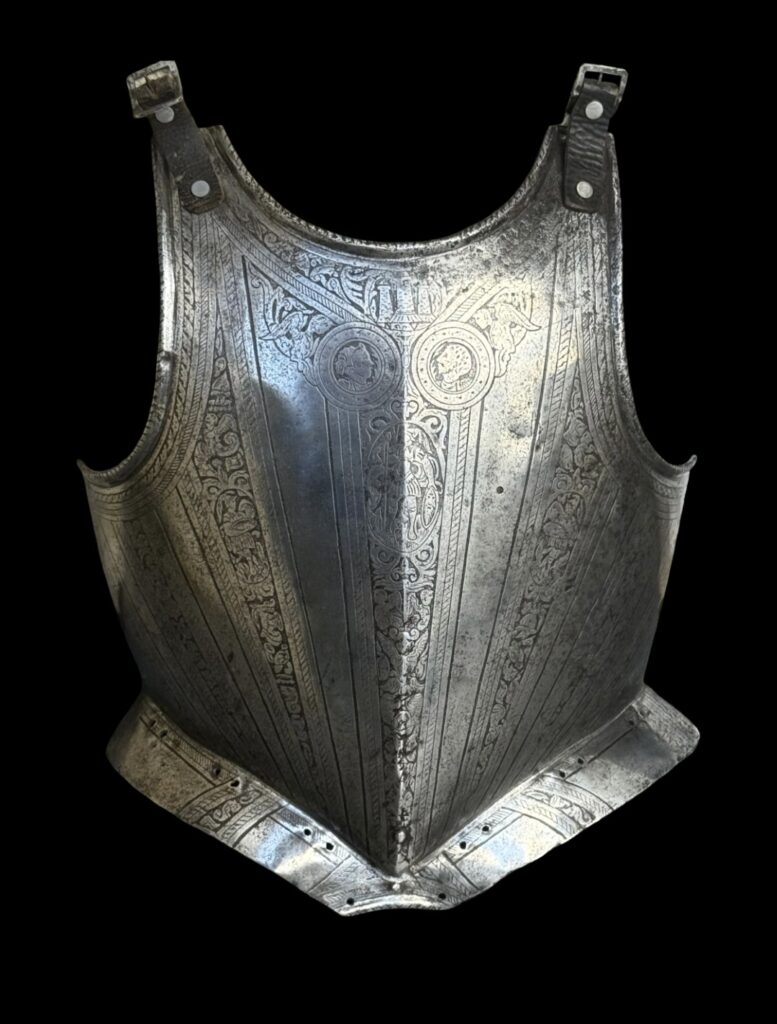
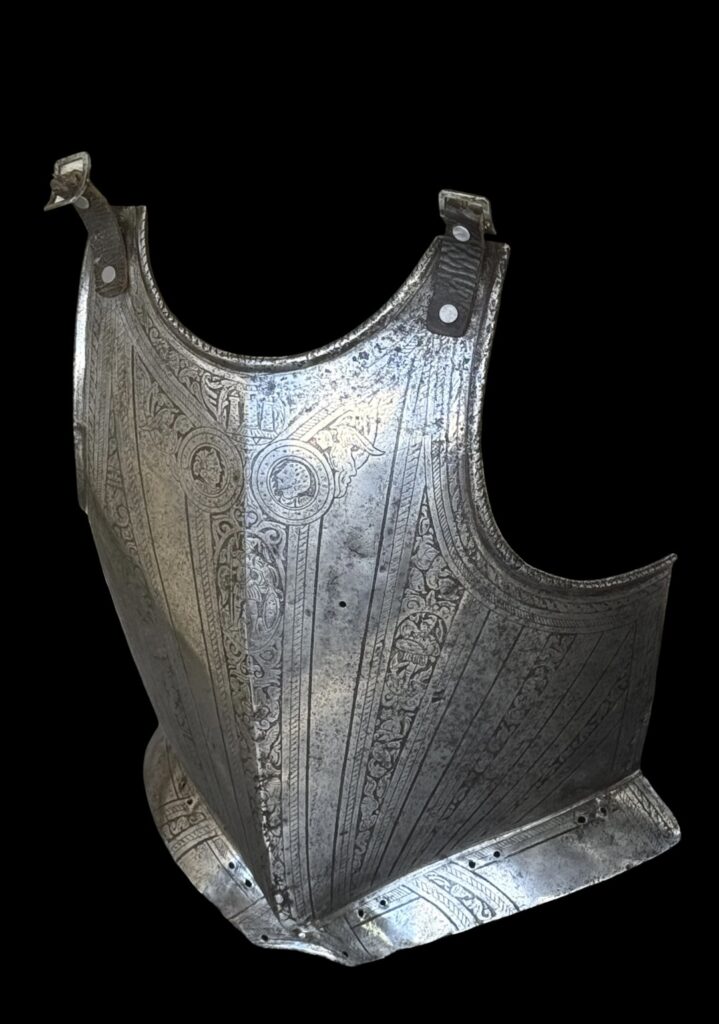
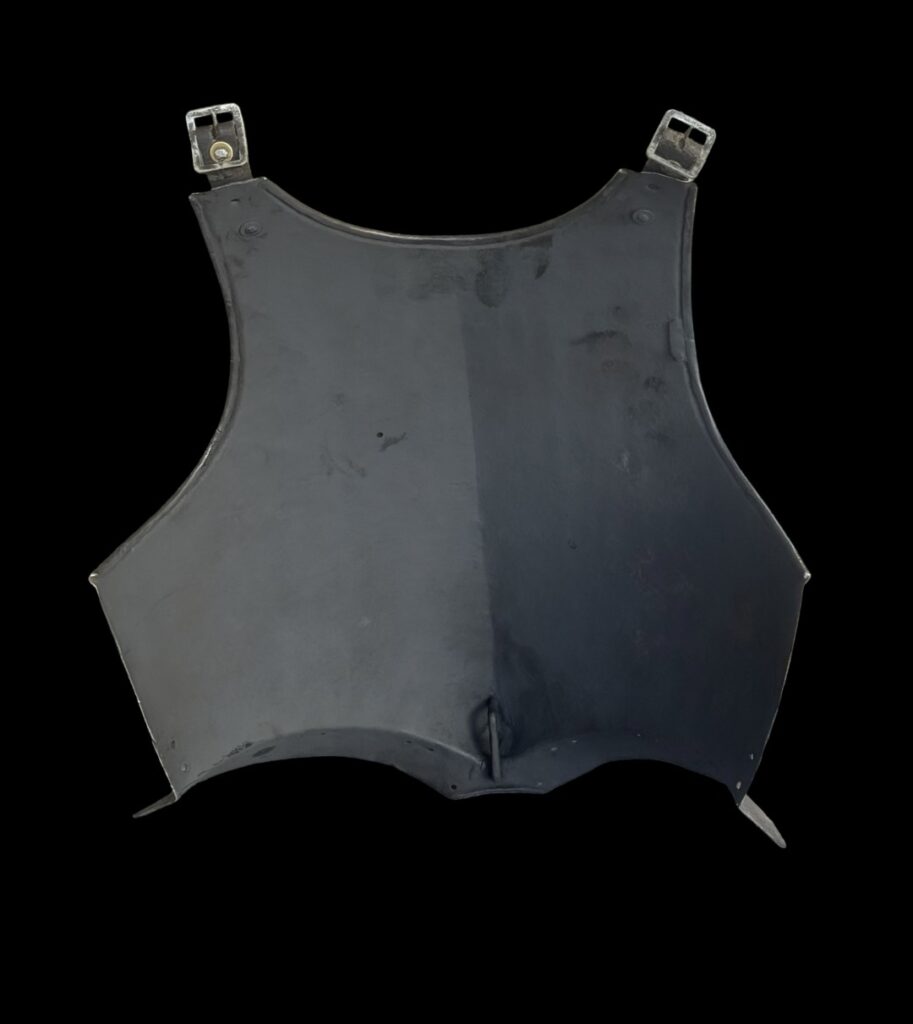
2081) ELEGANT ITALIAN PISAN ETCHED BREASTPLATE BY MASTER OF THE CASTLE CIRCA 1590:
Introduction: The Master of the Castle Mark” (often referred to in Italian as Maestro dal Castello or Master of the Three Towered Castle Mark) was a highly skilled but anonymous master armorer and etcher active in Milan, Italy, from roughly 1590 to 1620.
Historians gave him this pseudonym because he stamped his creations with a distinct mark depicting a three-towered castle, usually located prominently at the top of the breastplate or helmet. He is widely believed to have been a prominent student, follower, or collaborator of Pompeo della Cesa, the most celebrated Milanese court armorer of the late 16th century.
The “Master of the Castle” is renowned for his mastery of what arms historians call “Pisan” style armor (all ‘Eroica or North Italian etched armor). Despite the name “Pisan,” this decorative style originated and flourished in the workshops of Milan and Brescia but gained the nickname because massive quantities were shipped through the port of Pisa.
Description: A breastplate formed in the peascod fashion, fitted with gussets at the arm openings and flanged outwards at the lower edge to receive a fauld. Etched decoration composed of bands with trophies, foliage, and two figures, possibly the Nobels associated with this armor. The Master of the Castle proudly etched on the top center.
Condition: Very good.
Discussion: For the average collector, the most common type of etched armor they will be collecting is called Pisan, which was primarily manufactured in Milan in the 16th and early 17th centuries. Pisan etching was relatively inexpensive and mass-produced. Circa 1550, Italy replaced its practice of a hatched-lines background. It adopted the German practice of stippling (drawing or engraving using small dots) the background of the decoration. Pisan etching appears on Italian armors of good, though not exceptional, world-class quality.
Etching was known in Europe by the late 1300s; however, it was not used on armor until the late 1400s. Surviving examples of early etched armor are as early as the late 1400s and rather basic, with designs such as foliage and basic figures.
There are two primary methods of etching for Arms and Armor.
1) The first and oldest method of etching involves covering the entire metal piece being etched with a protective coat, such as wax (combined with pitch and oil) called the ground or paint called a mask. After it dried, the artist used the protective coating as a canvas and scratched it with an etching needle to create the design. The artist then treated the decoration with a corrosive mineral acid. This mineral acid eats away at the exposed area unprotected by the ground. This process creates the etched decoration in relief on the metal. When the ground is removed, the etched decoration can be blackened to create contrast. This method should not be confused with superficial micro-etching, where organic acid (for example, vinegar) is used and penetrates only about 50 microns into the metal.
2) The second method involves painting the design directly on the metal and then acid etching as in the first method. Some of the most prominent Renaissance European artists etched suits of armor, including Albrecht Dürer, Daniel Hopfer, Hans Holbein the Younger, and Hans Burgkmair. They produced religious decorations of subjects such as the Trinity, the Crucifixion, and many other stories from the New Testament. The saints chosen were protective, like St. Michael, St. George, and St. Barbara.
Comparables: Because his castle mark is so distinct, several of his authentic pieces have survived in major global armories. For instance, a beautifully preserved close-helmet from around 1600 attributed to him—featuring an all-over intricate etching of interwoven crowns and foliage—is housed in the Armeria Reale (Royal Armory) in Turin. Legend has long associated that specific helmet with the famous Spanish general Ambrogio Spinola. Other components, such as foot-tournament close-helmets and half-armors, are in the collections of The Metropolitan Museum of Art in New York and various European royal collections.
Provenance: An old Italian collection.
Conclusion: An exceptionally elegant breastplate in superb condition. Breastplates are the second most sought-after armor collectible, after helmets. They are easily recognizable works of art, displayed on walls or tabletops. They make a statement of class, power, and refinement. Priced to sell today to the collector who only wants the best at a much lower price than you would expect at a European auction. ACT-NOW!!!*
Contact me now to get the Lowest Price Possible from the Owner.
All my items come with the following:
–Free shipping in the US.
–10-day review period.
–Certificate of Authenticity.
– Free autographed copy of my book if you do not have one.
– In the event of an international shipment, we will help assign the lowest correct Customs tariff, so you pay the least as little as 5% or even nothing.
I believe you will be very pleased. ACT NOW!!!*