2069 Burgonet
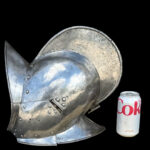
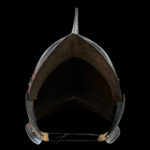
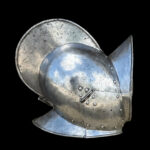
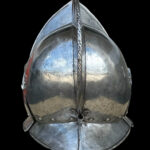
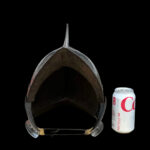
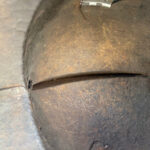
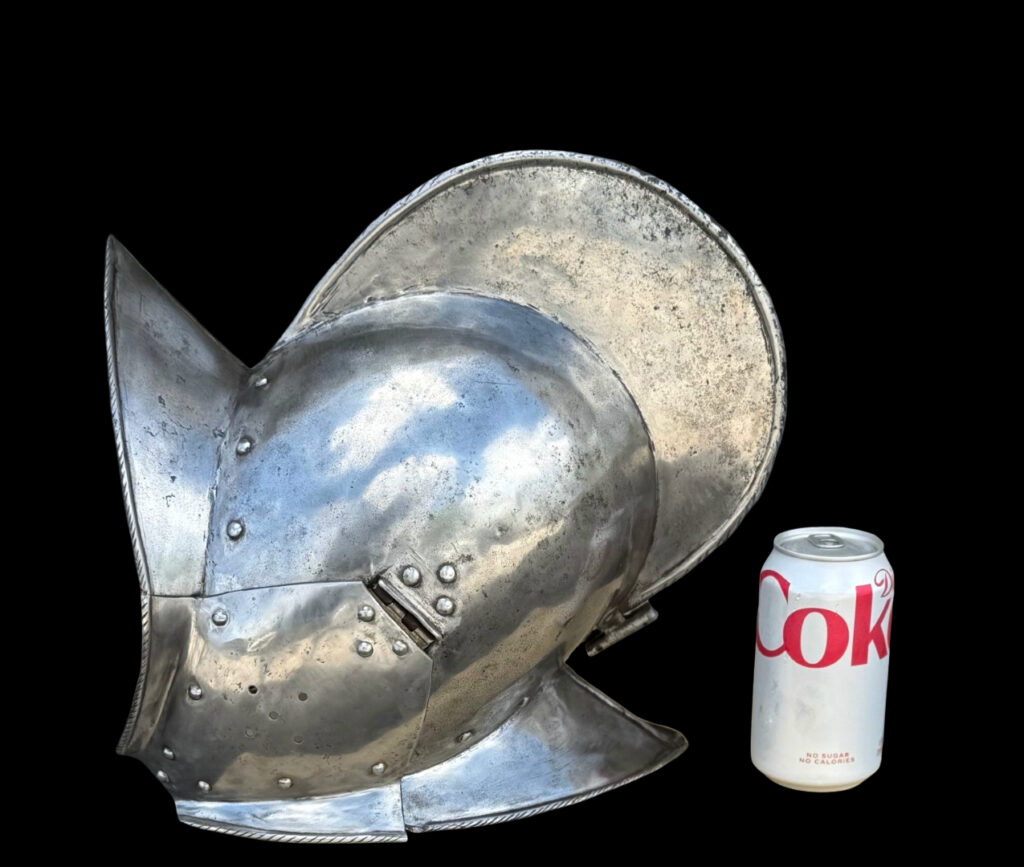
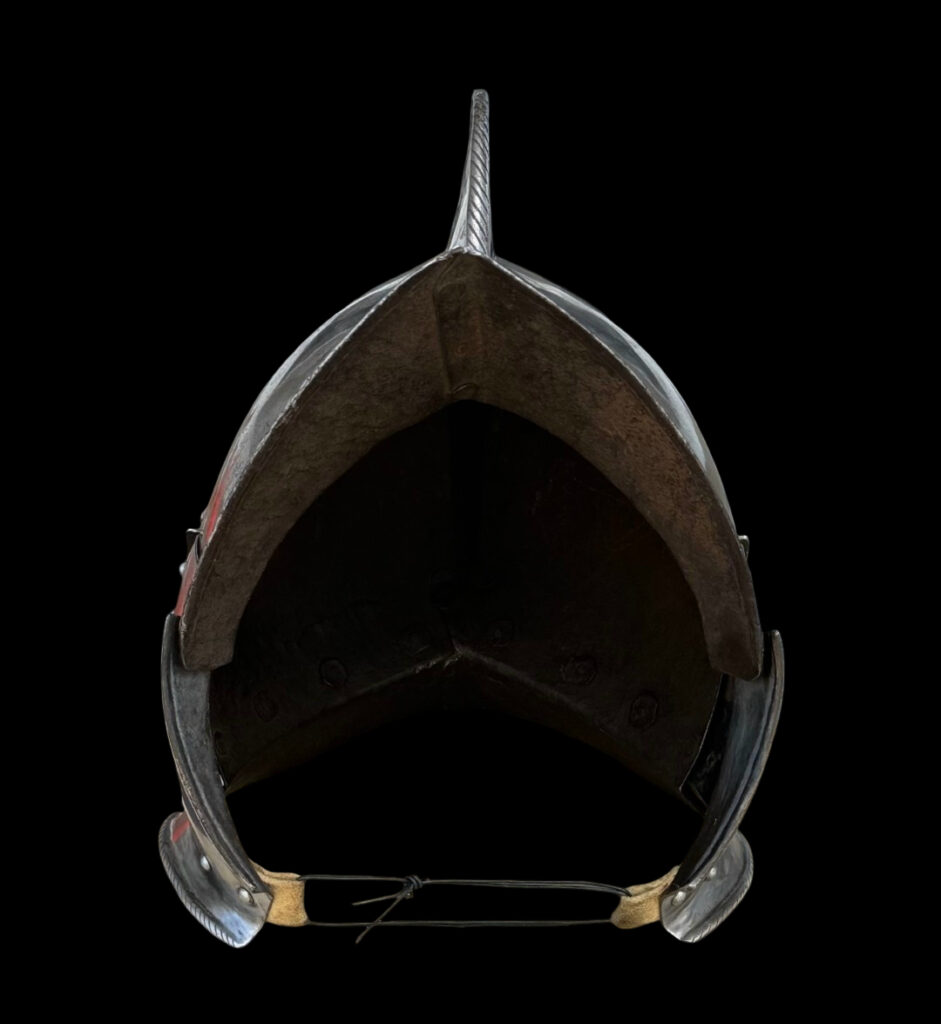
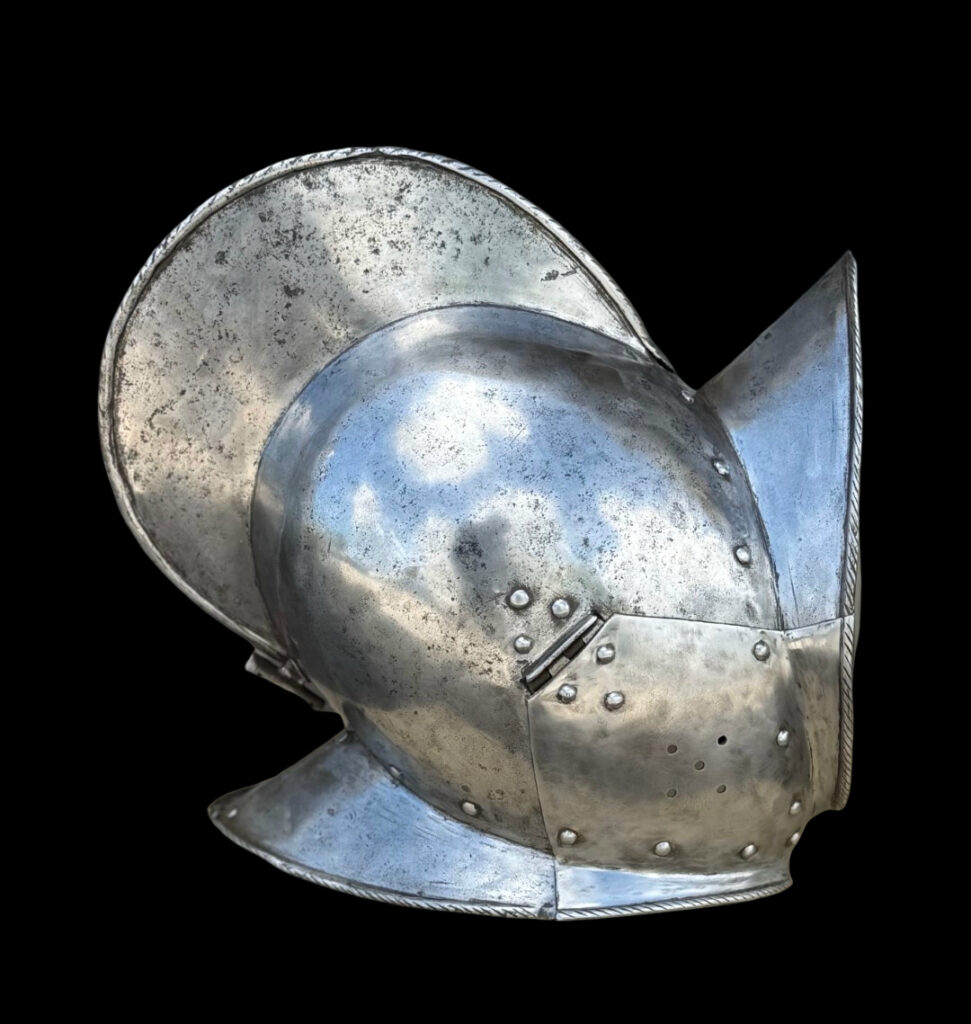
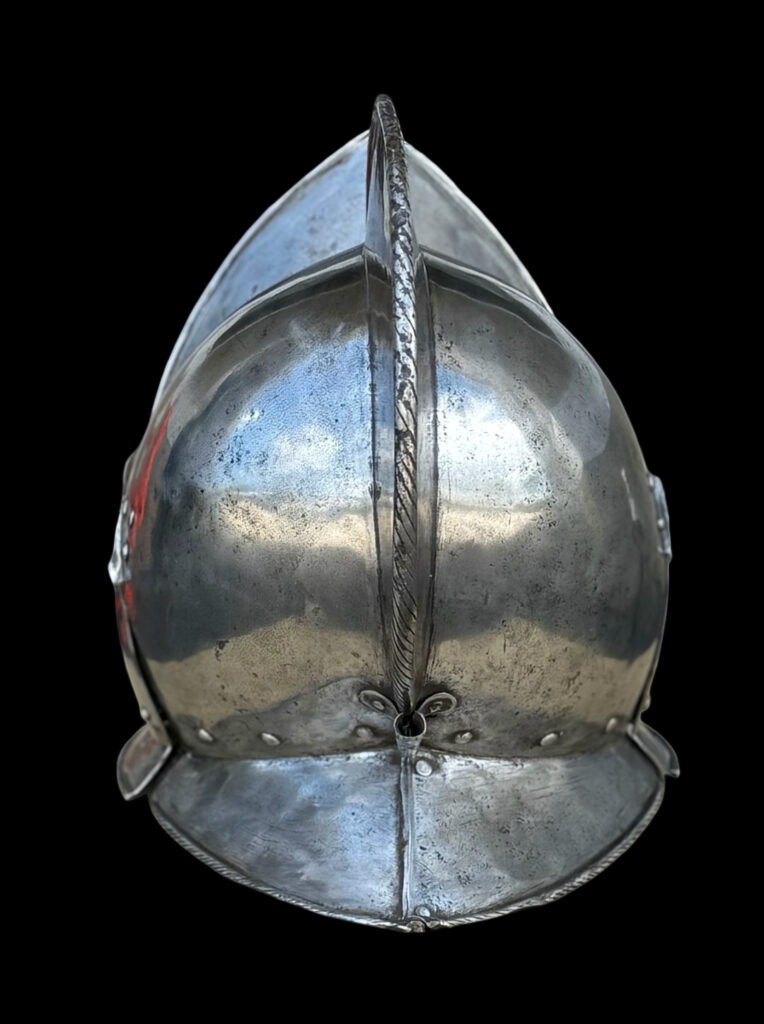
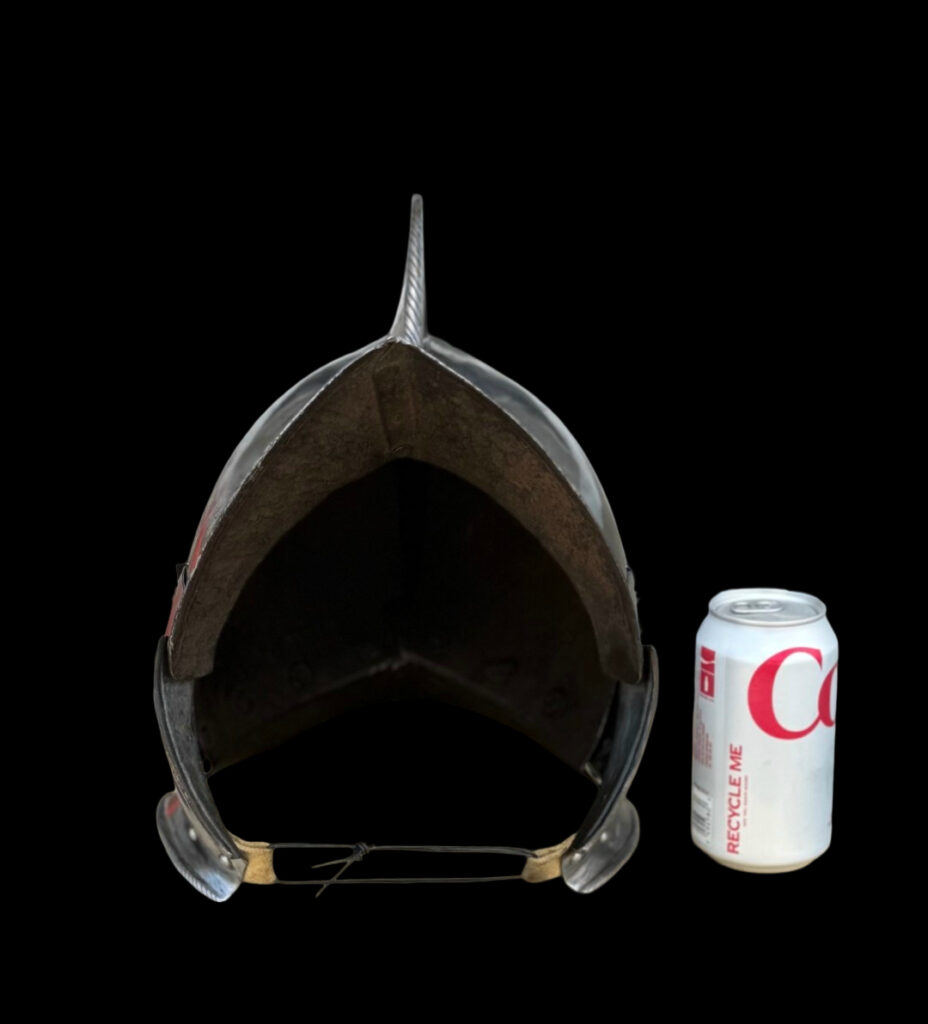
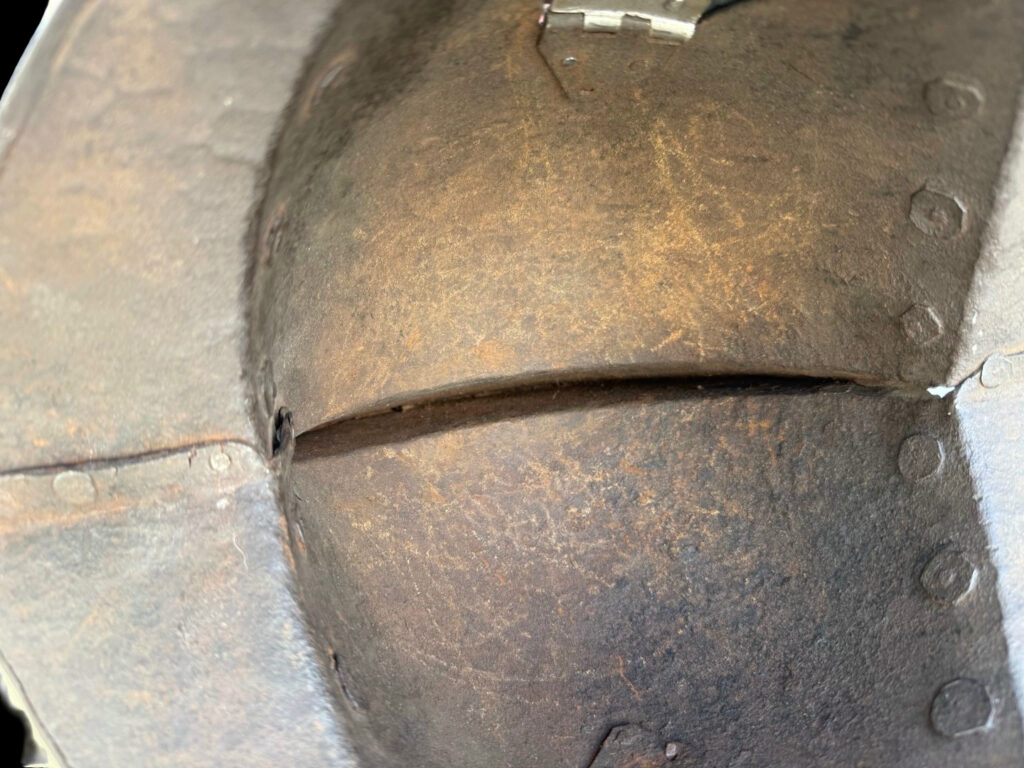
2069) MASSIVE GERMAN OR SWISS BURGONET OF SUPERB HEAVY CONSTRUCTION CIRCA 1600:
Introduction: In my opinion, the burgonet is the finest defensive helmet of the Medieval and Renaissance periods. The burgonet, sometimes called the “Burgundian sallet”, largely replaced the sallet in the 16th century. The best surviving example, most demonstrative of the transition from the sallet to the burgonet circa 1500, is located in the Vienna Kunsthistorisches Museum, see page 163 in my book. Another early example is D20 in the Almeria Real in Madrid. These are two of the earliest variants of what is now known as a burgonet; they evolved as early as 1510.
The burgonet is more of an early Renaissance helmet than a Medieval helmet. It looks more like a classical helmet than the direct descendant of the sallet. The burgonet was primarily used by light cavalry and infantry. Little is known about the burgonet’s development other than that it was mutually developed (parallel development) by both Germany and Italy from the sallet. While the burgonet was preferred by the Germans over the morion, the Italians preferred the morion over the burgonet.
Discussion: In its infancy in France, the burgonet was called “celada borgonona” or “Burgundian sallet”. In Spain, it was called “salade a la bourgogne” (the exact translation). The burgonet is a tight-fitting, open-faced helmet with a comb and hemispherical shape, a visor peak to protect the wearer, and a similar curved plate at the back of the neck. Hinged plates are found on some burgonets to protect the wearer’s cheeks. Combs, or a decorative ridge from brow to neck, were common. The comb helped reinforce the helmet and provided a space for embellishment on the armor of wealthy or noble soldiers. Other decorations, such as rolled or embellished edges, were also commonly used.
Description: Constructed with a two-piece skull rising to a tall and prominent, roped comb, the comb extending to a one-piece neck guard and front pointed visor, fitted at the nape with a possibly associated plume holder, edges decorated en suite with roping, possibly associated cheek pieces pierced with 5 small hearing/ventilation holes. Military armors such as these were made in large groups and contracted to more than one armorer; as a result, slight variances are sometimes noticeable. Military contract armors were usually made in three sizes: small, medium, and large. This massive helmet is undoubtedly large.
Approximate height: 12.5 inches.
Provenance: A US collector.
Comparable: See page 189 in my book.
Conclusion: This helmet is massive. It was probably made in Germany under contract for the Swiss infantry. At first glance, it looks too big to be true. The construction is heavy-duty and masterfully executed. This helmet gives a lot of bang for the buck.
Priced to sell immediately. Don’t wait; ACT NOW!
This one should sell quickly, and I don’t want you to be disappointed!
All my items come with the following:
–Free shipping.
–10-day review period.
–Certificate of Authenticity.
–Autographed copy of my book.
– In the event of an international shipment, we will help assign the lowest correct Customs tariff so you pay the least.
Please contact me for the best available price.
I believe you will be very pleased. ACT-NOW!!!*