2064 Antique Dagger
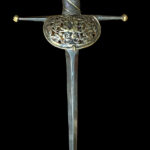
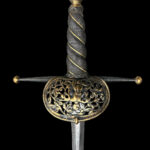
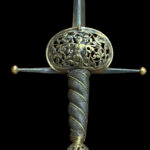
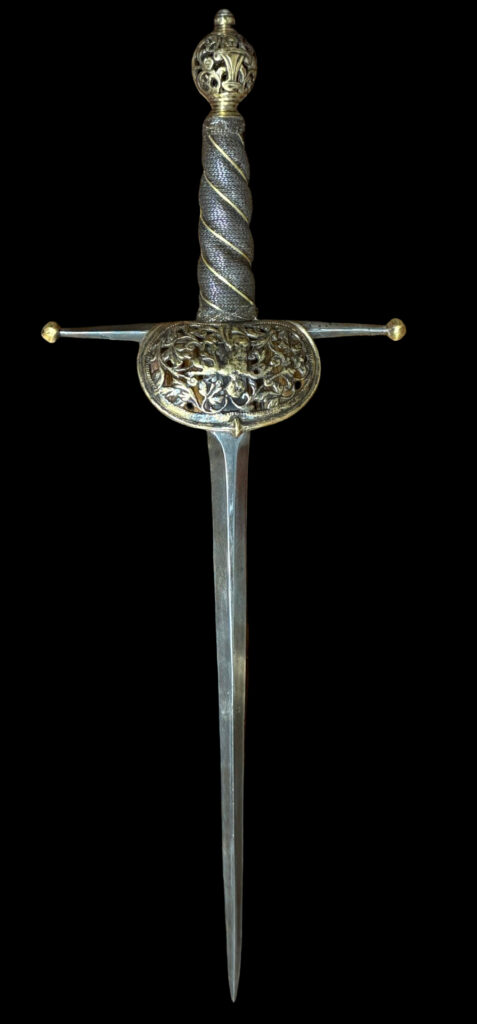
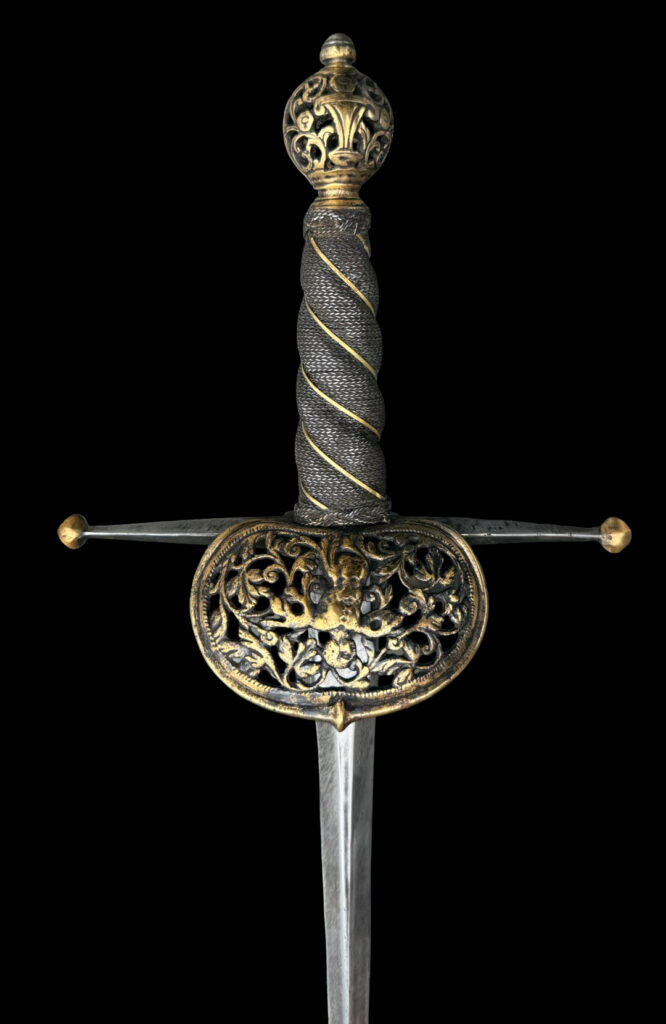
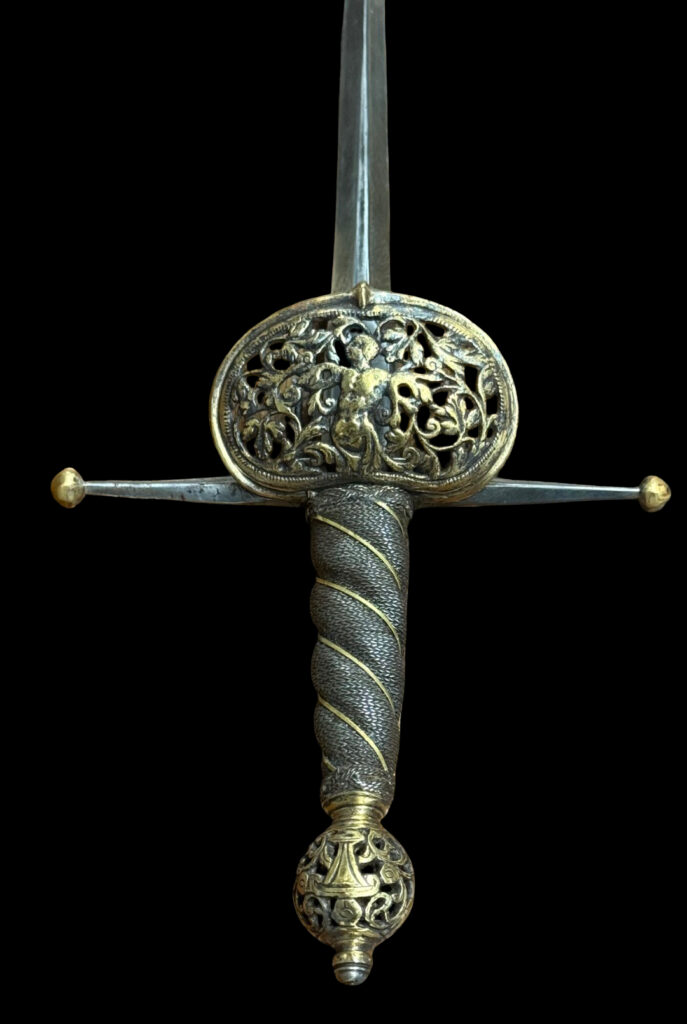
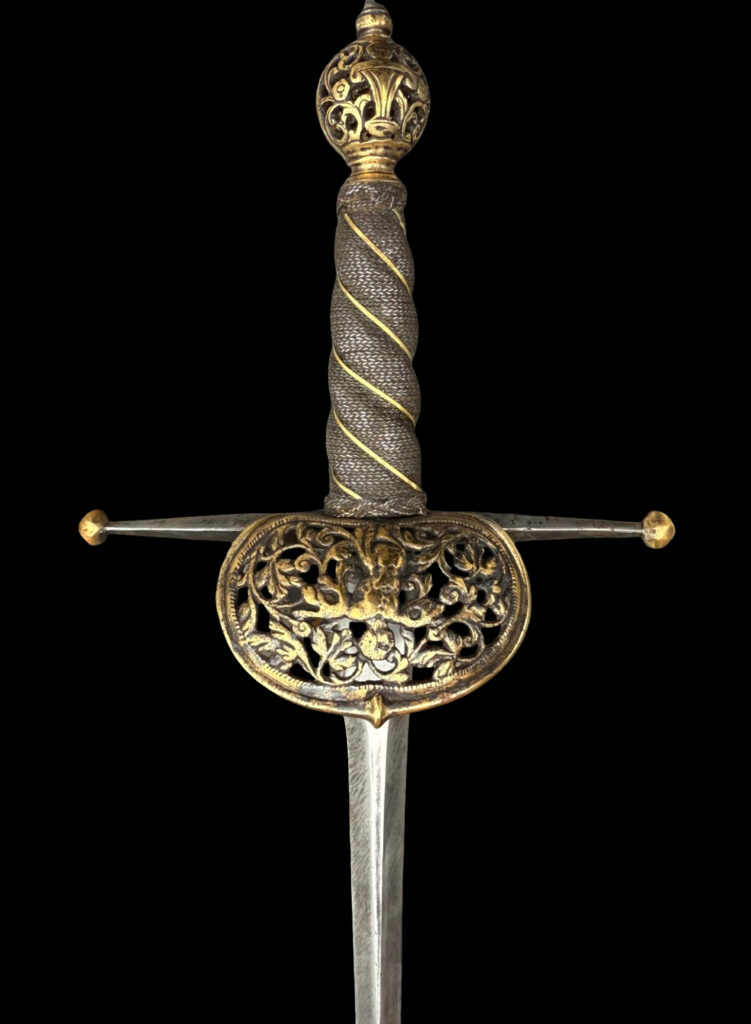
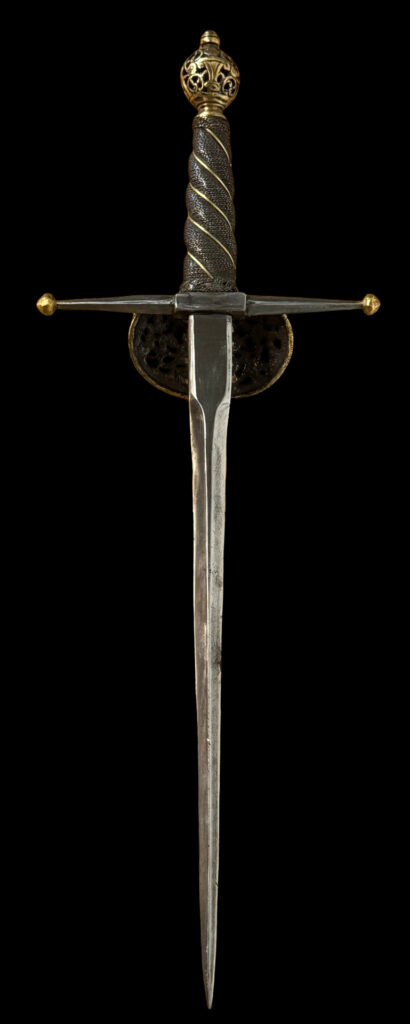
2064) Very Elegant Pierced Italian Left Hand Dagger Circa 1590:
Introduction: A superb, very intricately decorated left-hand dagger with exceptional decoration and in mint museum condition. I would describe this dagger as a “little gem” that would look outstanding in any world-class collection or museum.
The 1600s accelerated the decline in the dagger’s importance and increased the sword’s popularity. Daggers in certain parts of Europe, namely the north, were still used for dress during festive occasions. The exception was the left-hand dagger and the stiletto, which was primarily used in Italy. That is the story of this exceptional left-hand dagger.
Description: Constructed with a pierced knuckle guard and pierced pommel decorated en suite with vines and foliage; at the knuckle guard the form of a person, quadrilateral tapering guard that swells to form a gilded sphere tip, a rectangular quillon block, short rectangular ricasso, short quadrilateral blade more of an estoc stabbing weapon, grip in the shape of a, reverse conical wood roping grip covered in restored wire and gilded accent in the cavities.
Condition: Superb, restored/conserved to museum standards.
Discussion: Left-hand daggers (a modern term) were essential to the fencing strategy. Left-hand daggers are used in conjunction with the rapier to maximize a combatant’s‚ swordsmanship. The left-hand dagger was used to parry, block, trap, and redirect the opponent’s sword to create an opening for the rapier to administer the “coup de grace.” However, a good swordsman could also reverse the roles and use the rapier to set up the left-hand dagger for the finishing stroke.
In the past, swords were thicker, heavier, and stronger because battlefield opponents wore armor. Because the rapier and left-hand dagger were civilian implements of defense with no armor involved, the sword could be much lighter and wielded more effectively with one hand. Left-hand daggers were usually made with three different hilt types:
(1) Cruciform shape: The quillons were horizontal, stout, long, and sometimes swelled at the tips.
(2) Bent downward: In an effort to trap the opponent’s blade with a simple twist of the wrist, most left-hand daggers had downward-turned quillons. Downward-turned quillons also redirected the opponent’s blade to create an opening to attack.
(3) Opposite bend: In some less common examples, one quillon was turned downward to trap the opponent’s blade, and the other quillon bent in the opposite direction (facing upward) to function as a knuckle guard and protect the swordsman’s hand.
A protective ring or shell at the quillon block served the purpose of protecting the hand from a redirected blade that could have slid down and disabled the swordsman’s hand. The blade tapers to the tip, most with a medial ridge for added strength. Most blades were double-edged and had a ricasso. Some blades were pierced with decorative patterns or cut with intricate indentations (see page 328‚ #15-A in my book).
These features were not just for decoration; they served the same purpose as a fuller on a sword. They made the dagger lighter without sacrificing the blade’s rigidity or strength. Contrary to what the Victorians thought, the piercings on the blade were not for poison but simply for decoration. Most rapiers’ blade decoration mirrored the decoration of the left-hand dagger blade.
Conclusion: This is a very elegant dagger. It would be a standout in any museum or world-class private collection. Needless to say, it’s a strong buy recommendation. I believe you will be very pleased with it. ACT NOW: I only have one, and I believe it will sell quickly.
I believe you will be very pleased. ACT-NOW!!!*
All my items come with the following:
–Free shipping.
–10-day review period.
–Certificate of Authenticity.
–Autographed copy of my book.
–In the event of an international shipment, we will help assign the lowest correct Customs tariff, so you pay the least.