2056 Antique Hammer
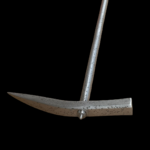
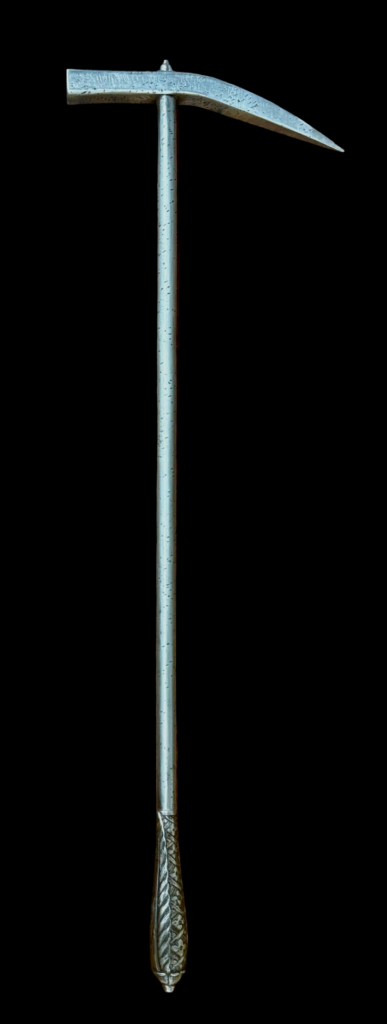
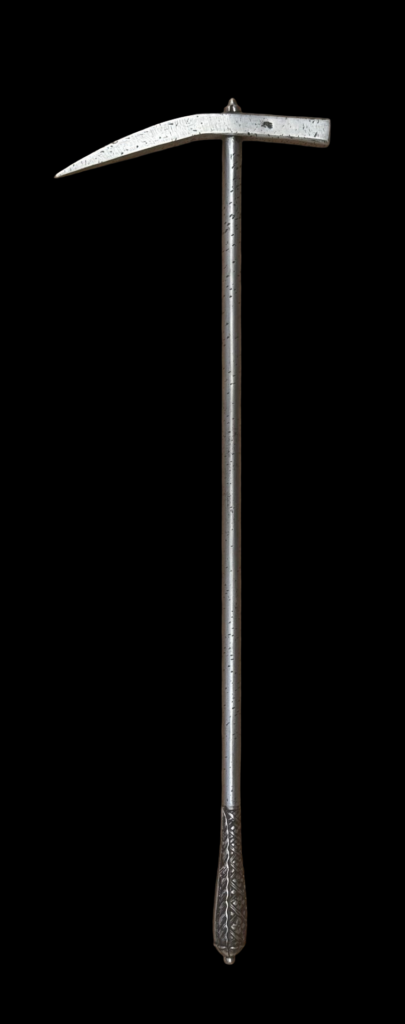
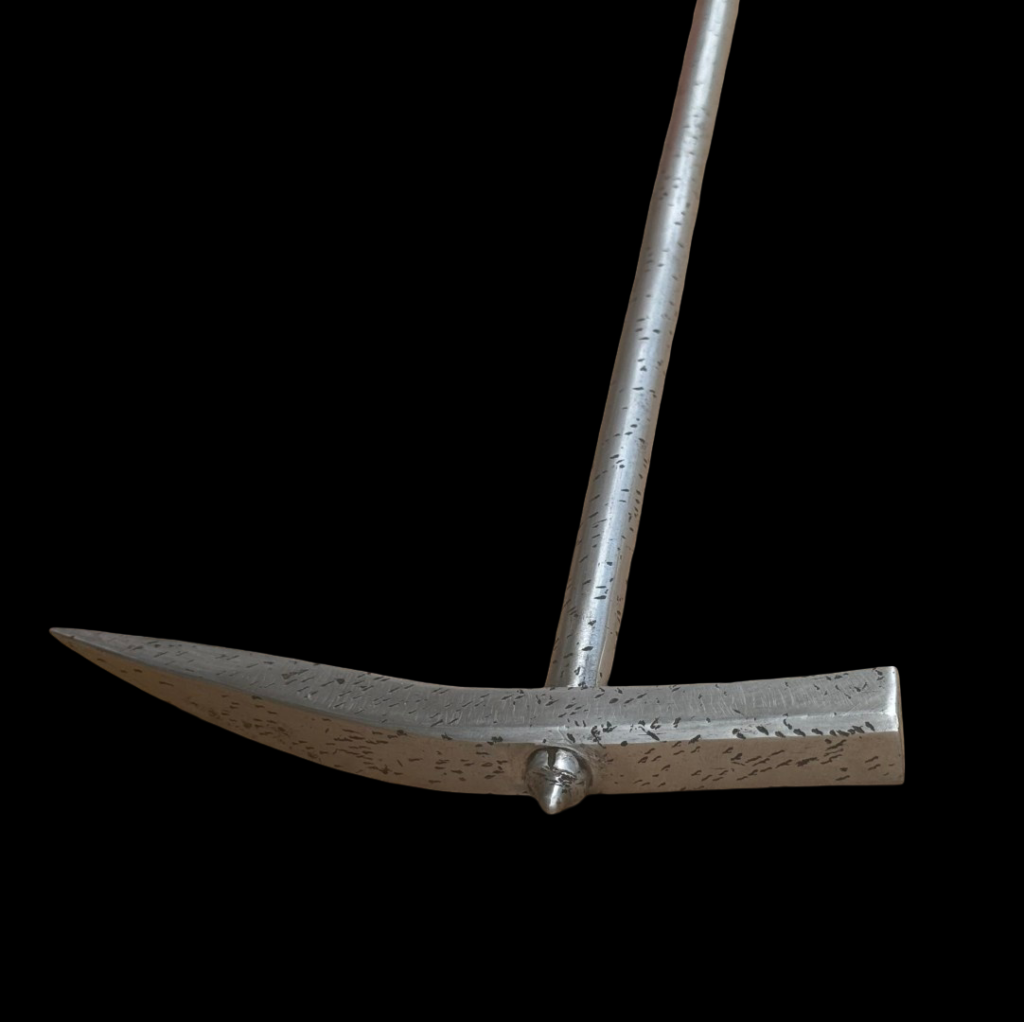
2056) Exceptional All Steel War Hammer Circa 1620:
Introduction: This rare and exceptionally well-preserved military war hammer represents a definitive archetype of the specialized armor-piercing shock weapons favored by the Polish and Hungarian cavalry during the early 1600’s.
Known natively as a nadziak in Poland and a cákány or fokos in Hungary, this weapon reflects the profound Eastern and Indo-Persian influences that shaped the martial culture and aesthetic sensibilities of the regional nobility during the Deluge and the Ottoman wars. Combining lethal utility with high-status craftsmanship, it stands as a premier example of early Eastern European arms.
Discussion: By the 1620s, the widespread adoption of robust plate armor and heavy buff coats by cavalry forces necessitated weapons that relied on concentrated kinetic force rather than cutting edges. The nadziak became the quintessential weapon of the Polish Husaria (Winged Hussars) and Hungarian elite horsemen, carried not only as a primary sidearm but also as a profound symbol of officer rank and aristocratic status (szlachta).
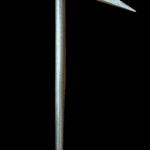
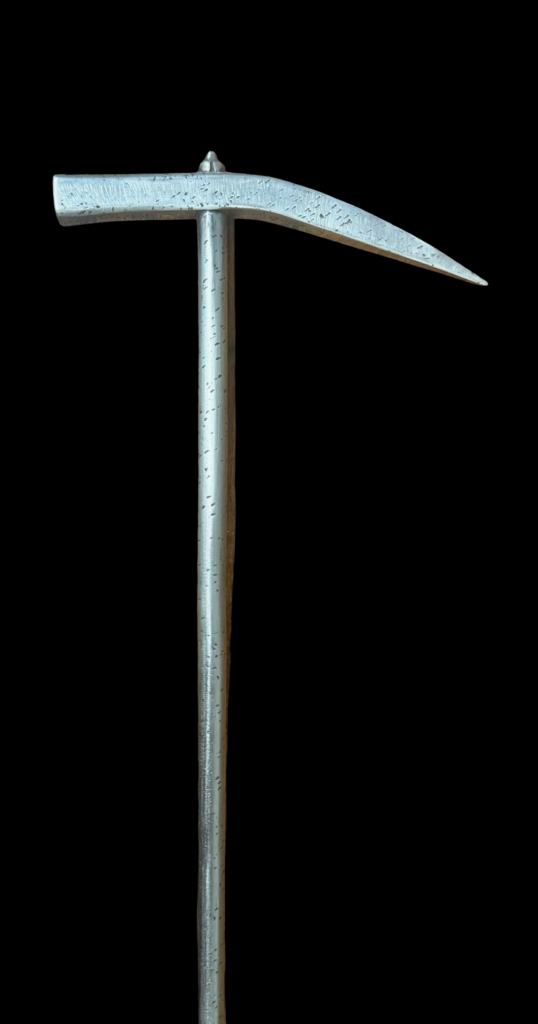
This particular specimen showcases the classic European adaptation of the Indo-Persian zaghnol. Unlike Western European war hammers, which often featured multi-pronged or serrated faces, the Polish- Hungarian variant favored a clean, heavy block face countered by an elongated, downward-sweeping beak.
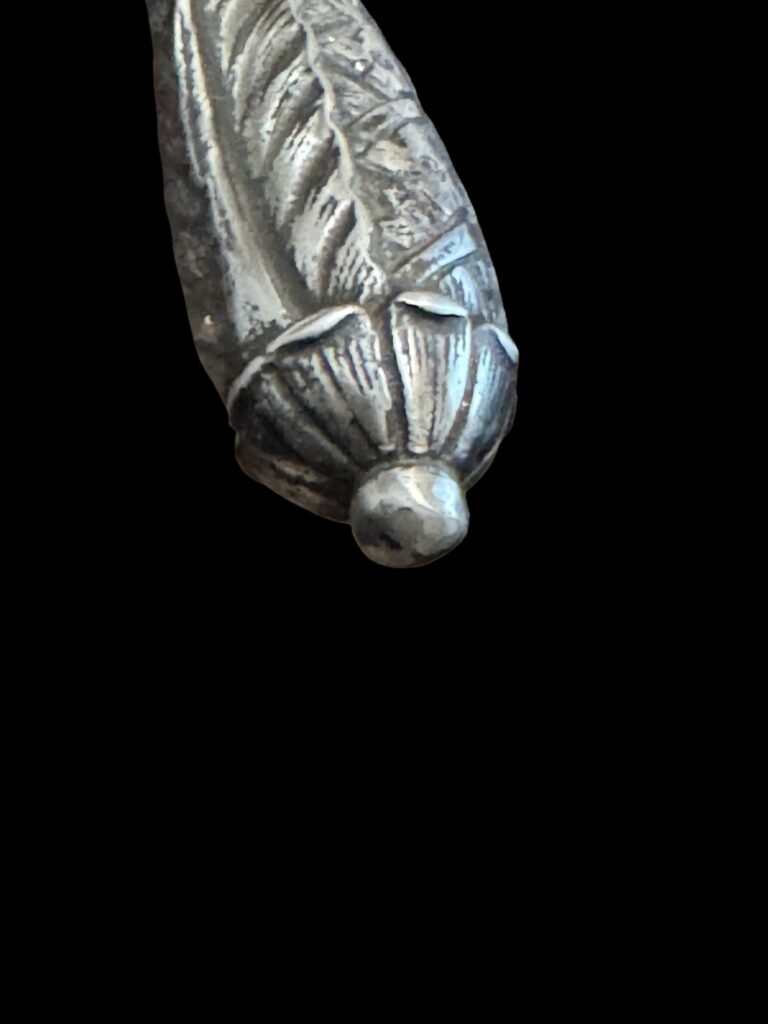
Its entirely metallic construction (both haft and head) indicates it was engineered to withstand severe vibrational shock without fracturing, a common failure point for wooden-hafted variants. The ornate, cast-metal relief work on the grip further elevates this piece from a standard munition-grade weapon to a bespoke, privately commissioned arm belonging to a nobleman or high-ranking military commander.
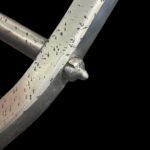
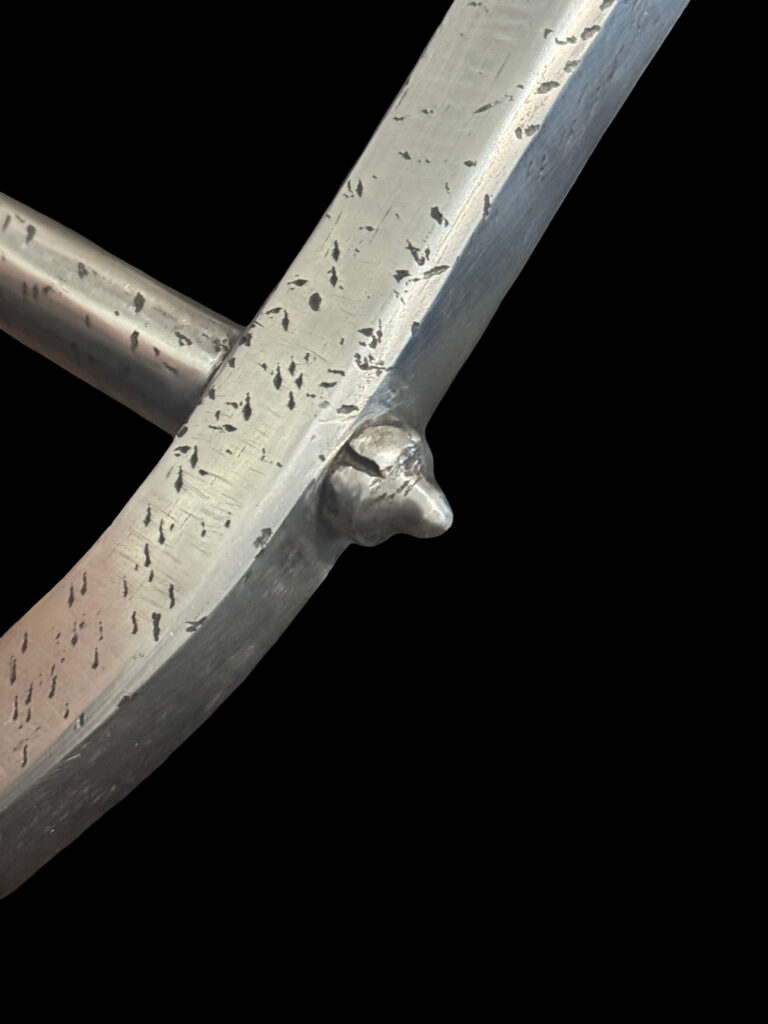
Description: Hand-forged steel construction. The hammer head is forged in one solid piece and securely anchored to the shaft, surmounted by a small, pointed central steel finial button. One side features a heavy, blocky rectangular hammer face with a smooth, untextured striking surface designed for crushing blows. The reverse features an elongated, square-sectioned rear beak that aggressively curves downward to a sharp point, engineered specifically to punch through breastplates and helmets.
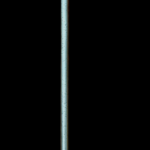
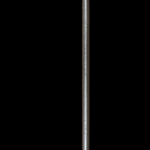
A solid, slender steel cylindrical shaft, perfectly balanced to distribute maximum weight toward the striking head. The surface shows a light, authentic patination and subtle hand-forged pitting consistent with age and 17th-century metallurgical practices.
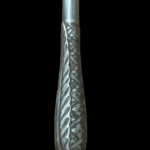
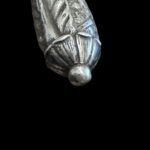
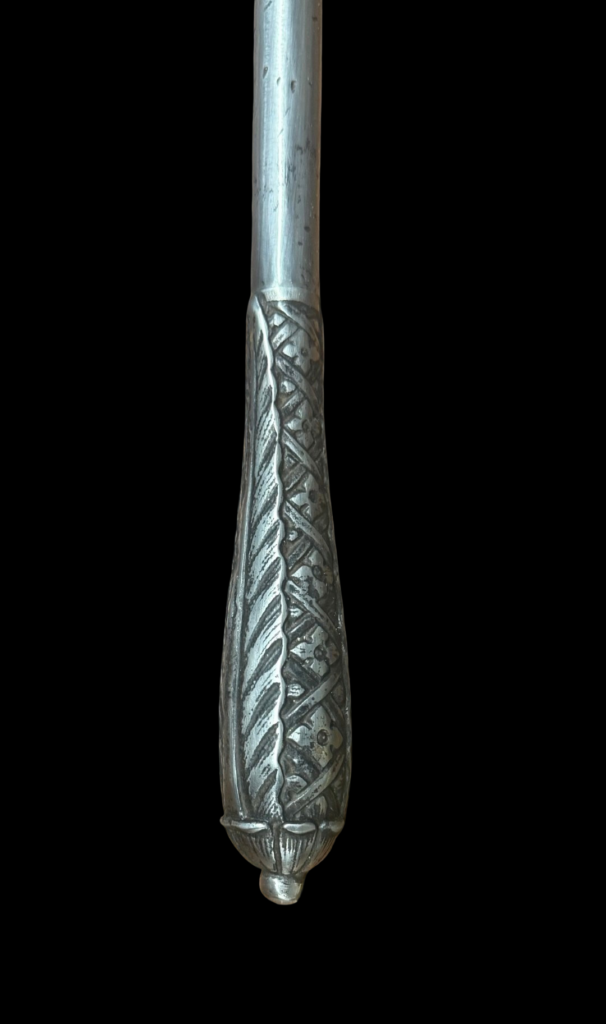
The lower portion transitions into an intricately decorated, chiseled grip sleeve. The relief ornamentation features a continuous pattern of crisscrossing lattice bands framing delicate rosettes, flanked by a stylized, ribbed foliate or feather motif running parallel to the shaft. The grip terminates in an architectural, multi-tiered pommel cap, finished with a small, rounded drop terminal.
Length: 24.5 inches.
Condition: Superb.
Provenance: From a European collection.
Conclusion: The decline of hammers, maces, and axes in Western Europe started as early as 1550. Up to 1550, Polish/Hungarian Knights, namely the Hussars, used the same hammers, maces, and axes as those used by Western Europe. After 1600, hammers, maces, and axes continued to be used widely in Central Europe, primarily Poland and Hungary, by both the cavalry and infantry. They remained in service up to as late as 1750; however, they had their own unique flair and style.
This hammer is in exceptional condition. It shows really well and is a welcome addition to any collection. This one is a very good item that should sell quickly.
ACT-NOW!!!*
All my items come with the following:
–Free shipping.
–10-day review period.
–Certificate of Authenticity.
– Free autographed copy of my book if you do not have one.
I believe you will be very….very…. pleased. ACT NOW!!!!*