2044 Morion
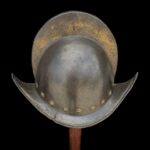
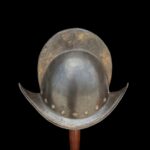
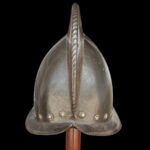
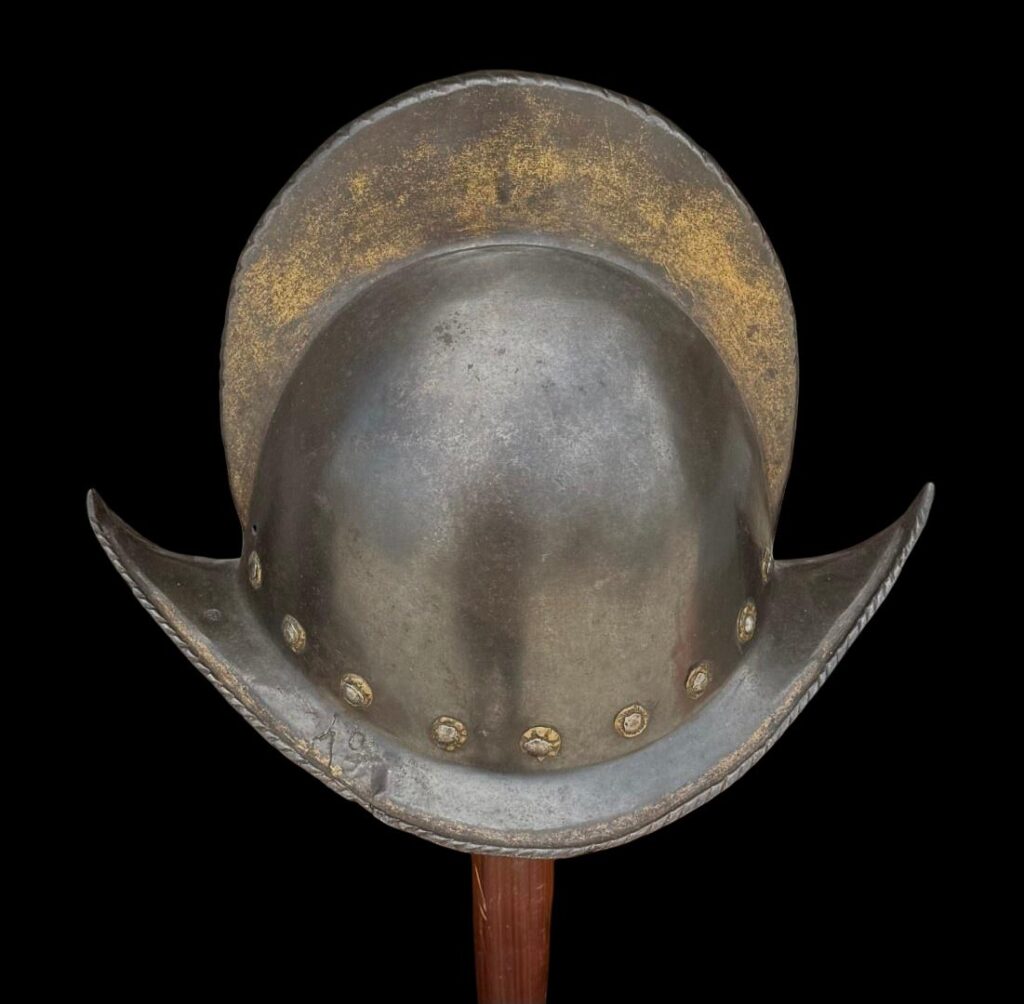
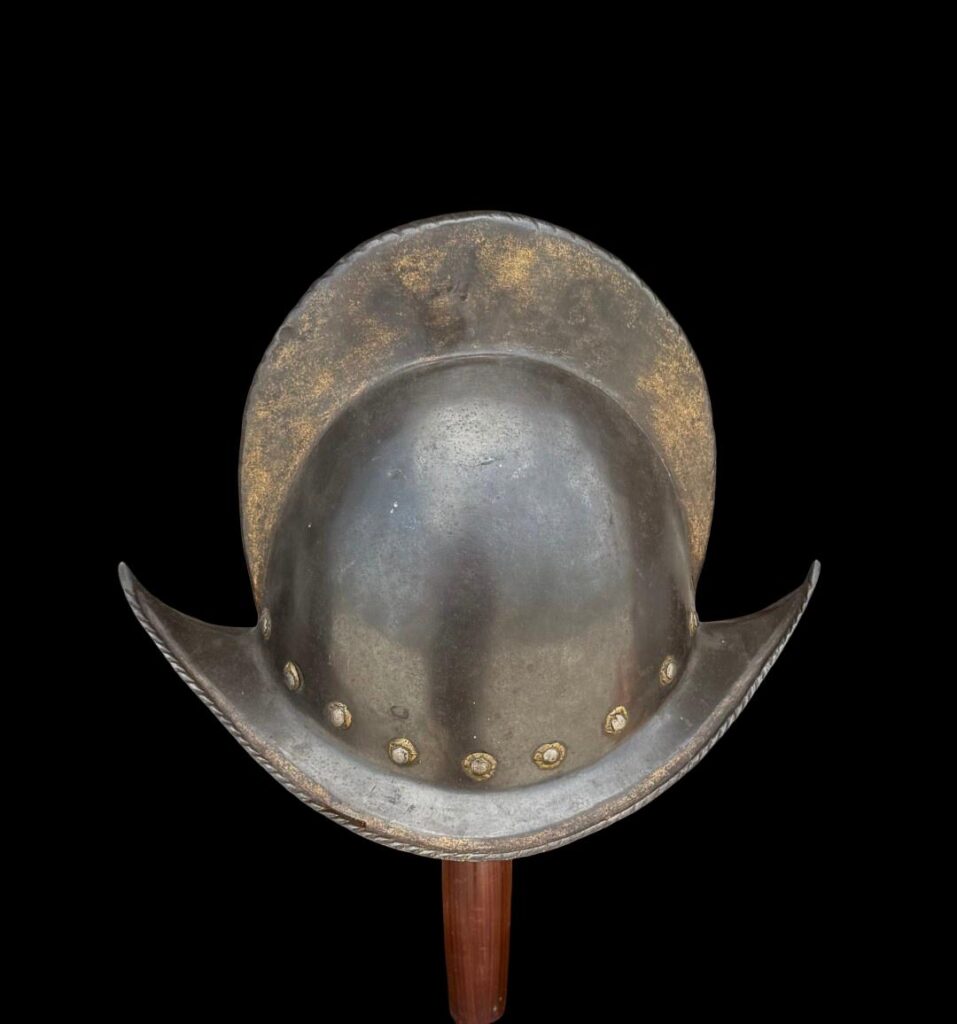
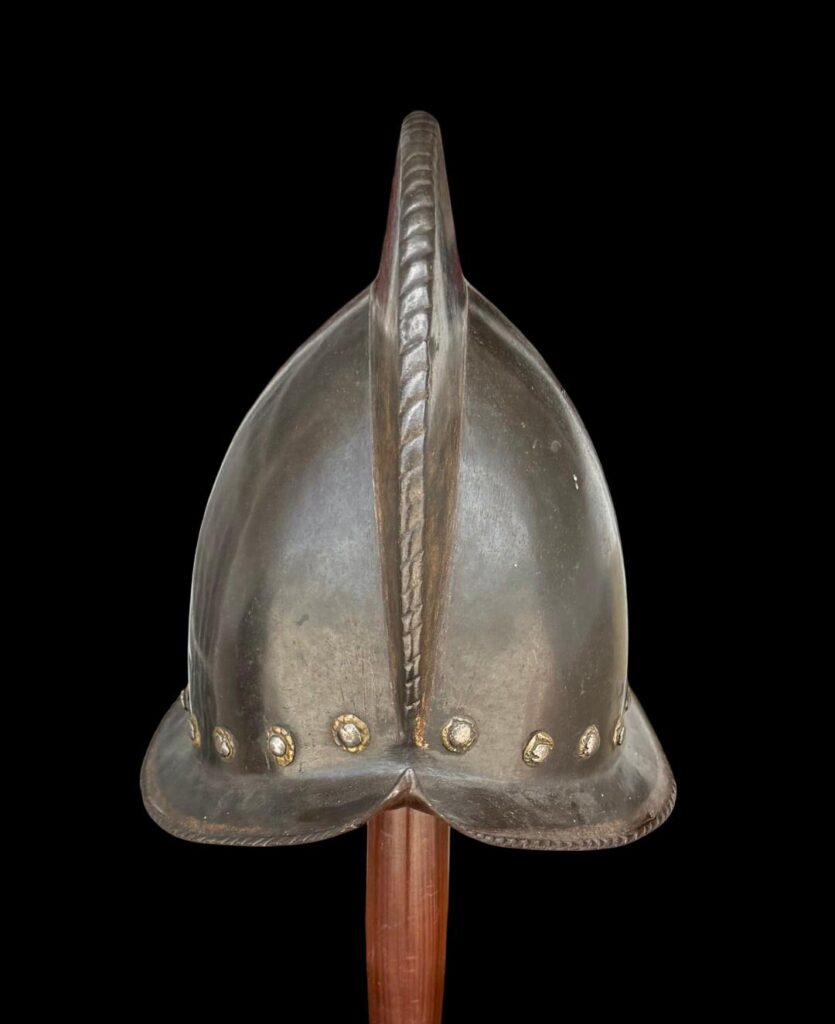
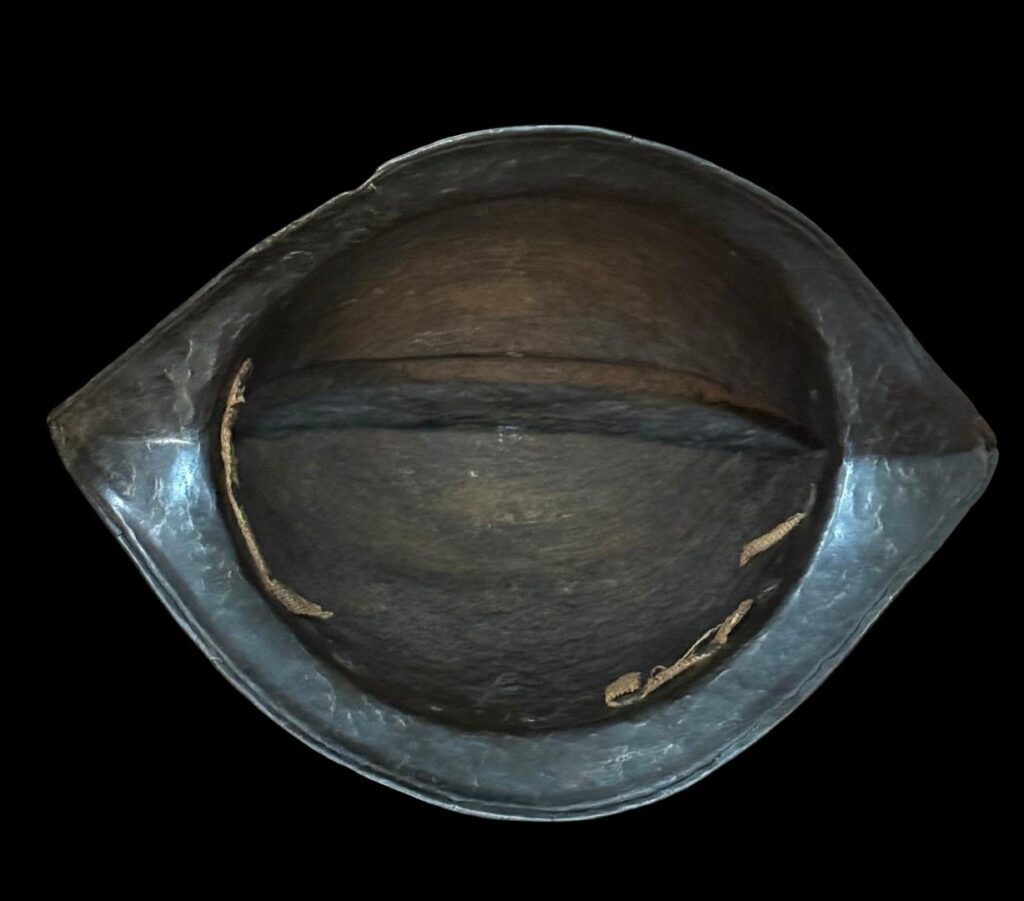
2044) EXCEPTIONALLY RARE GILDED FENTON MORION CIRCA 1580: You may have heard the rumors about a handful of Fenton morions with original gilding. Well, after 40 years, we finally have one!
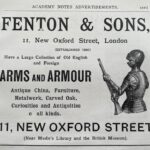
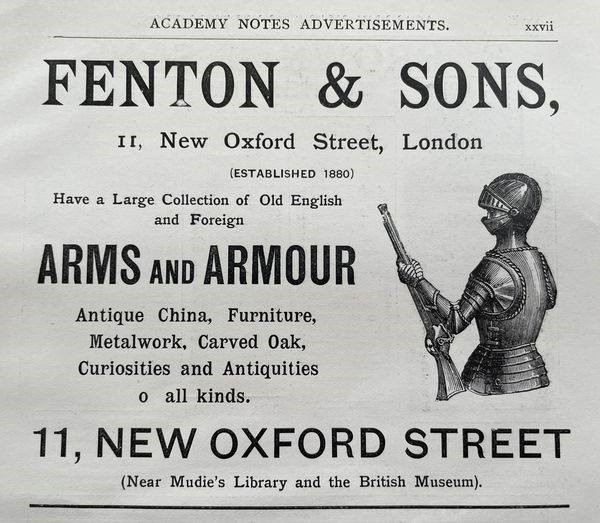
Introduction: The Fenton group is notable for retaining its original finish. They come up at auctions from time to time, and they are worth owning. This example is one of the best-preserved in its group, retaining much of its original gilding. It is from one of a group of morions sold by Fenton & Sons of 11 New Oxford Street, London, between World War I and World War II. The morions vary a little in the height of their combs and in the form of the brass rosette washers that are fitted under the heads of their lining-rivets, but are otherwise almost identical in their details.
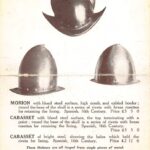
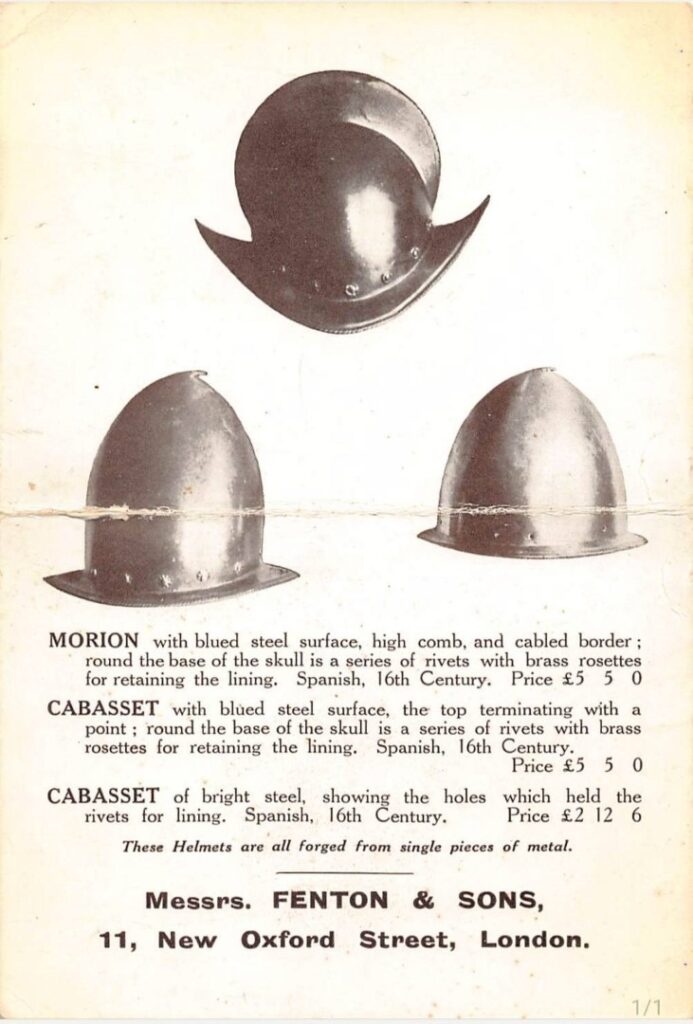
The group also includes some “Spanish” morions (cabassets) of similar character, almost certainly products of the same workshop. A representative selection of these morions was illustrated by Fenton & Sons in an undated circular, a copy of which was formerly in the collection of the late Gerald I. Mungeam of London (photographic copy held in the Royal Armouries Museum, Leeds). According to a tradition still prevalent among English collectors in the 1950s and ‘60s, the morions had been acquired by W. H. Fenton from a storehouse in Spain, where they had been deposited for use by the Spanish Armada in 1588 but never actually called upon for use. However, in a letter dated 23 December 1969, Theodore Egli, an armorer to the Tower Armouries and previously armorer to Samuel Fenton, wrote that “Fenton” (most likely meaning W. H. Fenton) had bought a whole lot of morions in Ireland. Presumably, relics of the Elizabethan wars in Ireland. Fenton must already have been selling them some time before 1933, when one of his clients, James Henderson of Hastings, Sussex, bequeathed two examples, together with the remainder of his collection, to the Fitzwilliam Museum, Cambridge.
Discussion: The comb morion was popular in Western Europe from 1540 to 1620. The Italians generally preferred the comb morion and Spanish morion (see page 159 in my book). Conversely, the Germans preferred the burgonet (see page 162). Needless to say, the comb morion shape changed to adjust to the changes in warfare, military tactics, offensive arms, and fashion. The morion was used by men-at-arms, palace guards, city guards, merchants, and explorers. The morion was the Renaissance successor to the Medieval kettle hat. The morion was initially used in Western Continental Europe, mainly Iberia (Spain), Burgundy (France), and Flanders (Belgium). The primary advantage of the morion was visibility. Therefore, the largest proponents of the morion were archers and musketeers. The morion made aiming much easier by increasing the shooter’s vision without impairment and by increasing peripheral vision. During the inventory of the Saxon Armory in Dresden in 1606, over 60 years after the introduction of the morion, the morion was referred to as the Spanish Shooting Helmet (Spanifle Schutzen Haube). The morion evolved as early as 1540 from the Gothic Kettle/War Hat.
From the third quarter of the 16th century, the comb morion was commonly provided as part of the corslet in Germany. A corslet (see page 197 in my book) is a type of half-armor widely worn by German infantrymen throughout Southern and Western Europe. In Germany, however, the usual equipment for the infantryman of that time was a knee-length knechtisches harness furnished with a burgonet (see pages 173 and 211in my book). The morion was rarely made for military purposes in Germany before the end of the 16th century.
Comparables: Further examples of the group (without gilding) can be recorded in the Royal Armories Museum, Leeds, the Glasgow Museum and Art Gallery, the collection of William Reid, London, the collection of Sir Victor Blank, Oxfordshire, and the former collection of Gerald I. Mungeam of London.
Description: Finely formed in one piece with a high roped comb with remaining gilding and a swept brim.
Conclusion: Fenton morions have a bit of a cult following among Arms and Armor collectors. Their reputation and demand from collectors are most justified. However, owning a gilded Fenton morions is like owning a unicorn. This Fenton morion is in superb condition with strong traces of gilding. In spite of its great araity its priced to sell today. ACT-NOW, you will be happy you did !!!*
Contact Me To Get The Latest Lowest Price Possible From The Owner*
All my items come with the following:
–Free shipping.
–10-day review period.
–Certificate of Authenticity.
–Autographed copy of my book.