2043 Flamberg
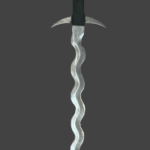
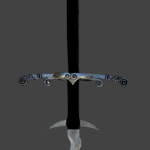
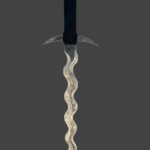
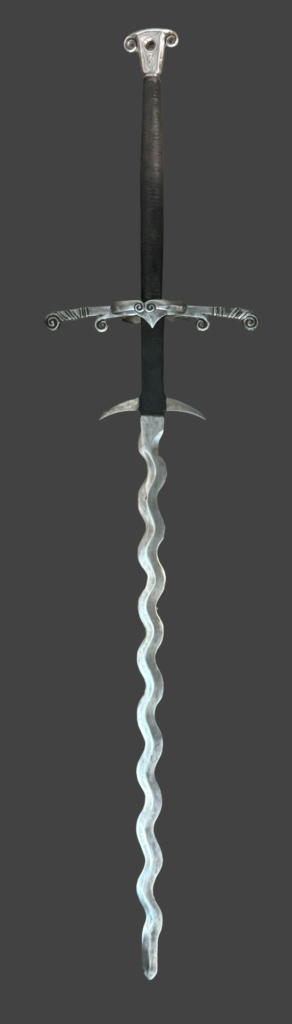
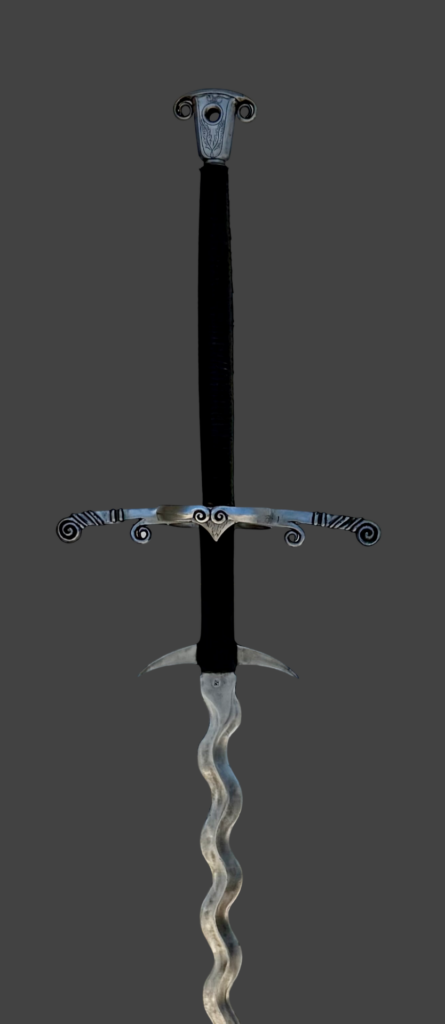
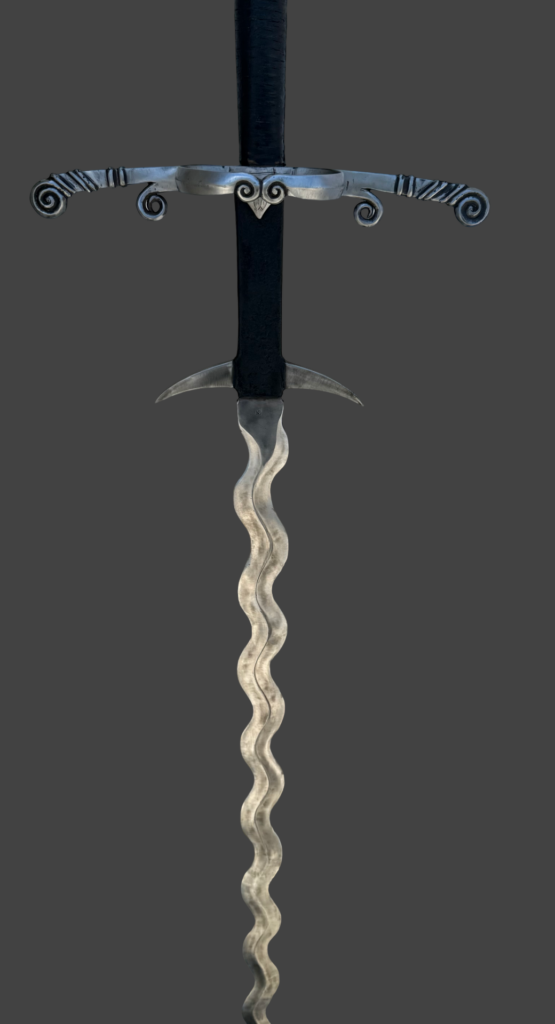
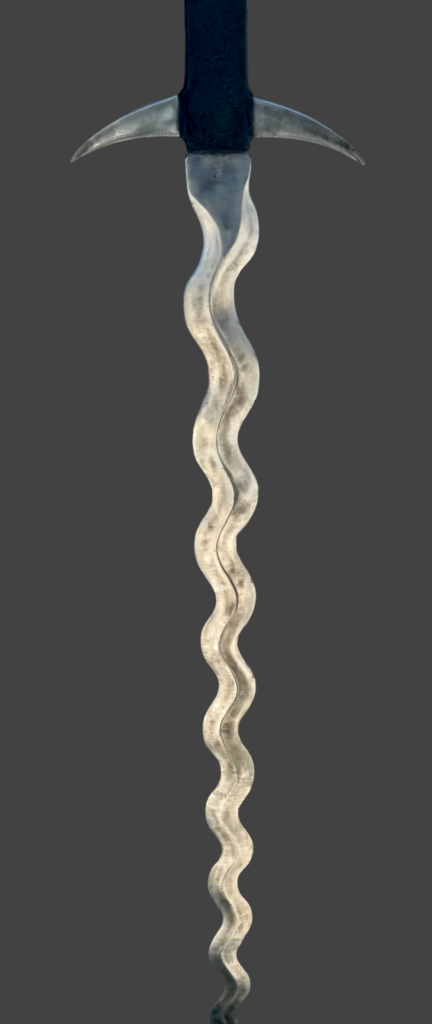
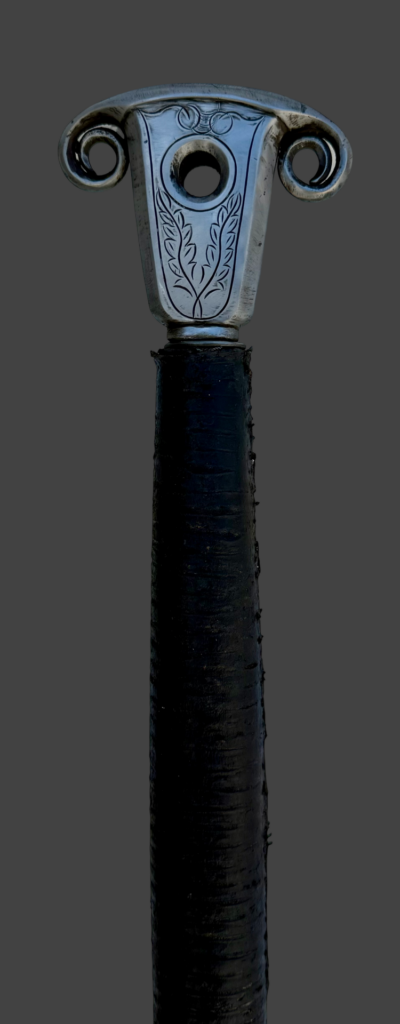
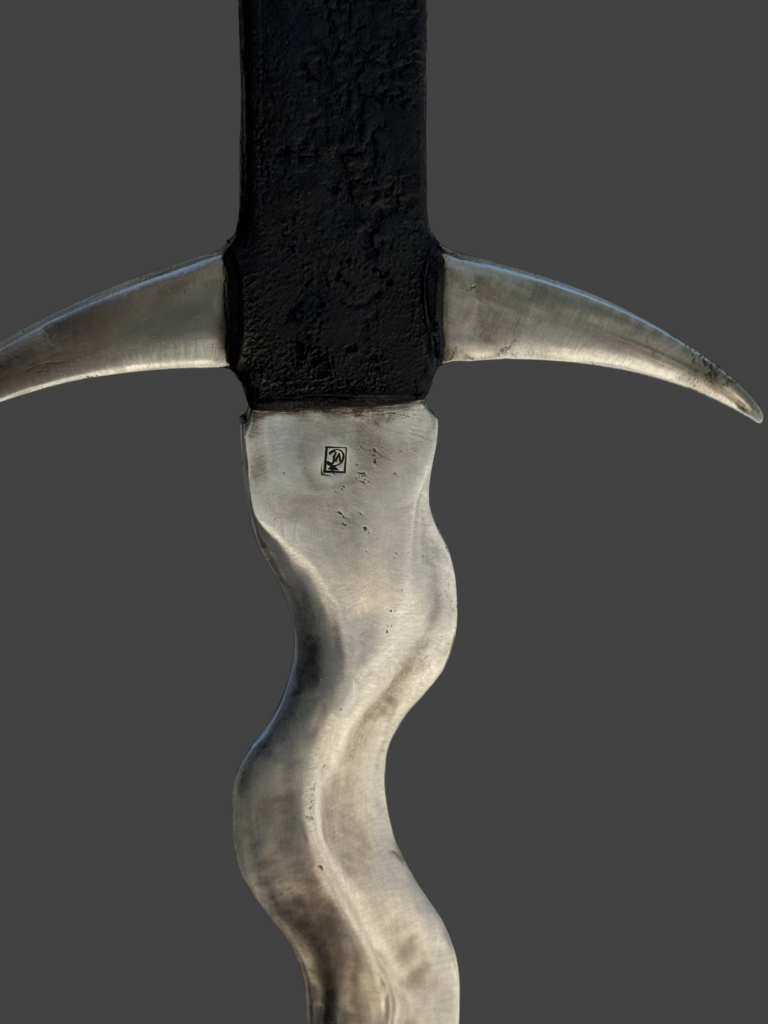
2043) MASSIVE MUSEUM QUALITY TWO-HAND DECORATED GERMAN FLAMBERG SWORD CIRCA 1570:
Introduction: The special undulating flamberg blade is named after its flame shape. The flamberg blade was used primarily with Zweihander (two-hand swords). Flamberg is the name attributed to the sword of a fictional French knight introduced in a 12th-century narrative poem (chanson de geste) titled Renaud de Montauban. From the 1600s to the 1700s, the term flamberg was used to describe special dueling swords. During the Victorian period, the term was erroneously applied to wavy-bladed swords.
The flamberg has an undulating design for five primary reasons:
1) The design creates a gripping crevice at the bottom where the scallops meet, offering the following advantages: (A) trapping and redirecting the opponent’s blade (sword) to a more advantageous position for a counterattack, (B) making it easier to dislodge the opponent’s grip from his sword.
2) It was believed the flamberg blade could cut deeper (especially on certain types of soft armor like cuir-bouilli, mail, or fabric) because the full impact of the sword was concentrated exclusively on the high ridges of the scallop. The smaller surface area results in deeper penetration if the sword is swung with the same power.
3) A sawing-ripping motion is possible after penetrating the impacted area, resulting in a deeper cut.
4) The flamberg is an elegant blade that could also have been adopted by civic, parade, and/or ceremonial guards.
5) The sword was lighter and easier to handle because it required less steel to make.
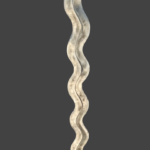
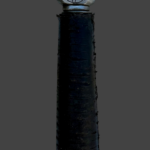
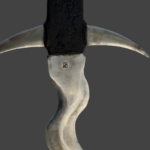
Description: Constructed with a distinctive undulating, flame-shaped edge, which was traditionally ground into the metal using large stone wheels. Positioned just above the leather-wrapped ricasso (the unsharpened lower section of the blade) are prominent, crescent-shaped parrying hooks (Parierhaken). These acted as a secondary guard to protect the user’s hands during close-quarters half-swording techniques. The main crossguard features blackened iron quillons with spiraling, rolled terminals. It incorporates protective side rings (or D-rings) adorned with stylized heart and foliate openwork chiseling. A heavily elongated two-handed grip wrapped in stitched black leather, tapering outward toward the pommel to give the user maximum leverage over the massive weapon. A highly elegant, double-conical pommel meticulously engraved with classic Renaissance leaf patterns, culminating in prominent curled side volutes resembling an ionic column capital.
Condition: Superb, conserved/restored to museum quality.
Length: Approximately 71 inches.
Provenance: From the collection of Gottlob Herbert Bidermann, Stuttgart/Aachen, Germany. Herr Bidermann was one of Europe’s most prominent collectors of Arms and Armor. He wrote several books on Medieval and Renaissance Arms and Armor. He was appointed court expert on Medieval/Renaissance Arms and Armor by the German Government (Öffentlich bestellter und vereidigter Sachverständiger für Historische Waffen).
DISCUSSION: Ceremonial/Parade/Bearing swords were primarily intended for religious, court, parades, and other social functions. Swords of this type tend to be very ornate, expensive, and very large. These swords were designed to look very pretty and were not utilitarian. They were usually not intended for fighting, although some fighting swords were later repurposed (modified) into ceremonial swords after their working lives.
So why did it take until the early 1300s for the two hand sword to flourish?
There are two primary reasons:
- A) For the same reason, full-metal defensive armor and two-hand swords did not develop until the same period. As furnaces grew larger in Medieval Europe, steel billets (solid lengths of steel) correspondingly increased in size. With larger steel billets, swords could now be made with fewer (but larger) billets, eventually reaching a peak of one billet per sword. Larger furnaces generally meant higher temperatures, better steel, faster production, and probably lower manufacturing costs on a large scale.
- B) As armor evolved, its counterpart, the sword, did the same, with larger specialized swords of superior quality and design. This was the weapons race of its day.
A two-hand sword, by definition, is a sword designed to be used with two hands for maximum effectiveness. Sword styles can vary by nationality. Two-hand swords were widespread both in the field and in the lists from the mid-15th to the early 17th centuries, though from the latter part of the 16th century they increasingly tended to be employed in a ceremonial role. It has been suggested that the earliest references to the use of the two-hand sword are those to be found in a French copy of the Romance of Alexander of about 1180, which mentions a “bone espée a II espieus molus,” and in the chronicle of Guillaume Guiart, written in the period 1304-7, which notes that the French, when fighting the Germans in 1264, had to adjust their tactics “Car les deux mains en haute levées/ Giètent d’unes longues espées.” More certain evidence of the use of the two-hand sword is provided by Jean Froissart (1337–1410), who, when writing his chronicles of the year 1358, noted that the Canon de Robesart “tenoit une espée a II mains, dont il donnoit les horions si grands que nul les osoit attendre,” while Bertrand du Guesclin (circa 1320- 1380) recorded in his chronicle that Oliver de Manny carried “d’une espée a II mains” (J. Hewitt, Ancient Armour, and Weapons, Vol. II, London, 1855, p. 256).
Conclusion: This is an exceptionally elegant sword that, in my opinion, could be proudly displayed in any museum or world-class collection. All collections should have the iconic two-hand sword as a centerpiece. This example is very attractive not only for its great size, exceptional decoration, and condition, but also for its flamberg blade.
One very lucky owner will be pleased to have acquired this exceptional piece. The owner says to sell today!!!*
All my items come with the following:
–Free shipping.
–10-day review period.
–Certificate of Authenticity.
– Free autographed copy of my book if you do not have one.
– In the event of an international shipment, we will help assign the lowest correct Customs tariffs, so you pay as little as 5% or even nothing.
I believe you will be very pleased. ACT-NOW!!!*