2037 Antique Sword
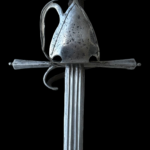
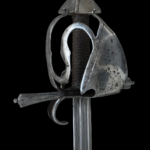
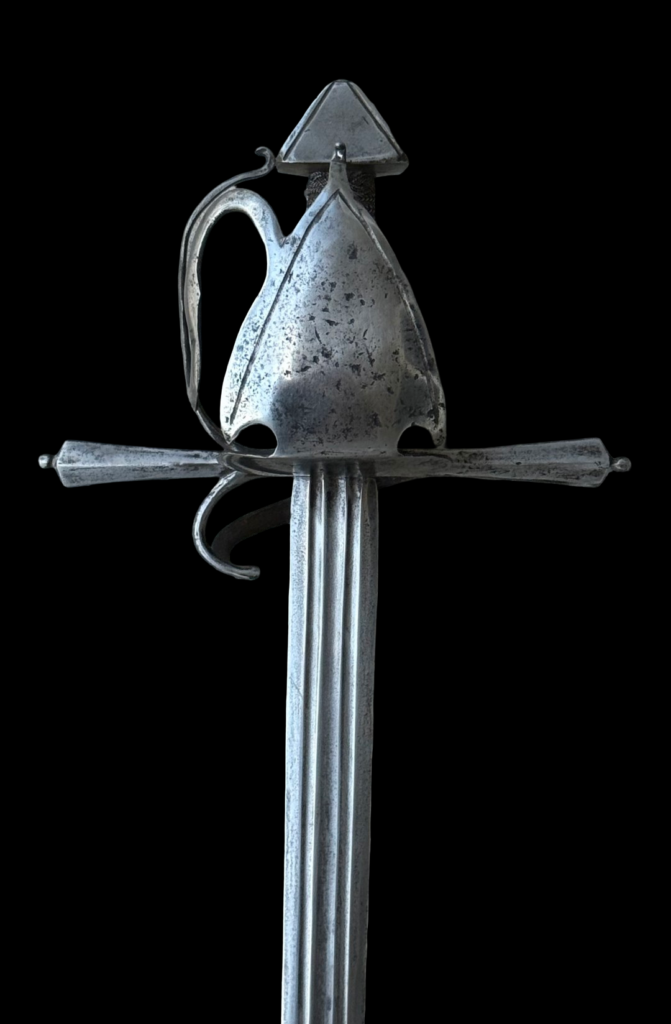
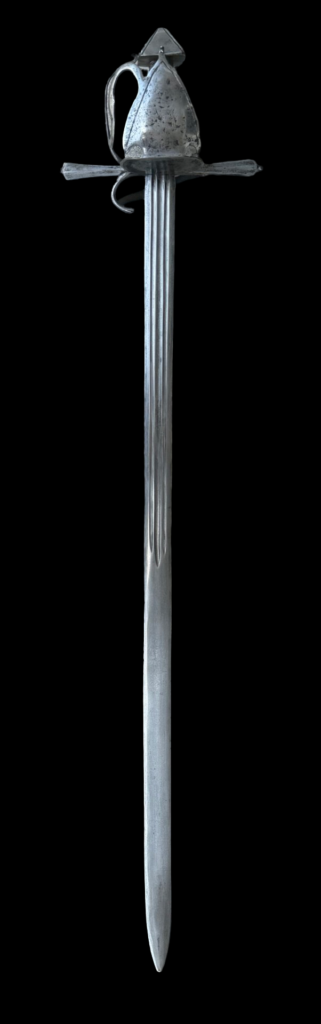
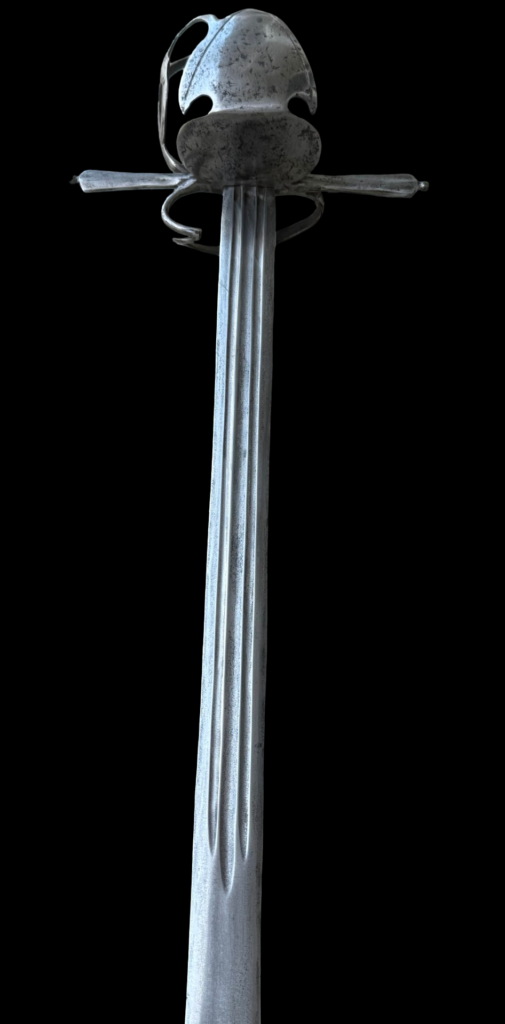
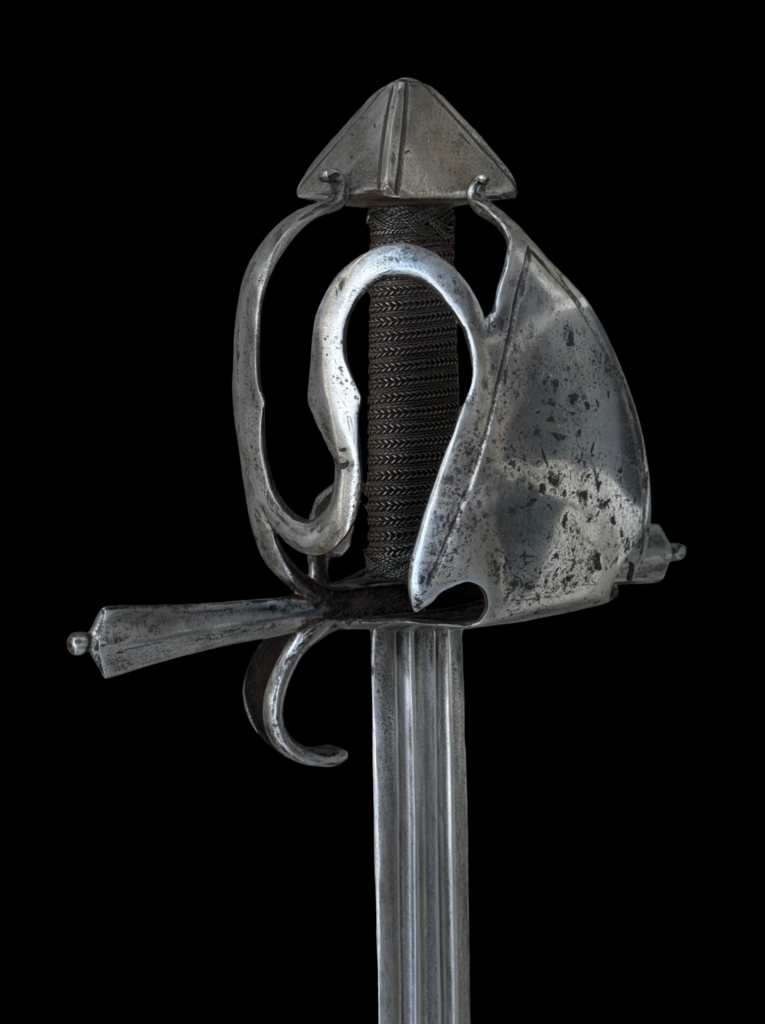
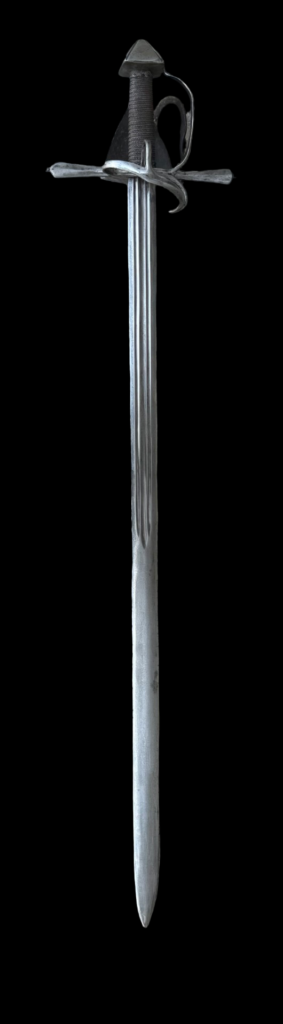
2037) AN ELEGANT GERMAN/STYRIAN MILITARY SWORD CIRCA 1590:
Introduction: While broadly categorized within Germanic military traditions, this specific style is highly characteristic of the weapons produced by the Styrian arsenals (such as the famous Landeszeughaus in Graz). The iron hilt design highlights the transition between medieval cruciform swords and the more complex swept-hilt rapiers of the Renaissance.
Styria (now southeastern Austria) was one of the most important weapons-producing regions in the Holy Roman Empire during the 16th century. The famous Landeszeughaus (Provincial Arsenal) in Graz — which still survives today as the world’s largest preserved Renaissance arsenal — housed tens of thousands of weapons virtually identical in character to this one. These arms equipped the Styrian Landwehr (territorial militia) defending the region against Ottoman incursions, which were a persistent threat throughout the late 1500s.
Discussion: The combination of the ribbon-like quillons (cross guard), an upturned plate (outer guard), a scrolling bar, and a dedicated inner-guard thumb-loop provides comprehensive protection for the user’s hand against sliding blades.
The “writhen” (twisted) handle profile assists with indexing and grip security. The wire wrapping, flanked by braided “Turk’s head” knots, is a later historical reinforcement or restoration, common on service weapons that remained in active armory rotation.
The diamond-shaped, engraved iron pommel acts as a critical counterweight to balance the blade, keeping the point lively and maneuverable.
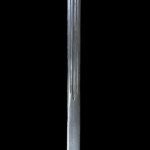
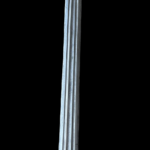
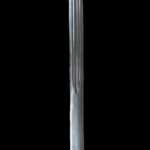
Description: Constructed with a tapering double-edged blade towards its slowly tapering point and formed with two long, slender fullers about half the length of the sword, the iron hilt comprising a pair of ribbon-like quillons with patterned bud-shaped terminals, outer-guard formed of an up-turned plate and joined to the knuckle-guard by a scrolling bar, the latter two each with a central molding en suite with the quillons, inner-guard with thumb-loop, engraved rhomboid pommel, and writhen grip with a later embossed plaited wire binding between ‘Turk’s heads’.
Condition: Very good. The iron shows the characteristic grey patina and surface pitting of age, consistent with a genuine period piece. The overall preservation appears quite good for a working military arm of this era, suggesting it may have spent time in an arsenal inventory (like the Graz Arsenal) rather than heavy campaign use.
Approximate Length: 39 inches.
Provenance: From an American and, prior to that, a European collection.
Conclusion: This is an excellent example of the Germanic military sword at a pivotal moment in the evolution of European swordsmanship. By 1590, this sword would have served a mounted or dismounted officer or man-at-arms. The complex hilt reflects awareness of the Italian and Spanish schools of fence spreading through Germany, while the robust blade retained the cutting capability demanded by military (as opposed to civilian dueling) use. It’s neither a pure rapier nor a medieval war sword — it’s a practical compromise suited to the messy reality of late 16th-century warfare.
This is a great item that would make a superb addition to any collection.
ACT_NOW and avoid disappointment.
All my items come with the following:
–Free shipping.
–10-day review period.
–Certificate of Authenticity.
–Autographed copy of my book.
– In the event of an international shipment, we will help assign the lowest correct Customs tariff, so you pay the least.