2026 Dagger
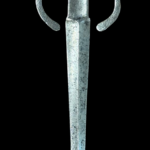
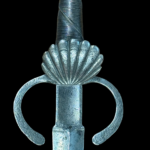
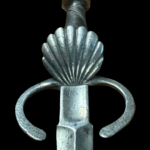
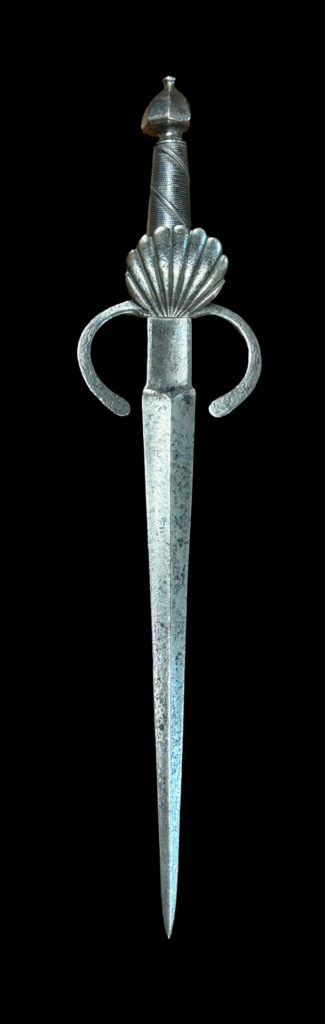
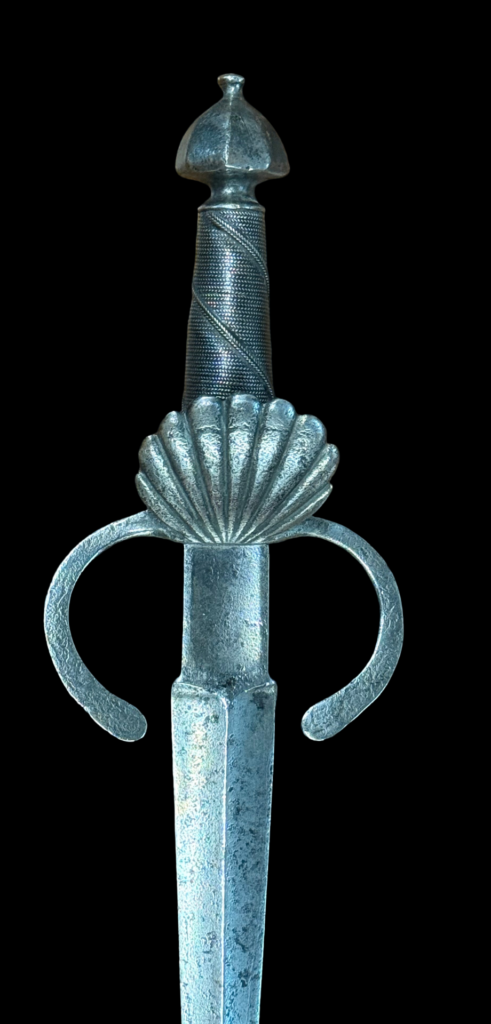
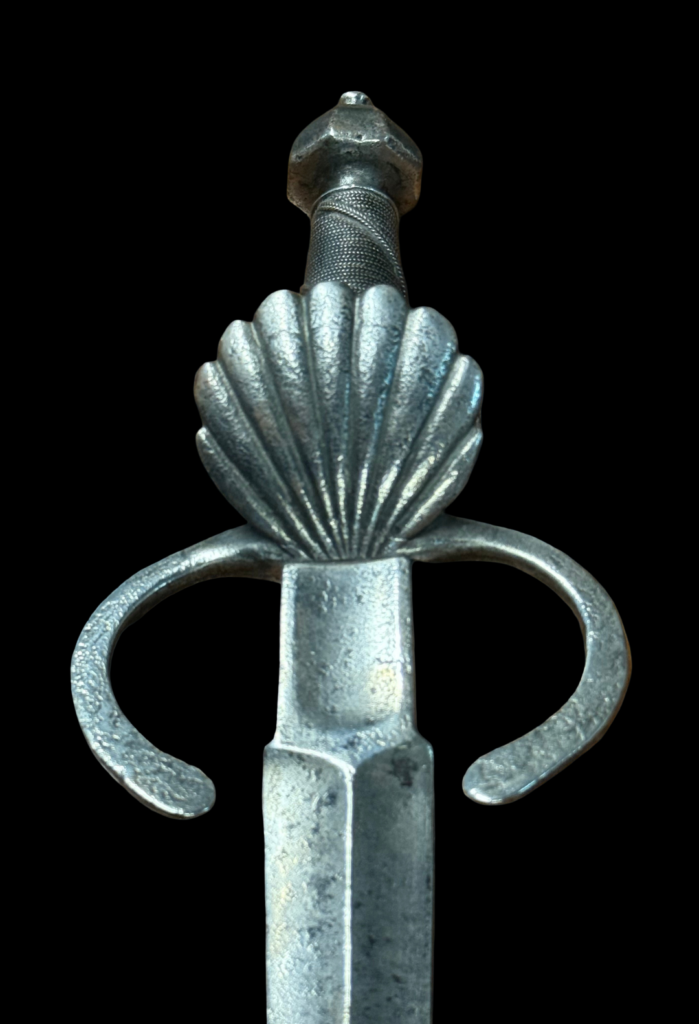
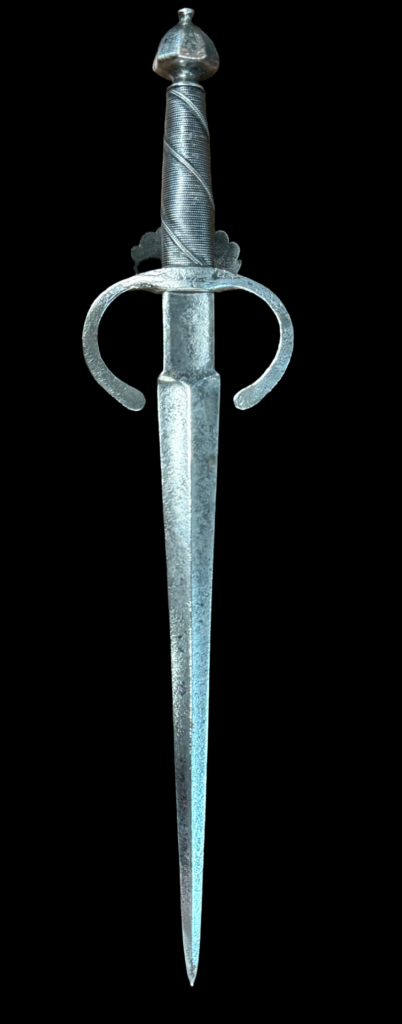
2026) ELEGANT ITALIAN SHELL GUARD LEFT-HAND DAGGER CIRCA 1600:
Introduction: A left-hand dagger, also known as a Main Gauche, was essential to the fencing strategy. Left-hand daggers are used in conjunction with the rapier to maximize a combatant‚ swordsmanship. The left-hand dagger was used to parry, block, trap, and redirect the opponent‚ sword to create an opening for the rapier to administer the ‚” coup de grace”. However, a good swordsman could also reverse the roles and use the rapier to set up the left-hand dagger for the finishing stroke.
Description: Constructed with a Long, stiff thrusting blade of triangular cross-section with a pronounced medial ridge, tapering elegantly to an acute point. The forte features a distinct rectangular ricasso with chamfered edges, allowing a finger-ring grip and precise control during parrying. The guard, forged in iron, with symmetrically curling side-rings that curl inward toward the blade and slightly widen at the tips, is designed to trap the opponent’s blade. Surmounted by a large, prominently chased scallop shell (conchiglia) — a signature decorative motif of Italian Renaissance metalwork — providing additional hand protection and aesthetic distinction. Original or working life grip of possibly silver, acorn-shaped octagonal pommel of iron, surmounted by a small domed button finial.
Condition: Very good with no active corrosion, some signs of past pitting.
Discussion: Because the rapier and left-hand dagger were civilian implements of defense with no armor involved, the sword could be much lighter and wielded more effectively with one hand. Left-hand daggers were usually made with three different hilt types:
1)Cruciform shape: The quillons were horizontal, stout, long, and sometimes swelled at the tips.
(2) Bent downward: In an effort to trap the opponent‚ blade with a simple twist of the wrist, most left-hand daggers had downward-turned quillons. Downward-turned quillons also redirected the opponent‚ blade to create an opening to attack.
(3) Opposite bend: In some less common examples, one quillon was turned downward to trap the opponent‚ blade, and the other quillon bent in the opposite direction (facing upward) to function as a knuckle guard and protect the swordsman‚ hand.
A protective ring or shell at the quillon block served the purpose of protecting the hand from a redirected blade that could have slid down and disabled the swordsman‚ hand. The blade tapers to the tip, most with a medial ridge for added strength. Most blades were double-edged and had a ricasso.
Some blades were pierced with decorative patterns or cut with intricate indentations (see page 328‚ #15-A in my book). These features were not just for decoration; they served the same purpose as a fuller on a sword. They made the dagger lighter without sacrificing the blade’s rigidity or strength. Contrary to what the Victorians thought, the piercings on the blade were not for poison but simply for decoration. Most rapiers‚Äô blade decoration mirrored the decoration of the left-hand dagger blade.
Conclusion: A true collectible at a price most collectors can afford. Thick, heavy-duty construction, excellent condition. Waiting for its new owner in its 400 year plus journey. Priced to sell way under true value!!!*
ACT NOW to get the lowest possible price and avoid disappointment. This one should sell fast.
Contact Me Now To Get The Lowest Price Possible From The Owner!!!*
All my items come with the following:
–Free shipping.
–10-day review period.
–Certificate of Authenticity.
–Autographed copy of my book.