2003 Cup Hilt Rapier
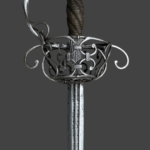

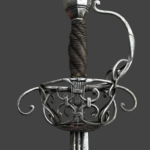
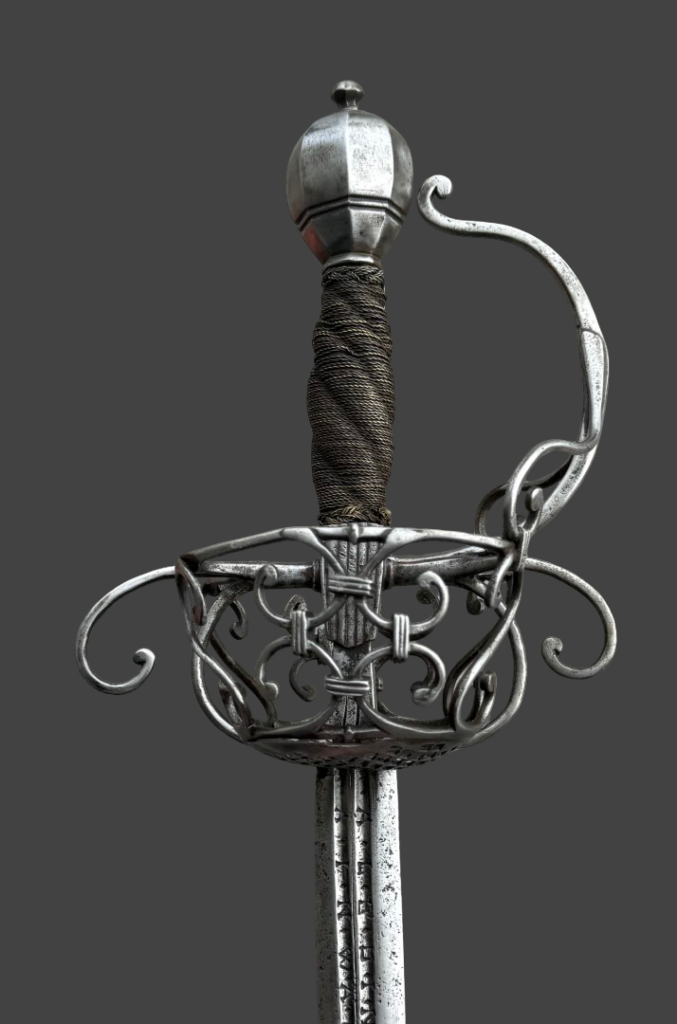
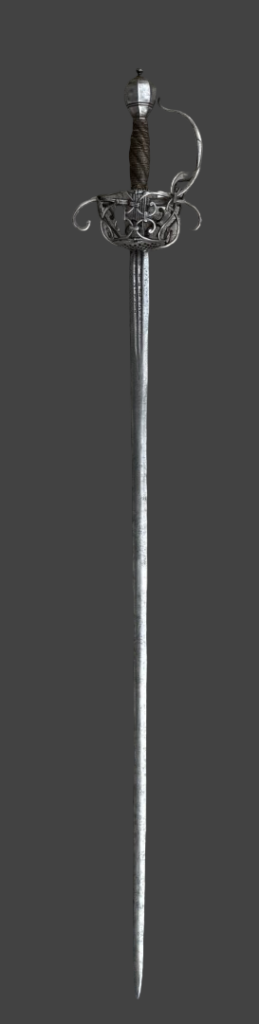
2003) GERMAN CUP HILT WIRE MESHED RAPIER CIRCA 1620 MADE FOR THE SPANISH MARKET:
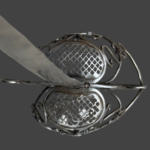
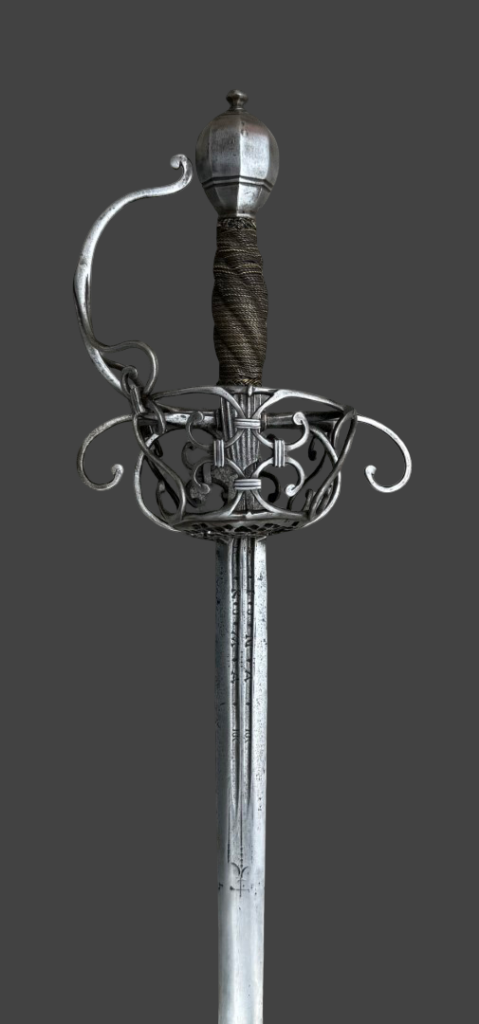
Introduction: Even if you’re not a rapier collector, the rapier was such an important part of Renaissance Europe that you should have at least one in your collection. The workmanship on this cup hilt is of a rather rare type referred to as “open work”. It was specially designed for a swordsman who required a lighter sword for very fast swordsmanship.
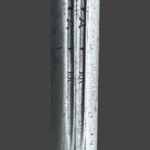
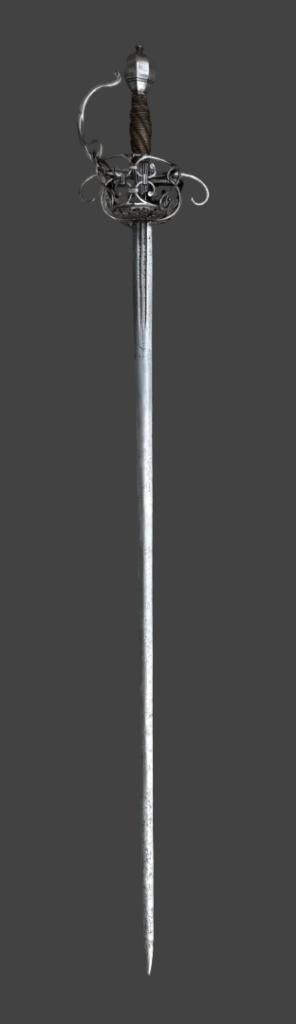
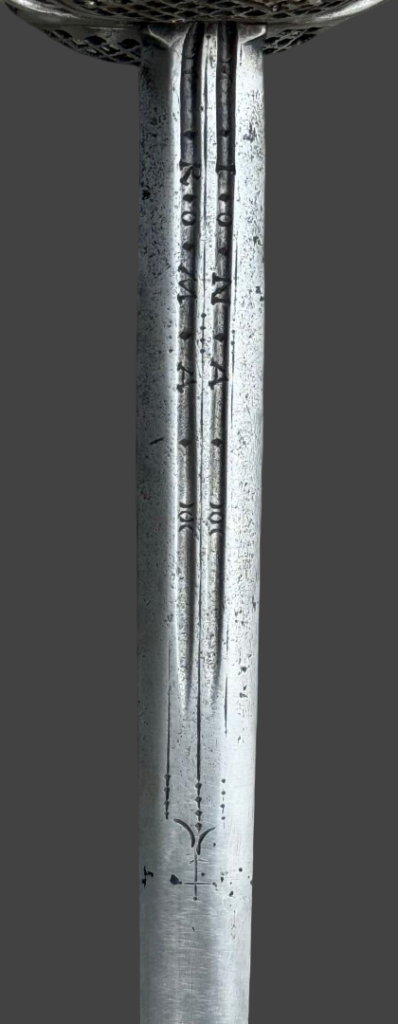
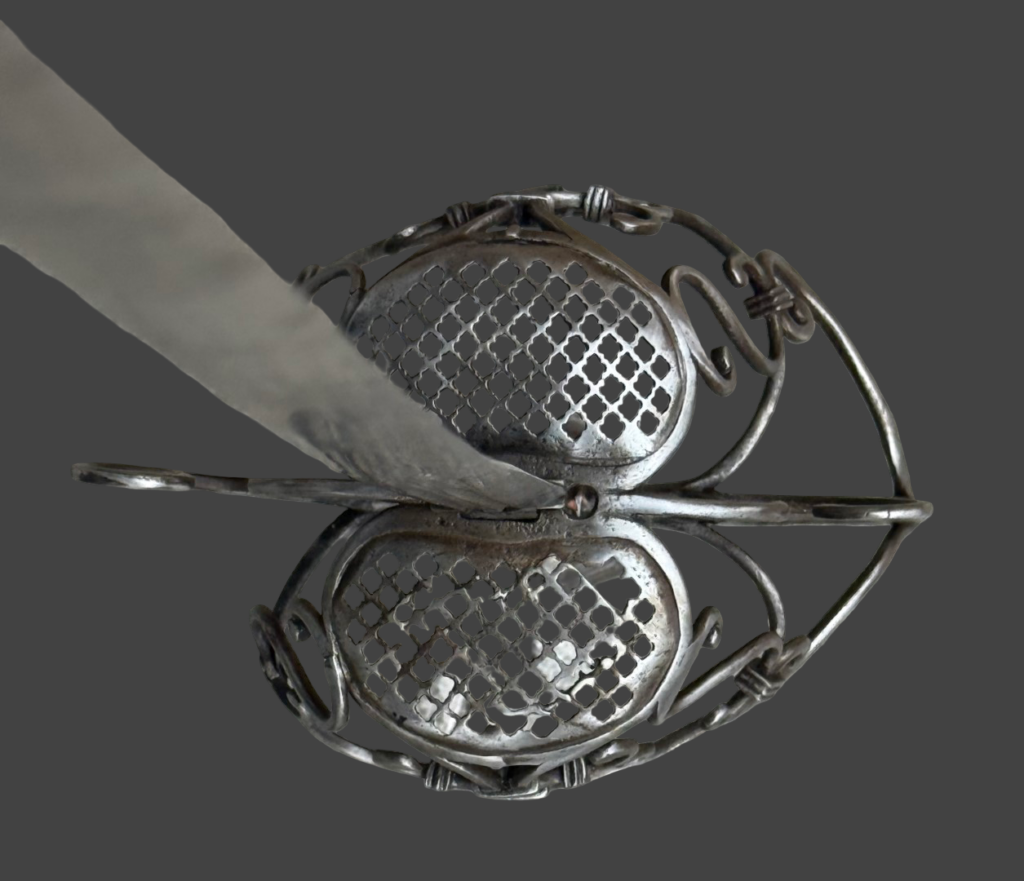
Description: Constructed with a hilt design, often referred to as “open-work,” it features an ornate cup composed of curved steel bars and a mesh decorative guard at the base. The primary purpose of the intricate, filigree-like construction of the guard was to provide protection for the hand while remaining lighter than a solid cup-hilt, an octagonal egg-shaped pommel with double molding, knuckle guard, and two downward turned and curled quillons that serve as a blade catcher, wire grip with two Turks heads, lenticular blade with a slow taper to the tip. Inscriptions are found on both sides of the blade in short fullers at the forte.
The inscription on side one of this rapier, based on the visible letter patterns and what’s commonly found on early 17th-century rapiers, most closely matches. Top fuller: A L E M A N I A and Bottom fuller: I N W A L L
ALEMANIA: This is the Spanish word for Germany. During the 17th century, many high-quality blades were forged in German centers like Solingen and then exported throughout Europe, including to Spain and Italy. Blades marked “Alemania” were often intended for the Spanish market to indicate their prestigious German origin. IN WALL: This is likely an abbreviation or a corruption of “In Walloon” or refers to a specific workshop or location. “Walloon” style swords were popular in the mid-17th century, and the term was often applied to blades from the Low Countries or Germany.
On the reverse side:
The inscription on the rapier blade appears to be a religious or protective invocation in Latin, common on European blades from the early 17th century. The legible portions of the inscription are: Top fuller: I O A N I. Bottom fuller: R O M I A. The sequence “IOAN” often refers to Johannes (John the Baptist or John the Apostle), while “ROMA” may refer to Rome, potentially signifying a Catholic or Papal association.
Approximate length: 50.2 inches.
Condition: Very good. A-.
Comparable: MET Museum Object Number: 14.25.1164a,b, pictured above.
Discussion: In a day and age lacking appropriate policing, the private citizen was forced to protect himself from society‚ criminal dregs. From the middle of the 16th to the end of the 17th century, the weapon of choice was the rapier. The rapier is a simple but highly effective sword against the non-armored. The rapier was primarily a thrusting weapon that could inflict serious injury to an adversary‚ vital organs with minimal effort. It was also an exceptional slashing and cutting weapon; however, the slash was not as lethal as the thrust. The slash was used more as a feint to set up a finishing thrust. The slash was also a dire warning to a would-be assailant of the horrors to quickly follow if he chose not to acquiesce. The rapier is almost undeniably of Spanish origin and is probably Spain‚ most significant contribution to the Renaissance arms race.
A highly expensive, ornate rapier was the equivalent of a person in our day and age making a fashion or opulence statement by wearing very expensive jewelry, such as a Rolex or Audemars Piguet watch. Because fencing is more of a thrusting art, it became commonplace throughout Europe to have as long a blade as possible to obtain an advantage. This extravagance in length reached the point that municipalities passed statutes regarding the allowable lengths of blades. Those in violation had the misfortune of having their rapier blades cropped at the tip at the city gate to comply. One example of these statutes is from an English Royal Proclamation on March 17, 1557‚ 1558.
Conclusion: An exquisite addition to any collection. Even if you are not a rapier aficionado, all collections should have at least one. This cup hilt rapier is in museum condition. You are getting a lot of sword and flash for the money. It’s priced to sell fast, ACT-NOW!!!
ACT-NOW!!! If not, you will probably regret it later.
All my items come with the following:
–Free shipping.
–10-day review period.
–Certificate of Authenticity.
–Autographed copy of my book.
– In the event of an international shipment, we will help assign the lowest correct Customs tariff, so you pay the least.