2004 Viking Helmet
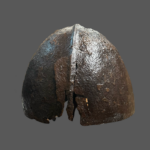
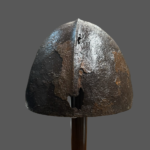
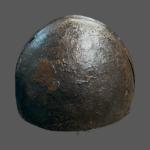
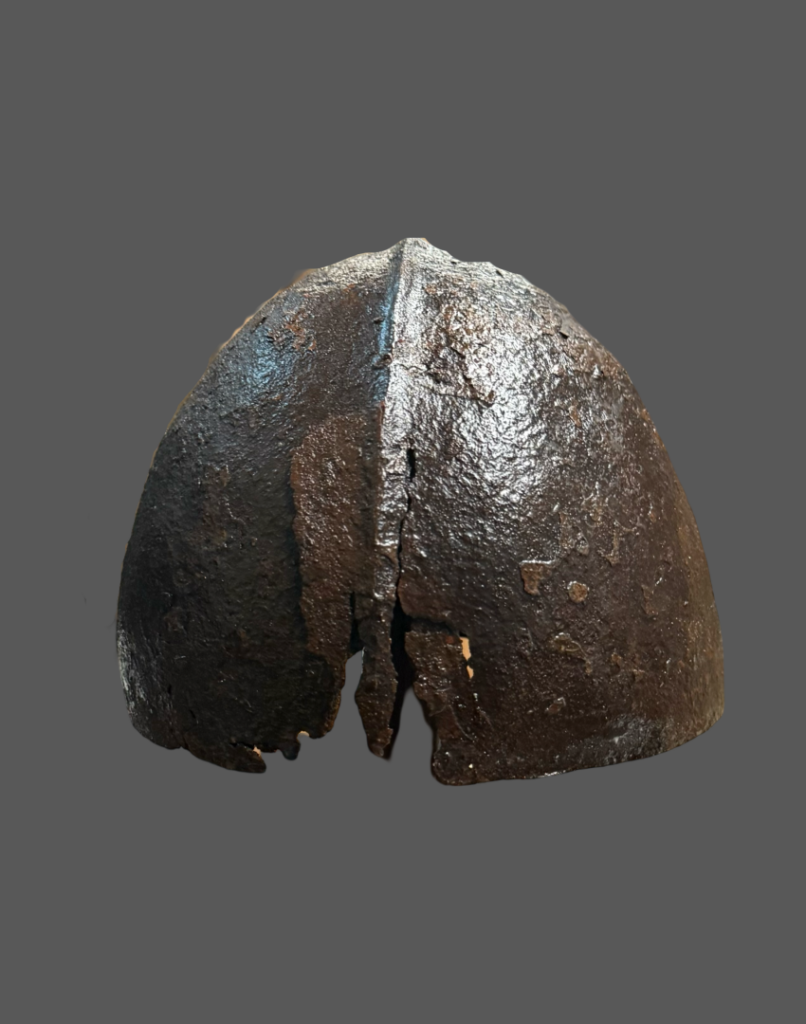
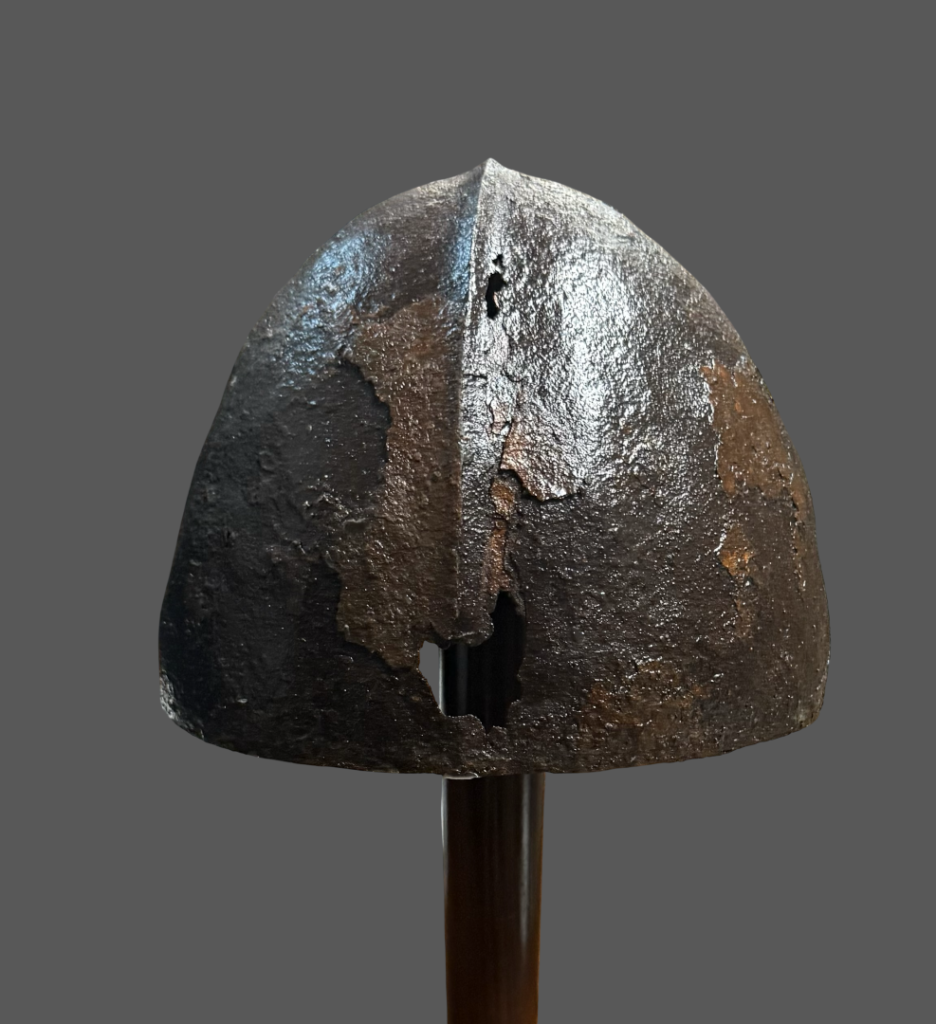
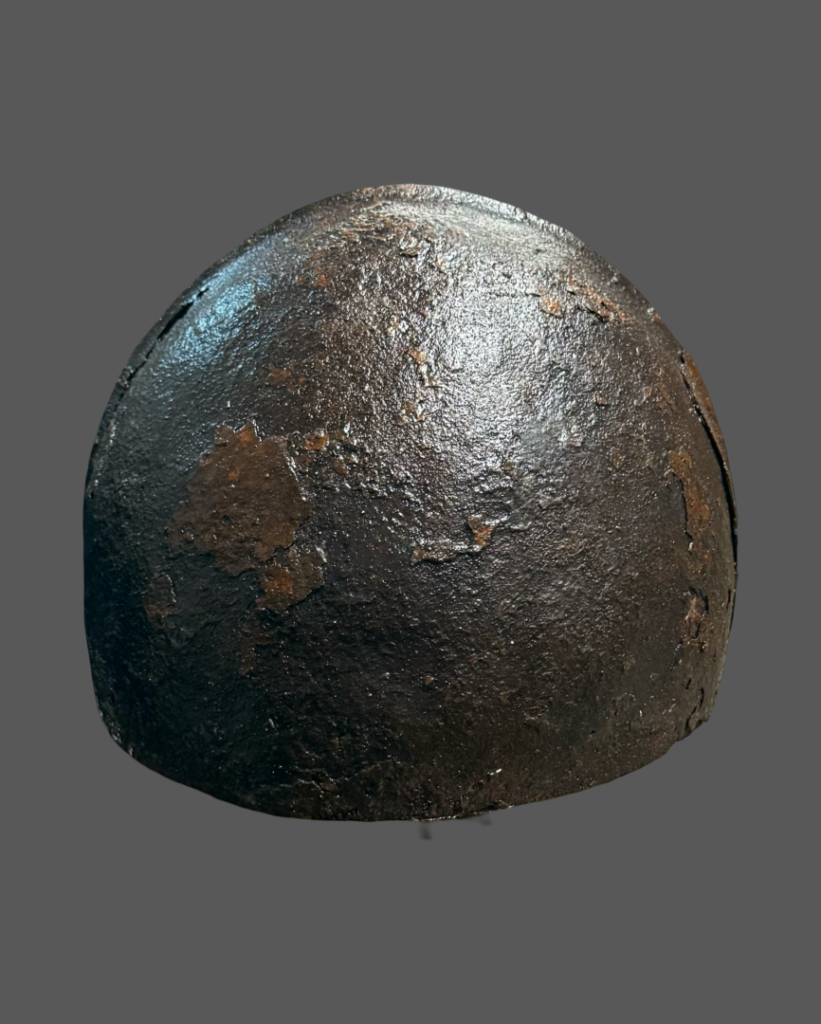
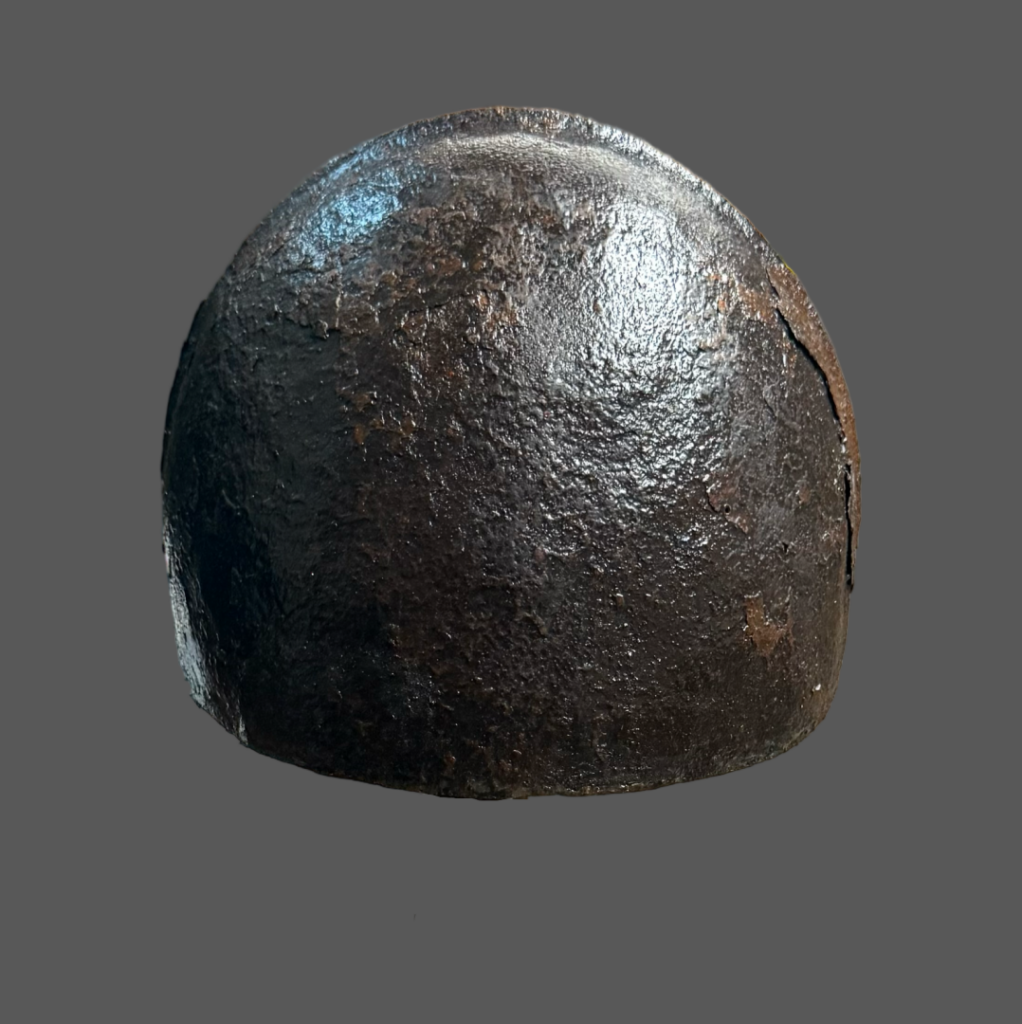
2004) A RARE VIKING-SAXON PERIOD ONE PIECE HELMET CIRCA 1000:
Introduction: Let me be very blunt. Almost all the early helmets like this for sale on the internet are well-made reproductions. This is a unique opportunity to own a treasure from the early Medieval period that was buried underground like a time capsule. The helmet is in relic condition, but it is still a collectible item that commands respect. If only this helmet could talk the stories it could tell.
Discussion: The rarest form of the Norman helmet is forged from a single piece of metal. The nasal piece is integral, meaning it is part of the helmet rather than a separate piece; this was difficult for the armorer to make. This variant is rarer because:
1) It required a masterful armorer using a very inefficient small forge and rudimentary tools to forge a single billet into one esoteric shape.
2) It also required large amounts of metal to create a single iron billet when iron/steel was only available in minimal quantities.
In Western Europe, nasal bars made their appearance as early as the 11th-century, as seen: (1) in the Bayeux Tapestry (see page 51), (2) in the Apocalypse of Saint Sever in the Bibliothèque Nationale, Paris, produced between 1029 and 1072;
The earliest variant of this typology of helmet, also called the Norman helmet, known as the Spangenhelm (German/Victorian term), was found in Mesopotamia and dated to the 4th Century. Unlike its High Middle Ages counterpart, this earlier version was used by Asian tribes crossing into Western Europe and featured cheek pieces. As the most popular type of Norman helmet, the term Spangenhelm became the generic term for Norman helmets with or without a nasal. The banned helmet was extremely popular in Eastern Europe (Russia, Ukraine, etc.) up to the 1200s.
The Norman helmet was in use from the 6th to the 13th centuries. It’s a slightly pointed helmet with or without a nasal ridge (nose defense). Some Norman helmets incorporated mail protection to the neck or a partial or full-face plate. A mail coif was commonly used.
Condition: This nasal is in relic condition. Considering it was underground for hundreds of years and suffered cremation, it’s amazing it is still with us today after all these years.
Approximate dimensions: Height…. 6..75 inches, diameter at the base…. 7.5 inches at its widest.
Provenance: A German collection. By tradition found in Western Europe.
Conclusion: This is an item of great interest to any collector who wants to add a great example of a Viking-Saxon period helmet to their collection. It’s also an exceptional conversation piece that is very reasonably priced for a quick sale!!! You will not regret owning this time capsule into the Viking-Saxon era. *
ACT-NOW!!! If not, you will probably regret it later.
All my items come with the following:
–Free shipping.
–10-day review period.
–Certificate of Authenticity.
–Autographed copy of my book.
– In the event of an international shipment, we will help assign the lowest correct Customs tariff, so you pay the least.