2005 Antique Sword
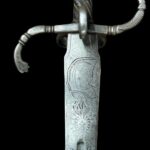
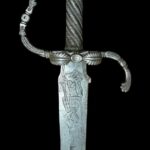
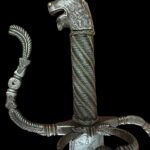
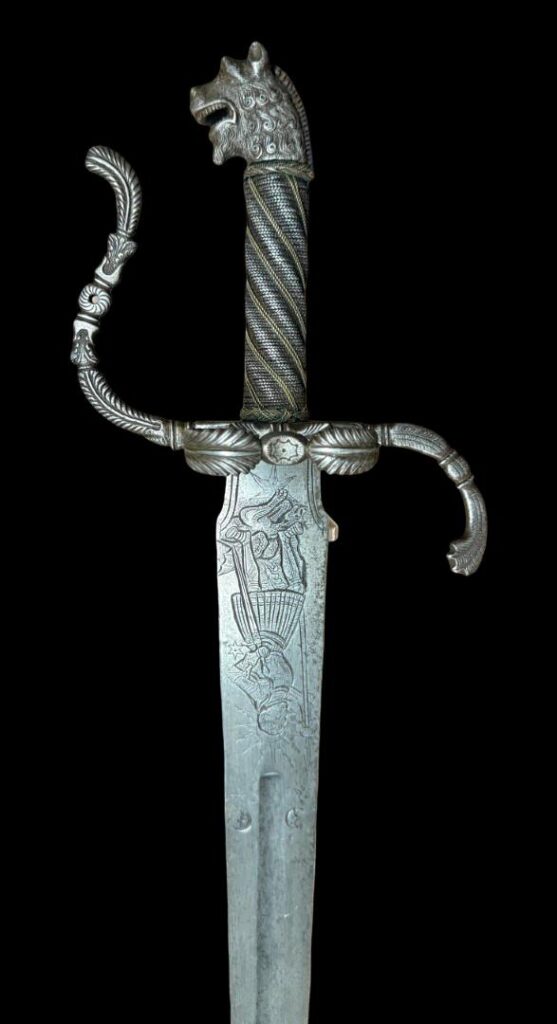
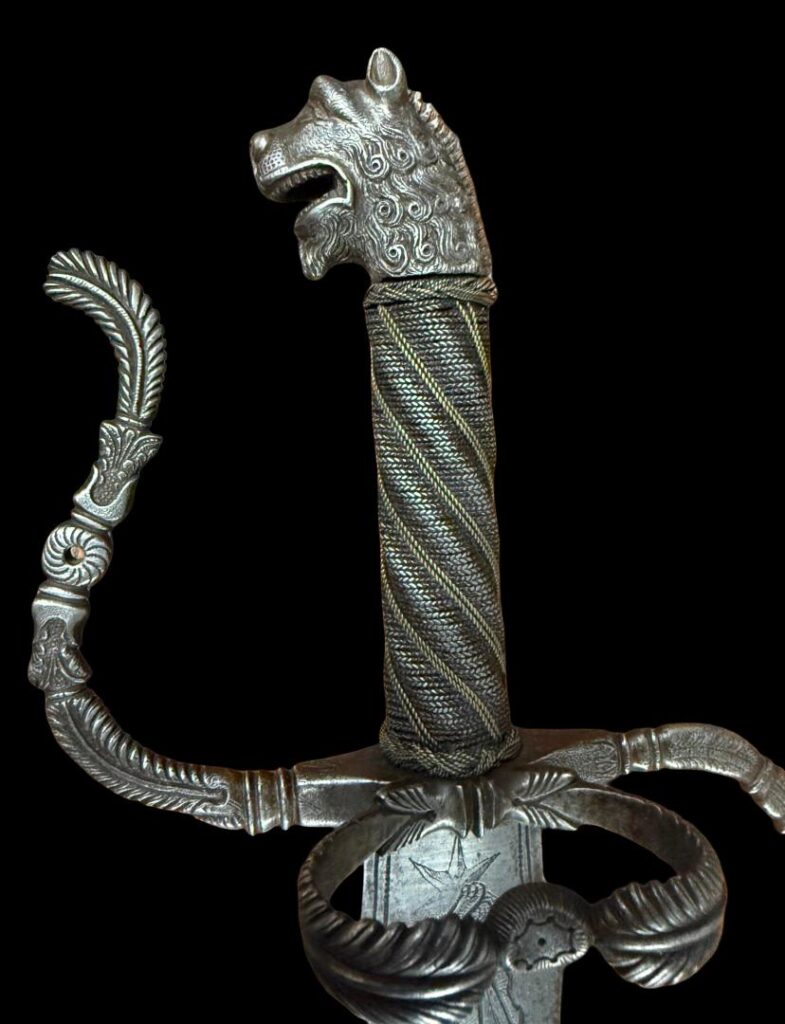
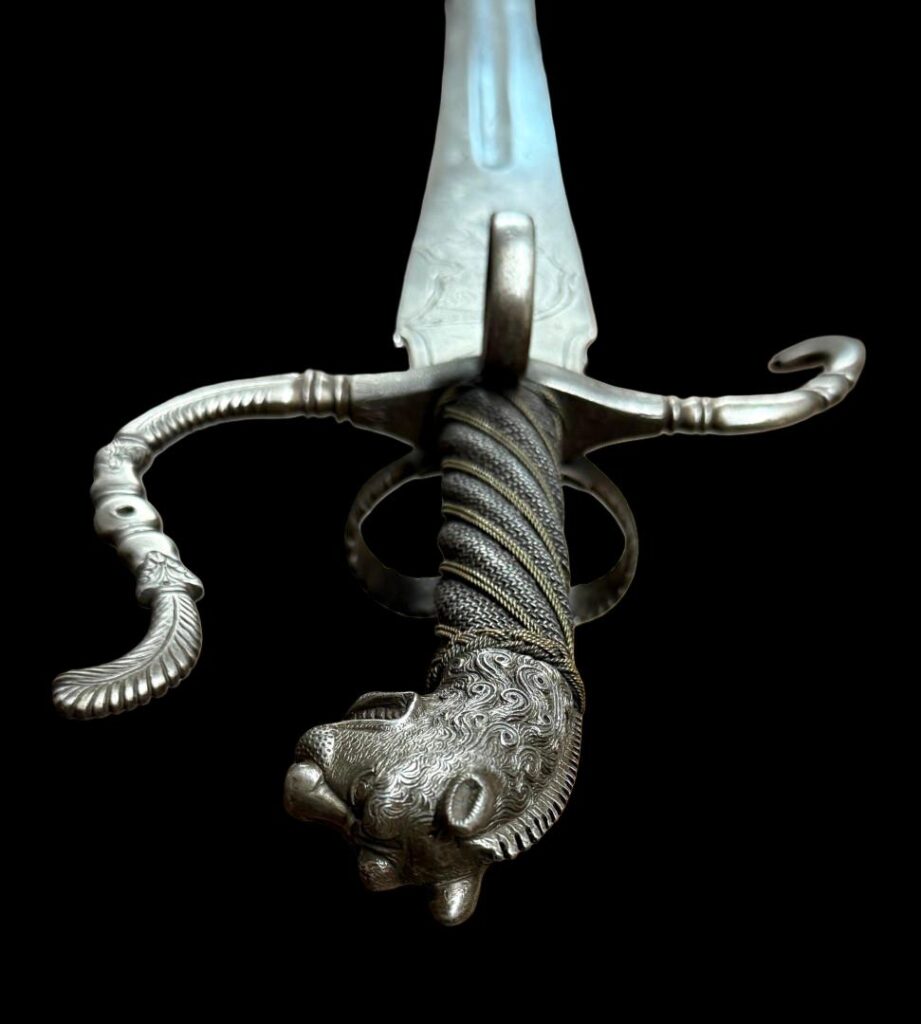
2005) AN IMPORTANT AND RARE VENETIAN HIGHLY CHISELED AND ETCHED SWORD CIRCA 1590:
Introduction: This rare sword is in superb museum condition. Venetian arms and armor are rare and sought after by collectors. They have a certain esoteric look and mysticism that arms and armor from the rest of Europe do not have. Imagine Doge’s Palace in Venice circa 1590, and a high-ranking officer, Nobleman or wealthy merchant entering the palace is wearing this sword at his hip that can now be yours.
Discussion: An exceptionally elegant and rare example of a Renaissance sword that a very wealthy person or nobleman must have owned. It has survived in exceptional condition because the wealthy had others fight for them. So why even wear a sword like this if you had no intention of using it?
Because it’s a status symbol. A highly expensive, ornate sword like this was the equivalent of a person in our day and age making a fashion or opulence statement by wearing very expensive jewelry, such as a Rolex watch or a solid gold necklace with large diamonds. In contemporary terms, this wealthy original sword owner was making a “bling statement.”
Not all wars were fought on the battlefield with swords, lances, and armor. A non-bloody war was in the fashion and status arena. Fashion also extended deeply to Arms and Armor. The phrase… “keeping up with the Joneses” … is not a new 20th-century concept. Let’s be brutally honest: Who needs a wristwatch that costs the same as a car in this age, when your cell phone or computer will tell you the time with much more accuracy and at no cost? An expensive watch says…”I am wealthy; treat me accordingly….” It was the same with a sword like this.
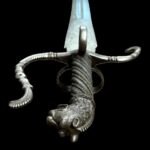
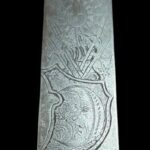
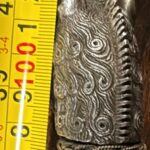
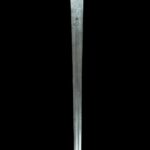
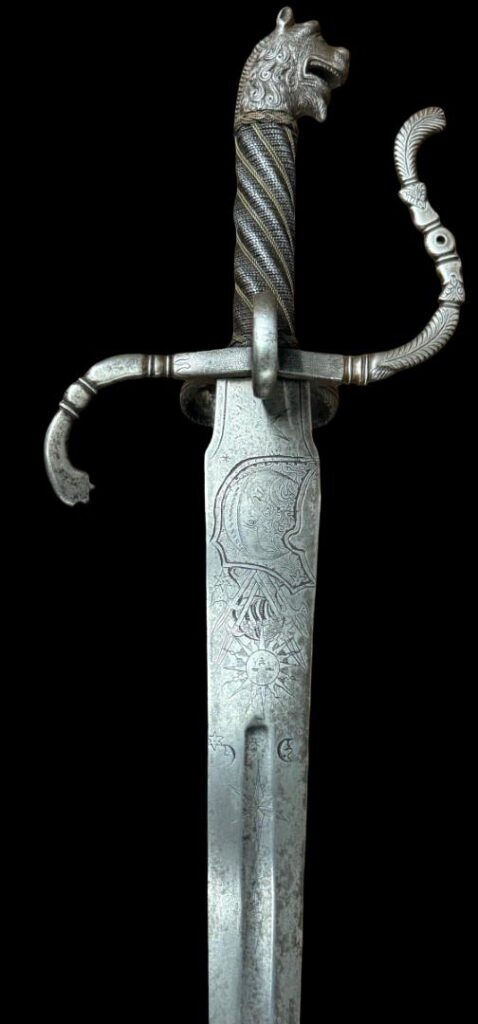
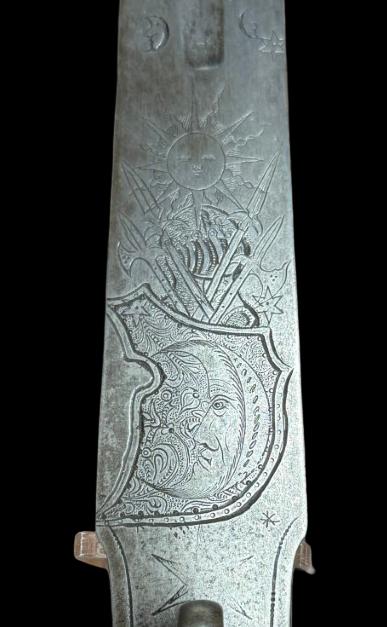
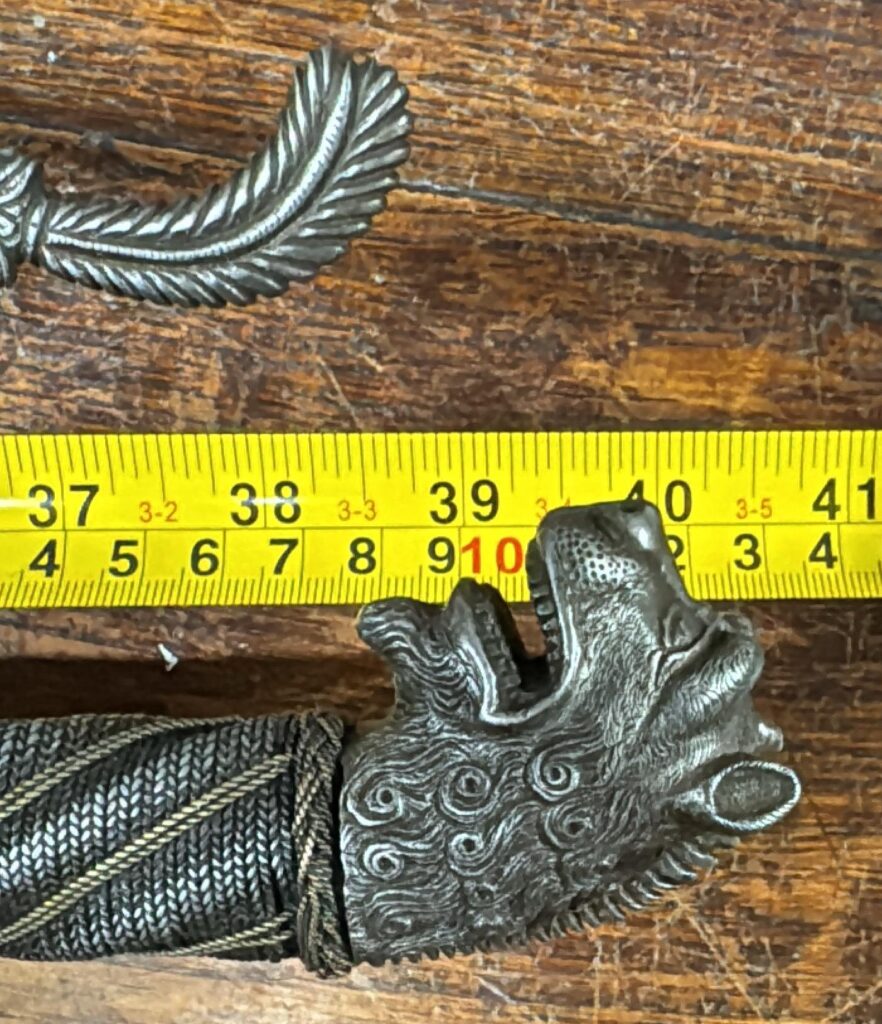
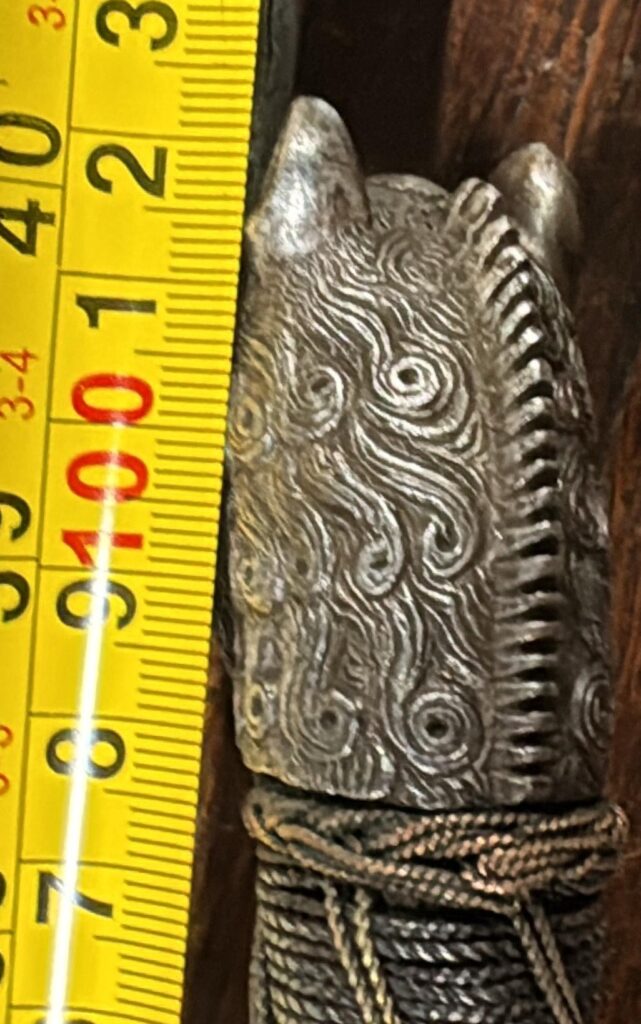
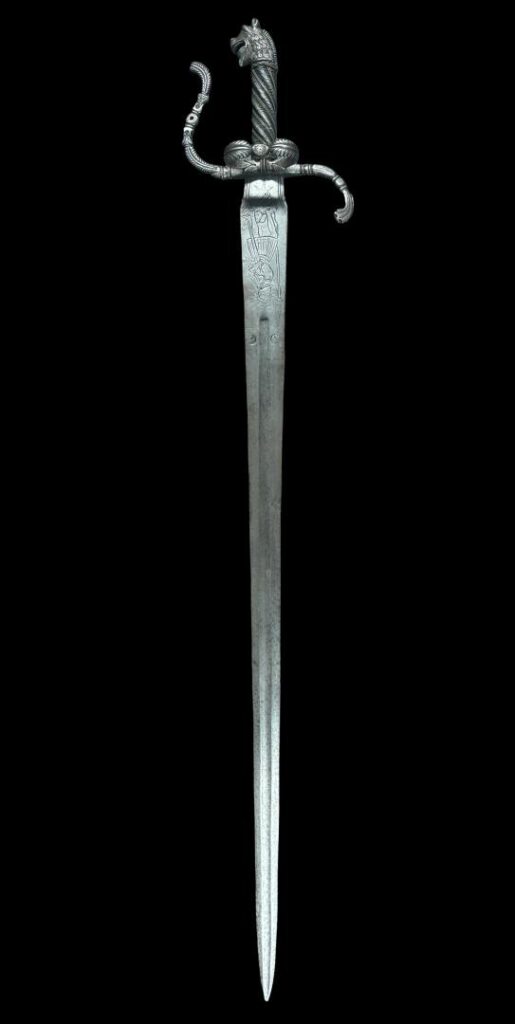
Description: Constructed with a hilt that displays the distinctive features of a high-status Venetian sword from the late 16th century, characterized by its ornate, symbolic metalwork. The hilt is decorated with a finely sculpted pommel in the shape of a lion’s head, almost certainly a reference to the Lion of Saint Mark, the historic symbol of Venice. The grip is possibly original, with a tight, spiraling wire wrap and Turks’ heads. The chiseled guard is recurved on one side, serving as a knuckle guard with ornate foliate decoration. A wide blade of stiff diamond shape tapering slowly to the tip with a fuller starting after the decoration at the forte. The engravings at the forte are rich with Renaissance European symbolism, reflecting themes common in late 16th-century Italian craftsmanship. While designs varied, these specific elements often represented a combination of divine protection, military prowess, and astrological influence. Here is a breakdown of what the symbols are likely to represent:
Side: 1
At the top, the “Sun in Splendor” with a human face typically represented divine favor, truth, and clarity. In a military context, it suggested the bearer fought under God’s watchful eye or possessed enlightened leadership. The sun represents light, reason, and divine power, and is often portrayed as masculine. The moon represents night, change, and reflection, and is often portrayed as feminine. The Trophies of Arms is the central cluster that includes crossed polearms and swords. This is a classic “trophy of arms” motif, symbolizing military victory and the martial skill of the owner. Similar arrangements of weapons are frequently found on 17th-century European sabers and ceremonial blades. The Shield and Anthropomorphic Moon: The lower portion features a large, ornate shield. Inside the shield is a crescent moon with a profile face, often paired with the sun to represent the duality of day and night or the balance of the universe. In Italian heraldry and art of this period, these celestial bodies were also linked to astrological beliefs, suggesting the sword was governed by favorable cosmic forces. Intricate Scrollwork: The background is filled with foliate scrollwork, which was a hallmark of the high-quality etching found on Renaissance-era Italian weaponry from centers like Milan or Brescia.
The whole decoration reads vertically. The above is the celestial order (sun, moon, stars). The bottom is earthly or imaginative forms. This reflects the Renaissance idea of the connection between heaven and earth.
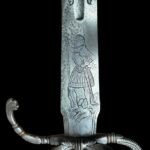
Side: 2
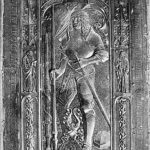
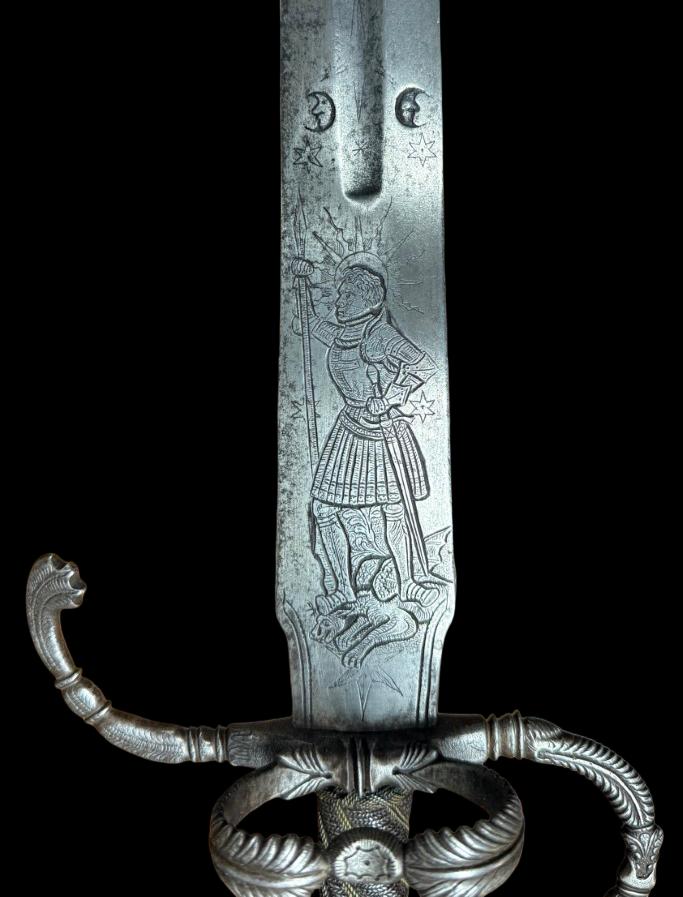
The decoration appears to depict Saint George, the patron saint of Knights and soldiers, in a triumphant pose, famously known for his battle with a dragon.
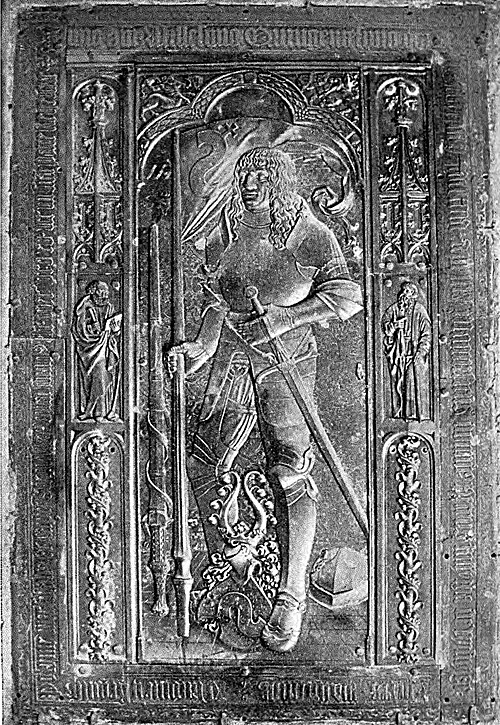
The engraving shows a figure in full armor—consistent with the period of the sword, like the Gravestone of Piotr Kmita (†1505) from the workshop of Peter Vischer the Elder, Nuremberg. Located in Wawel Cathedral, Kraków, Poland, see above. The Slain Dragon: The beast beneath his feet represents evil or paganism that has been overcome. This “standing over the beast” composition is a classic element of St. George and the Dragon imagery. A Symbol of Protection: On a sword, this imagery served both as a decoration and a talisman, intended to invoke the saint’s protection and strength for the wielder.
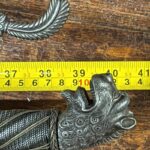
Length: 42.5 inches, guard 10 inches.
Condition: A+, museum-quality.
Provenance: From a distinguished collector who is thinning his herd.
Conclusion: All collections should have at least one iconic sword in their collection. This example is superb, elegant, and highly sought-after. They seldom come this nice. This one should be in a museum; however, if you act fast, it can be in your collection for much less than you think. This is a rare bargain-priced opportunity for a quick sale. Don’t wait and above all ACT-NOW. !!!*.
All my items come with the following:
–Free shipping.
–10-day review period.
–Certificate of Authenticity.
–Autographed copy of my book.
–In the event of an international shipment, we will help assign the lowest correct Customs tariff, so you pay the least.
I believe you will be very pleased. ACT-NOW!!!*