2001 Antique Sword
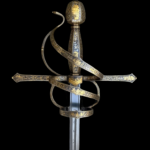
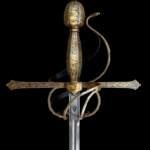
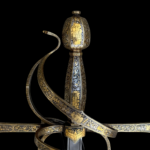
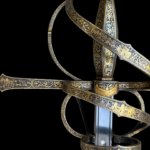
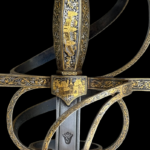
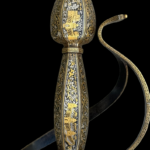
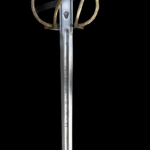
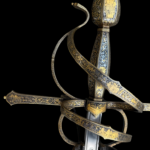
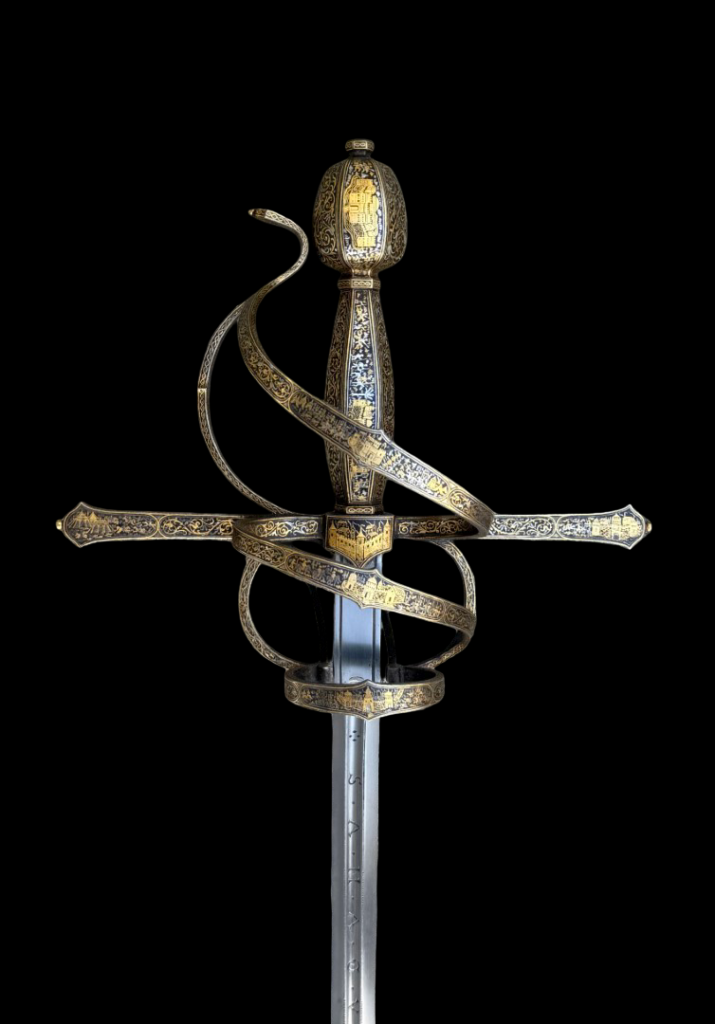
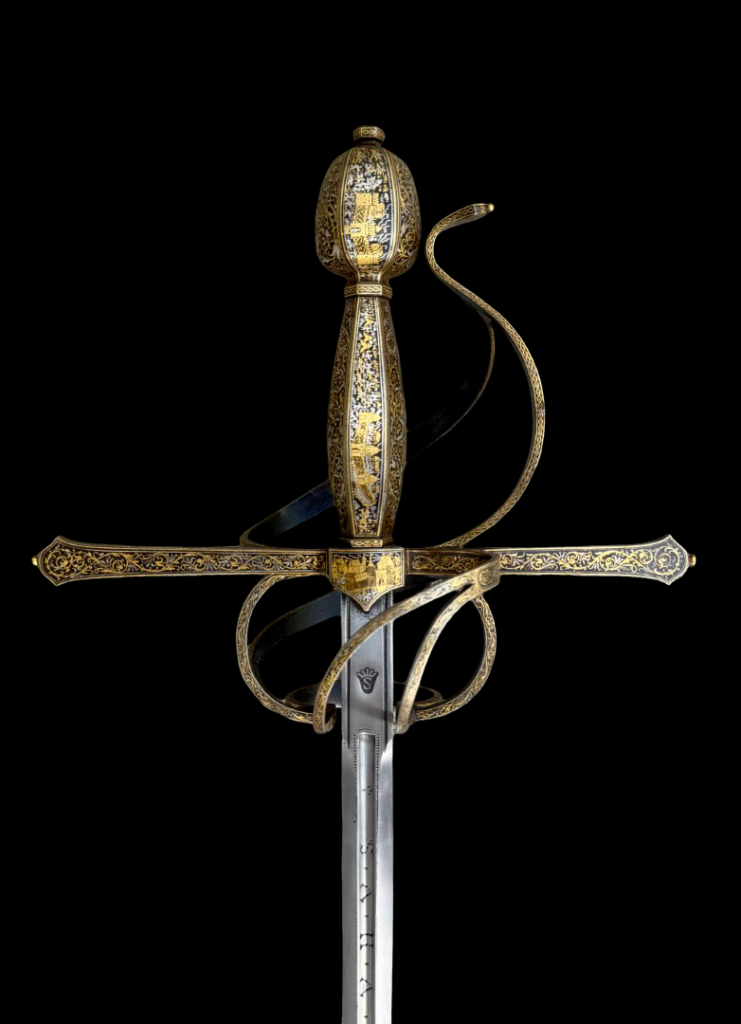
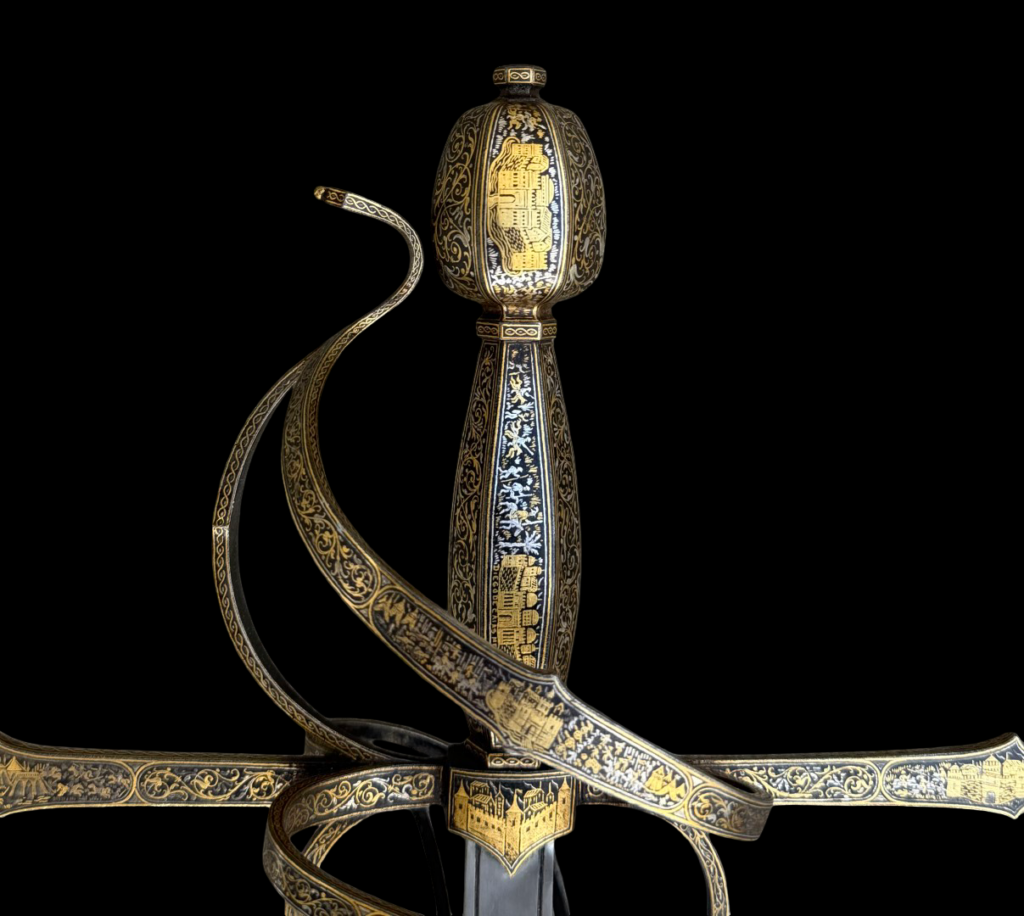
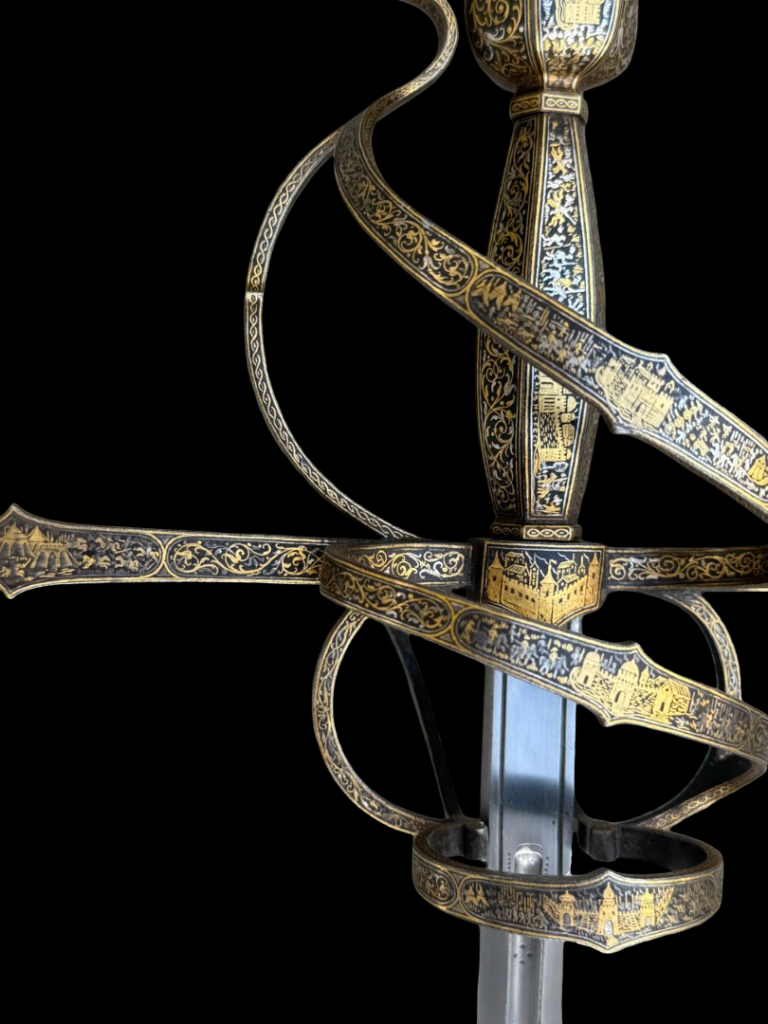
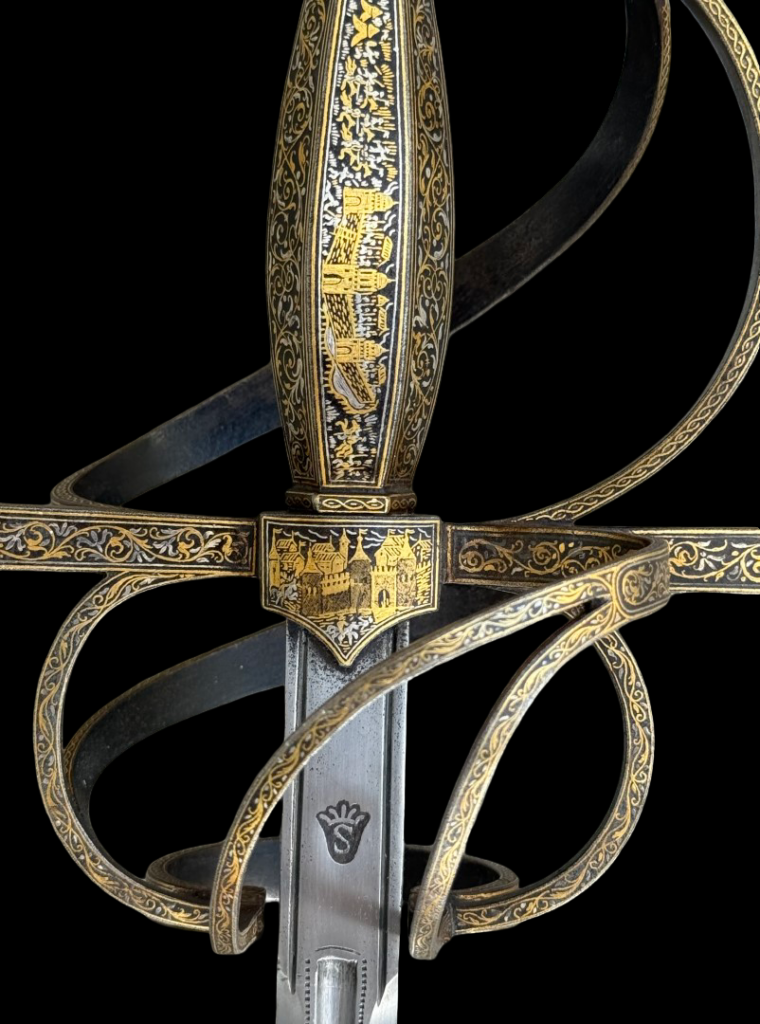
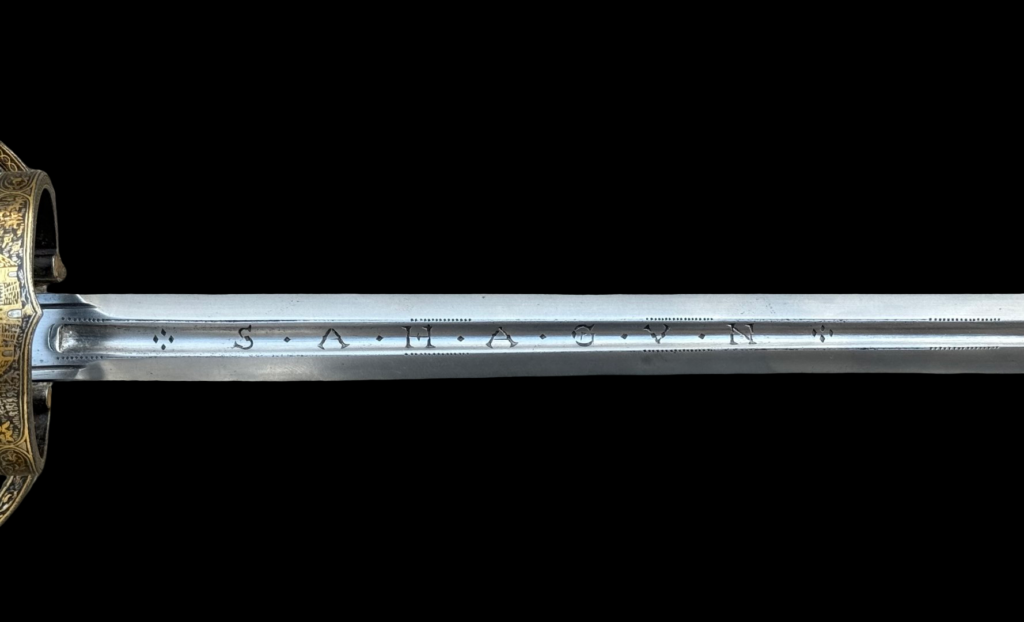
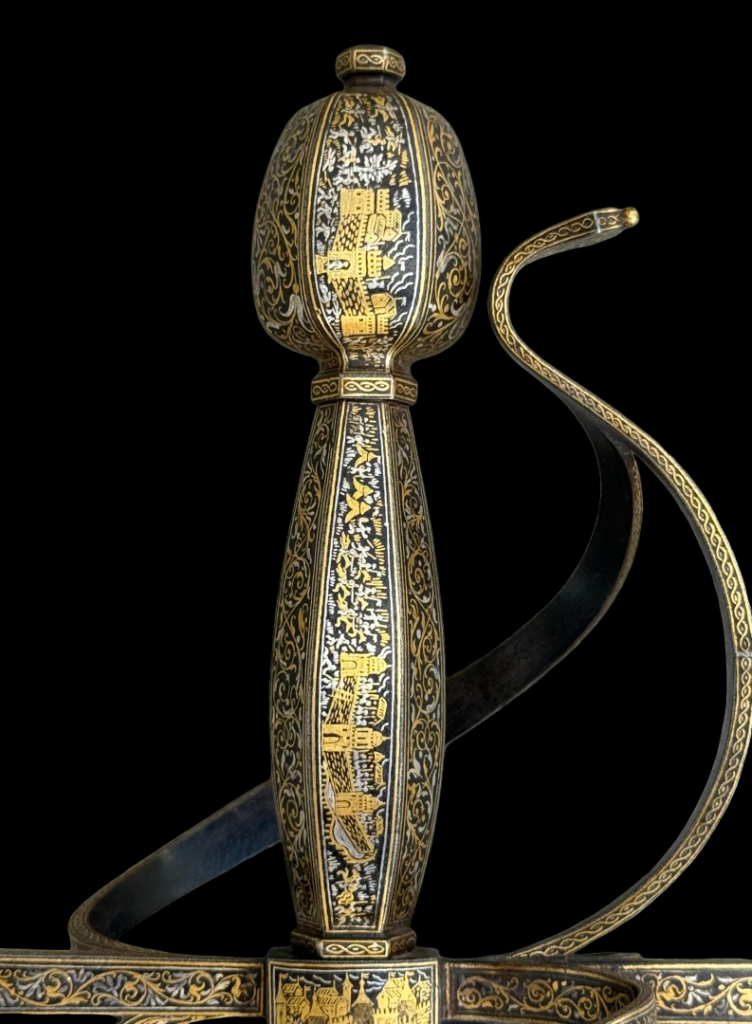
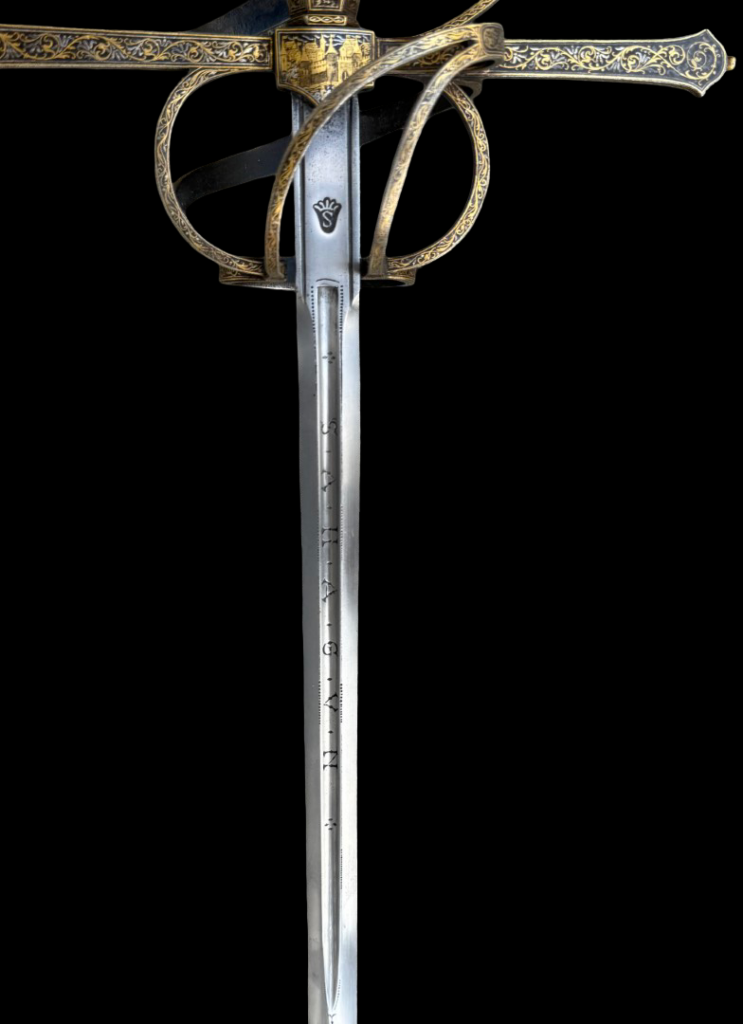
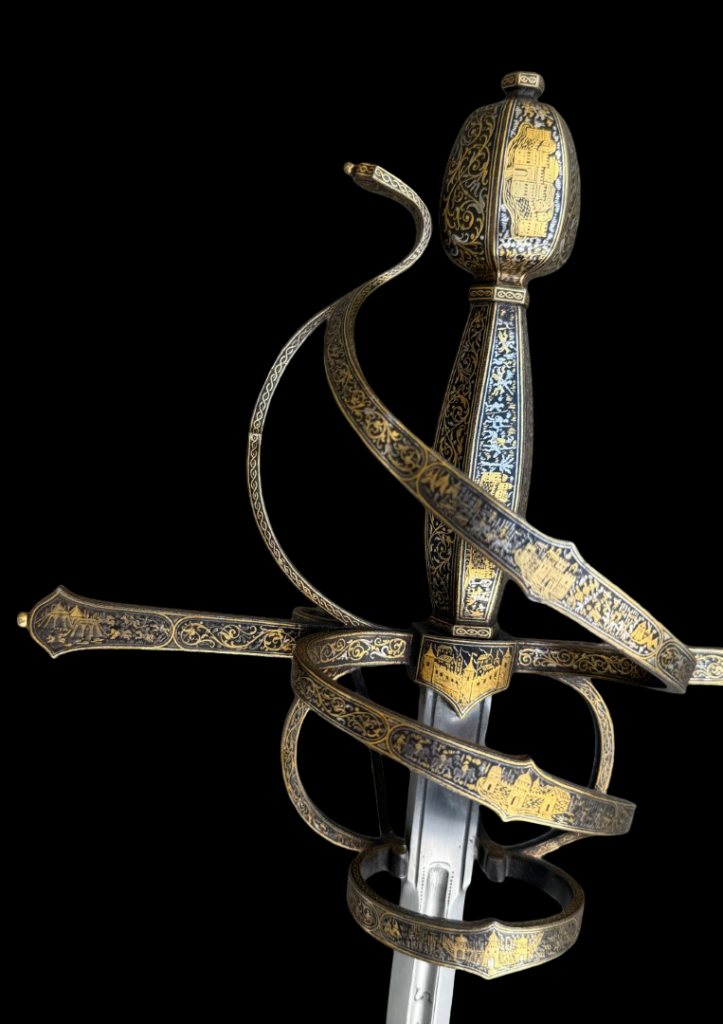
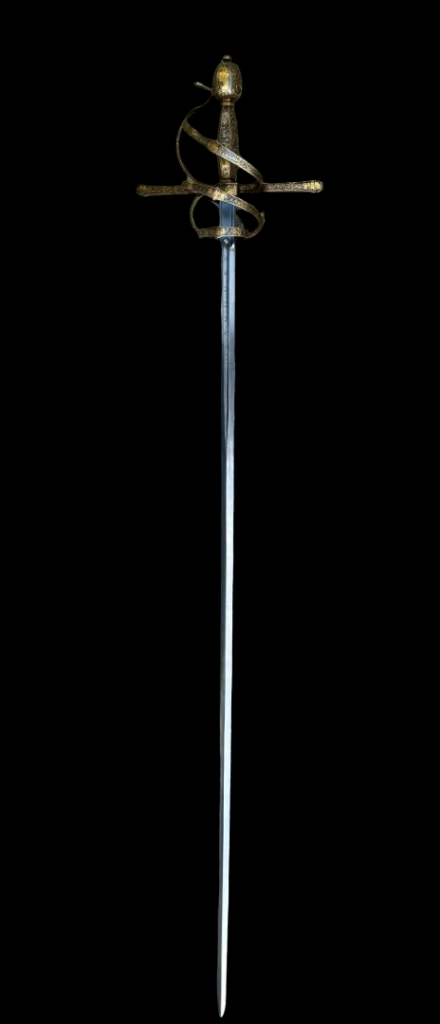
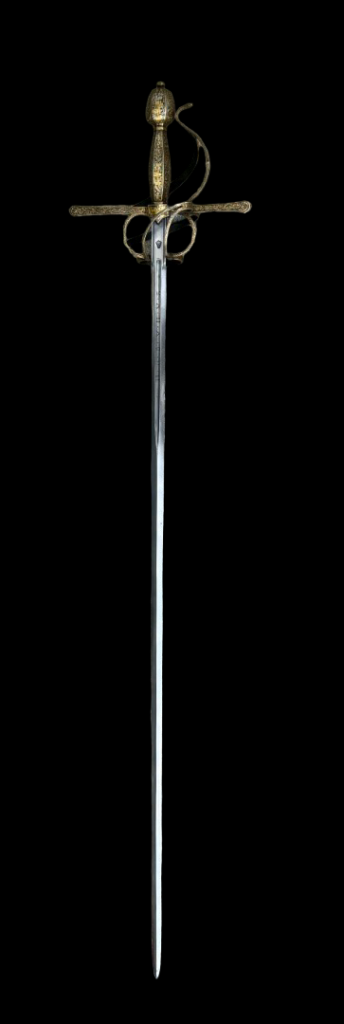
2001) AN IMPORTANT AND SUPERBLY DAMASCENED RAPIER CIRCA 1560 IN THE TASTE OF DIEGO de CAIAS :
Introduction: The rapier under discussion is an actual, mint-condition rapier from circa 1560. The hilt was hand-decorated with damascene around 1850 during the Victorian period. During the Victorian period, collecting Arms and Armor was fashionable, but there weren’t enough real Medieval and Renaissance period Arms and Armor pieces to satisfy demand. During this period, many reproduction pieces of exceptional quality were made by old-world artisans. This sword is decorated in the same manner of workmanship.
A similar example to the sword under discussion was made by Damianus de Nerve, the prodigy of Diego de Çaias. The sword resides at the greatest museum of arms and armor, the Kunsthistorisches Museum in Vienna, Austria. See the picture above.
In my opinion, the original in Vienna is the finest surviving example of a Renaissance damascened hilted sword. If a sword like this were ever to become available in the collectors’ market, it would, in my opinion, sell for in excess of a million dollars!
The example under discussion is of such quality that, on more than one occasion, it was sold for tens of thousands of dollars as a genuine 16th-century rapier with period decoration and fooled many long-term collectors!
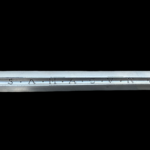
Description: Constructed with a hilt decorated with damascene. Damascening entails inlaying gold or silver wire onto the surface of the metal. In armor, it is used in linear decoration. The process involves creating a narrow cut line on the metal surface with a chisel, then hammering the precious metal wire into the cut line. At times, the background is colored, with blue and purple being the preferred colors. Under the Norman typology, this would be a Hilt 75 with a type 34 pommel, flat and widening to the tip, rectangular quillons with a button at the quillons’ tip, a short rectangular ricasso with a short fuller approximately a fourth the length of the blade, fuller with the inscription…SAHAGVM… referring to Alonso de Sahagún the Elder, a highly esteemed Spanish bladesmith active in Toledo during the late 16th century. His name was so synonymous with quality that it was frequently forged by makers in Solingen, Germany, to increase the value of their own blades. The remaining blade with a double-edged blade of flattened hexagonal sections tapering to a point, maker’s mark an S with a crown at its apex, grip of metal decorated en suite with a hexagon-shaped grip.
Condition: Superb, world-class.
Total length: 47.5 inches.
Discussion: Diego de Çaias was the Master Damascener of 16th-Century Europe. He was a Spanish-born swordsmith and damascener who was active in the mid-16th century. DeÇaias worked for Henri II of France from 1535 to 1542, and then for Henry VIII and Edward VI of England around 1544.
Imitations of the rapiers made by Diego de Çaias and Damianus de Nerve were made briefly during the 1970s using electric tools. However, these examples don’t come close to the opulence and craftsmanship of the rapier we are discussing.
Conclusion: If you want an exceptional world-class collectible that is normally unattainable, that will leave your friends and family spellbound and thinking you have one of the finest swords in the world and have spent a king’s ransom, this is it. Priced for a lot less than you imagine. Please call me immediately for the best, lowest possible price on a rapier that will leave you speechless.*
ACT-NOW!!! If not, you will probably regret it later.
All my items come with the following:
–Free shipping.
–10-day review period.
–Certificate of Authenticity.
–Autographed copy of my book.
– In the event of an international shipment, we will help assign the lowest correct Customs tariff, so you pay the least.