1989 Axe
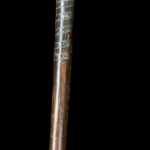
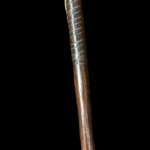
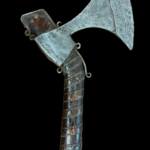
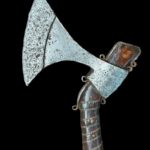
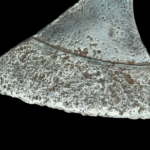
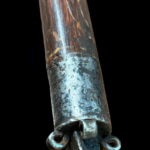
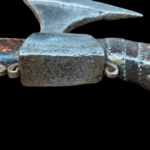
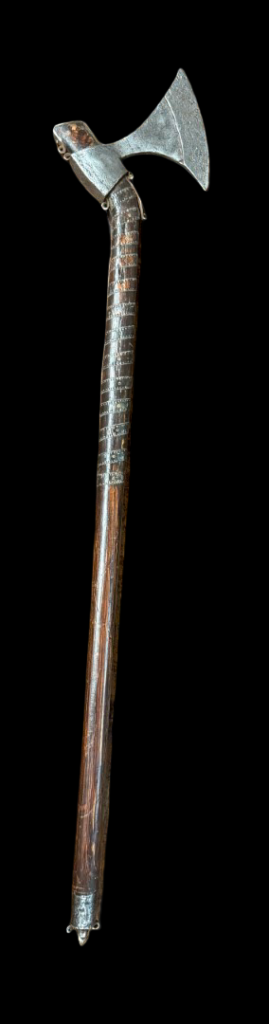
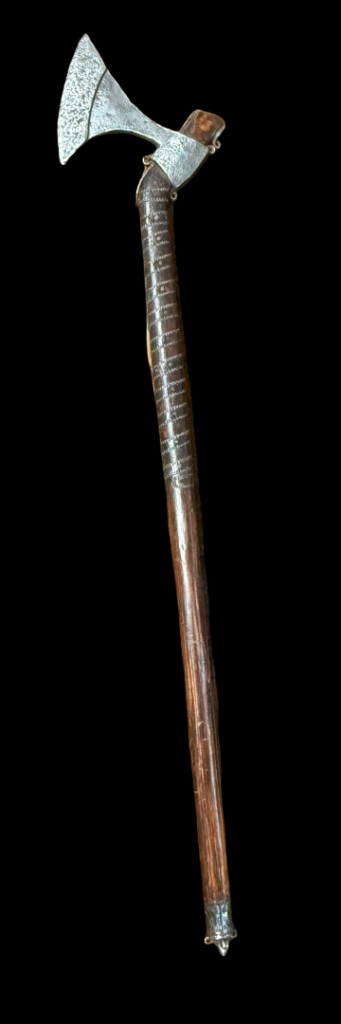
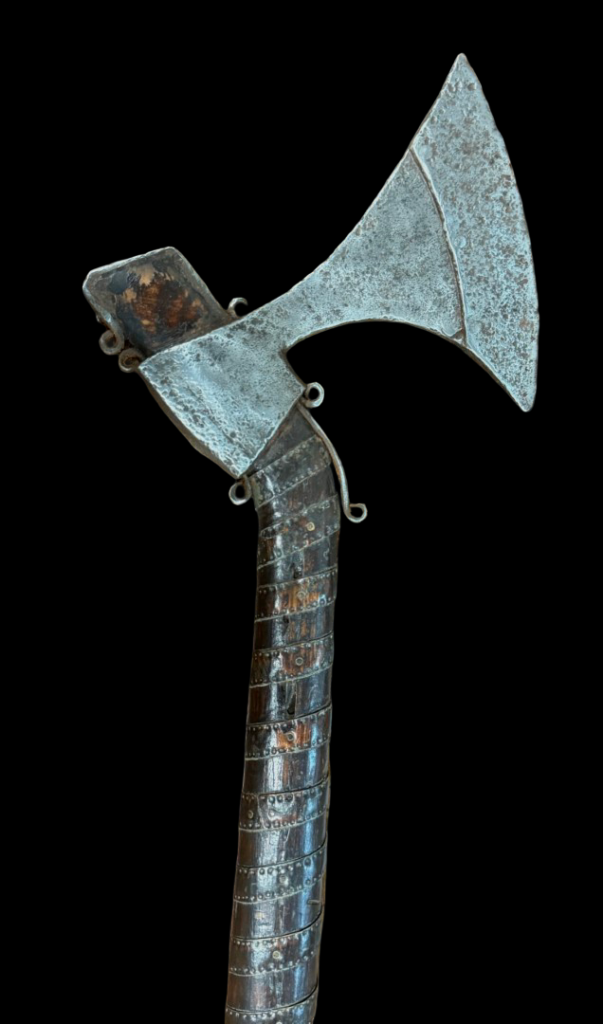
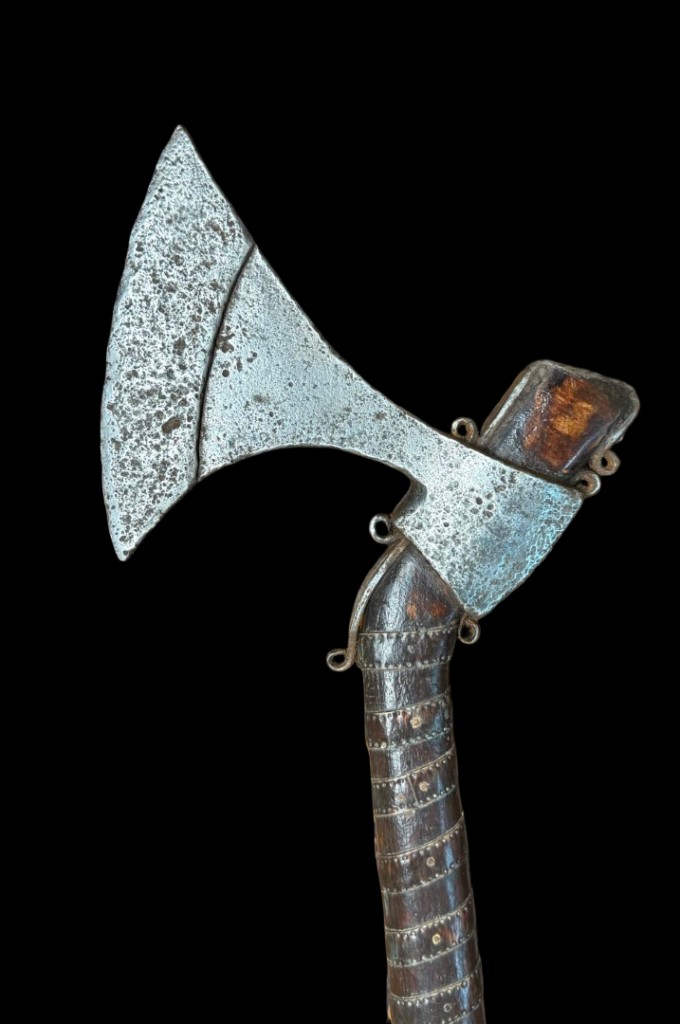
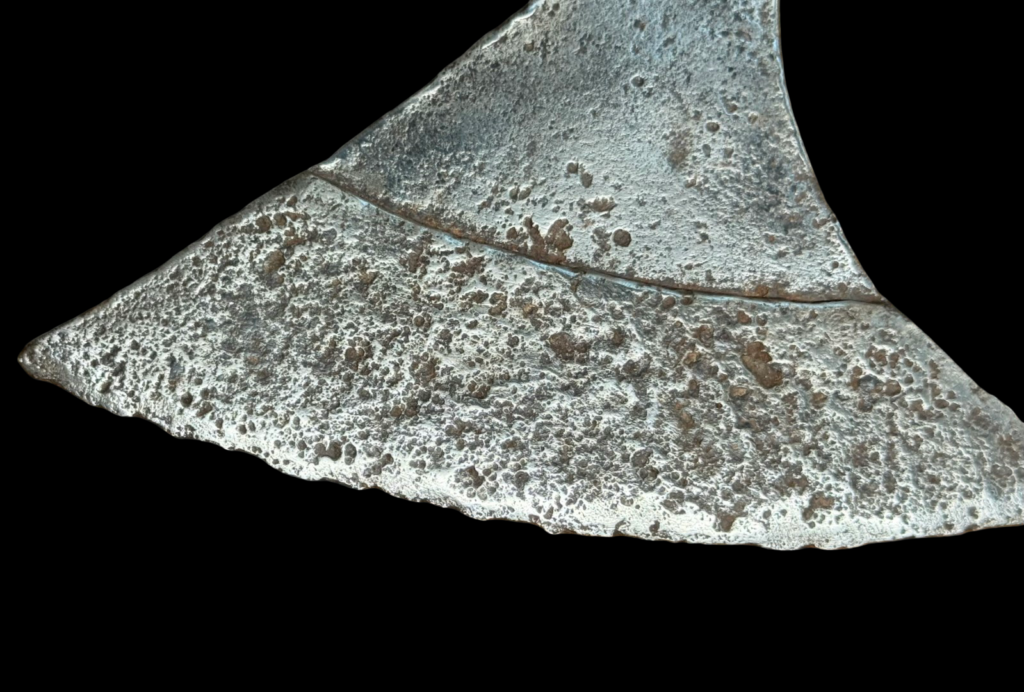
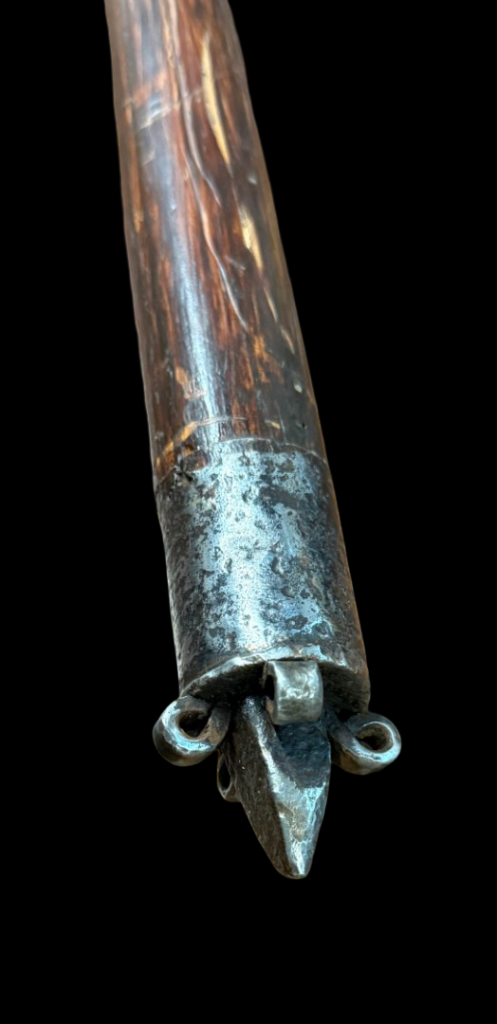
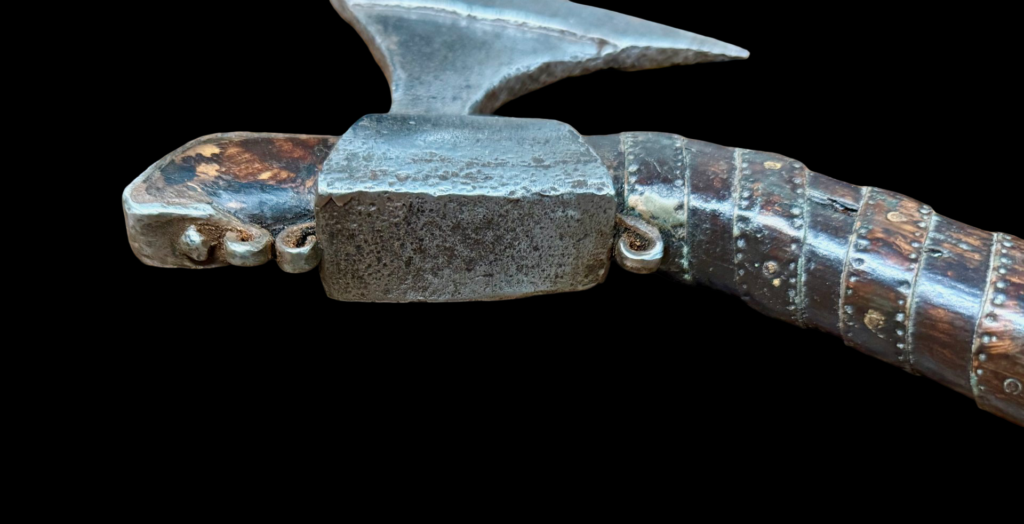
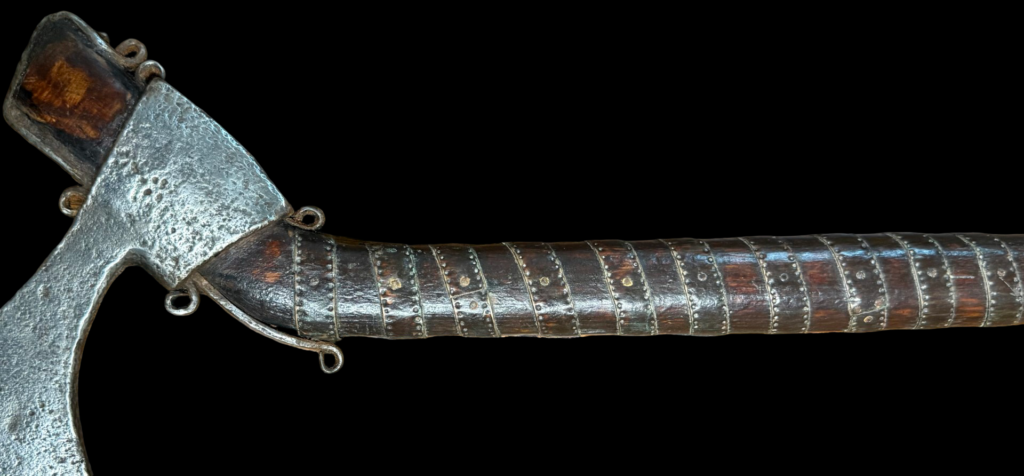
1989) RARE SCANDINAVIAN/NORWEIGEN BATTLE AXE CIRCA 1570: A near identical to one in the Severance Collection at the Cleveland Museum of Art.
Introduction: As beautiful as it is deadly, the Norwegian battle axe features a deceptively curved handle that is actually a stroke of tactical brilliance. While a traditional straight handle offers a direct strike, the crooked design provides the best of both worlds: the raw power of a heavy blow paired with the deep, slicing motion of a saber. These fearsome tools of war rose to prominence in the early 17th century, fueled by laws requiring every farmer to maintain their own weaponry.
Discussion: The Scandinavian axe is contemporary to the Tessak sword. In 1604, Christian IV began buying military swords from armies across Europe to sell to the farmers in his country, who had been serving as auxiliaries to his army since 1589. This law was called “Den Norske Landslov.” The tessak sword most often had (1) a curved blade with a (2) shallow, wide fuller extending down the length of the blade. The tessak arrived in Norway around the year 1600. Every year, the farmer had to bring his weapons to the Valeting (weapons meet) to prove that he still had his mandatory weapons. The Scandinavian axe was also part of the “Den Norske Landslov” arsenal.
Description: Constructed with an axe head that features a distinctive bearded design (skegg), where the lower edge drops steeply to create a long, hooked cutting surface. This design allows for both devastating chopping blows and specialized maneuvers, such as hooking an opponent’s shield. The shaft (possibly original) is made of durable hardwood, almost certainly ash, providing the wielder with significant reach and torque. The upper portion of the shaft, near the head, is often reinforced with brass or steel bands. This served a dual purpose: it decorated the weapon as a status symbol and protected the wooden handle from being sheared by enemy sword or axe strikes during combat.
Condition: Superb, conserved/restored to museum standards.
Length: 45 inches.
Comparatives: I have attached pictures of other similar axes from museums such as the Severance and Telmark in Norway and private collections throughout Europe.
Provenance: From an exceptional private Viking sword collection.
Conclusion: A rare opportunity to own a highly collectible weapon of war that would look exceptional in any world-class Viking sword or antique sword collection or any museum.
ACT NOW, or you could be very disappointed!!!
Axe’s like this seldom make it to the collectors’ market.
All my items come with the following:
–Free shipping.
–10-day review period.
–Certificate of Authenticity.
–Autographed copy of my book.
–In the event of an international shipment, we will help assign the lowest correct Customs tariff so you pay the least.