1979 antique rapier
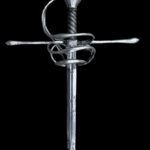
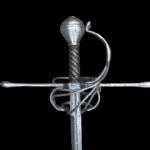
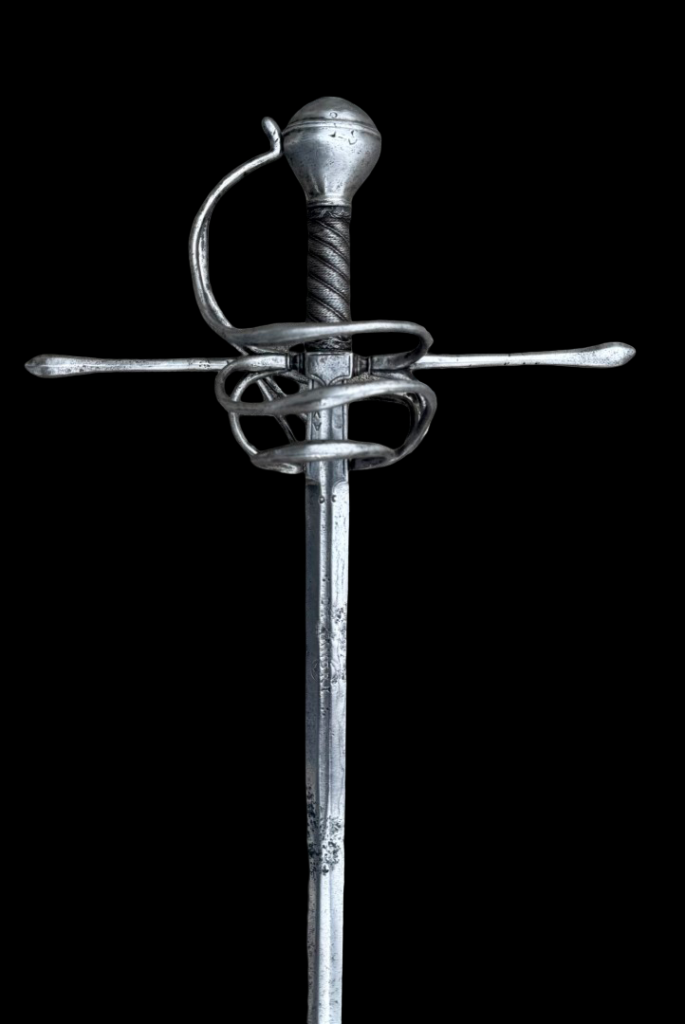
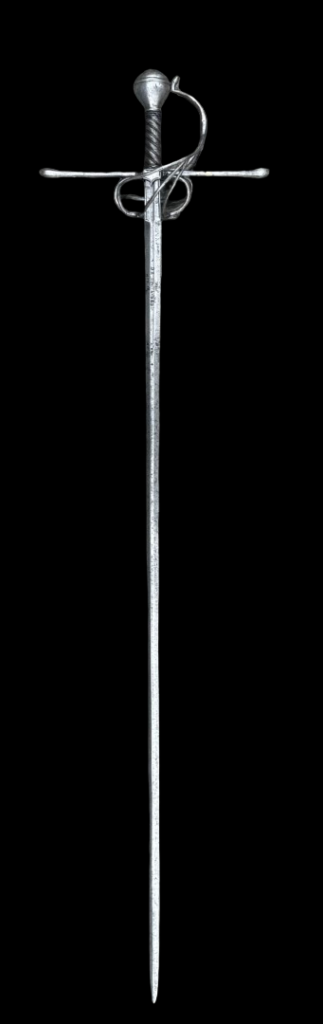
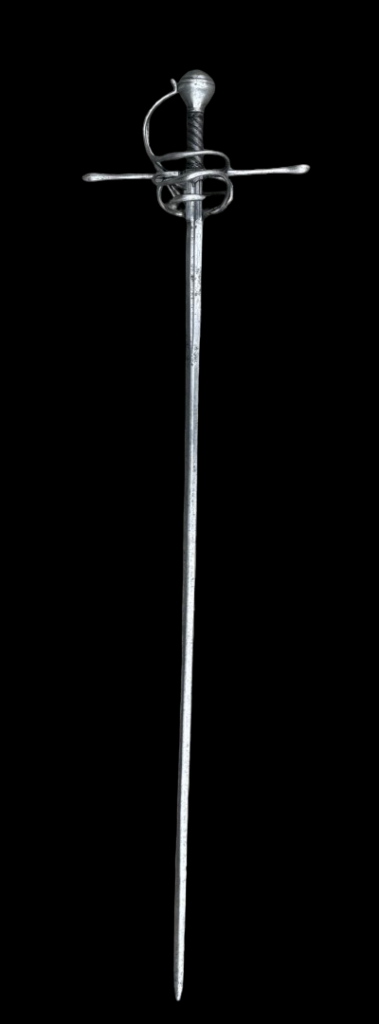
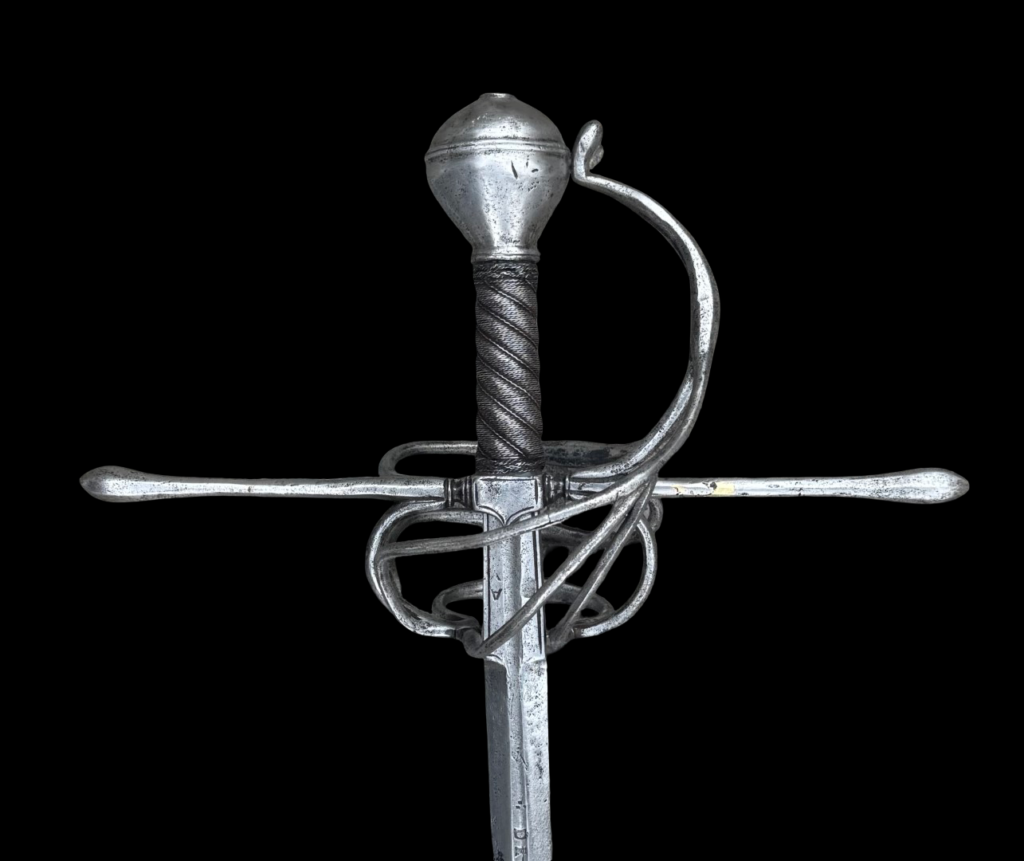
1979) A FINE EARLY GERMAN MILITARY RAPIER, WITH MARKS CIRCA 1560:
Introduction: Military-class rapiers like this one seldom make it to the collectors’ market. This is a fighting sword, not a rapier worn by some fat, wealthy person who had bodyguards and never personally engaged in mortal combat in his life.
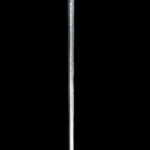
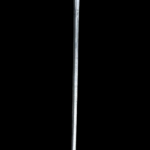
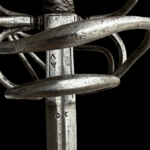
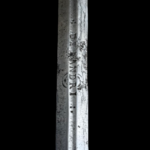
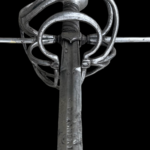
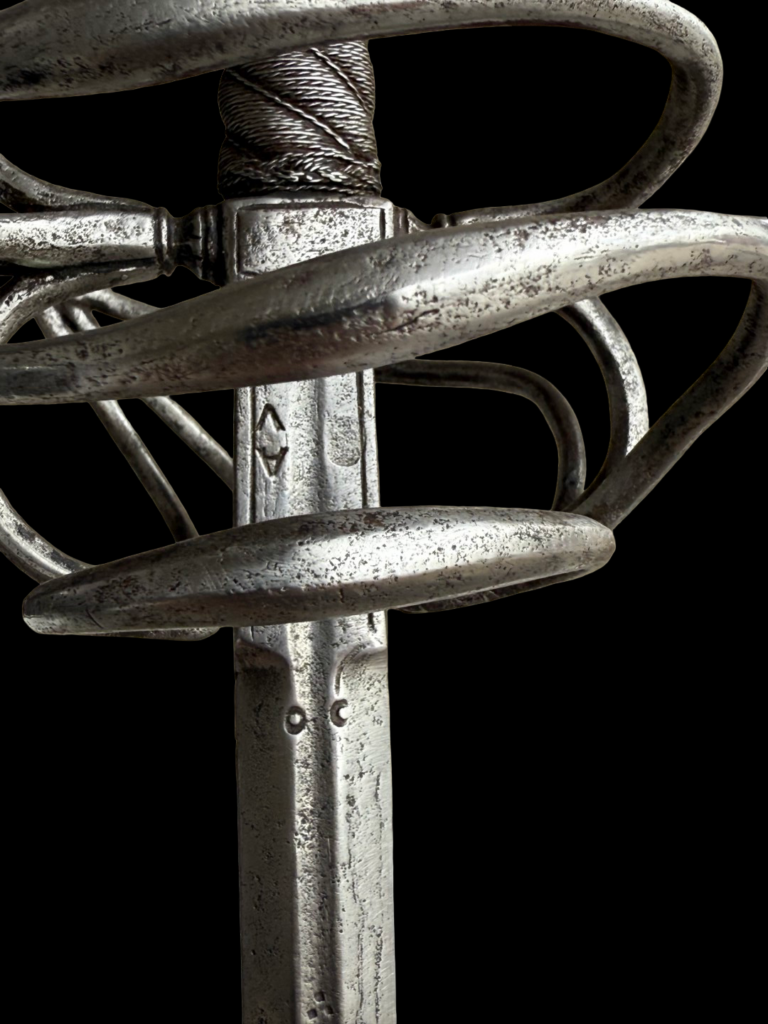
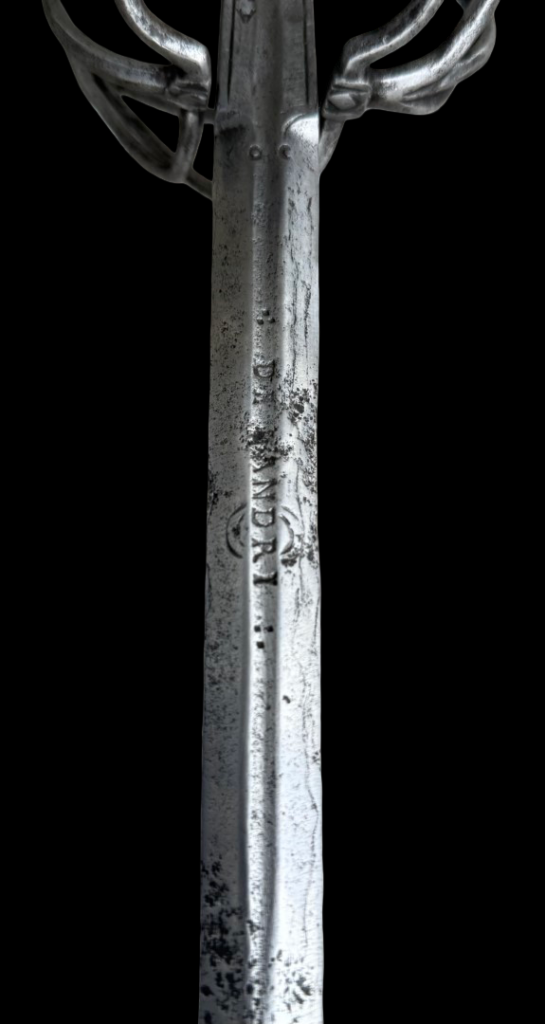
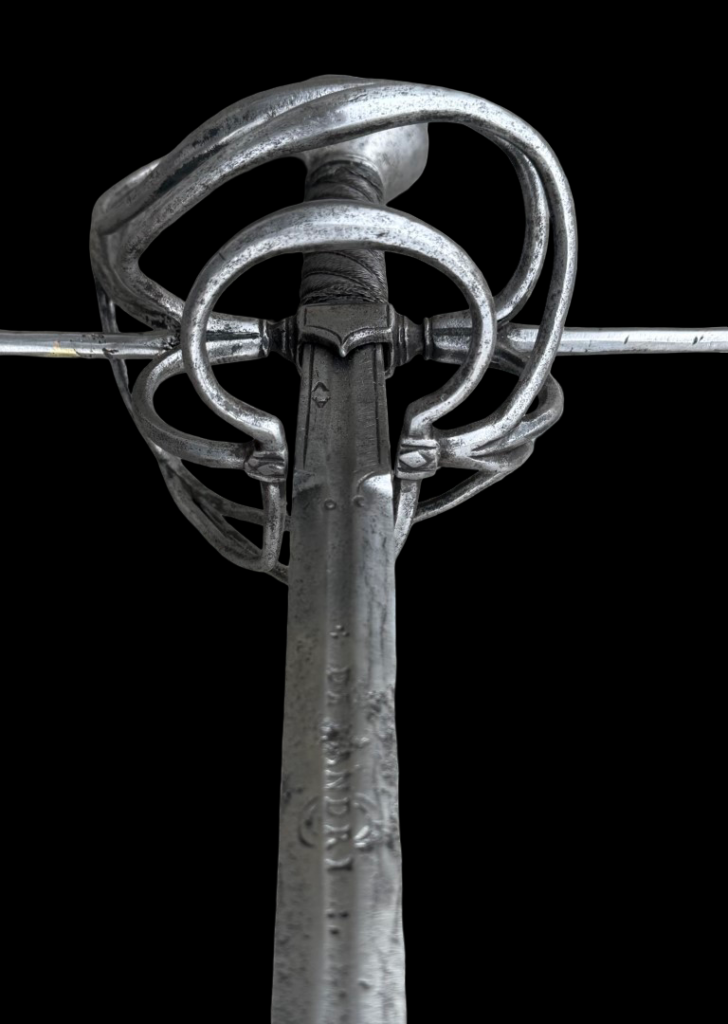
Description: Under the Norman typology, this would be a Hilt 74 (1545-1620) with a type 16 pommel. Most examples of this typology (such as this one) have thin guards of circular section with long quillons ending in knobs; this one ends in an octagonal, elongated shape. The knuckle guard curves away from the pommel at its end and terminates with knobs en suite. The center of the guards also terminates en suite. The chevron shape on the quillon block. Rectangular decorated recasso is marked with four maker’s marks (worn), long double-edged blade of diamond section with the inscription “D R ANDRI” (both sides) on a short fuller. Grip of wire with two Turks’ heads.
Approximate length: Length 45 inches.
Comparables: The earliest clearly recorded example of this typology is in a painting by Moretto da Brescia in 1560. The earliest known example, circa 1560, is in the Dresden Historical Museum (Cat. # E612).
Provenance: From a very well-known private world-class collector and dealer who was thinning his collection at age 82.
Condition: Good with some wear and pitting as you would expect from a utilitarian instrument of war.
Discussion: In a day and age lacking appropriate policing, the private citizen was forced to protect himself from society‚ criminal dregs. The weapon of choice was the rapier from the middle of the 16th to the end of the 17th century. The rapier is a simple but highly effective sword against the non-armored.
The rapier was primarily a thrusting weapon that could inflict serious injury to an adversary‚ vital organs with minimal effort. It was also an exceptional slashing and cutting weapon; however, the slash was not as lethal as the thrust. The slash was used more as a feint to set up a finishing thrust. The slash was also a dire warning to a would-be assailant of the horrors to quickly follow if he chose not to acquiesce.
The rapier is almost undeniably of Spanish origin and is probably Spain‚ most significant contribution to the Renaissance arms race. A highly expensive, ornate rapier was the equivalent of a person in our day and age making a fashion or opulence statement by wearing very expensive jewelry, such as a Rolex or Audemars Piguet watch.
Because fencing is more of a thrusting art, it became commonplace throughout Europe to have as long a blade as possible to obtain an advantage. This extravagance in length reached the point that municipalities passed statutes regarding the allowable lengths of blades. Those in violation had the misfortune of having their rapier‚ blades cropped at the tip at the city gate to comply. One example of these statutes is the English Royal Proclamation of March 17, 1557. The French adopted the phrase ‚”espee rapier” by 1475, which later was shortened to simply ‚”rapiere,‚Äù the English in 1505 spelled it ‚”rappyer”. The Giles Duwes English/ French dictionary of 1532/3 adopted the rapier’s definition as ‚”Spannyshe sworde”.
By 1550, the term rapier had been adopted to describe a slender, sharply pointed sword designed for thrusting, cutting, and slashing attacks. The rapier now consisted of a hilt protected by a handguard.
Conclusion: Even if you do not collect rapiers, it’s always good to have one in your collection because they were such an important part of Renaissance Europe. Military-grade rapiers like this one seldom make it to the collector’s market. This rapier would be welcomed in any collection or museum. This is a rare opportunity. Act now so that you won’t be disappointed!!!*
Even if you are not a rapier aficionado, all early arms and armor collections should have at least one example of a rapier. Priced to sell to the connoisseur of superb collecting taste at a lot less than you would expect!!!*
Contact me immediately to get the lowest price from the owner. Acy Now!!! Swords like this seldom make it to the collectors market place.
All my items come with the following:
–Free shipping.
–10-day review period.
–Certificate of Authenticity.
–Autographed copy of my book.
–In the event of an international shipment, we will help assign the lowest correct Customs tariff so you pay the least.