1951 Bastard Sword
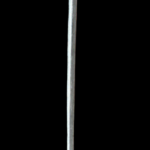
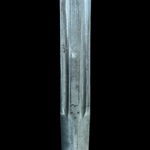
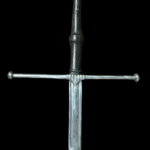
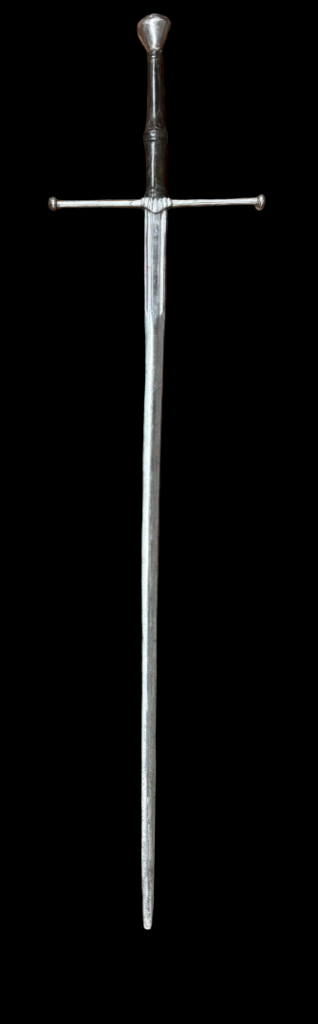
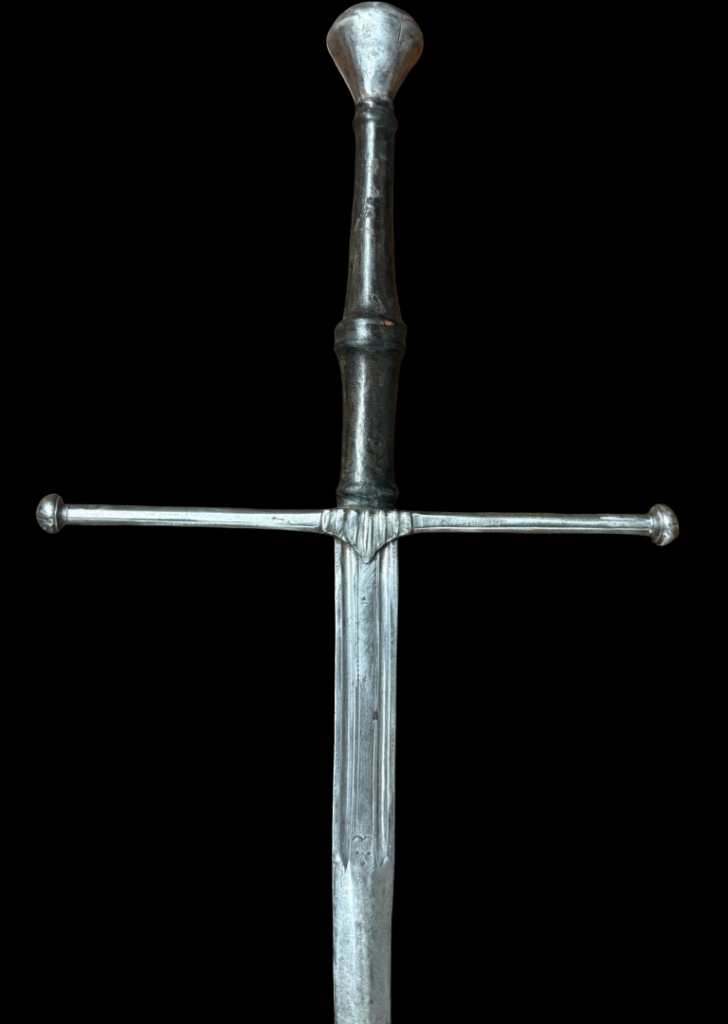
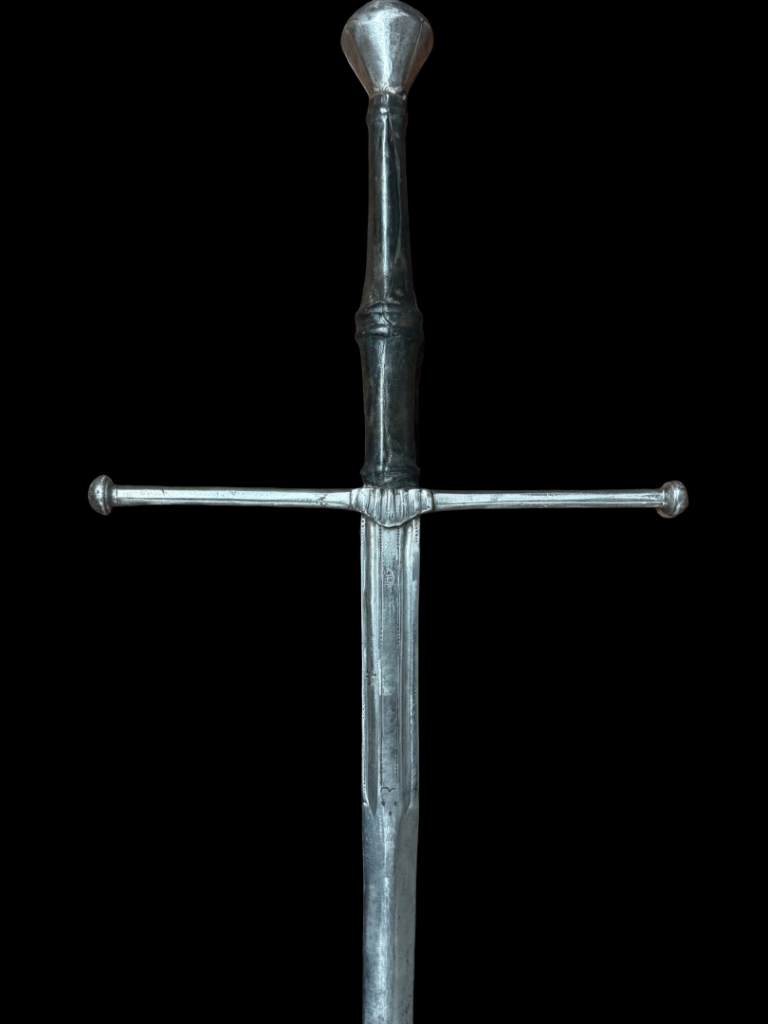
1951) RARE GERMAN INFANTRY BASTARD WAR SWORD CIRCA 1540:
Introduction: Infantry means this sword was made for the common soldier, the guy with the misfortune of being in the front line, the most dangerous place to be in any Medieval or Renaissance battle. This sword, make no mistake about it, is an instrument of war designed with one purpose only: to kill the enemy combatant in front of him.
Like any real combat sword, it is not exceptionally long, to facilitate close-quarter combat, and so it could be swung for hours without tiring. Even though its construction is superb, as you would imagine, it’s not exceptionally ornate like an officer’s grade sword. This sword radiates a certain cold-blooded machismo. It’s the true spirit of the Renaissance warrior.
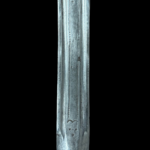
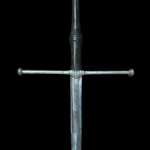
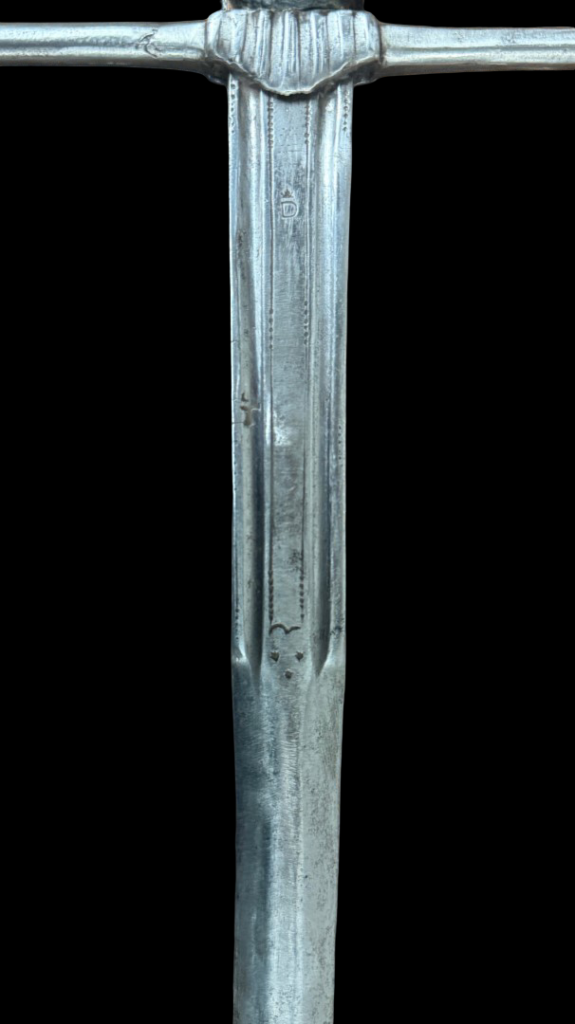
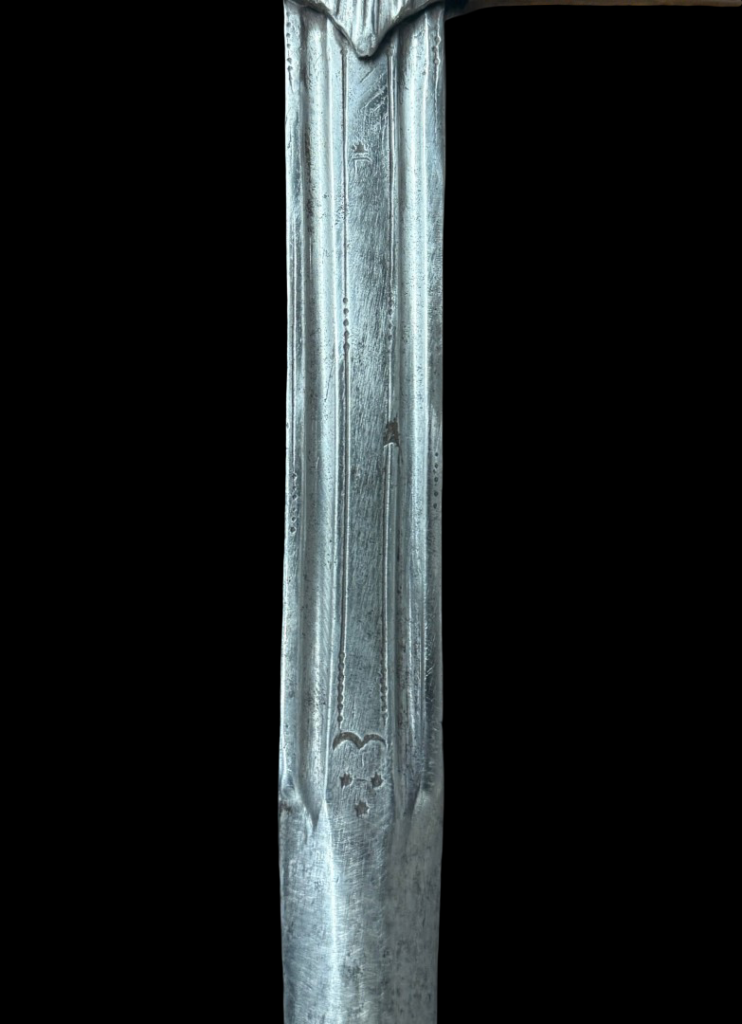
Description: Constructed with a cruciform hilt, round quillons extending to swelling tips, hash marks at the chevron shaped ricasso block, a two-stage hock bottle leather grip, probably a working life or early replacement, a style 16 Hens Egg octagonal pommel with eye lid decorations, long rectangular ricasso with fullers at the edges and makers marks (worn) on each side with punch mark decoration, tapering lenticular-shaped blade.
Length: Approximately 47.75 inches.
Condition: Good.
Provenance: From a distinguished American collector’s heir.
Country of Origin: German or Austrian.
Discussion: This is a true war bastard sword that can be wielded with one or two hands. A bastard (or hand and a half sword as later called by Victorian collectors or Anderthalbhander in German) is a combination of a short two-handed sword that can be wielded like a one-handed sword. It cuts and thrusts with a broad or long double-edged blade. Additional power can be employed by using the pommel and the related lower area of the hilt below the pommel as a grip for a two-hand strike to increase impact and penetration.
The term “bastard sword” is first recorded in France during a 17th-century duel. In Marc de Vulson’s 17th century treatise “Vray Theatre d’Honneur”, he describes the weapons used in a duel fought before King Henry II of France in 1549 as follows: Deux epees batardes pouvant server a une main ou a deux (Two bastard swords that can be used with one hand or two). I prefer the term “bastard sword” since this is the original term and not one concocted by the Victorians. It’s interesting to note that the ballock dagger (a vulgar word for testicles) was renamed the kidney dagger around the same time. They first appeared circa 1250 until circa 1650. They were widely used in Germany and Switzerland, but more prevalent towards the end with the Central European Cavalry.
Hilts varied throughout their evolution. Until circa 1550, most hilts on German bastard swords were cruciform in shape, with some having S-shaped guards. After circa 1550, some hilts became more elaborate. From approximately 1550, Swiss bastard sword hilts featured recurved quillons, knuckle guards, and ring guards. Blades were slightly curved, having developed somewhat from the Swiss saber (Schweizersabel). Prior to c1250 and the development of the bastard sword, swords were designed as arming swords with their use limited to one-handed use. Since they were knightly weapons, they were frequently used from horseback.
Sword length during this period varied from approximately 35 to 40 inches; after c1250, length increased to approximately 45 to 55 inches. So why did it take until the early 1300s for the bastard sword to flourish?
Primarily, there are two significant reasons:
1) For the same reason, full metal defensive armor and two-handed swords did not develop until the same period. As furnaces grew larger in medieval Europe, billets of steel (a solid length of steel) grew accordingly. With bigger billets, swords could now be made with fewer (but larger) billets of steel. Eventually reaching the apex of one billet per sword. Larger furnaces generally meant higher temperatures, better steel, faster production, and probably lower manufacturing costs on a large-scale basis.
2) As the master armorer evolved defensive armor, his counterpart, the swordsmith, did the same with larger and more specialized swords of superior quality and design. This was the weapons race of its day.
Conclusion: This is actually a rare sword, even though priced very inexpensively. The Arms and Armor that survive the ravages of time are usually the most ornate and pretty. Why? Because they are valuable, and people kept them as decorations and took good care of them. All collectors love bastard swords. I believe every collection should have at least one; it’s in the true spirit of the Medieval and Renaissance periods.
This sword is priced very reasonably to be sold immediately. From a novice collector to the most discriminating aficionado will recognize the value, rarity, and importance of this sword. ACT NOW and avoid disappointment!!!*
All my items come with the following:
–Free shipping.
–10-day review period.
–Certificate of Authenticity.
–Autographed copy of my book.
–In the event of an international shipment, we will help assign the lowest correct Customs tariff, so you pay the least.
I believe you will be very pleased. ACT-NOW!!!*