2079Halberd
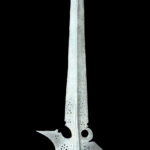
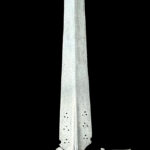
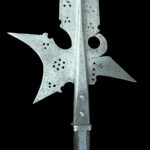
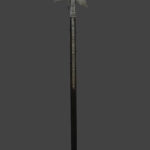
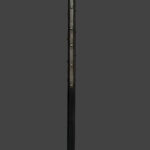
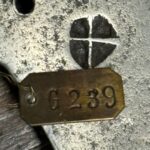

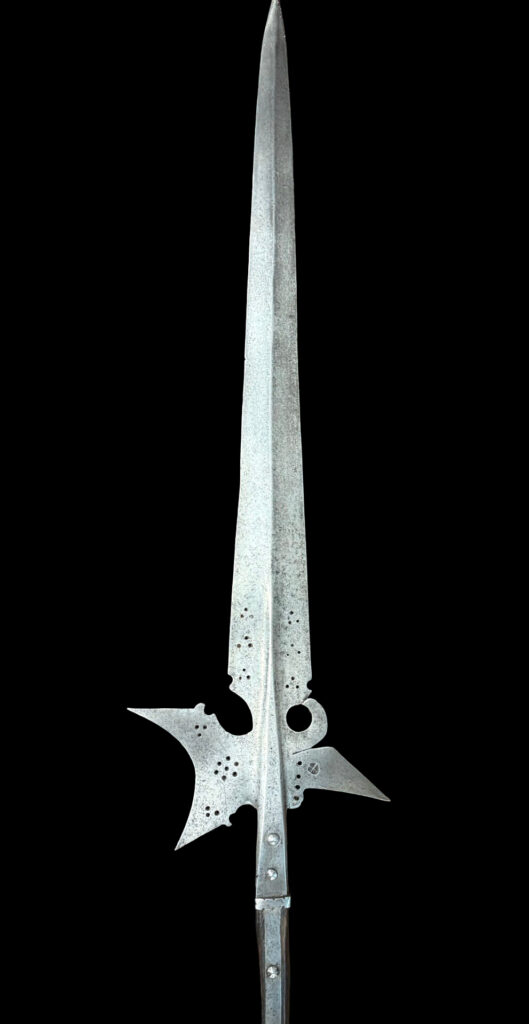
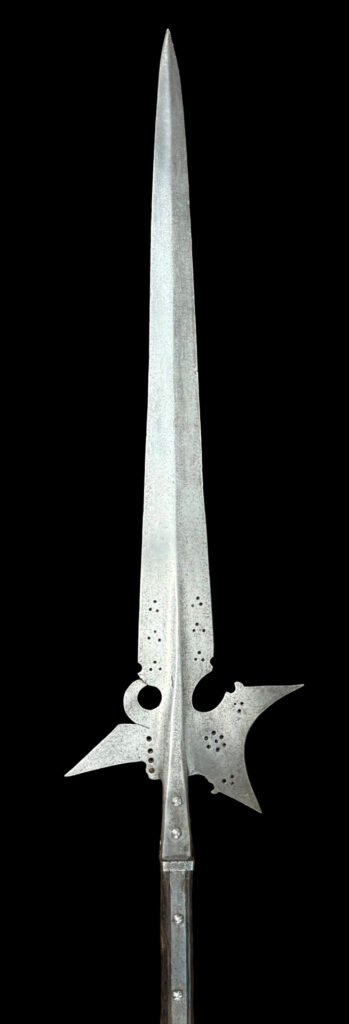
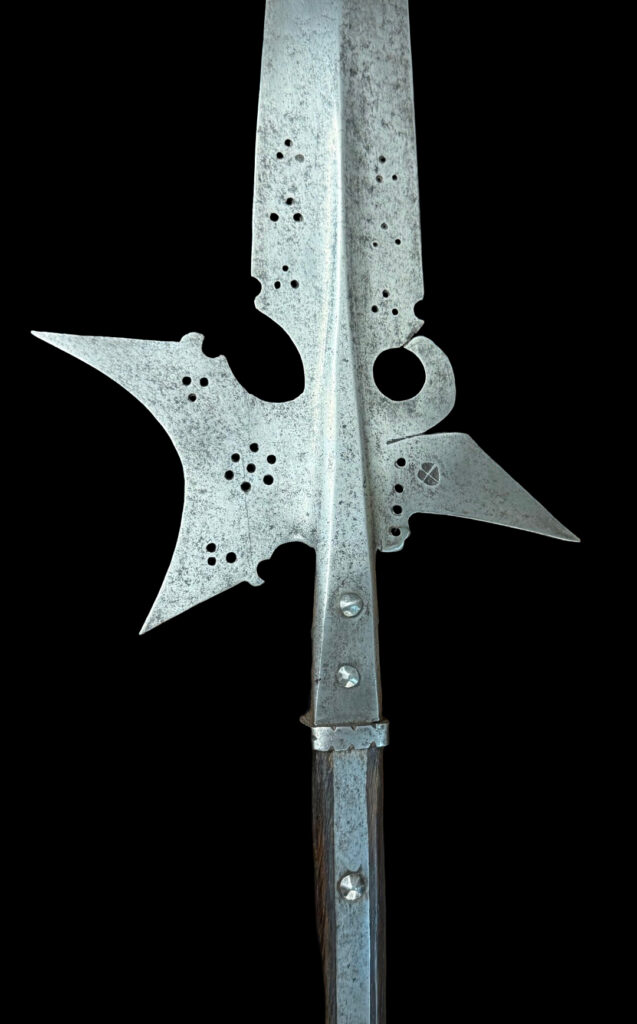
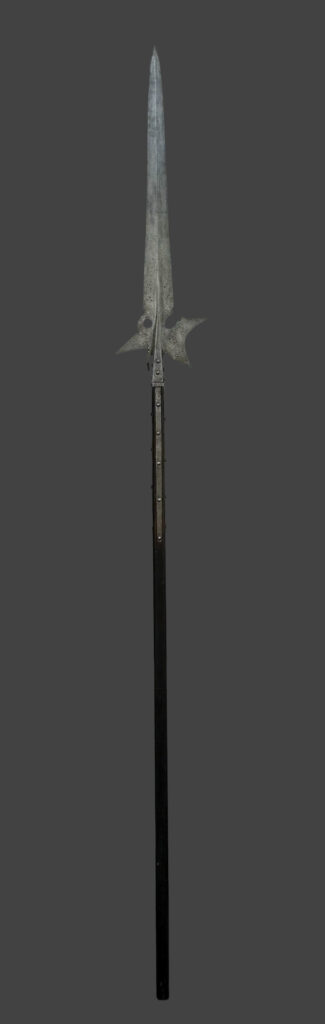
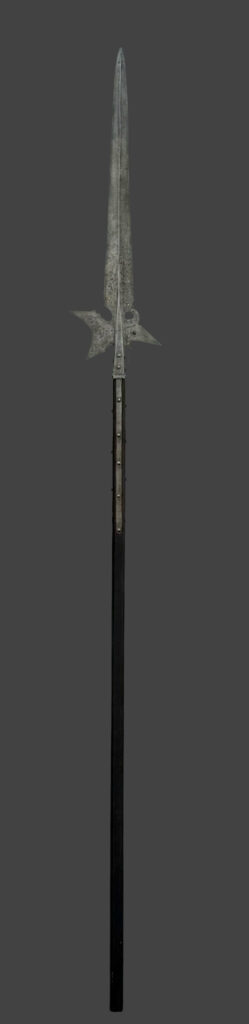
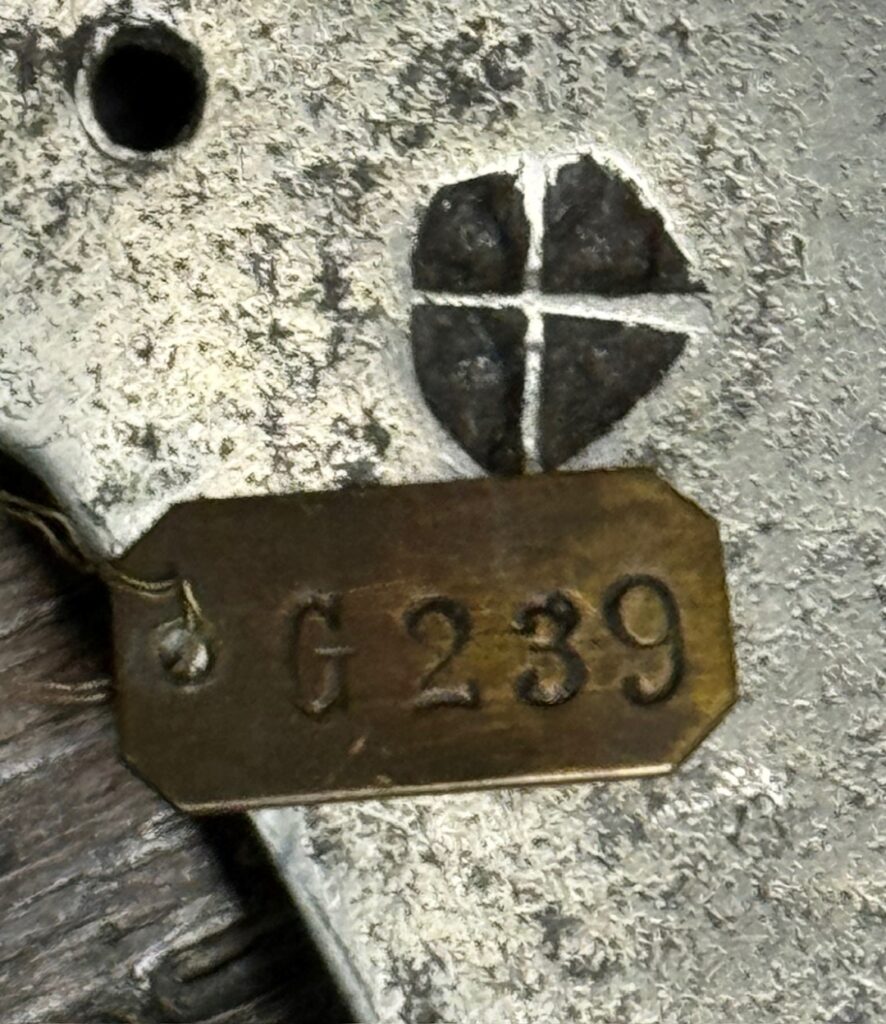
2079) PUBLISHED MUSEUM QUALITY AUSTRIAN WAR HALBERD, CIRCA 1580: With makers mark and museum/arsenal inventory tag (G239).
Introduction: This rare typology of halberd is more of a sword on a pole with a modest axe for chopping and a fluke to dismount riders. Unlike the traditional halberd, the combat effectiveness of this typology halberd is maximized as a thrusting and slashing weapon as opposed to chopping.
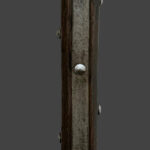
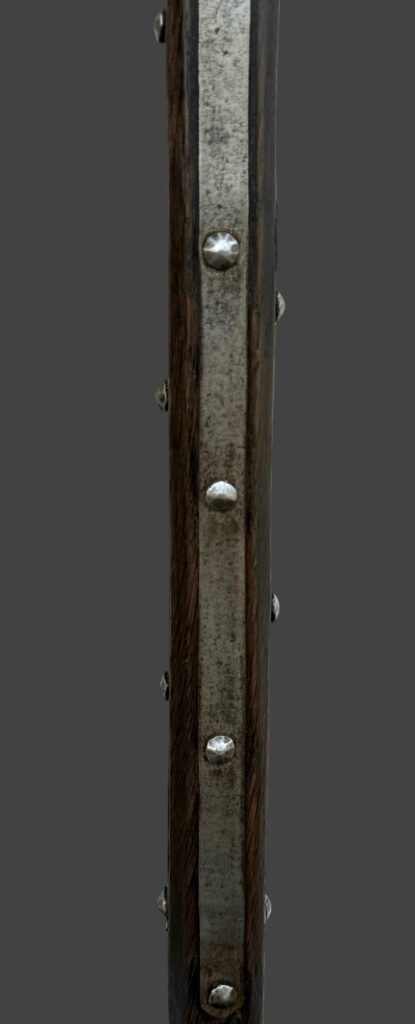
Description: Blade with a strong central medial ridge, solid quadrilateral (four-sided) haft with four straps, two long (one with a repair), and two short, attached with rivets on all four sides. The ax has two groups of piercings in groups of three at opposite extremities and a circular group of six with one piercing in the center. The flukehas a makers mark and four piercings in a straight line. The lower section of the blade (forte) contains six groups of triple piercings in triangular form. The holes serve the same function as a fuller on a sword ( see pages 35, 383, and 387 in my book). Original haft. Length: 265 cm.
Discussion: The halberd is a multiuse staff weapon of the Medieval and Renaissance periods. It was used with devastating effects throughout Europe. The halberd was developed in Switzerland and was popular throughout Western Europe. The halberd was responsible for changing warfare in Renaissance/ Medieval Europe. It was first called ‚hallembart‚ by the German poet Konrad of Wurzberg (d. 1287), who described a blade attached to a pole utilizing two rings called ‚eyelids in a poem about the Trojan War. It originated between the 6th and 9th centuries in the early Middle Ages. The first halberds were a short sword called a ‚scramasax‚ (see page 313 in my book) attached to a wooden pole. The halberd had reached a more evolved form by the late 13th and 14th centuries. It is mentioned in poetry and contemporary records of the period. In 1348, Franciscan John of Winterthur chronicled the Battle of Morgarten in 1315, in which his father fought.
Provenance:
By tradition the Bern Arsenal.
-Old Swiss Collection.
-Andrew F. Garcia Collection.
-American Collection.
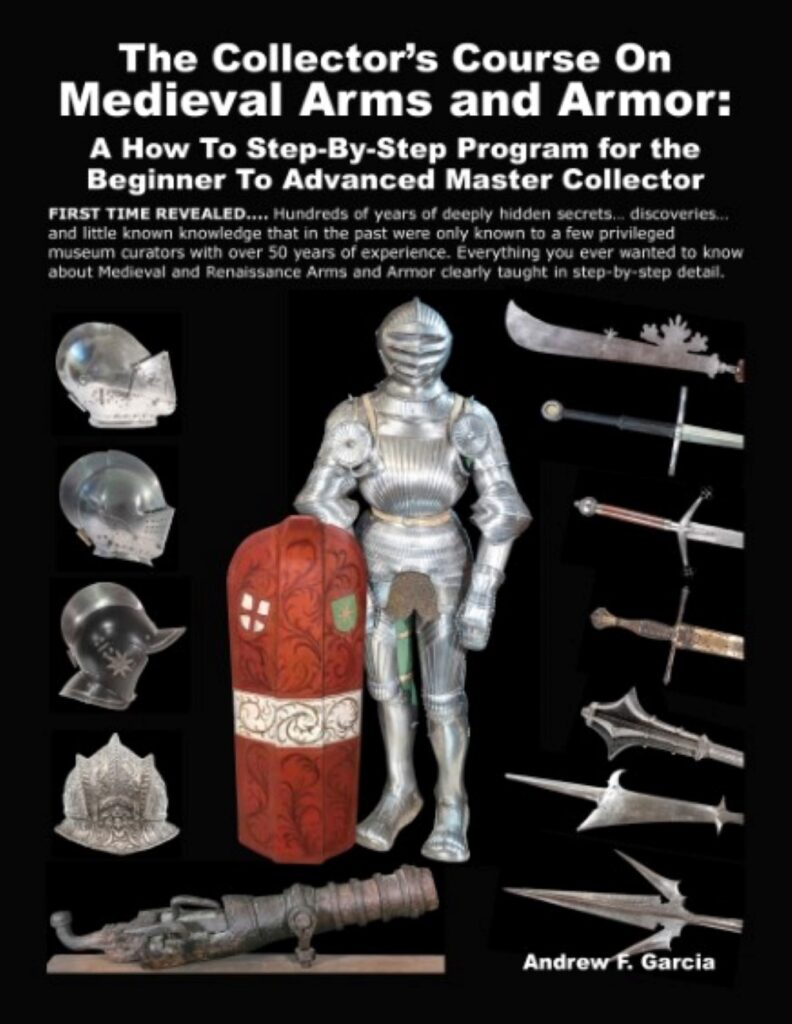
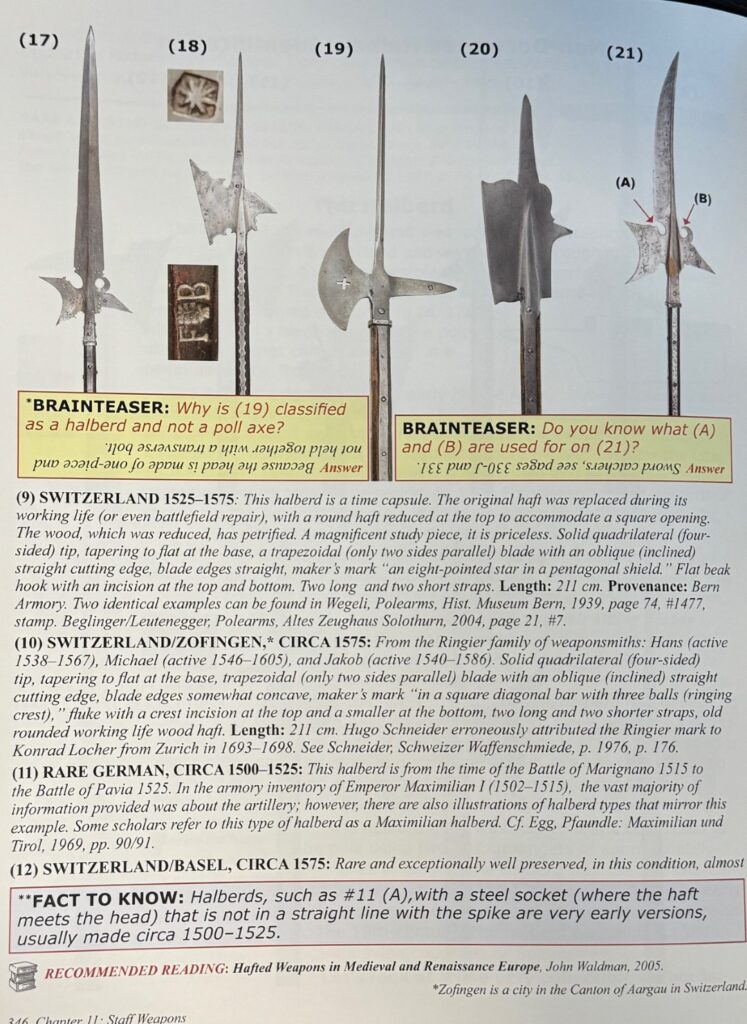
PUBLICATION: The Collectors Course On Medieval Arms and Armor, 2021, Garcia, pages 346 (#17) and 347 (#17).
Conclusion: Among 21st-century collectors, war halberds with original hafts are an extreme rarity. All collectors should strive for one. The typology of halberd under discussion is, in my opinion, more elegant and without a doubt rarer than the more common trapezoidal blade type with an oblique (inclined) straight cutting edge. This halberd is a great addition to any museum or collection.
All my items come with the following:
–Free shipping.
–10-day review period.
–Certificate of Authenticity.
–Autographed copy of my book.
– If it’s a helmet, a custom wood stand.
– In the event of an international shipment, we will help assign the lowest correct Customs tariff so you pay the least as low as 5% or even nothing.
I believe you will be very pleased.
Contact Me To Get The Latest Lowest Price Possible From The Owner*